
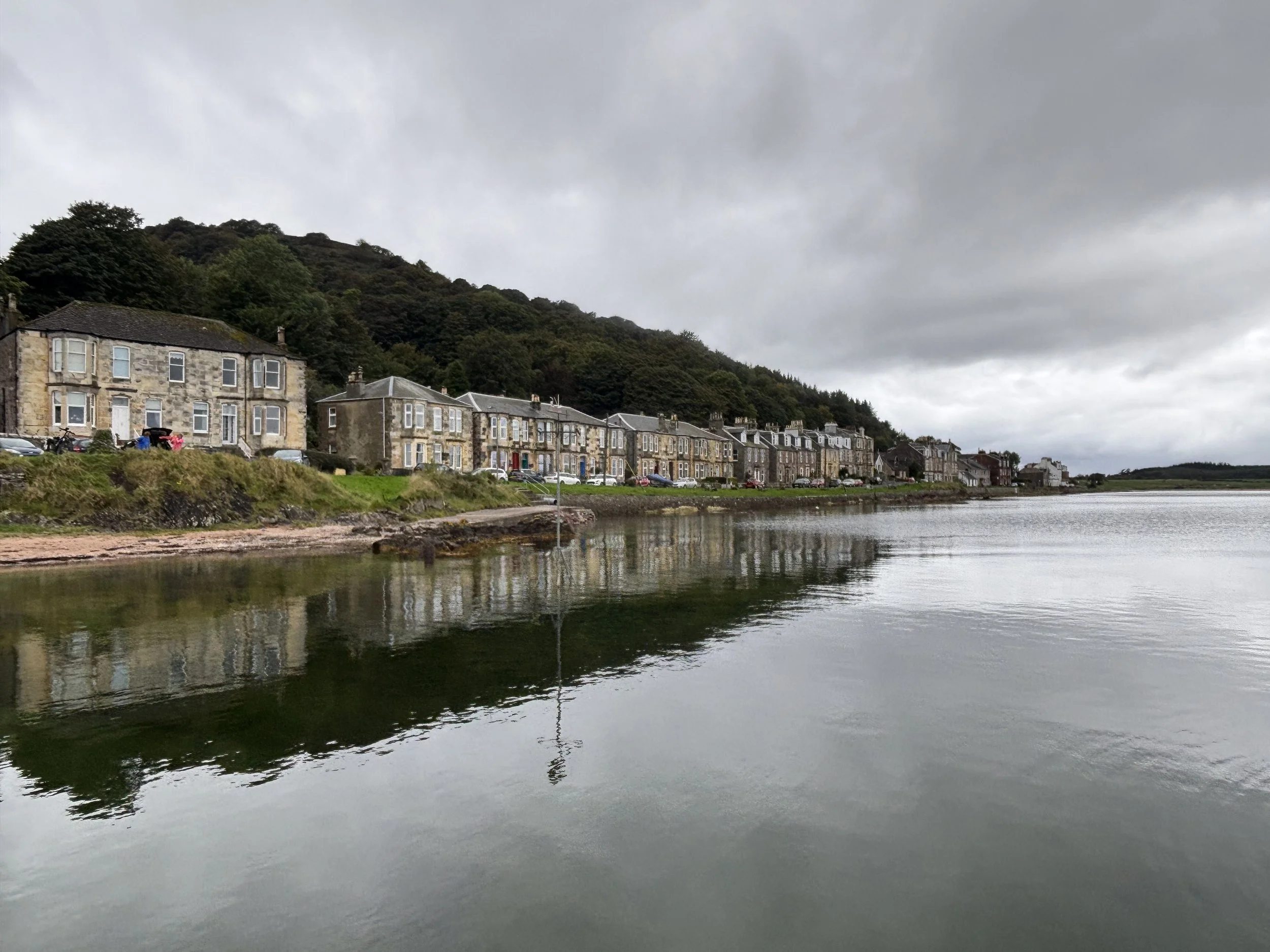
Scotland Part II
We arrived in Scotland on August 22nd. After spending one brief month exploring areas within the Firth of Clyde, we departed on September 22nd. One month is nowhere near enough time, and we barely covered any ground. But we knew our time there would be brief, as we were already late in the season, so we packed in as much as possible.
We spent a large portion of our time in the town of Millport on Great Cumbrae Island. It offered great protection from the stronger winds, which were becoming commonplace. But our time there was not only utilitarian. Millport was also an adorable, scenic small town with much to offer.
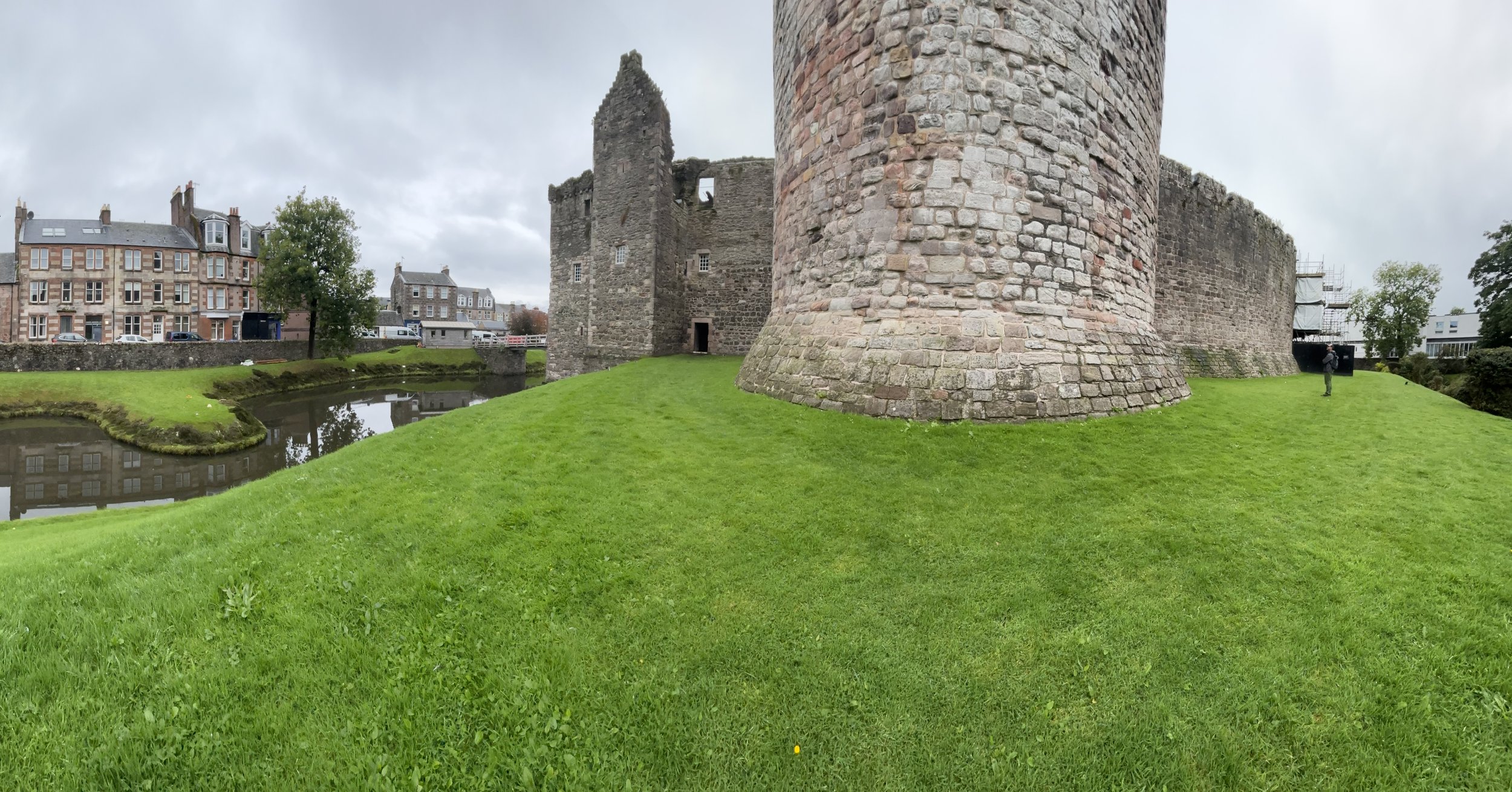
A New Country | Scotland
There’s a saying among sailors I’ve heard before that boats and people rot in marinas and harbors. While being in a marina has certain perks, like nice, long, hot showers and easy access to laundry, boats are built to be sailed. We loved our time exploring Northern Ireland, but after five days tied to a dock, we were ready to move on. But, as is often the case in sailing, you can’t just do what you want when you want. Our plans are determined by weather and tide.
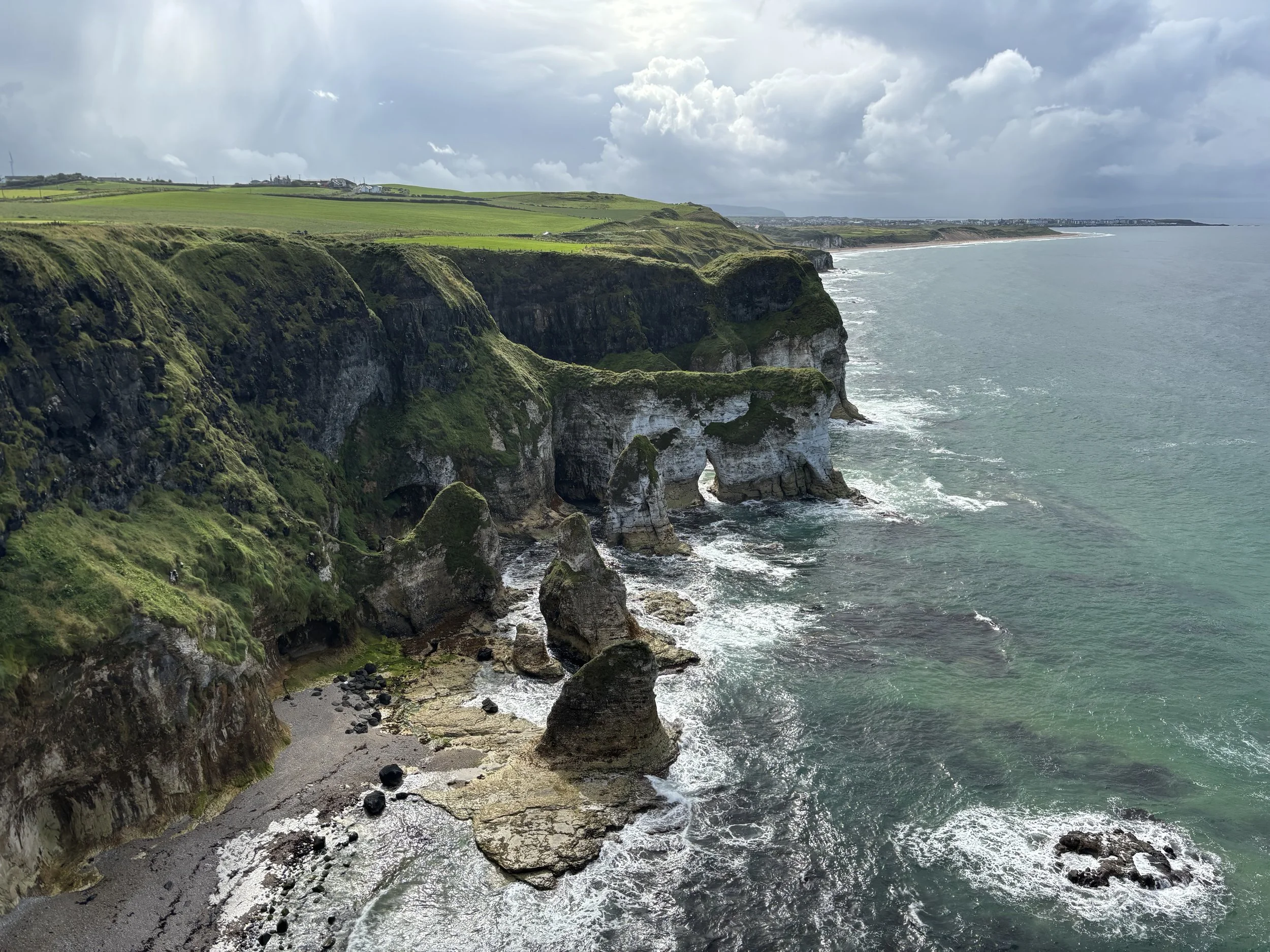
The Wild Atlantic Way
We arrived in Ireland on July 6th. Over the last six weeks, we’ve been exploring Ireland’s western shore. To say that we have fallen in love with Ireland would be a massive understatement. I am so glad we decided to take a more rugged path, sailing along the shores of the Wild Atlantic Way.
The Wild Atlantic stretches around 1,600 miles along Ireland's western seaboard—running between the historic harbor town of Kinsale in County Cork in the south to the Inishowen Peninsula (starting at Malin Head) in County Donegal in the north.
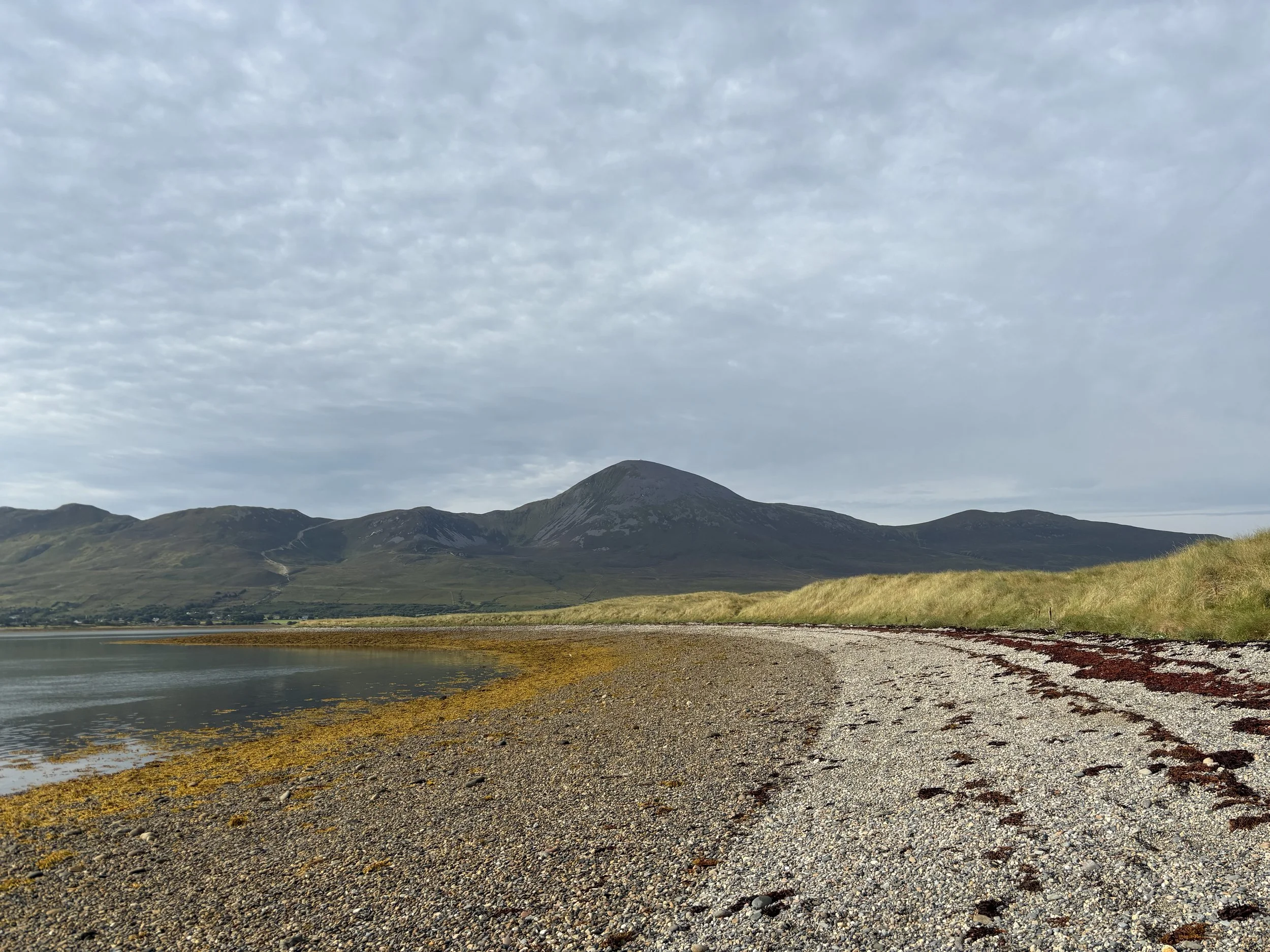
Clew Bay
We hated to leave Inishbofin. It is probably one of our favorite stops in Ireland so far! But the time came to move on again. From Inishbofin, we sailed to Clare Island, a quaint small island positioned at the mouth of Clew Bay.
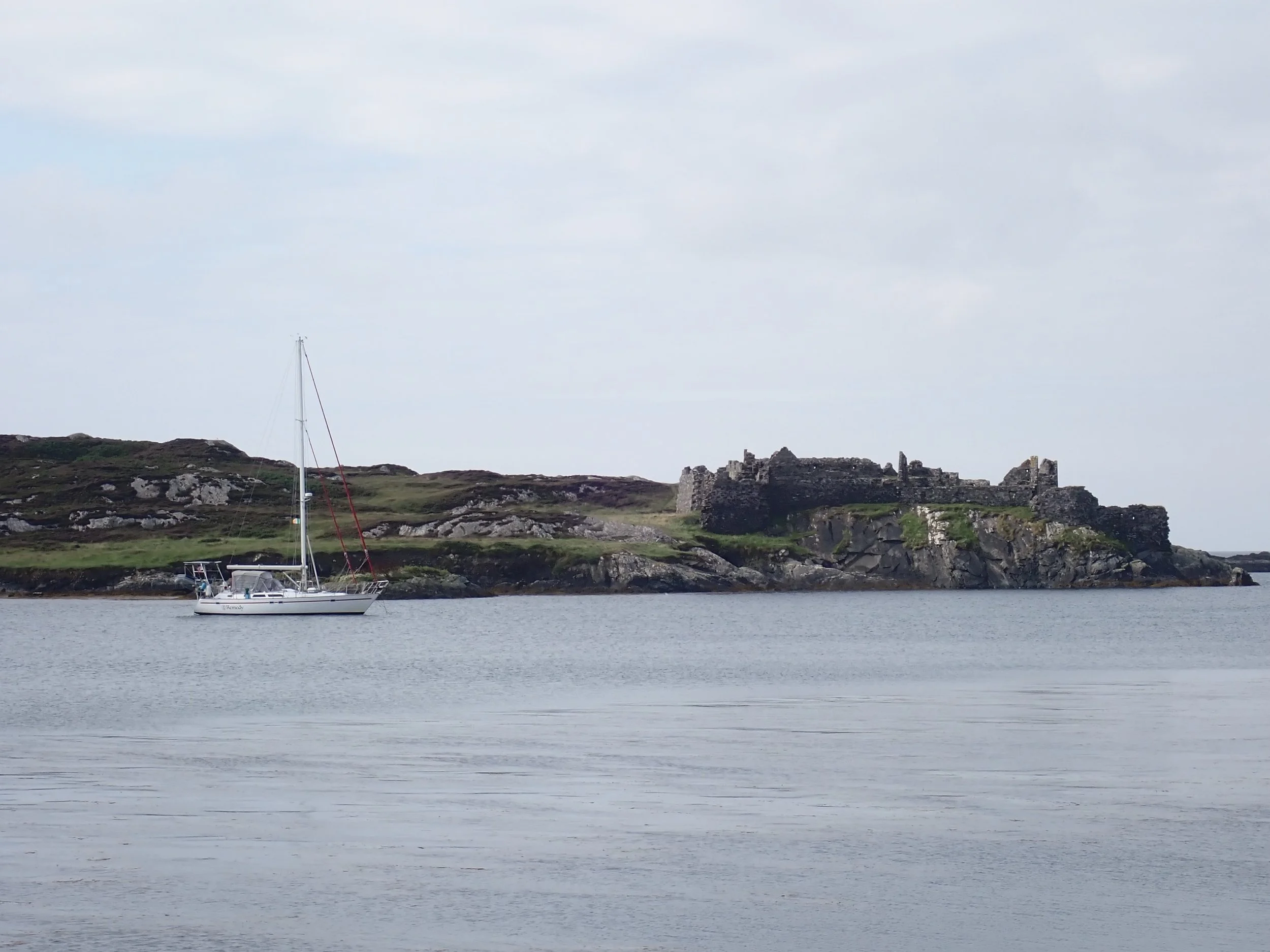
Our first stop was the 3-story tower house of the famous 16th-century pirate queen, Grace O’Malley. Tower houses were often three or four stories high, with a vault over the ground floor, and were protected by a parapet over the entrance, allowing stones or other objects to be dropped directly onto attackers.
Inishmore and Inishbofin
After leaving Dingle, we did a long sail up to the Aran Islands. We arrived at the island of Inishmore just after midnight. I really dislike coming into anchorages late at night—it makes everything a bit more difficult. But sometimes, it is unavoidable.
The Aran Islands are a group of three islands—Inishmore, Inishmaan, and Inisheer—located at the mouth of Galway Bay off the west coast of Ireland. The primary language spoken is Gaelic (Irish), though everyone also speaks English.
Derrynane to Dingle
Ever since arriving in Ireland, we have debated two choices: explore the southern coast of Ireland or travel up the more challenging northwestern shores, much of which is exposed to the open Atlantic Ocean.
The southern coast would take us to places like Schull, Kinsale, Baltimore, and Crosshaven, where we could experience not only the beauty of Ireland but also its charming port towns. The southwest has forts, castles, old market towns, maritime history, and famine history.
The northwestern coast would allow us to experience Ireland’s more rugged and dramatic shores, with enormous cliffs and mountains plunging into the sea. The northwest has less development, ancient monastic sites, Bronze Age remains, Neolithic monuments, and rich Gaelic history, with some of the islands still speaking Gaelic. Sailing this route would also be more challenging. There is less protection and fewer places to hide when bad weather arises.
Bantry Bay Recap
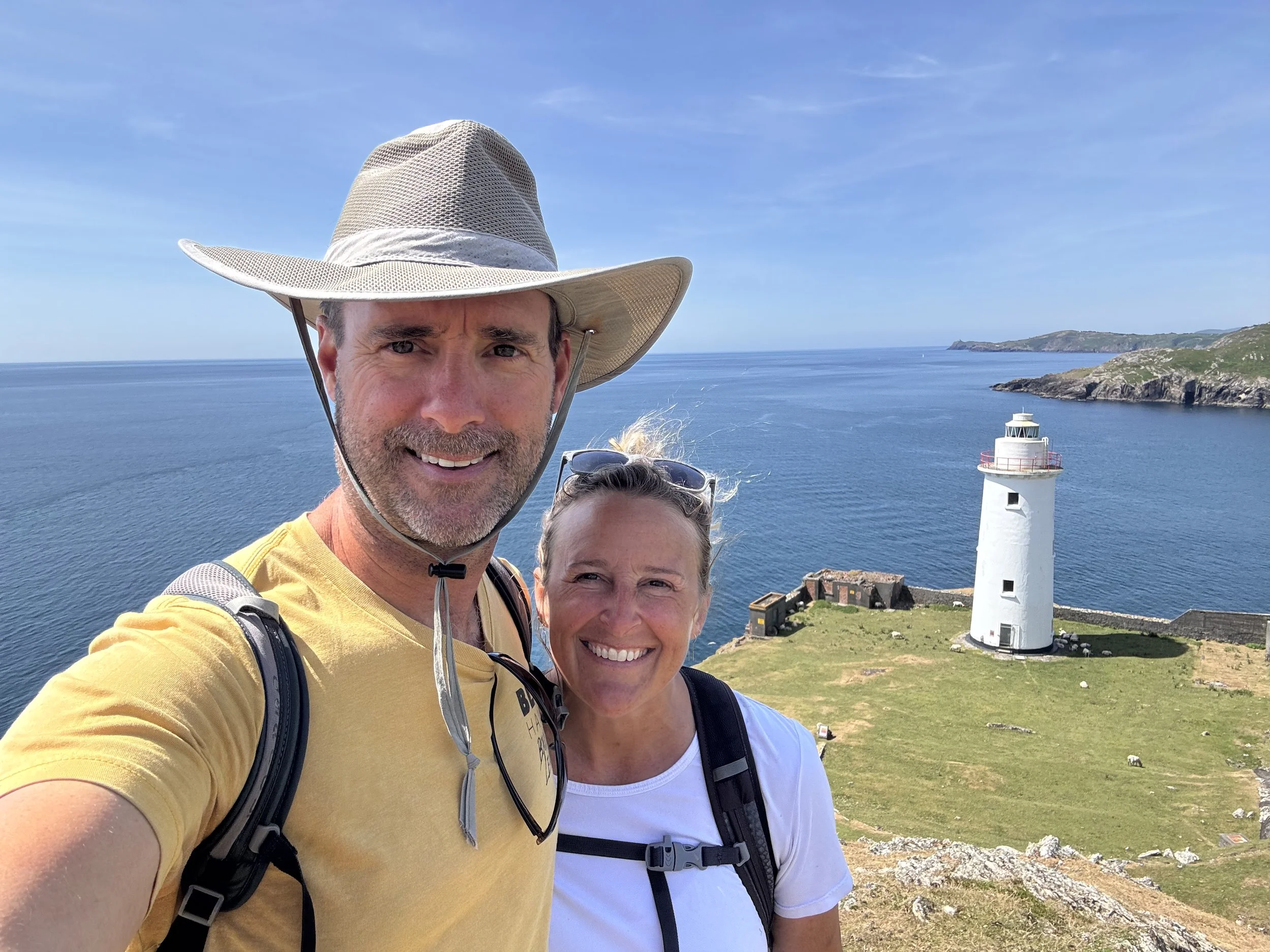
We made landfall in Ireland in Bantry Bay just over two weeks ago. The weather has been unseasonably warm. Ireland is on its second or third heat wave. When we were sailing here, we experienced many days that were cool, overcast, and foggy. This is more of what we expected. However, since arriving, we have had bluebird days with lots of sunshine and not a drop of rain.
In the last two weeks, Remedy has been anchored in six different locations, each with its own charm. Because it was late in the evening and overcast when we arrived in our first anchorage, Lonehort Harbor, we did not really see much. But when we awoke the next morning, we were surrounded by flower-dotted fields and cows grazing and lazing on the shore behind us.
Transatlantic Recap
We have now been in Ireland for one week. It is a beautiful country filled with warm and welcoming people, and we have thoroughly enjoyed our time here. Since our arrival, we have been moored in Bantry Bay.
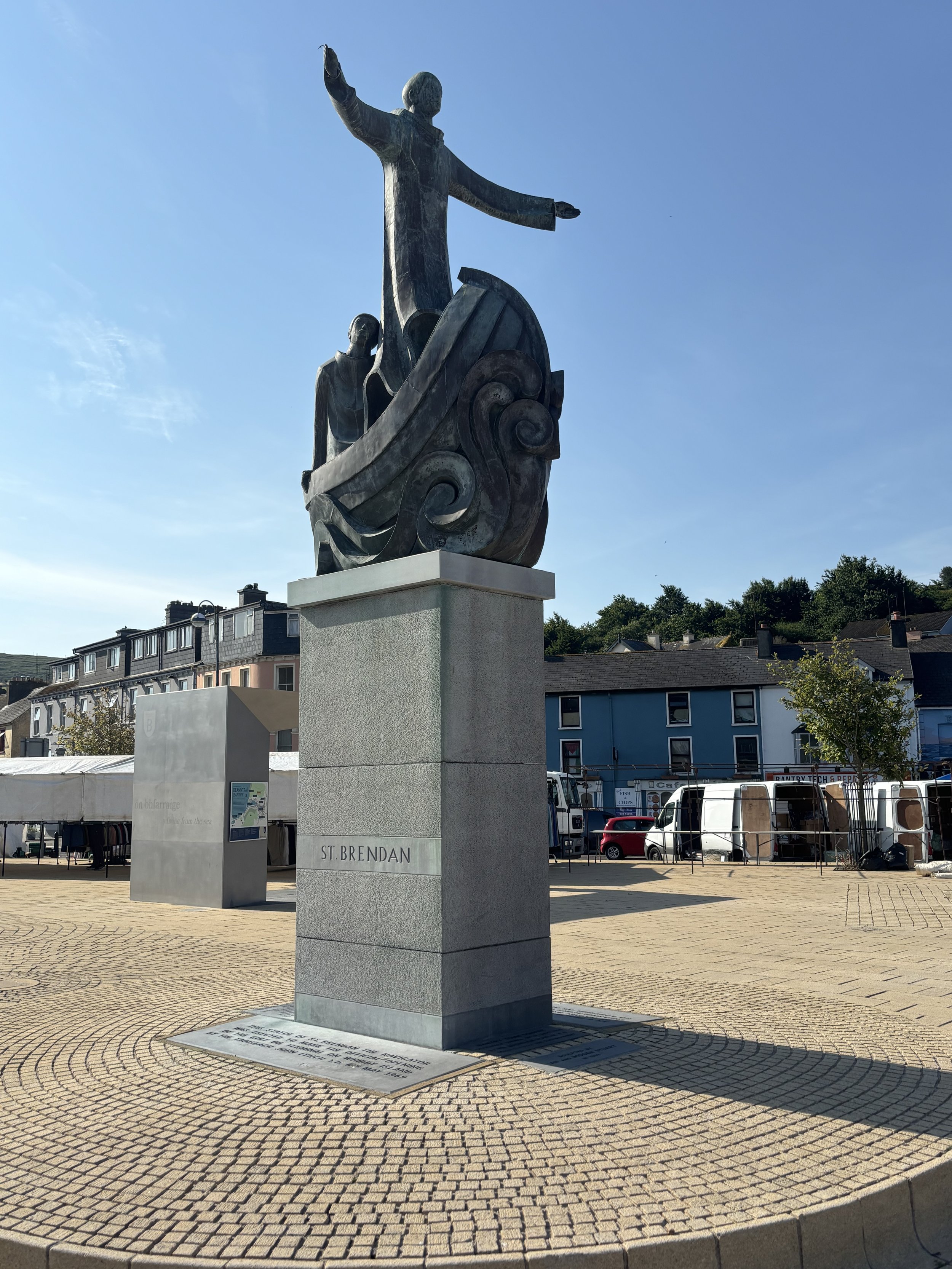
The picture above is of St. Brendan the Navigator (c. 484–577), one of Ireland's early monastic saints and the patron saint of mariners, sailors, and travelers. His statue stands with outstretched arms facing the bay, symbolically guiding ships into Bantry Harbour and celebrating the town's maritime heritage. Quite a fitting sight after arriving from our transatlantic passage!
Azores to Ireland | Landfall
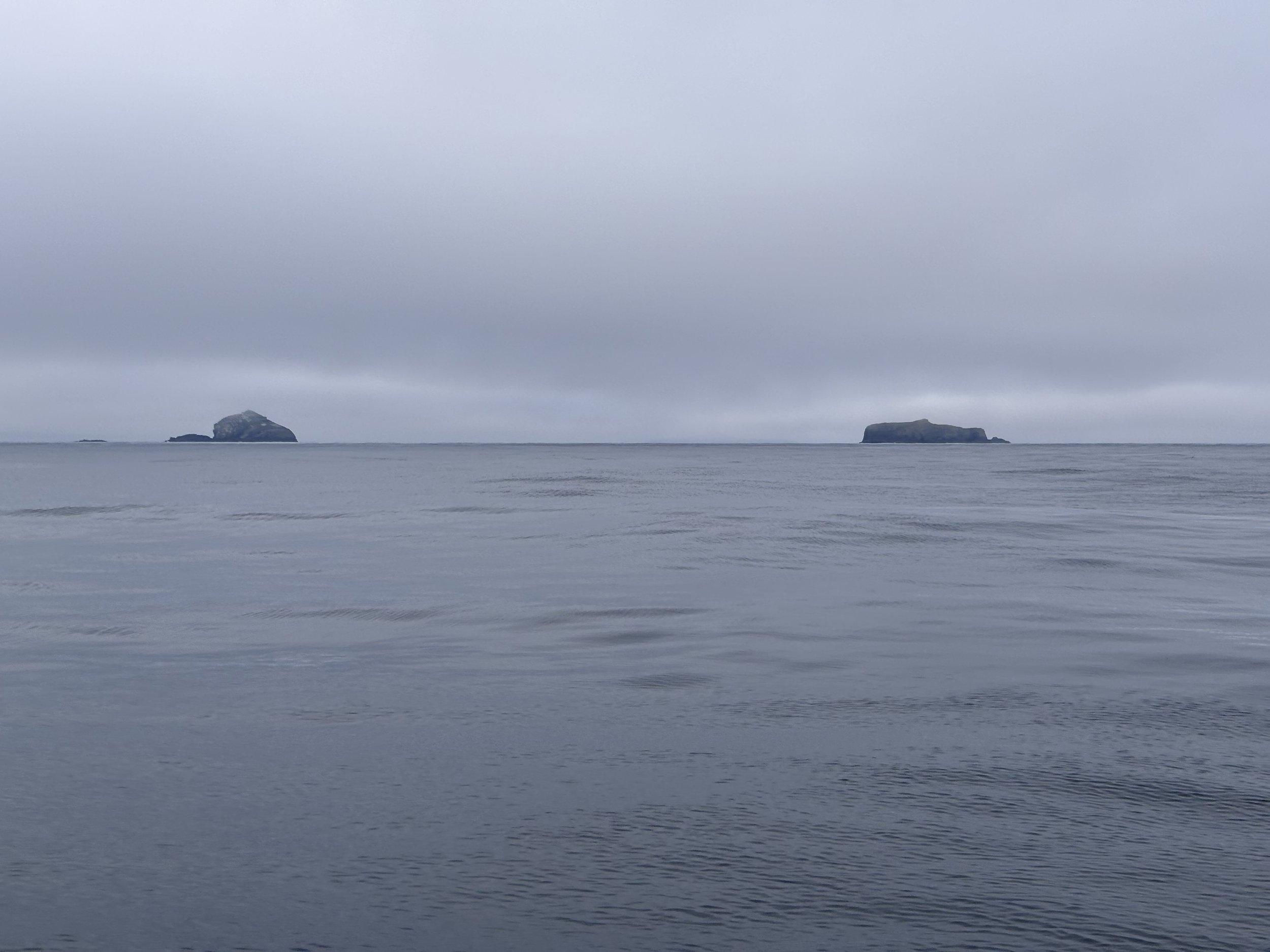
We made it! We dropped anchor in Ireland around 10 pm last night. The first sight of land was not as dramatic as our arrival in the Azores, but it was no less epic. Everything was shrouded in fog, so we could barely make out the land masses surrounding us. But the closer we got, the fog began to lift, and the sun peeked through, illuminating the cliffs and lush green hillsides. I cannot wait to explore it!
Azores to Ireland | Day 8
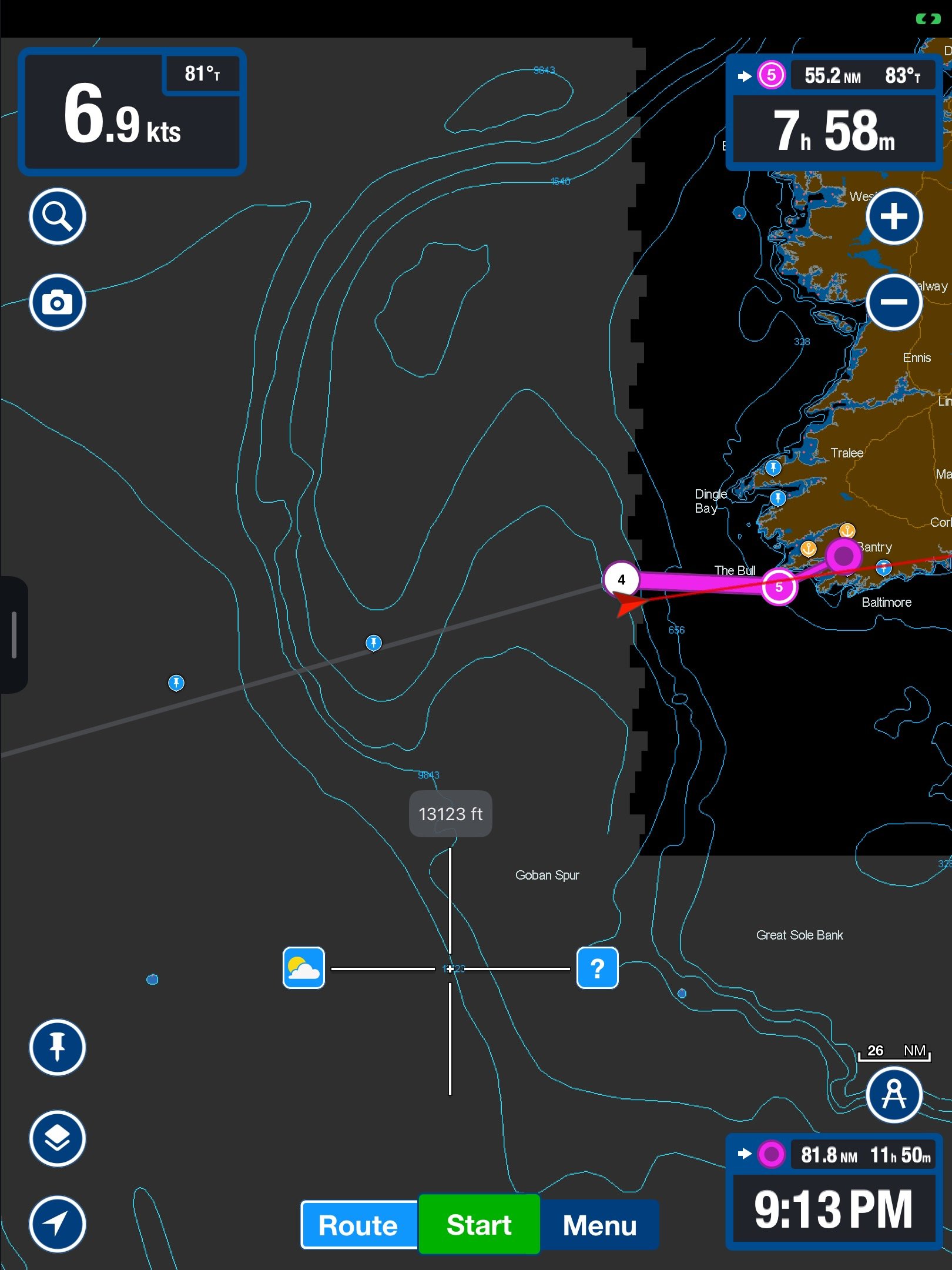
Another day down. We officially have zero night watches left in our Atlantic crossing. God willing, we will arrive in Bantry Bay late this evening.
The weather the last few days has been cool and shrouded in fog. Everything is gray—well, everything we can see, which is only the sky and the sea. Ha! I have not minded it, though.
The winds were light and decreasing yesterday, but we were still able to sail for most of the day. However, we knew we would eventually run out of wind and have to motor the rest of the way.
Azores to Ireland | Day 7
Yesterday was another really great day of sailing.
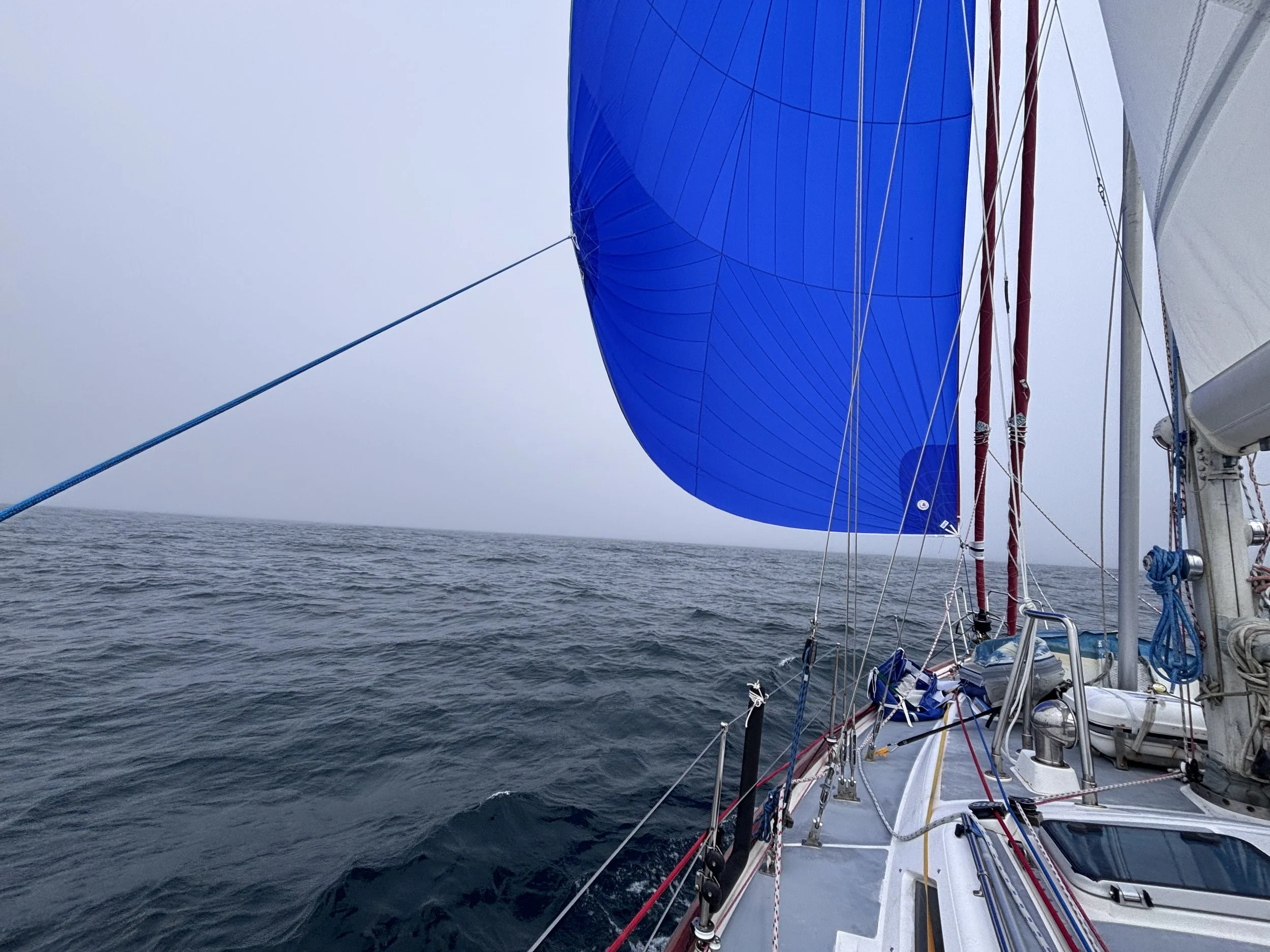
The winds were light throughout the day, so we had an opportunity to fly our asymmetrical spinnaker. We purchased her last year, so we have only flown her a handful of times. Remedy is a heavy boat, weighing around 14 tons. Her headsail and mainsail are made of heavier material, so she needs 8 to 15 knots, depending on the seas. If there is any significant swell that pushes the boat around, the sails collapse—flogging and thwopping—which not only affects the boat's performance but also feels like torture.
Azores to Ireland | Day 6
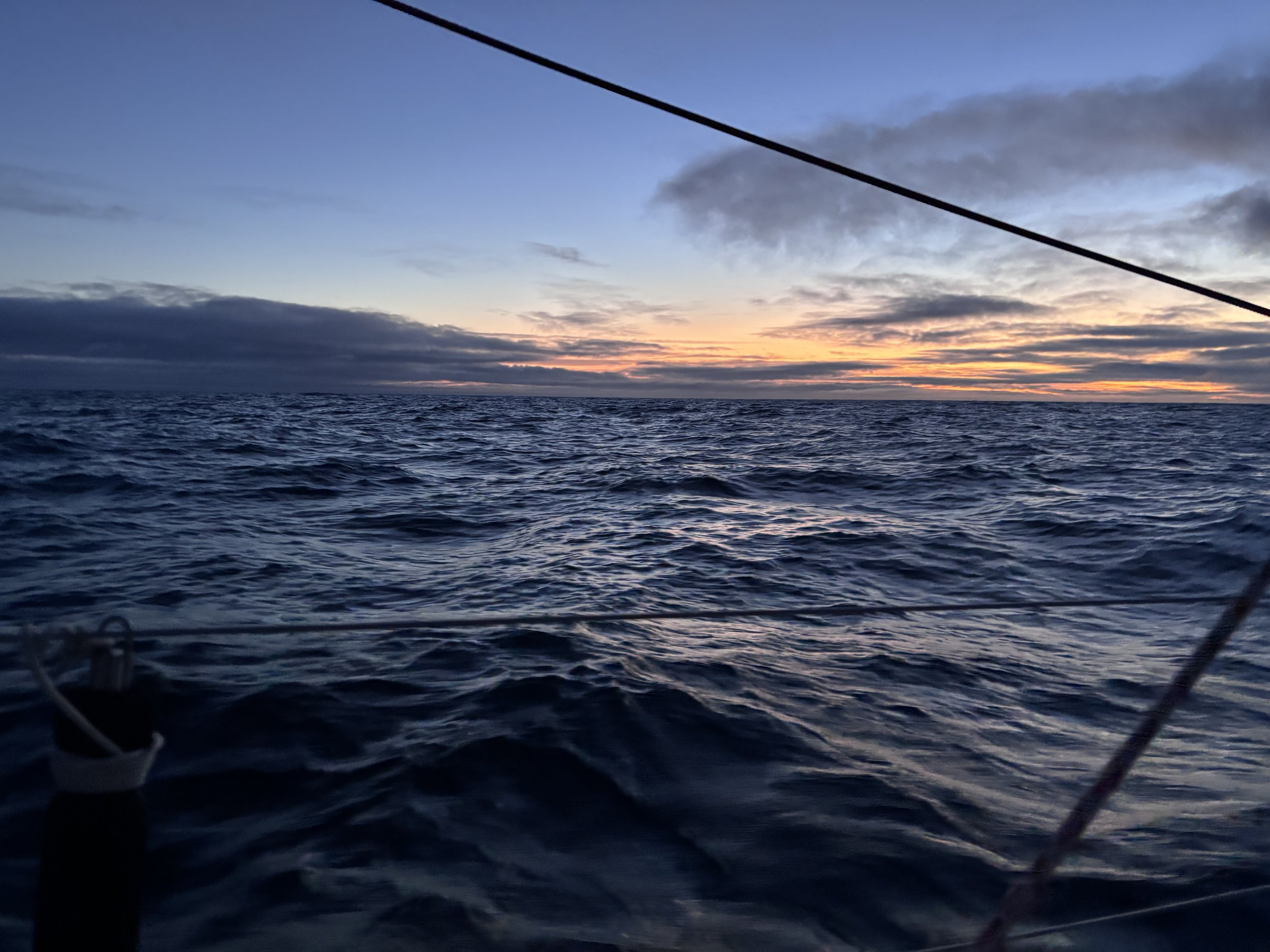
One more day down. Three more to go. Yesterday provided more wind than expected. We were consistently in the 20s with gusts into the mid-20s. We decided that it was time to reef and bring down the whisker pole. The process was a touch spicy, but not too bad.
Azores to Ireland | Day 5
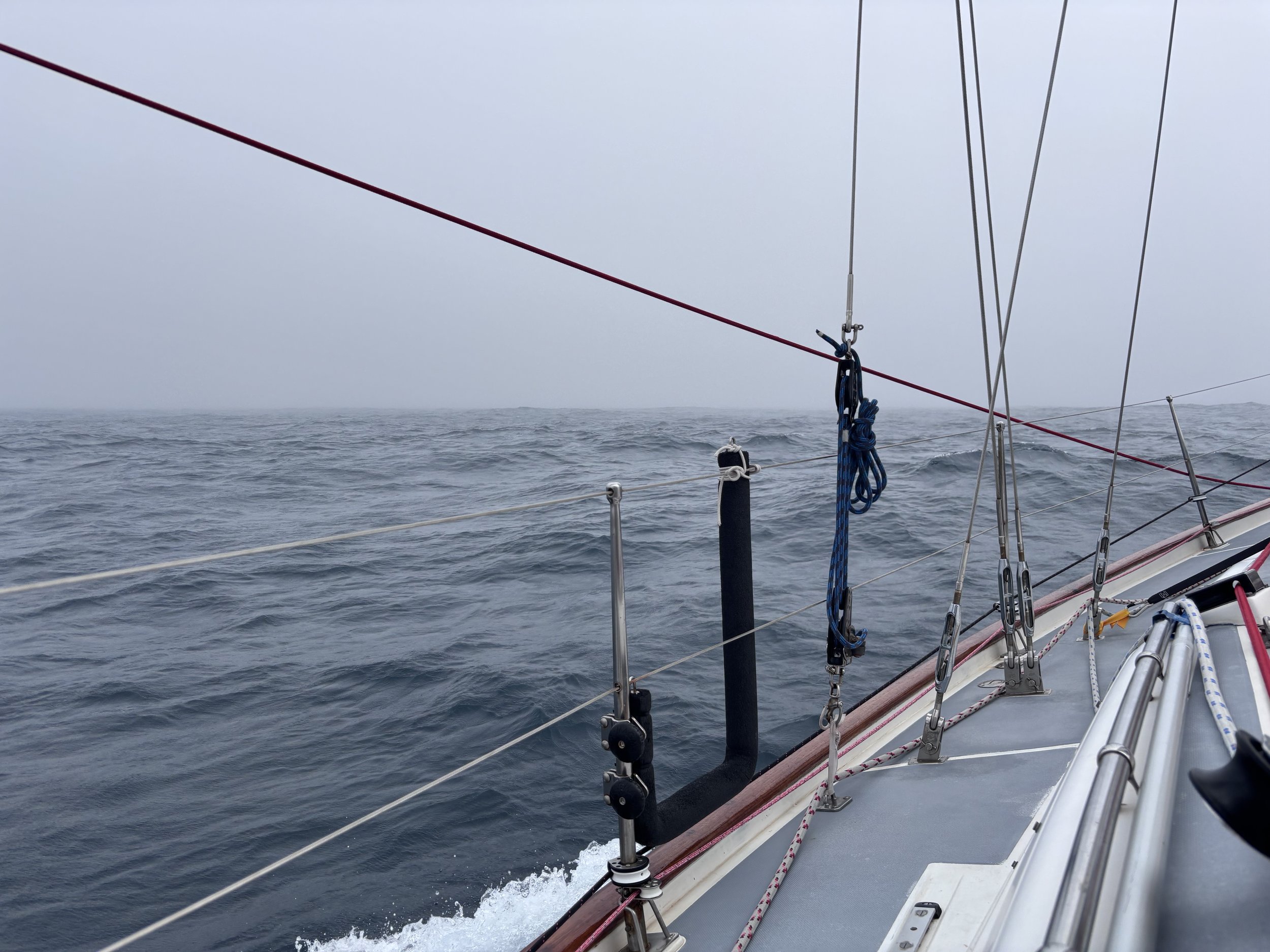
Yesterday was another great day of sailing! The weather has been beautiful. Slightly cool and overcast. We have even had periods of fog. The winds were consistent at 15kts. The seas were settled, with swells around 3 or 4 feet at 6- or 7-second intervals. We sailed wing-on-wing—the main sail out to port (left) and the headsail out to starboard (right), attached to a pole to keep it filled. An added bonus is that we had around 1kt of current with us for most of the day, adding a knot to our speed. Remedy glided through the entire day effortlessly. It was probably one of the most relaxing days on passage since leaving the States. We even watched a movie, not a very good one, but it was still enjoyable to be able to relax for a while.
Azores to Ireland | Day 4
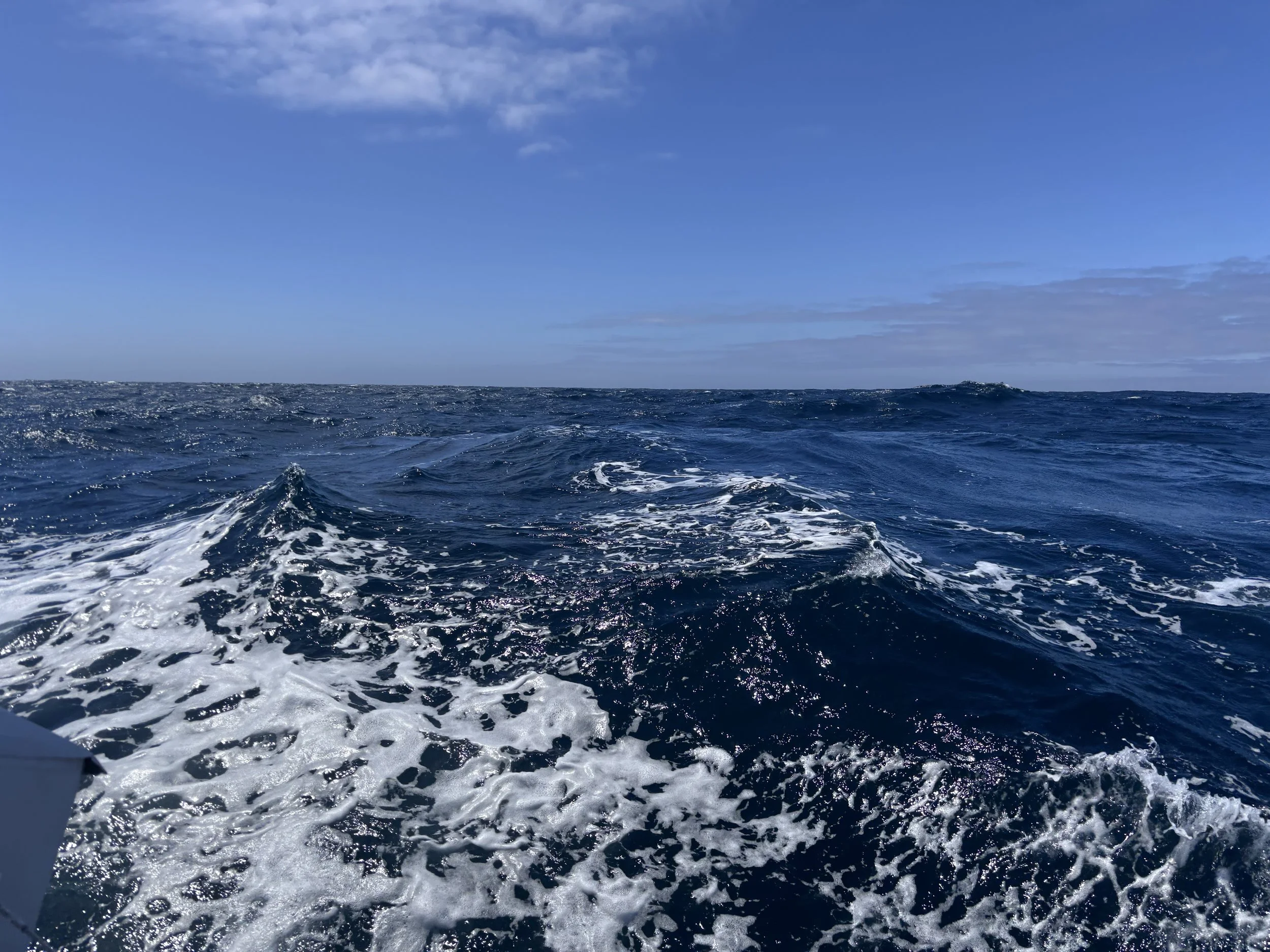
Yesterday was a great day of sailing. We had a consistent 17–18 knots of wind, with occasional gusts into the mid-20s. Early in the morning, the wind stiffened rapidly, and we briefly saw 30 knots, which meant we needed to reef quickly. This happened just as we were preparing to jibe—turning the stern of the boat through the wind—so we decided to reef as soon as we completed the maneuver. But by the time the jibe was finished, the wind had eased back to 15–22 knots.
Azores to Ireland | Day 3
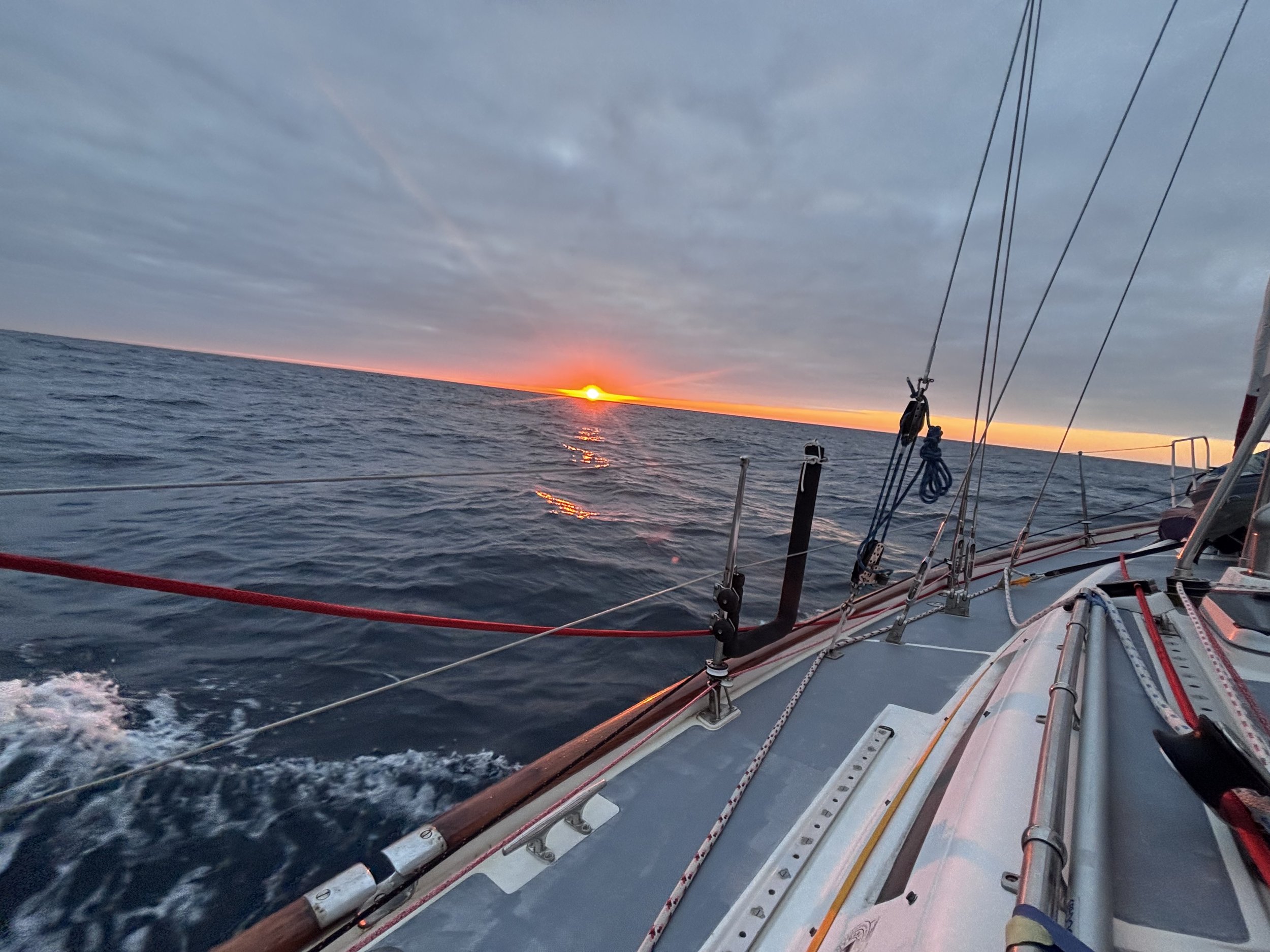
Sailing is so counterintuitive sometimes. We spent most of the day today sailing somewhat backward, away from Ireland.
We’ve been hovering around this pocket with light to no wind, called the Azores High. When we left Terceira, we headed straight north to try and get above the high where there is more wind. But we have also had to alter course further west. Ireland, of course, is to the east. At one point, we had sailed as far as 40 miles away from Ireland. And yet somehow this is part of sailing. Rarely can you point your boat directly at your destination and sail a straight line there.
Azores to Ireland | Day 2
Boat names can be intriguing. Some are a play on nautical words, others reflect the passion of their captain. The best boat name I've ever seen still belongs to my dad and his Hobie 16. Years ago, she was affectionately named The Other Woman for all the attention and play she received.
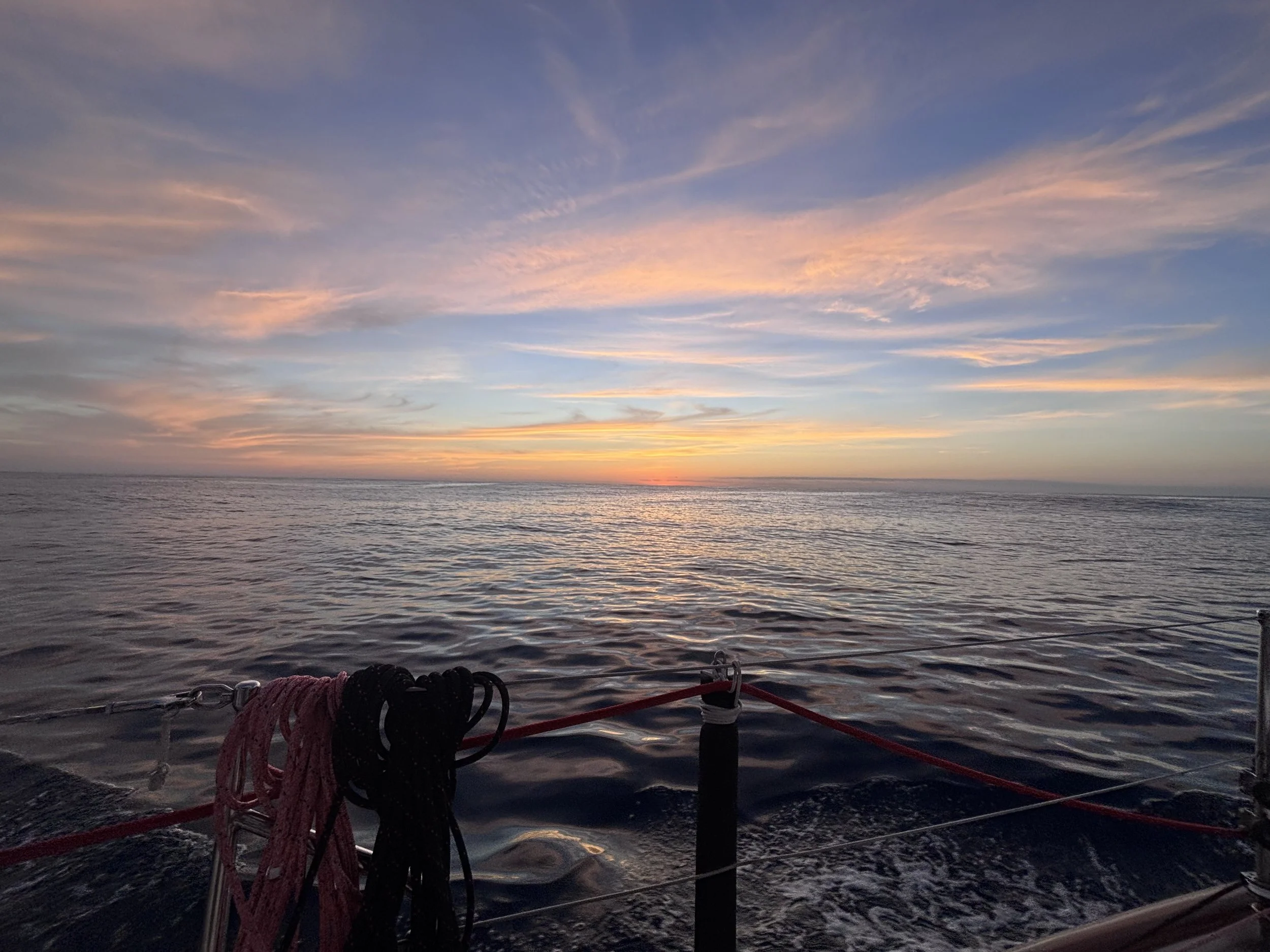
Azores to Ireland | Day 1
One day down, at least seven more to go.
We have covered around 140 miles in the last 24 hours. We were able to sail for the first few hours, but then the wind completely died, just as forecast. So we motored until around 2:30 a.m. this morning, when the breeze filled back in.
The conditions have been very benign. We're sailing downwind in moderate winds of around 12–15 knots, and the seas have been relatively settled. Every now and then a larger swell rolls through and rocks us a bit, but that's to be expected.
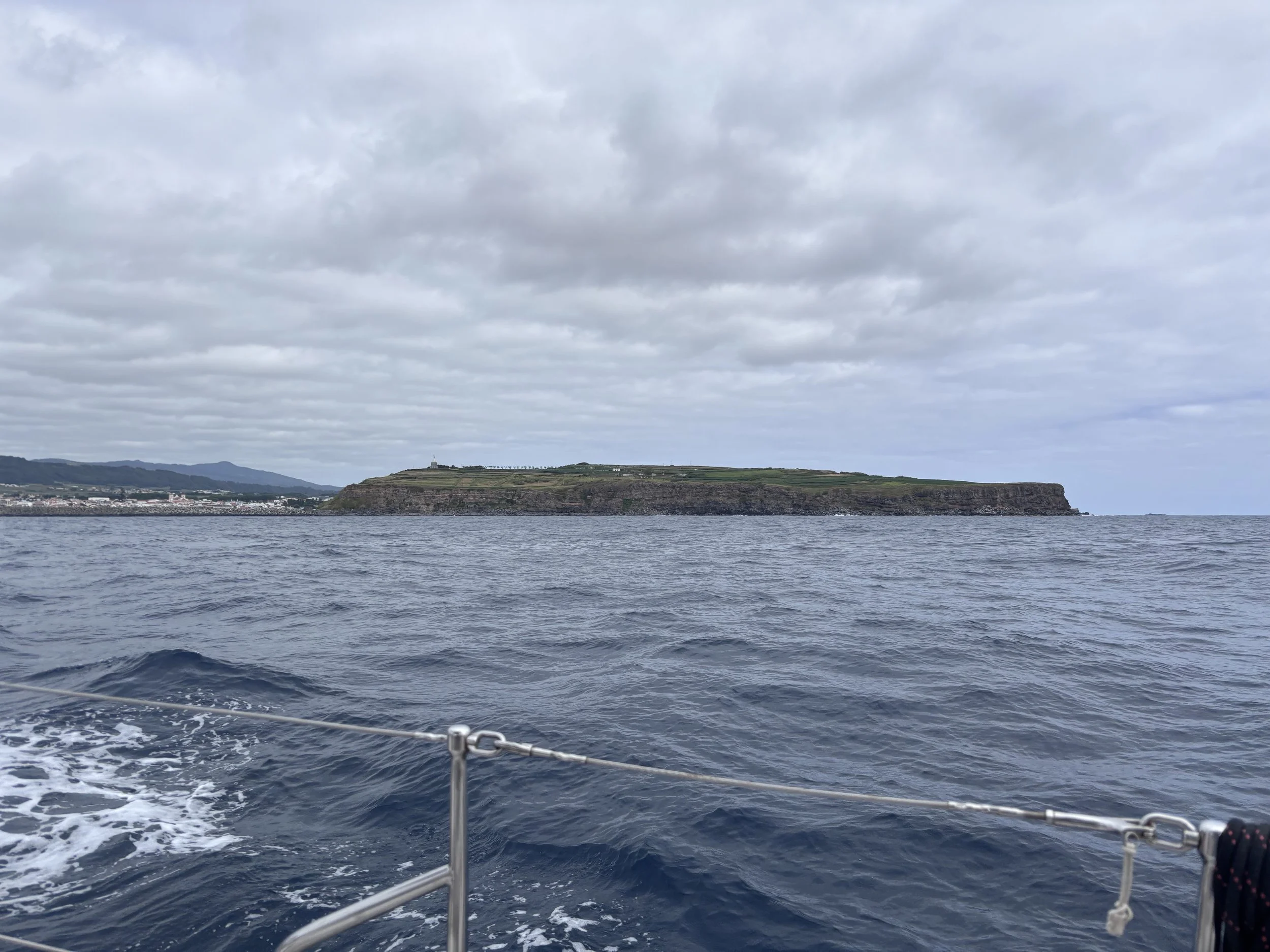
Azores to Ireland| Day 0
We are underway to Ireland!
We spent the last two days preparing for our departure: doing laundry, getting provisions, meal prepping, stowing loose items, and putting the dinghy up on deck. Last night, we got one last gelato with our friends Doug and Shane. Saying “see you soon” is always one of the hardest parts. We met Doug in Beaufort, NC, before we both crossed to Bermuda and then on to the Azores. Doug has been our daily companion for 1.5 months now. We have thoroughly enjoyed our time with him.
This morning, we pulled anchor and departed Praia da Vitoria at 10 am en route to Ireland.
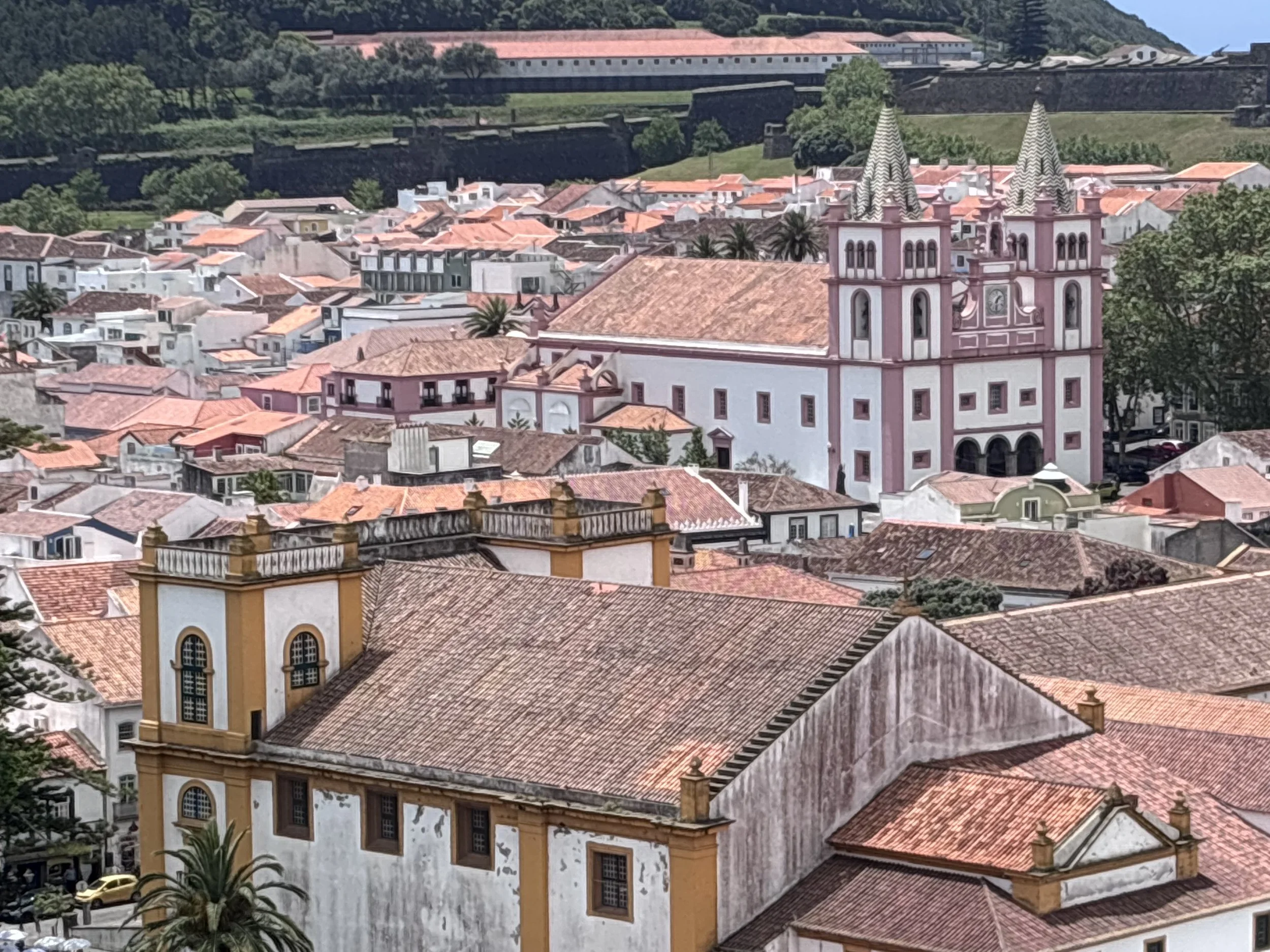
Terceira Recap
We have been on the island of Terceira for over a week. We began our adventure here in the city of Angra do Heroísmo. The afternoon we arrived, we learned there would be a traditional bull run in just over an hour. After checking in with the harbormaster, we hurriedly grabbed some dinner—because I was closing in on hangry—and then we rushed to find the street where the bull run would take place.
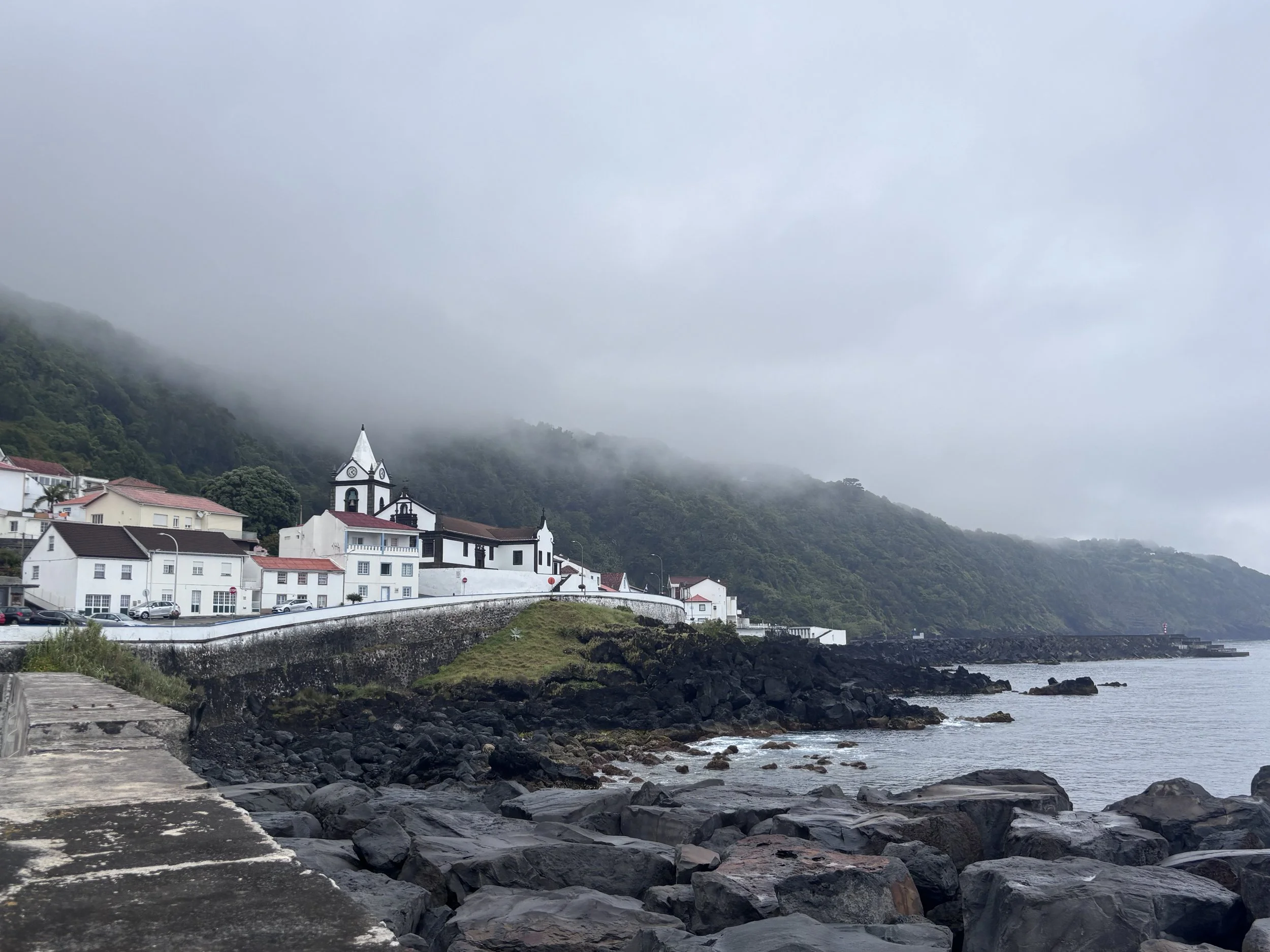
São Jorge Recap
After a week in Faial, we departed for São Jorge. As I mentioned, we had a lovely downwind sail during which we used our spinnaker—a sail specifically designed for light, downwind conditions. It was a beautiful day and a wonderful sail of just over 20 nautical miles.
We arrived in Velas, São Jorge, and decided to take a slip at the marina for a week due to predicted winds that would have made the anchorage quite unpleasant. It was tight getting into the marina, but Ken maneuvered us in like a champ.