Inishmore and Inishbofin
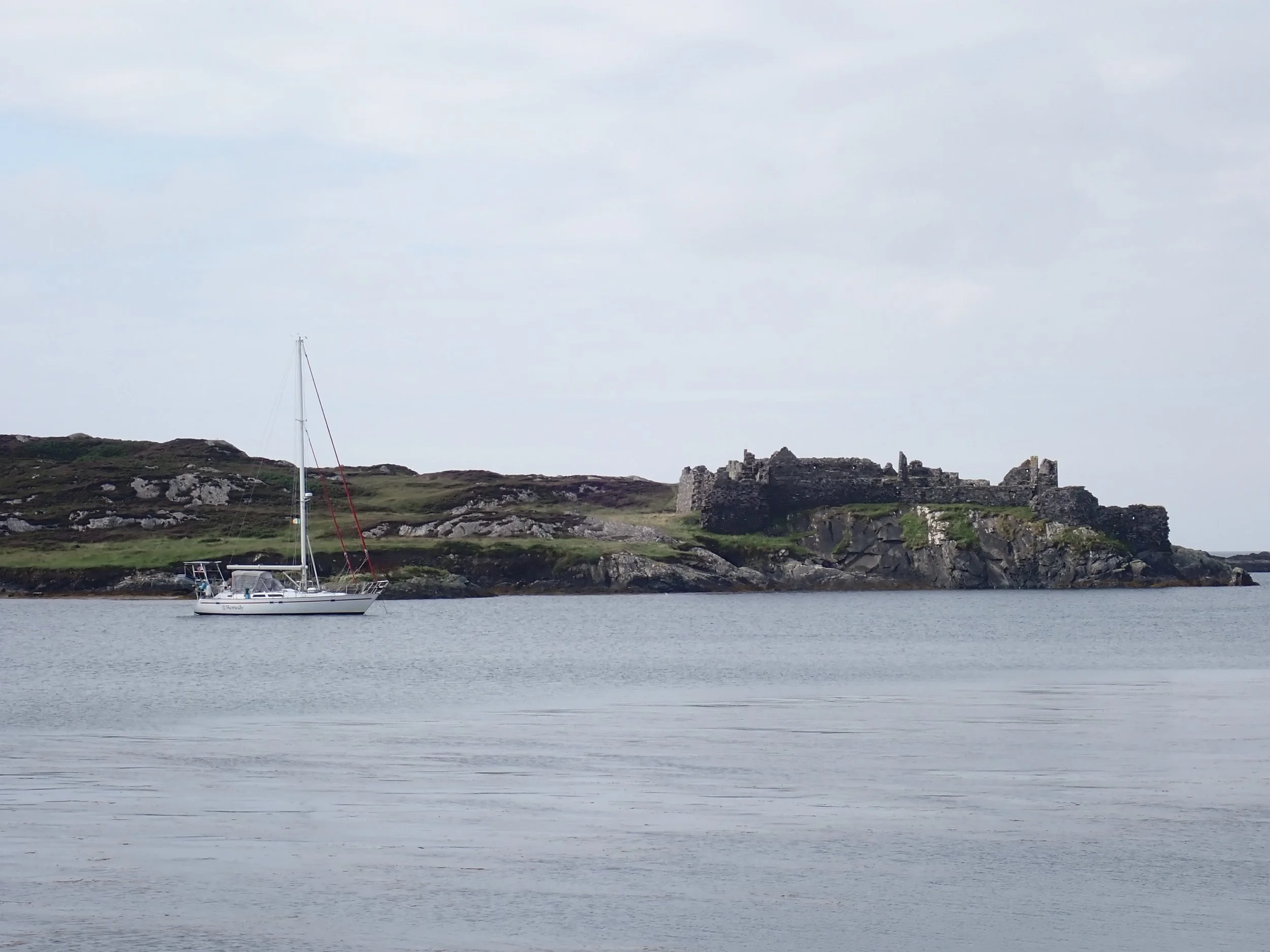
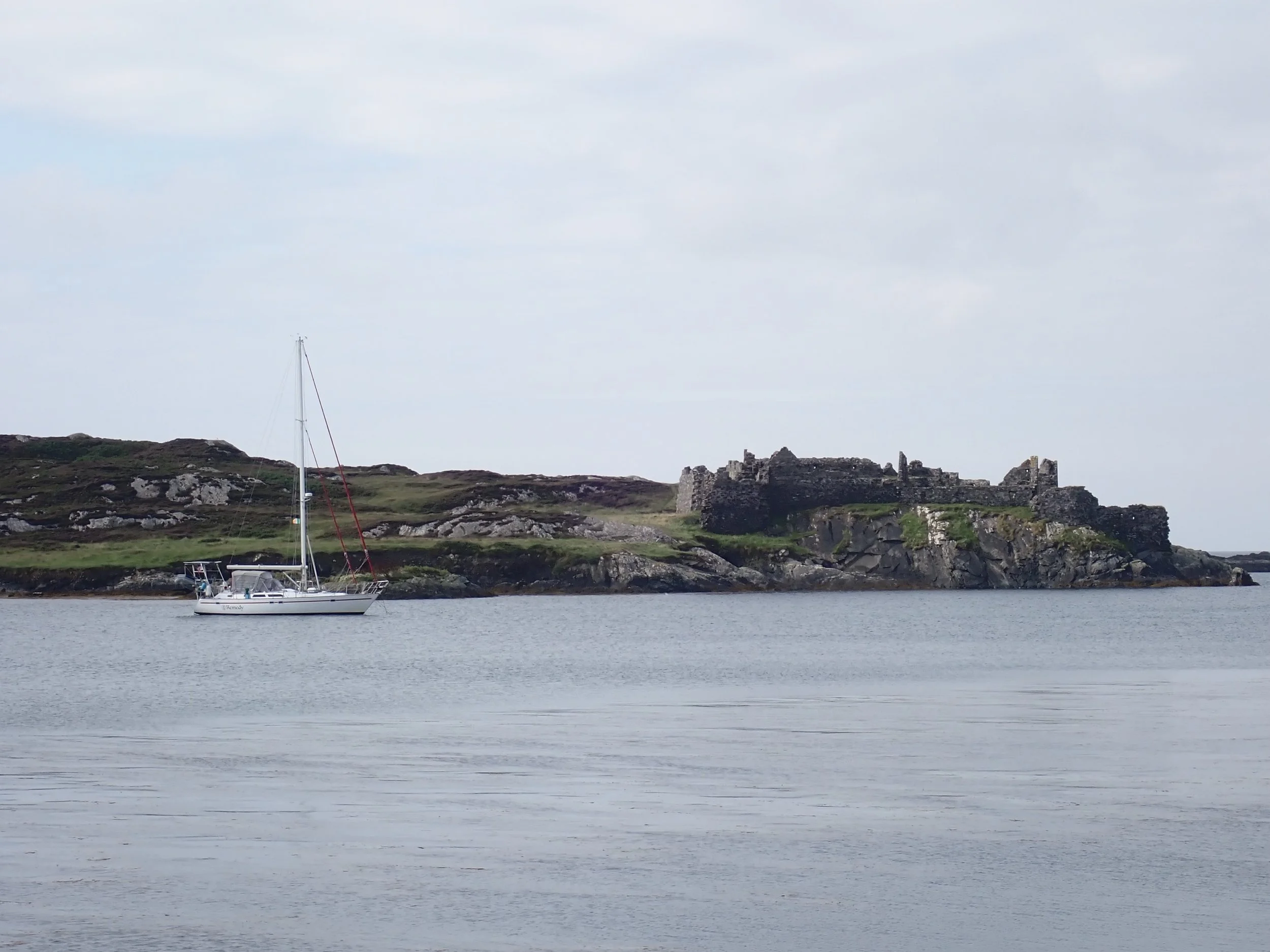
At anchor in Inishbofin, Ireland
After leaving Dingle, we did a long sail up to the Aran Islands. We arrived at the island of Inishmore just after midnight. I really dislike coming into anchorages late at night—it makes everything a bit more difficult. But sometimes, it is unavoidable.
The Aran Islands are a group of three islands—Inishmore, Inishmaan, and Inisheer—located at the mouth of Galway Bay off the west coast of Ireland. The primary language spoken is Gaelic (Irish), though everyone also speaks English.
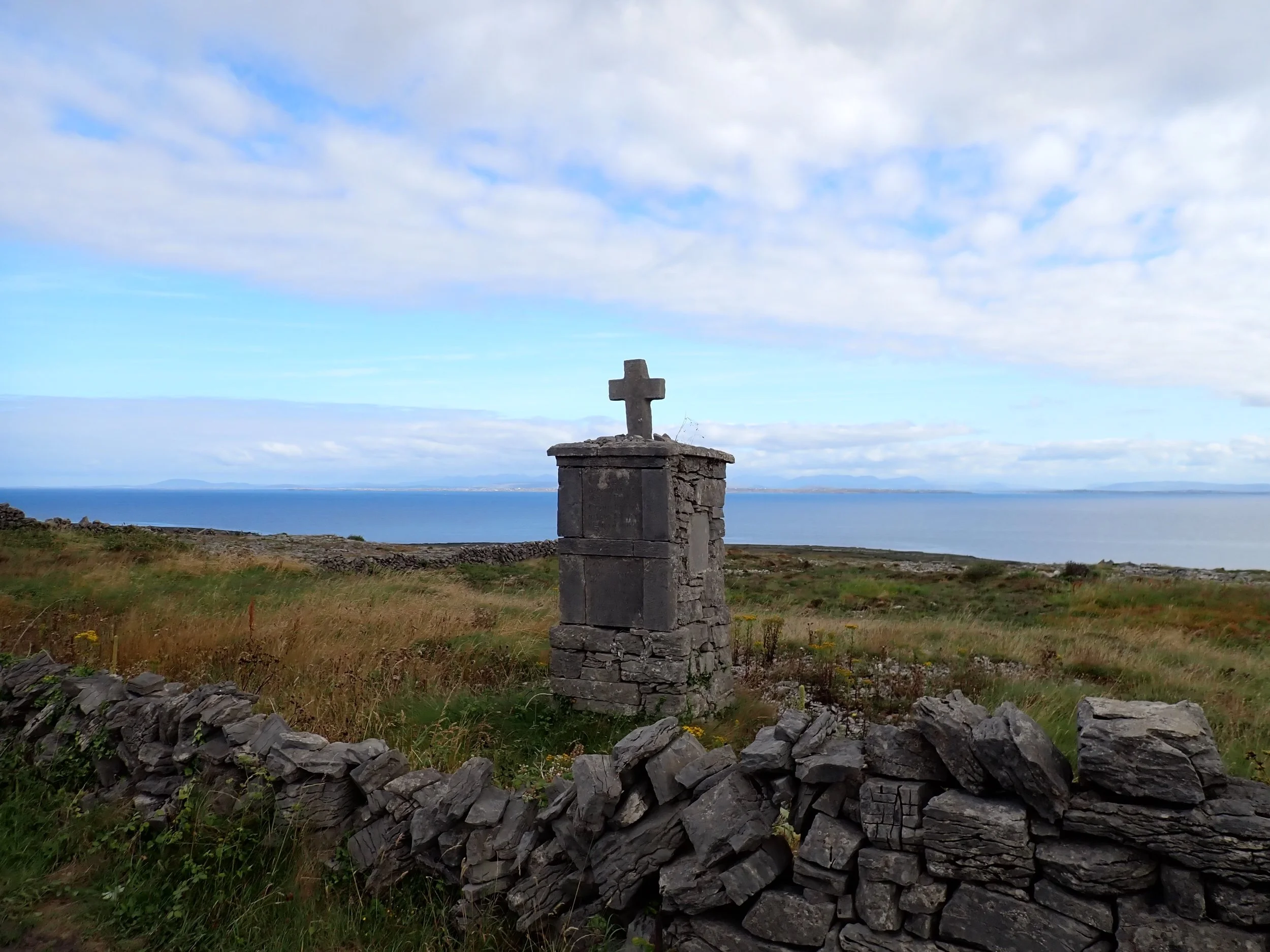
The only island we visited was Inishmore, and it did not disappoint! The island is sometimes referred to as Ára na Naomh (Aran of the Saints), due to the many saints who spent time here. The islands are archaeologically rich, with ruins of early Christian monasteries and other sacred sites, as well as prehistoric forts that may date to the Iron Age.
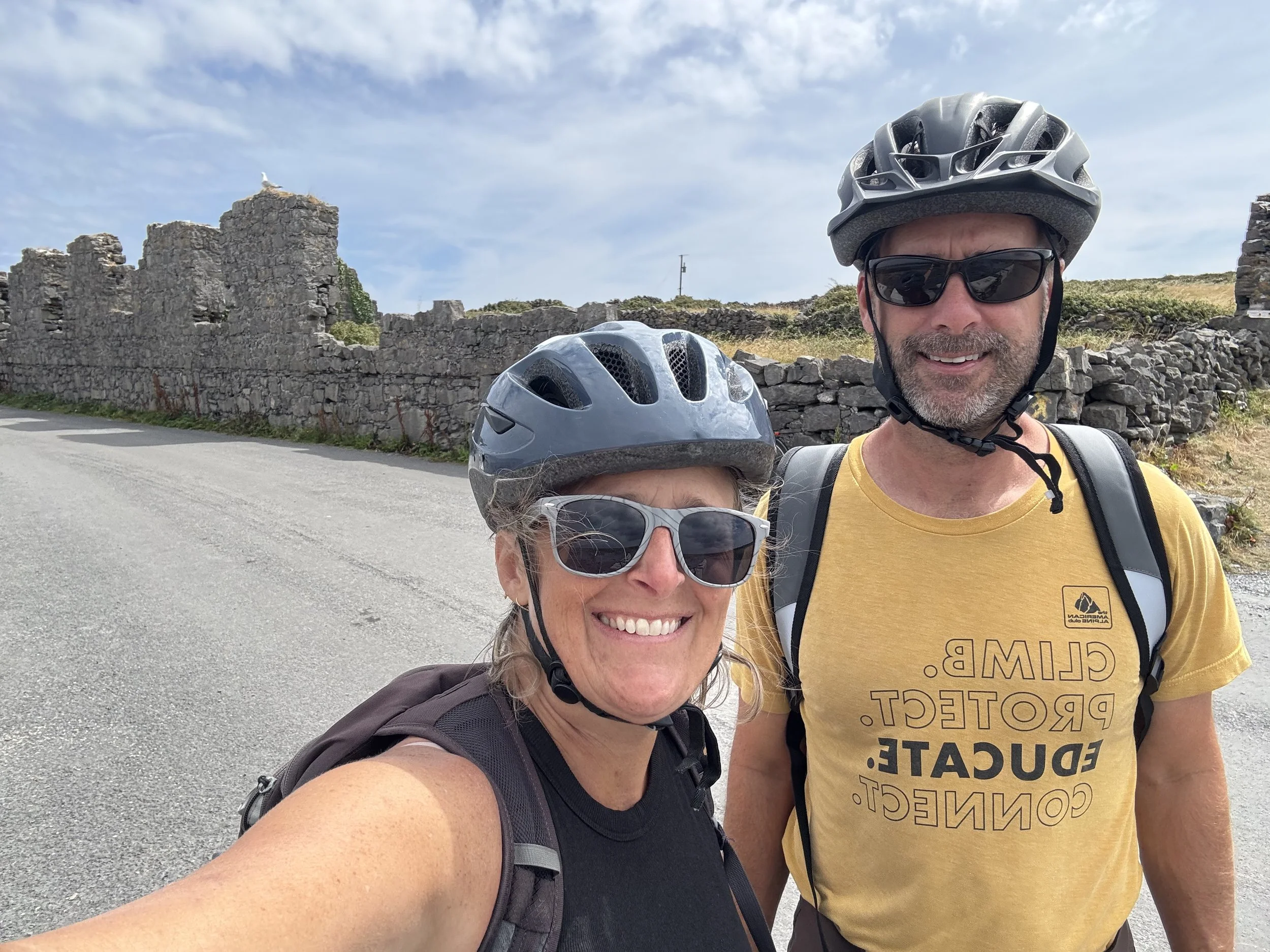
Normally, when we visit a new place, we walk everywhere. It helps us stretch our legs and get some much-needed exercise. But friends encouraged us to rent e-bikes, and I am so glad we took their advice. We were able to explore the whole island in one day and visit most of the major sites. Plus, having the extra boost on some of the hills made the adventure a bit more enjoyable! We visited several major sites: Dún Arainn, Dún Eochla, the Wormhole, the Seven Churches, and Black Fort.
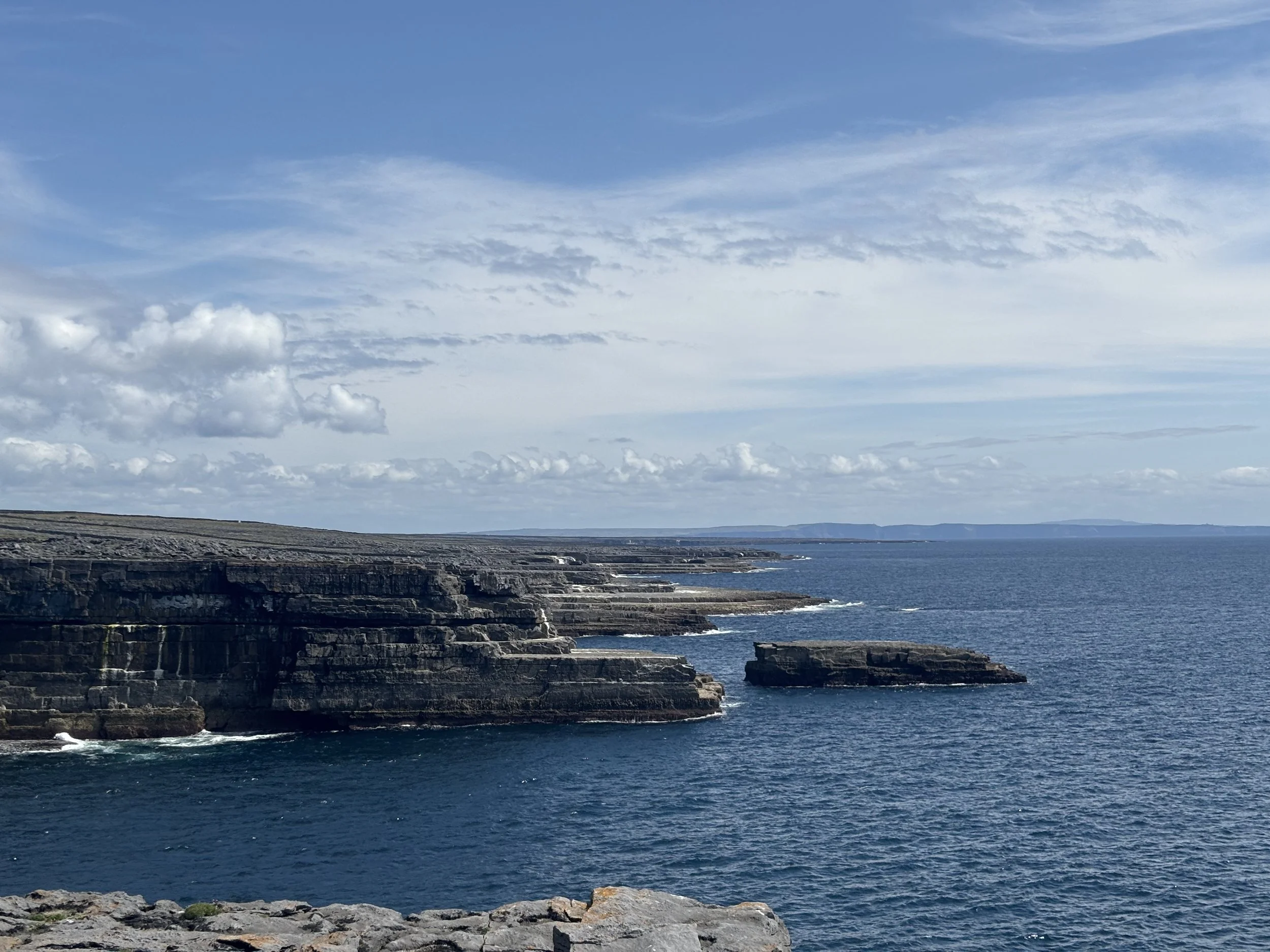
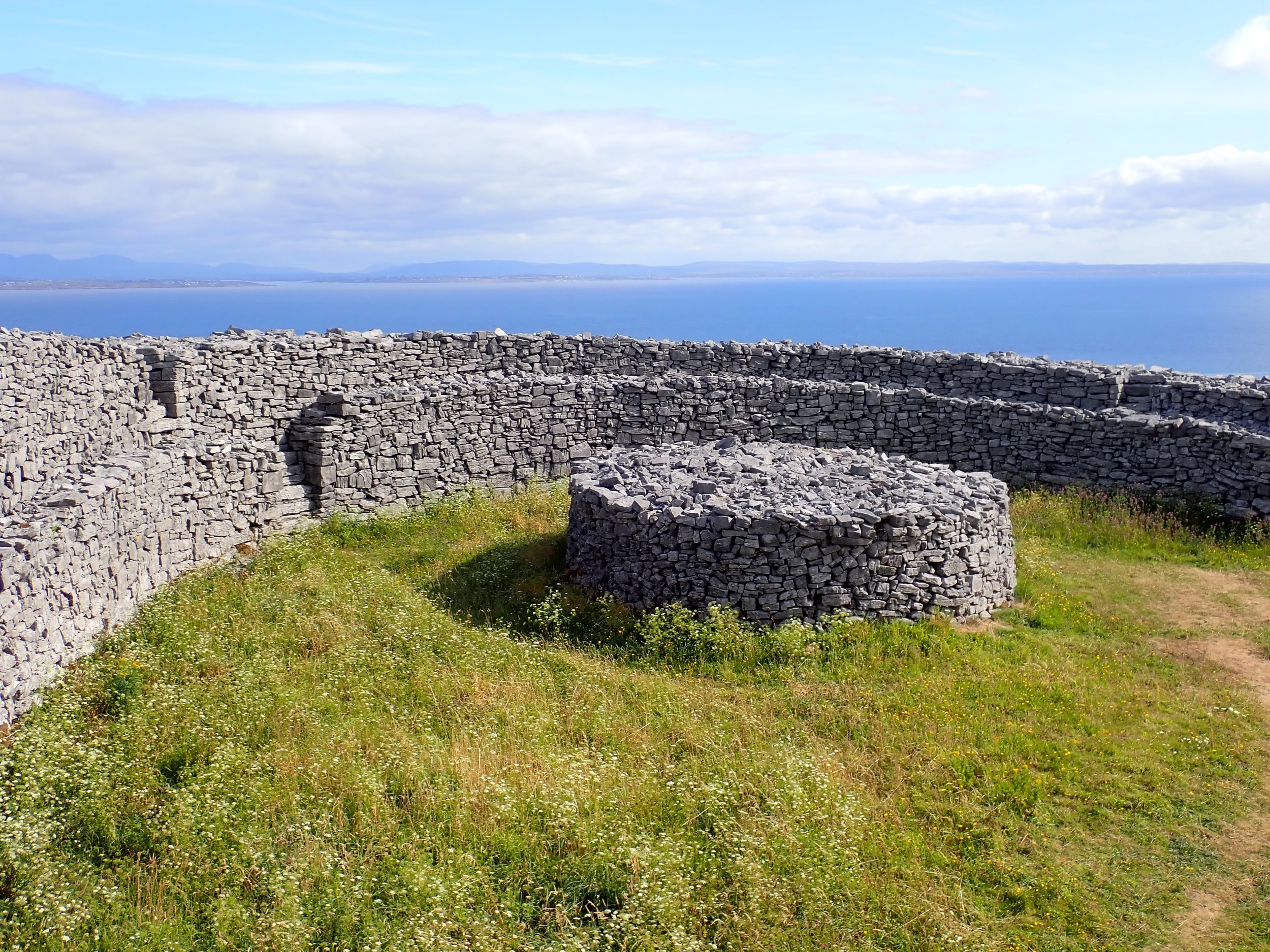
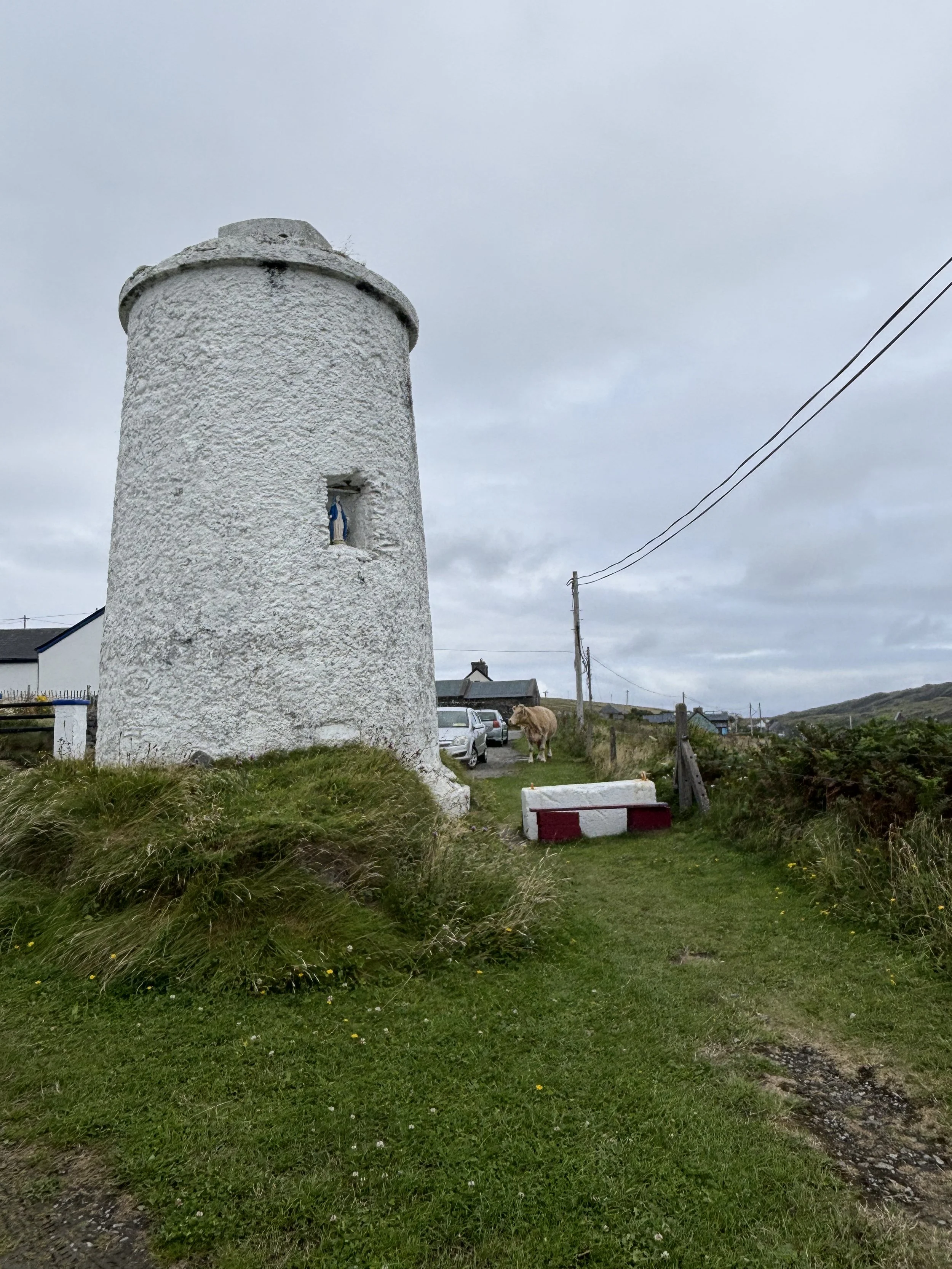
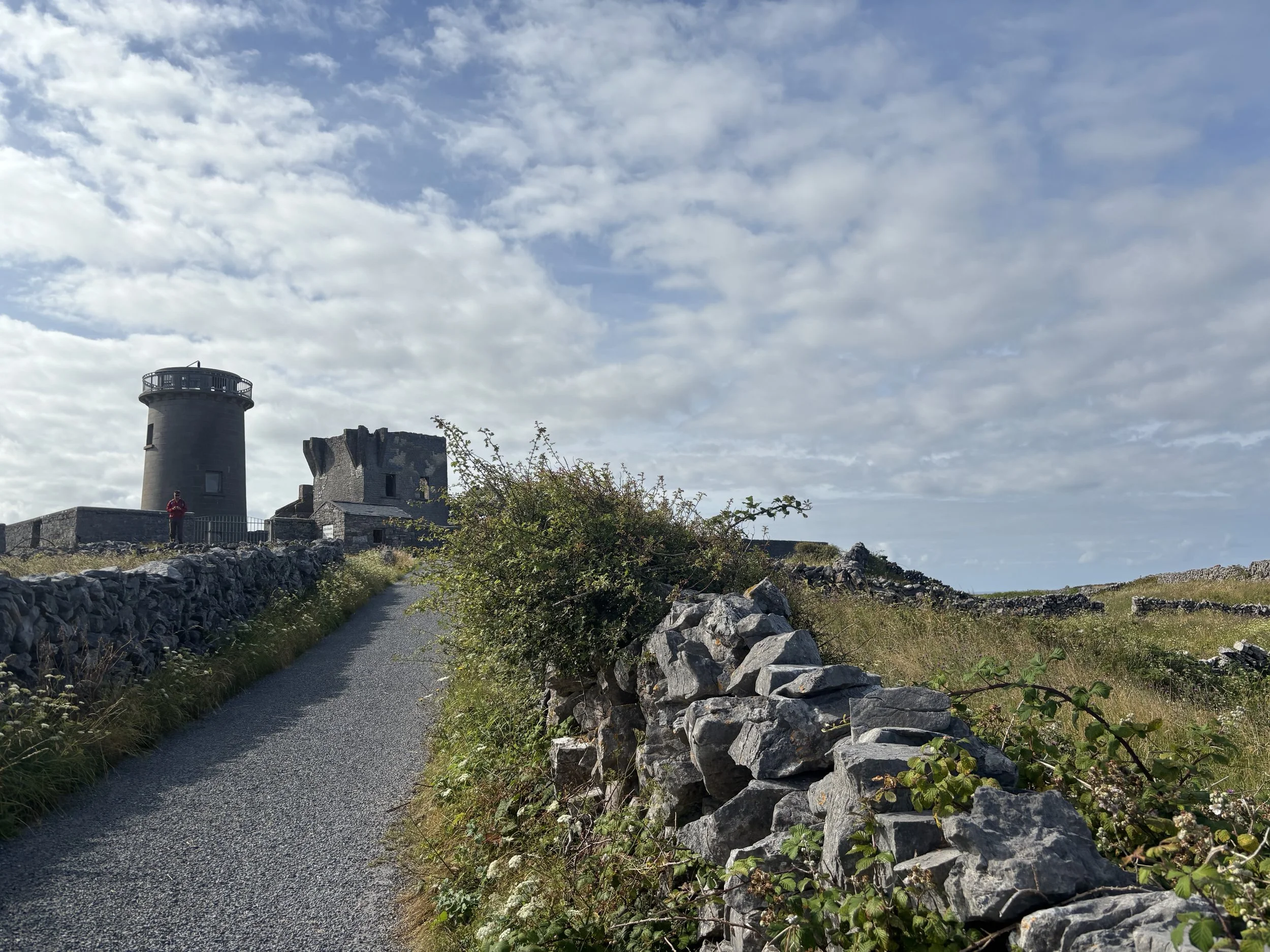
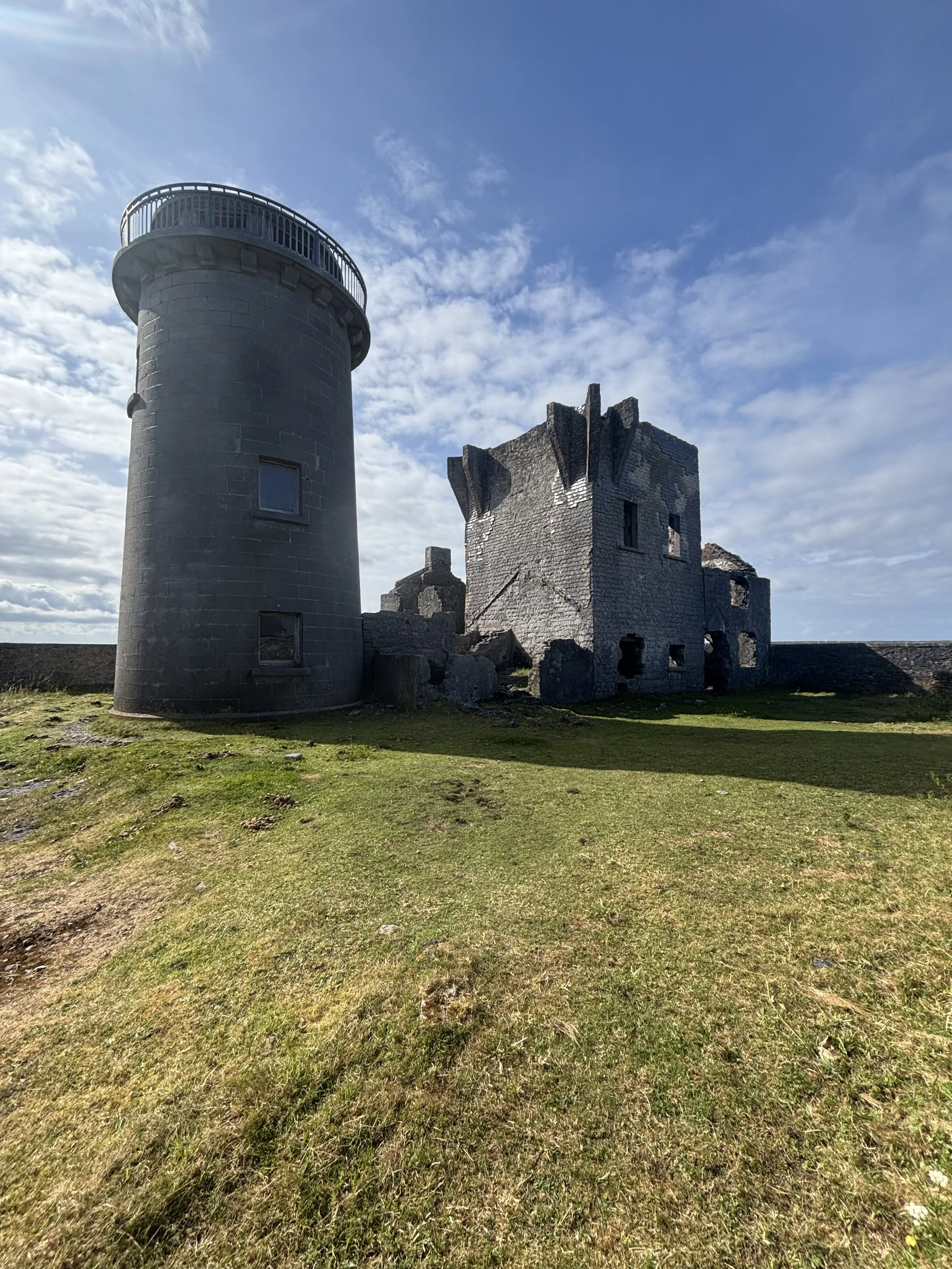
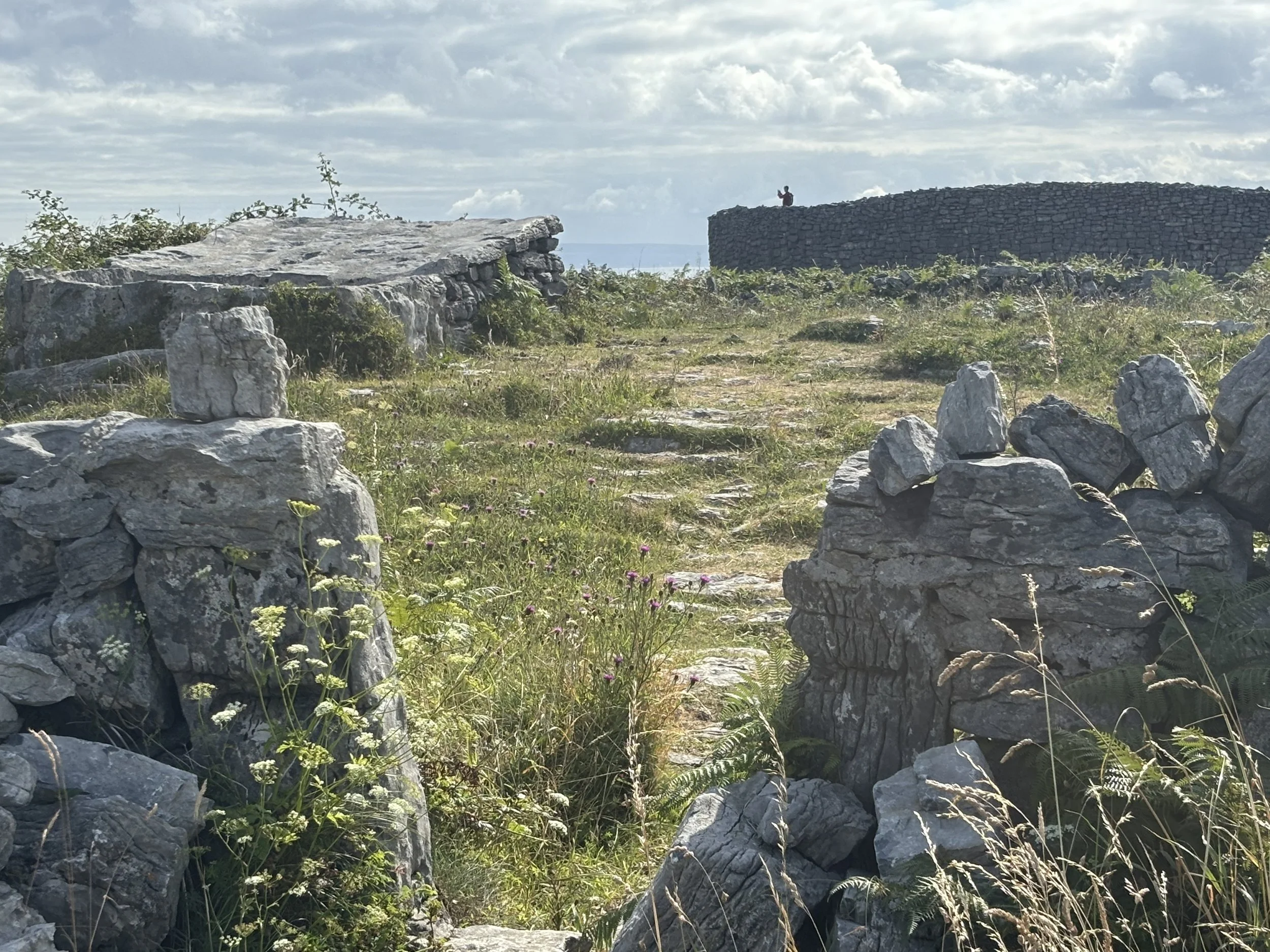
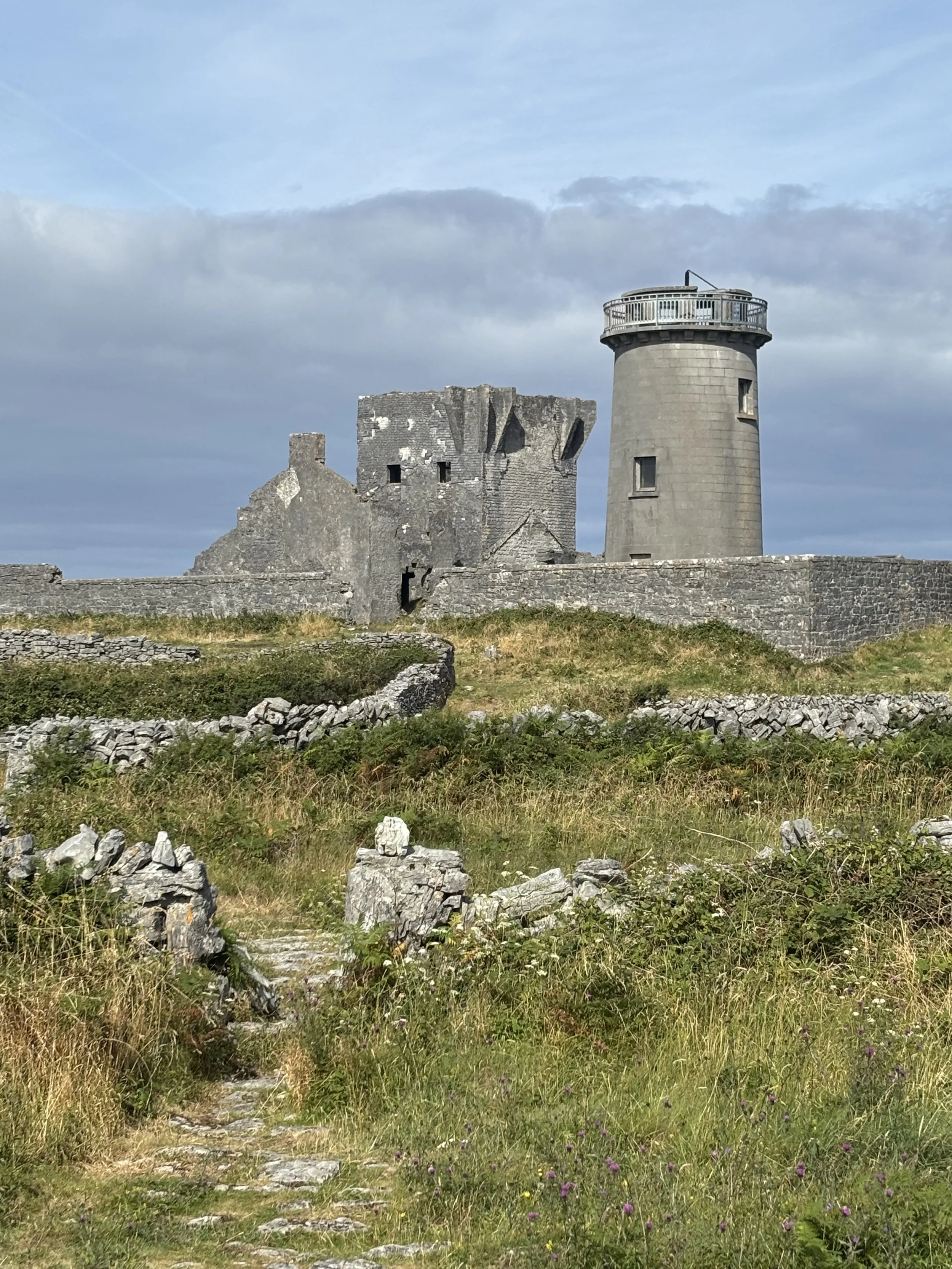
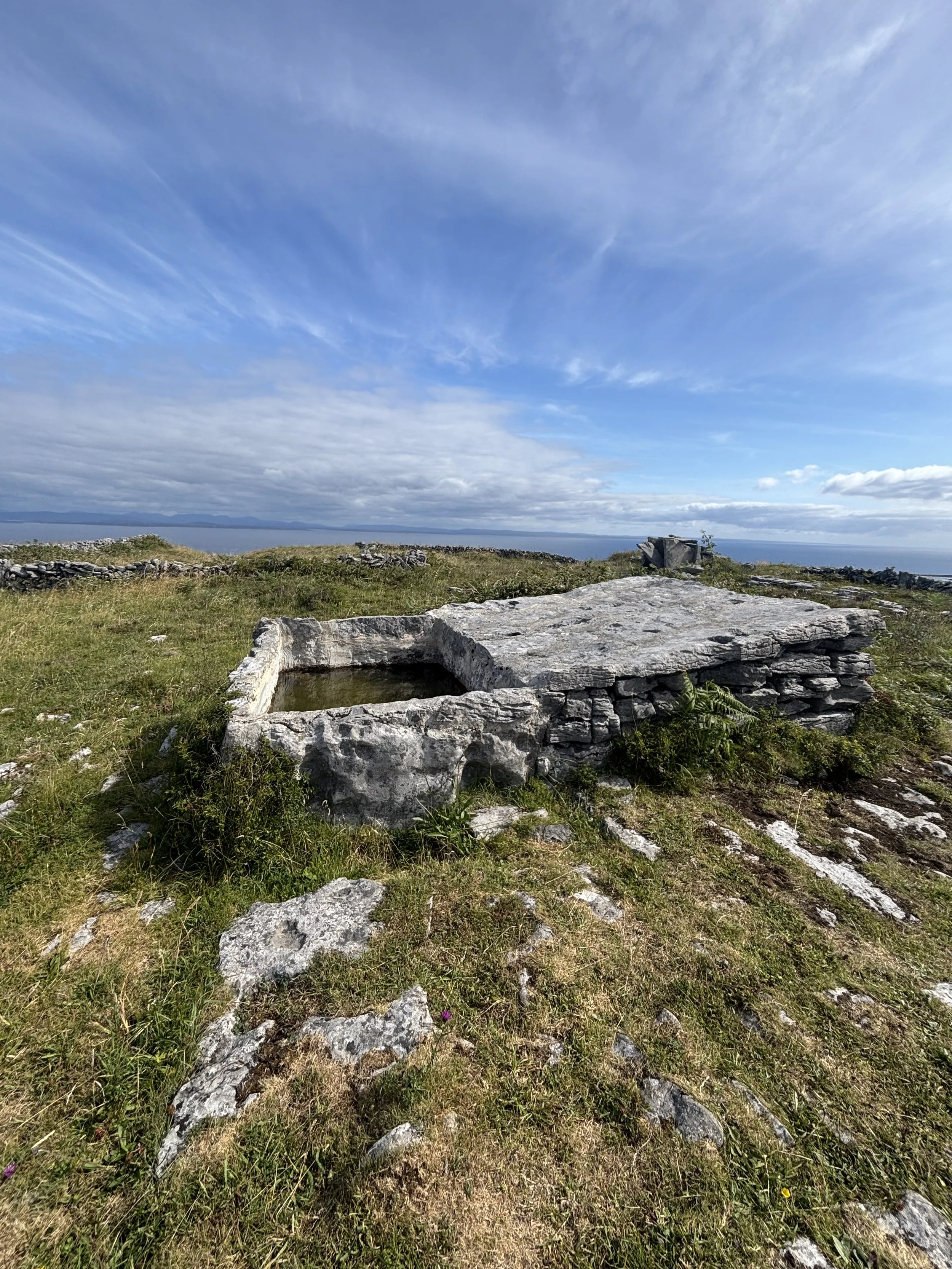
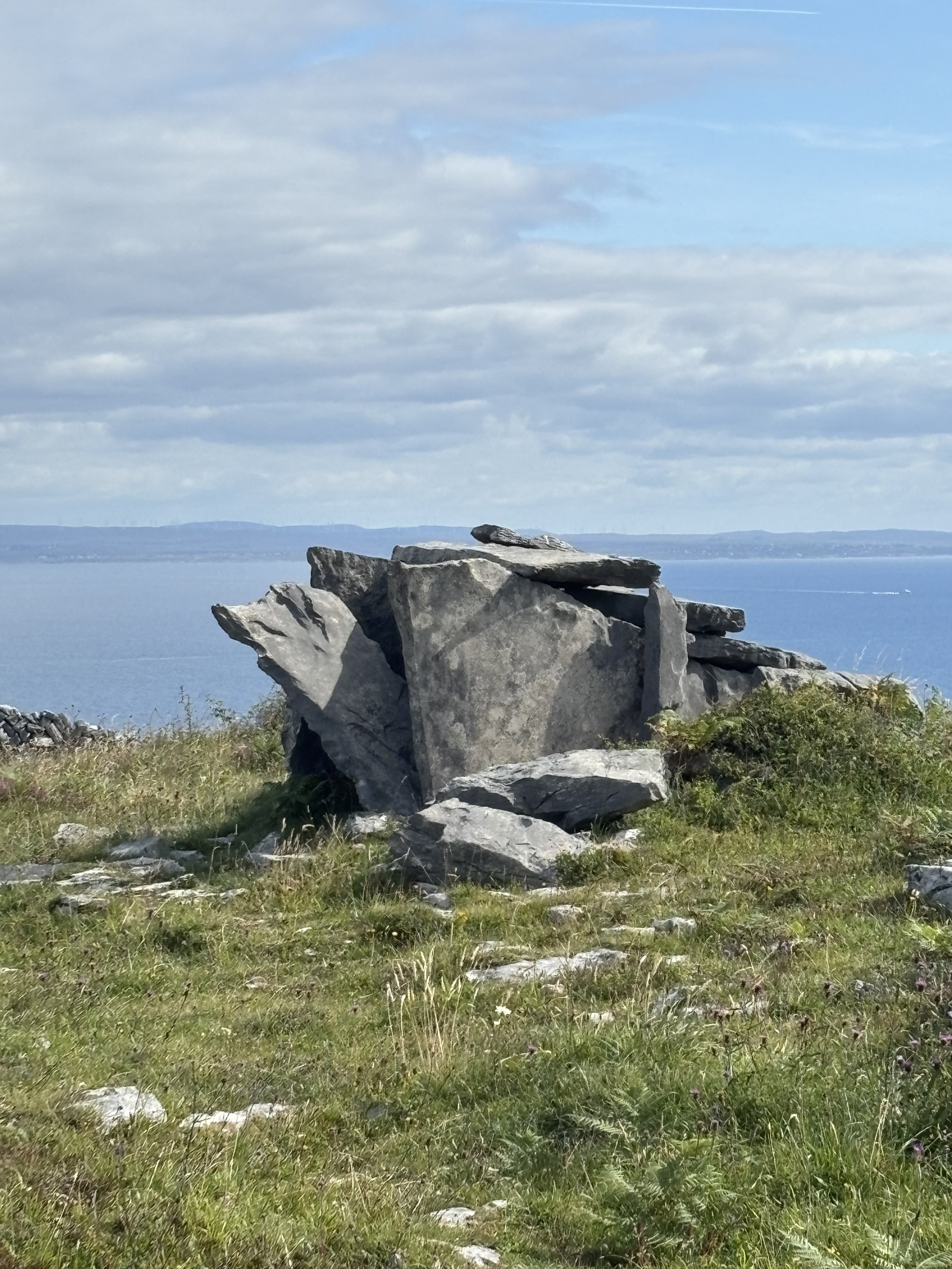
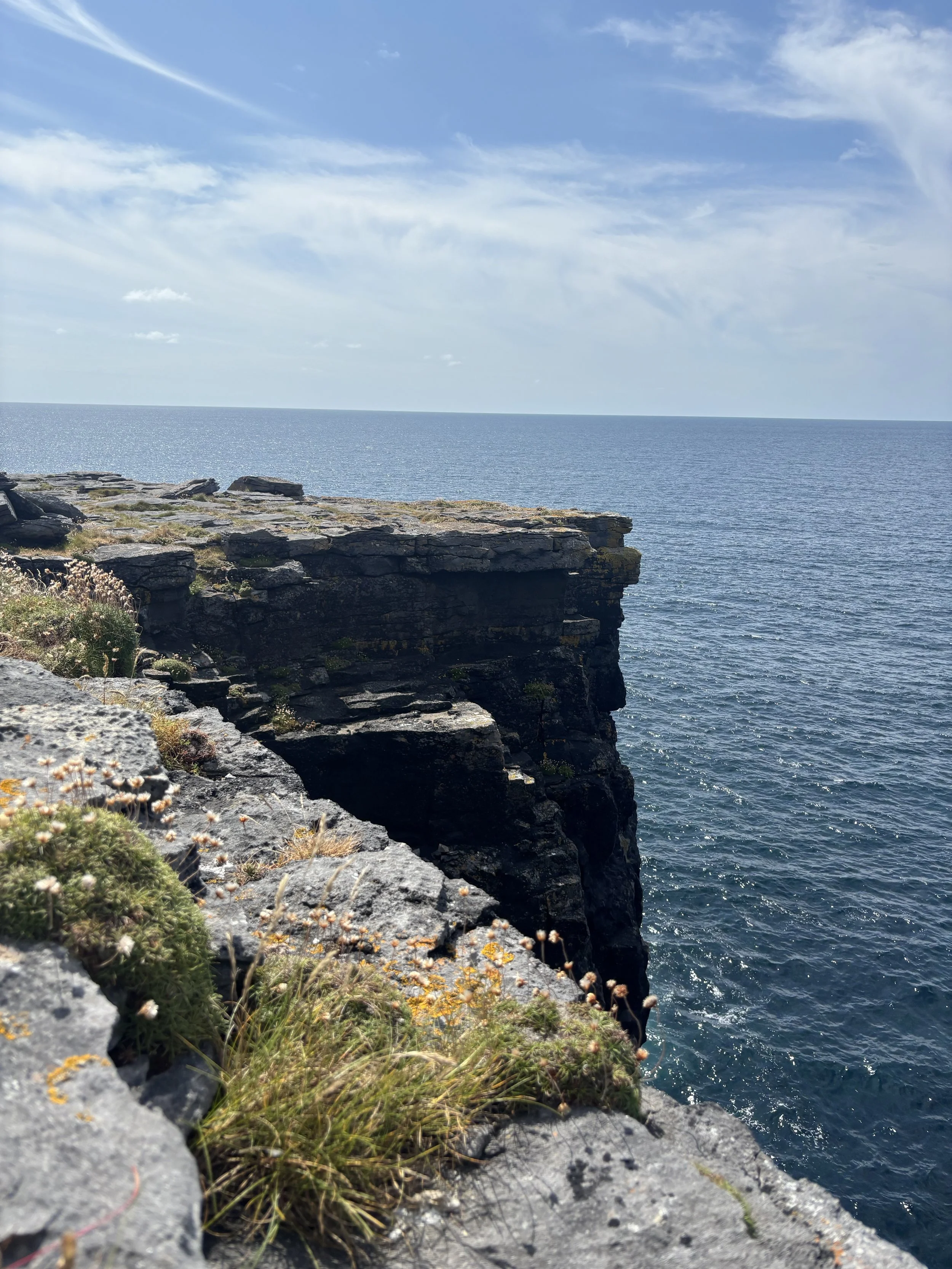
First was Dún Arainn, a historic lighthouse built in 1818. Its less-than-ideal positioning made it difficult for ships to see its light and be guided into safe harbor. So the lighthouse was eventually decommissioned. Near Dún Arainn was Dún Eochla, an early medieval stone fort, dating to around A.D. 700.
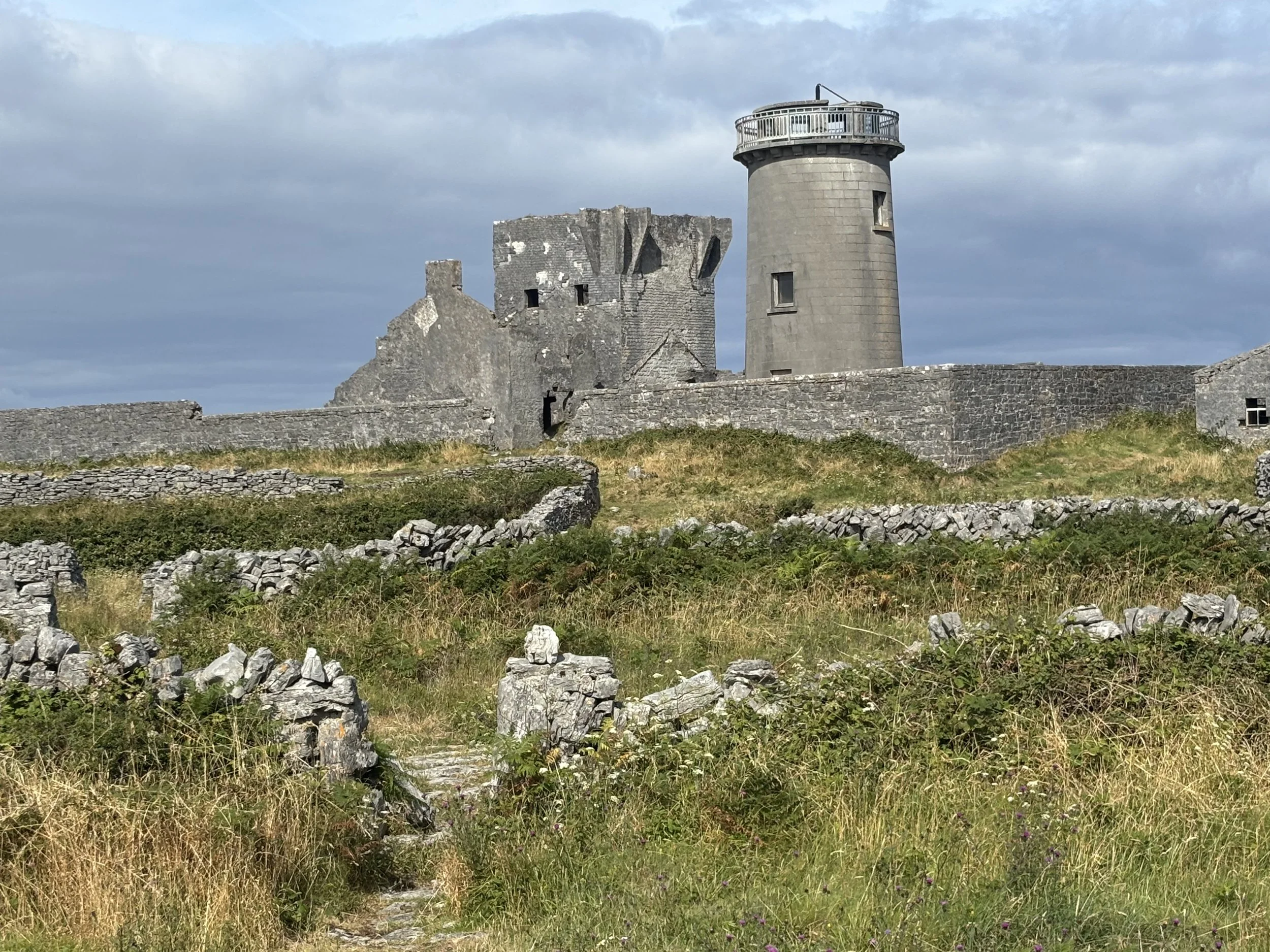
Dún Arainn Lighthouse, Inishmore, Ireland
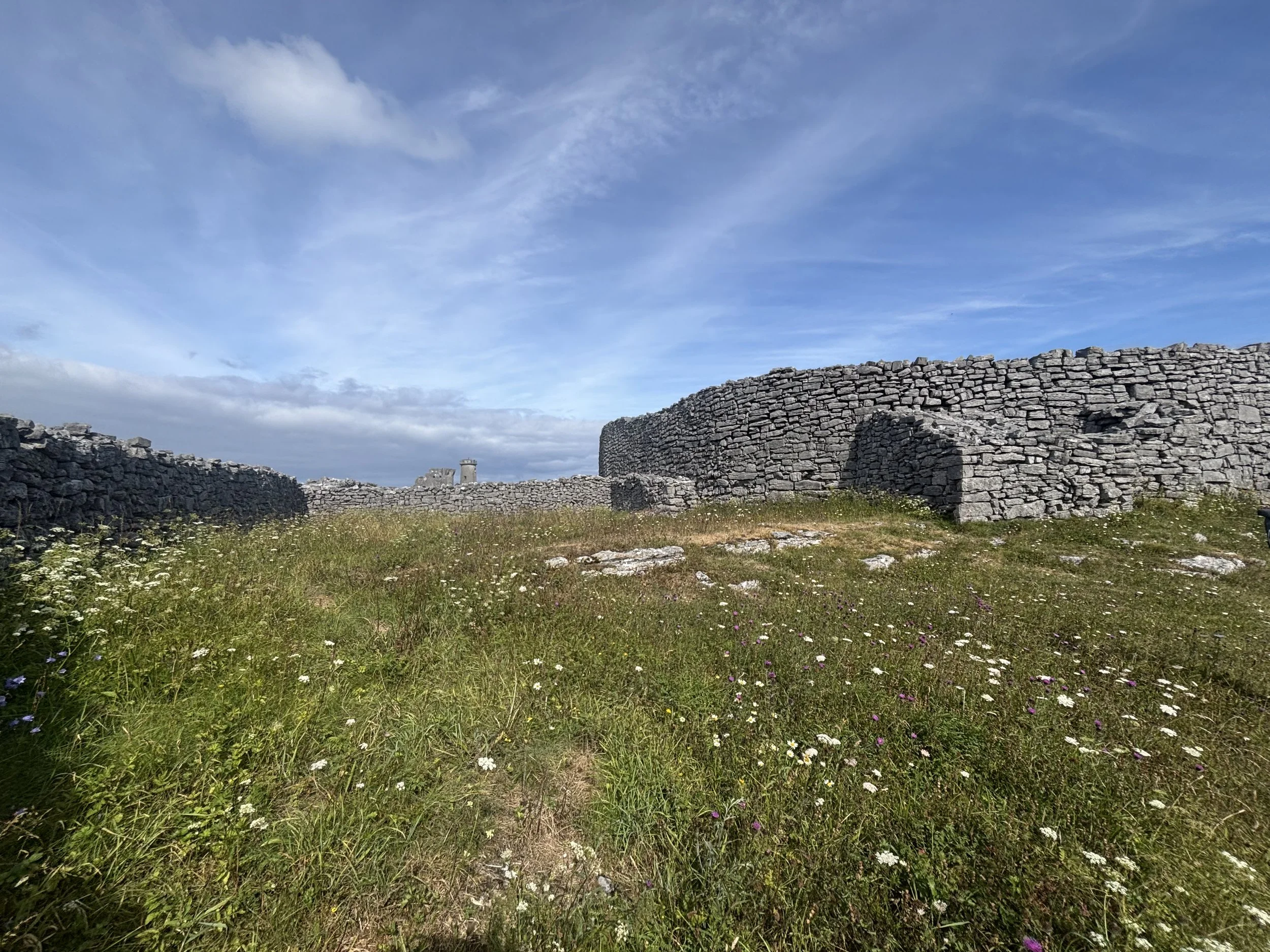
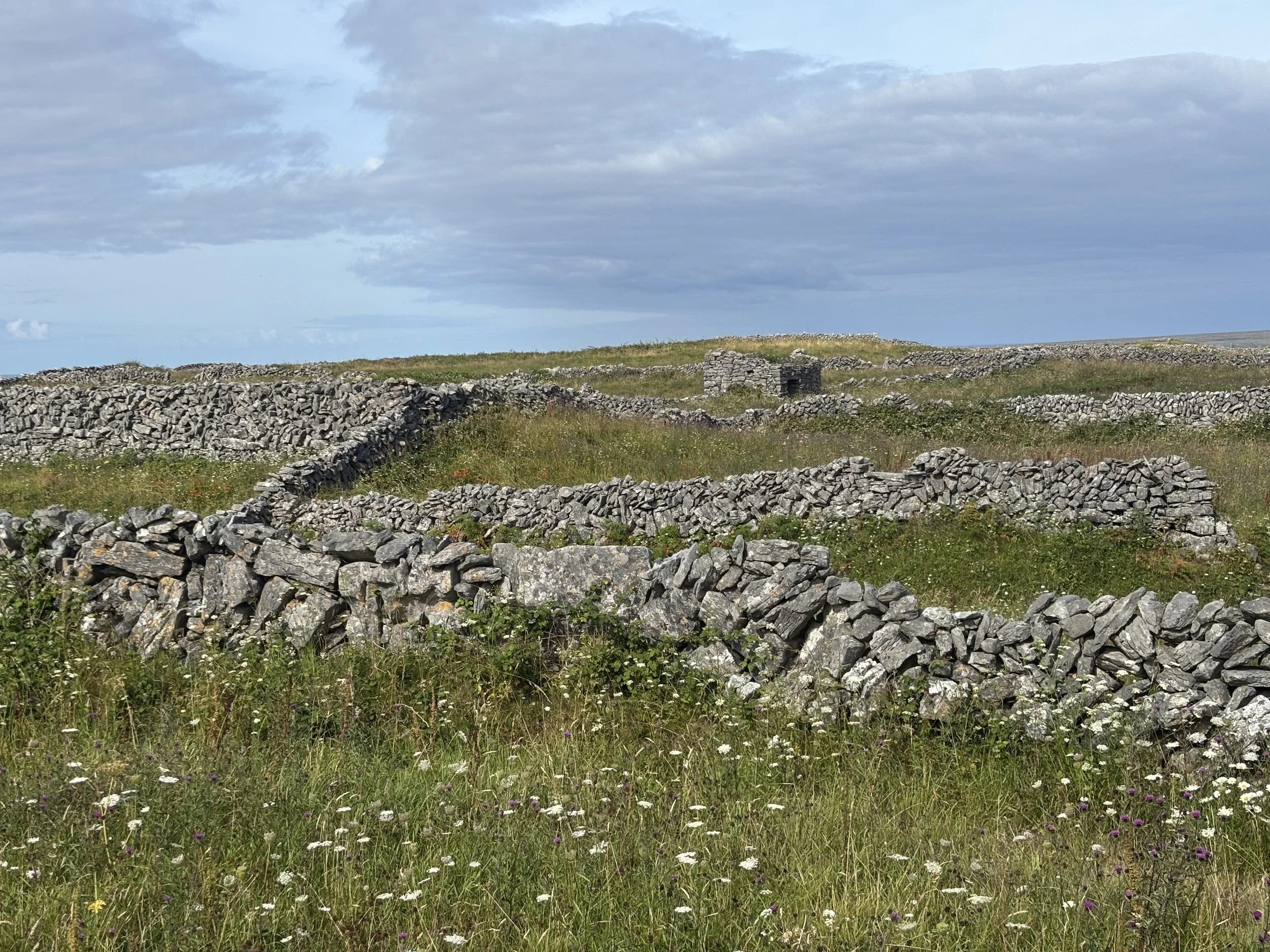
Dún Eochla, Inishmore, Ireland
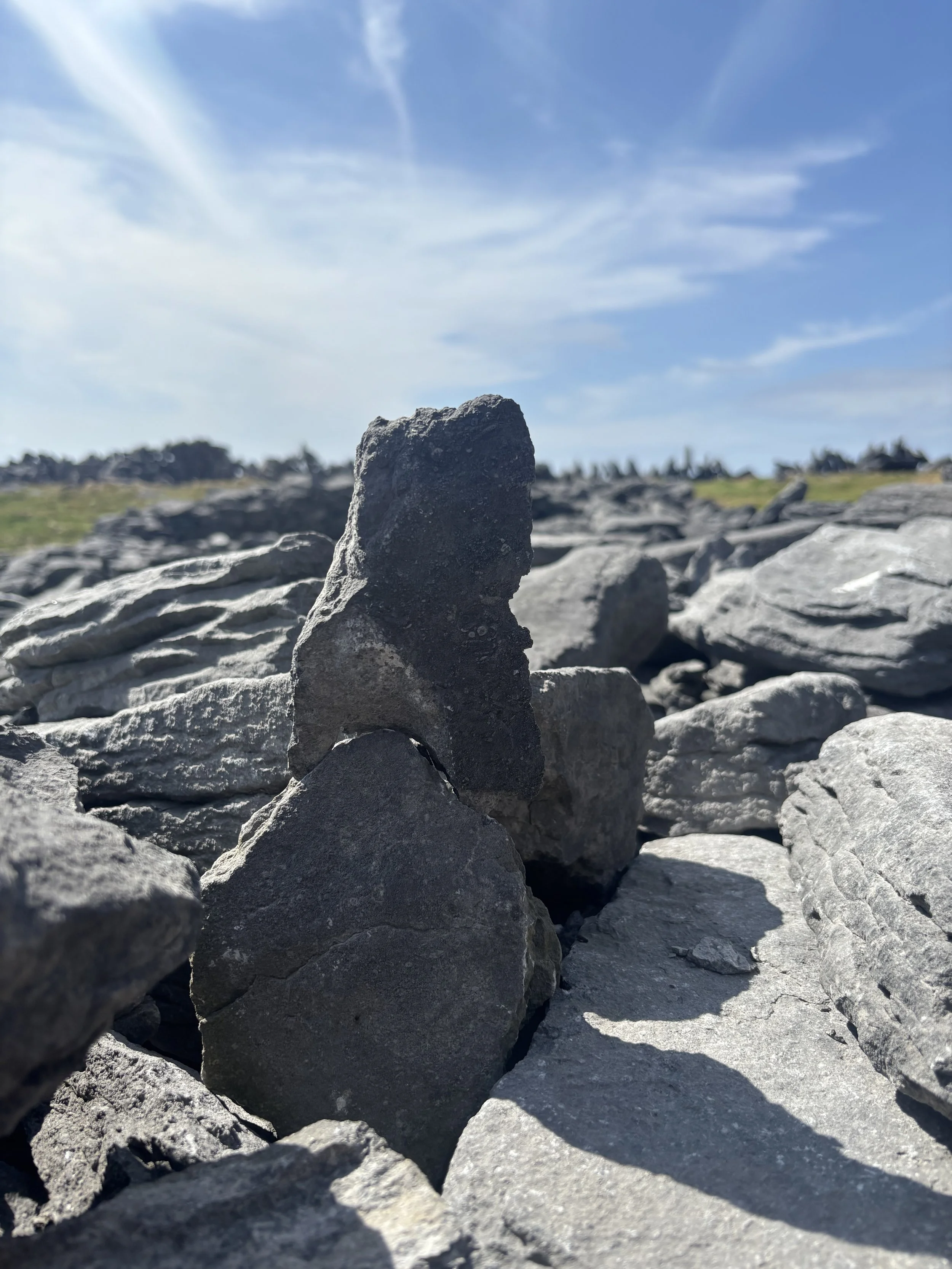
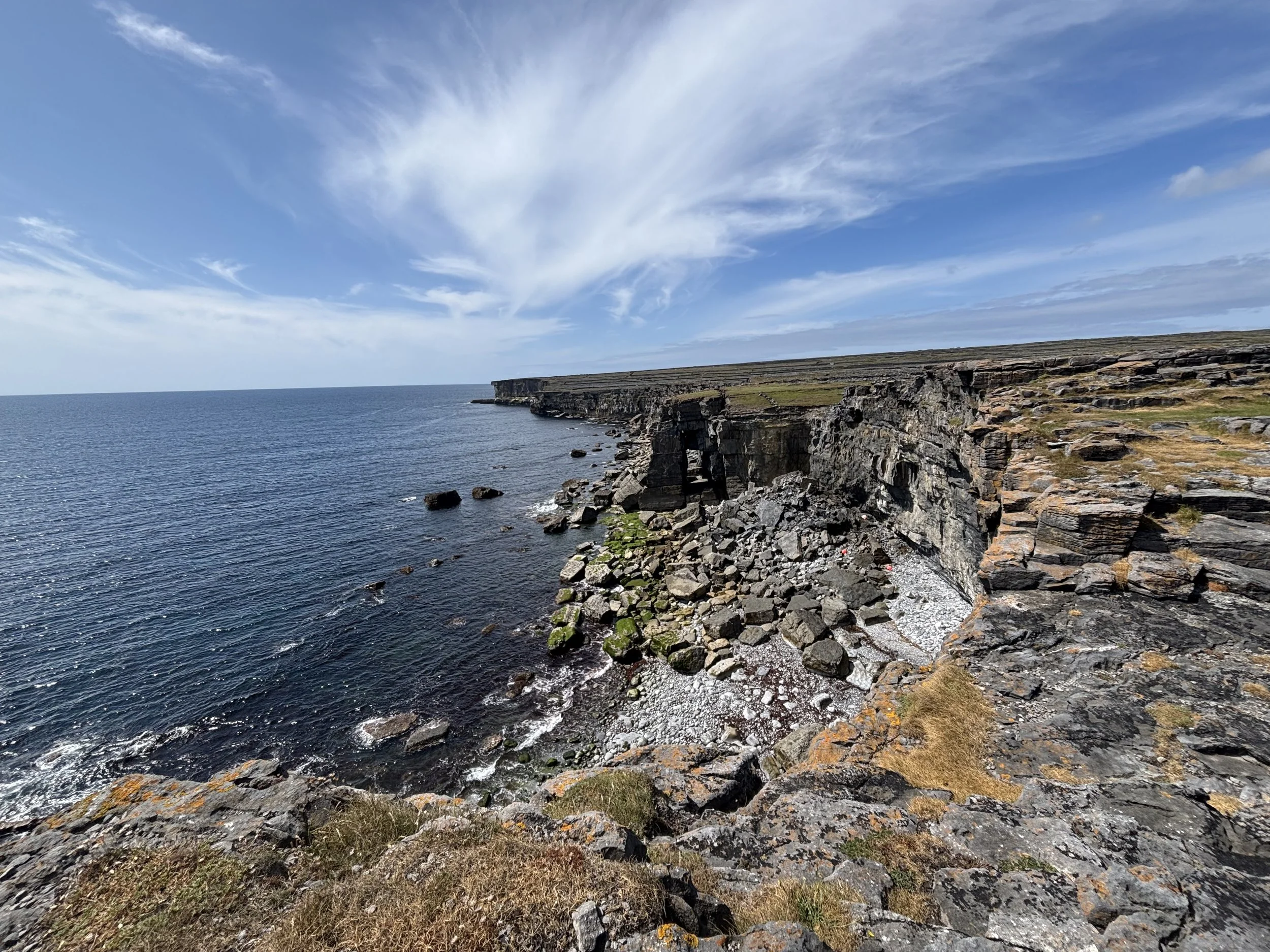
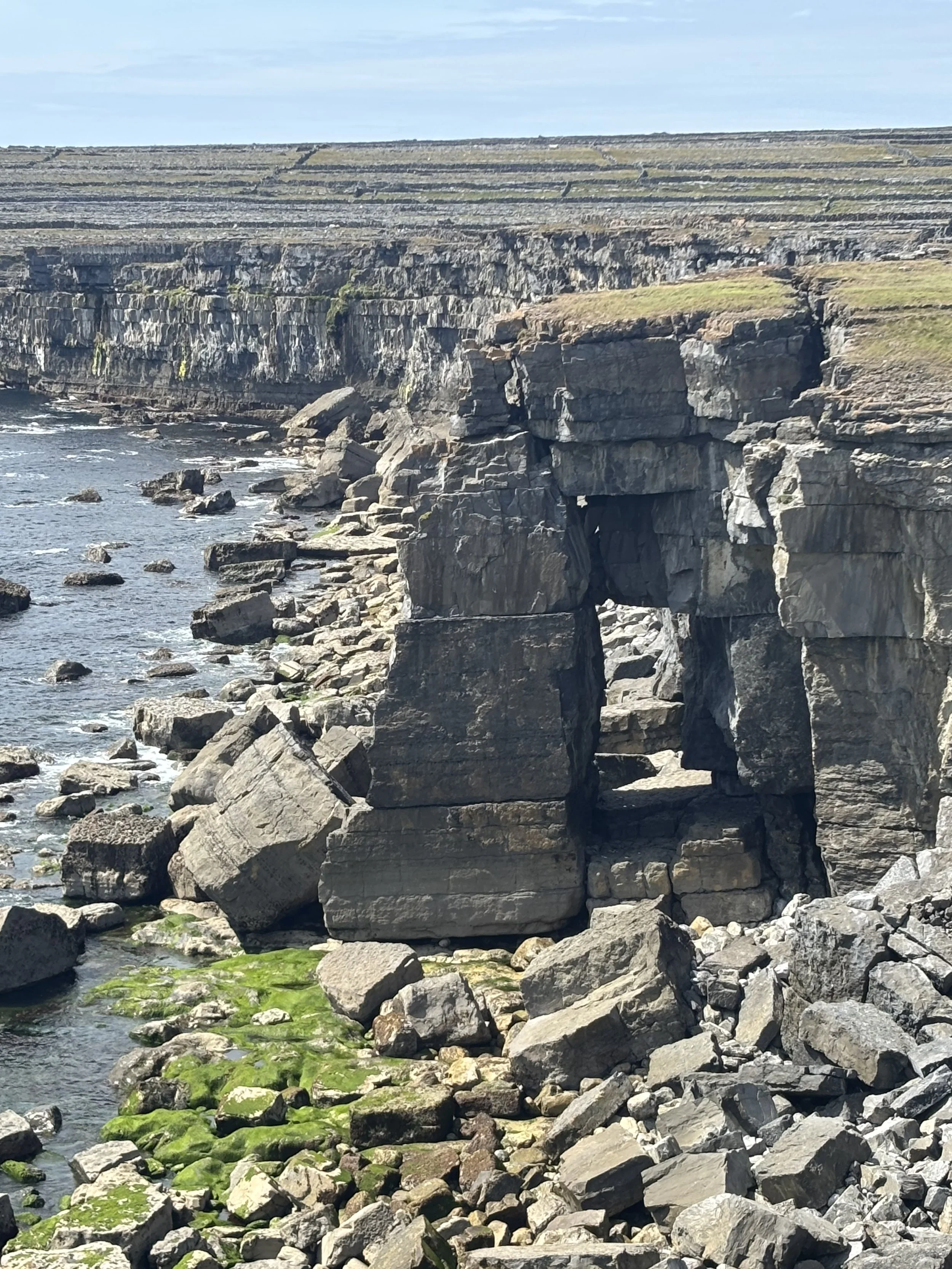
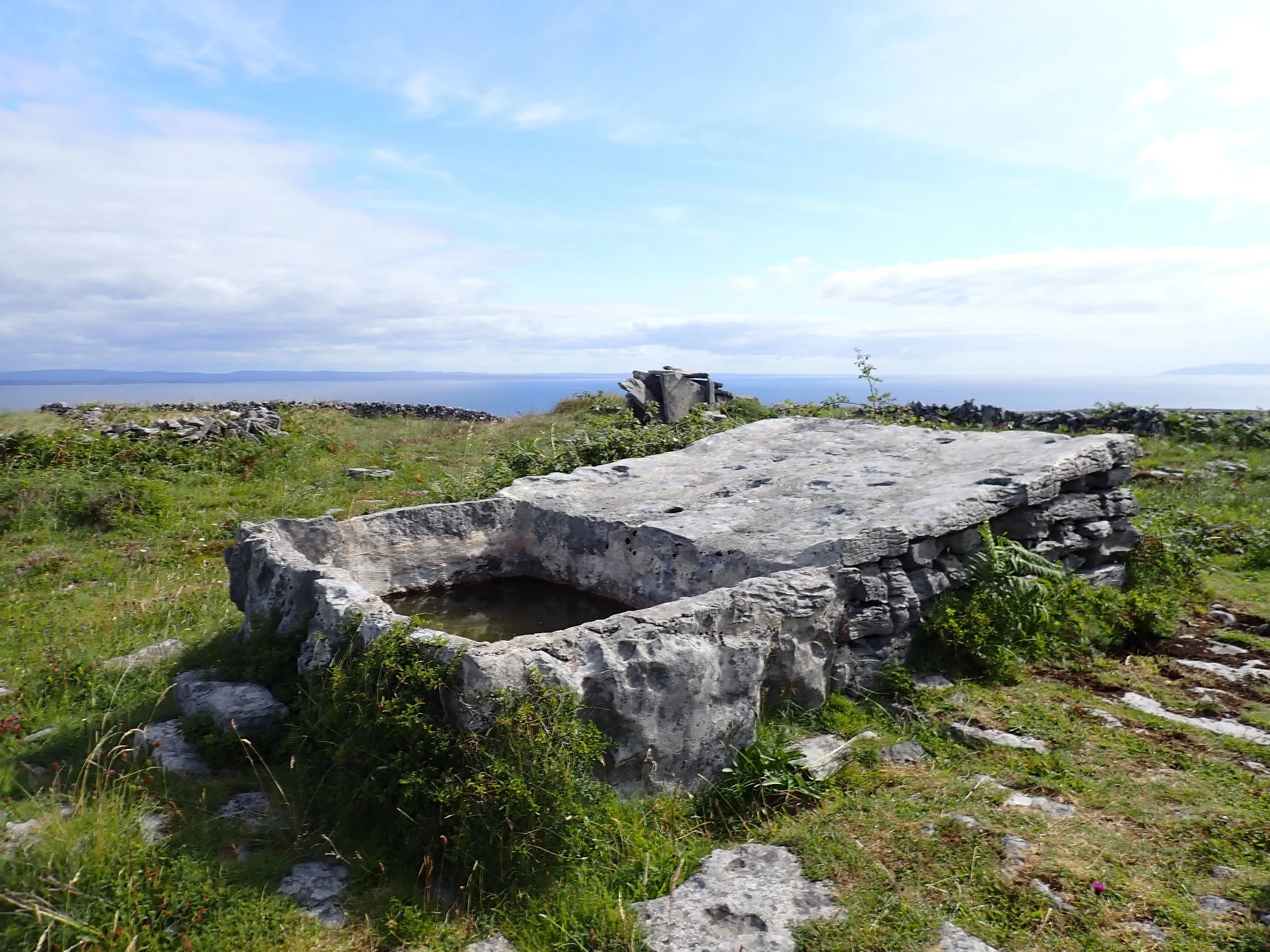
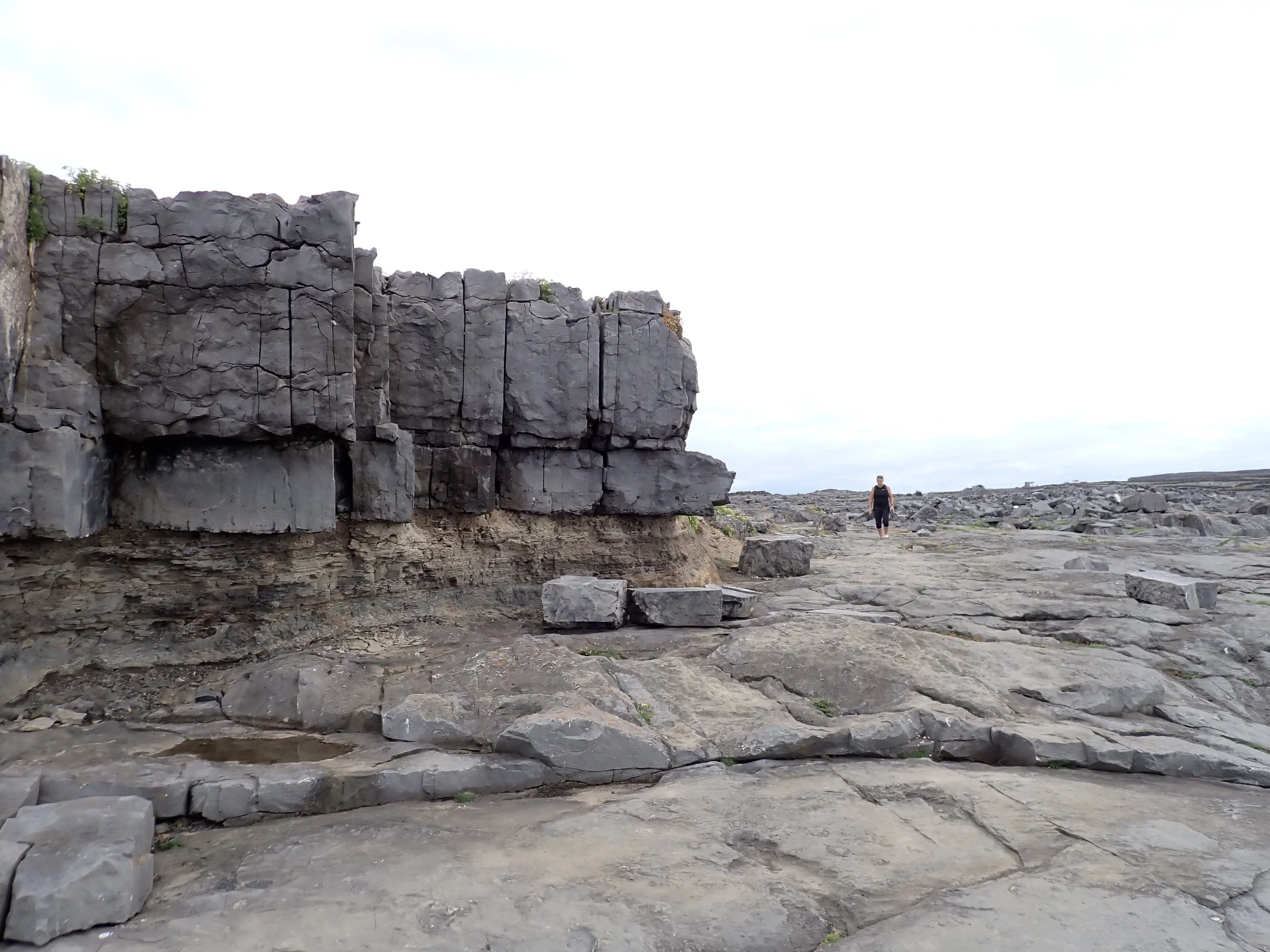
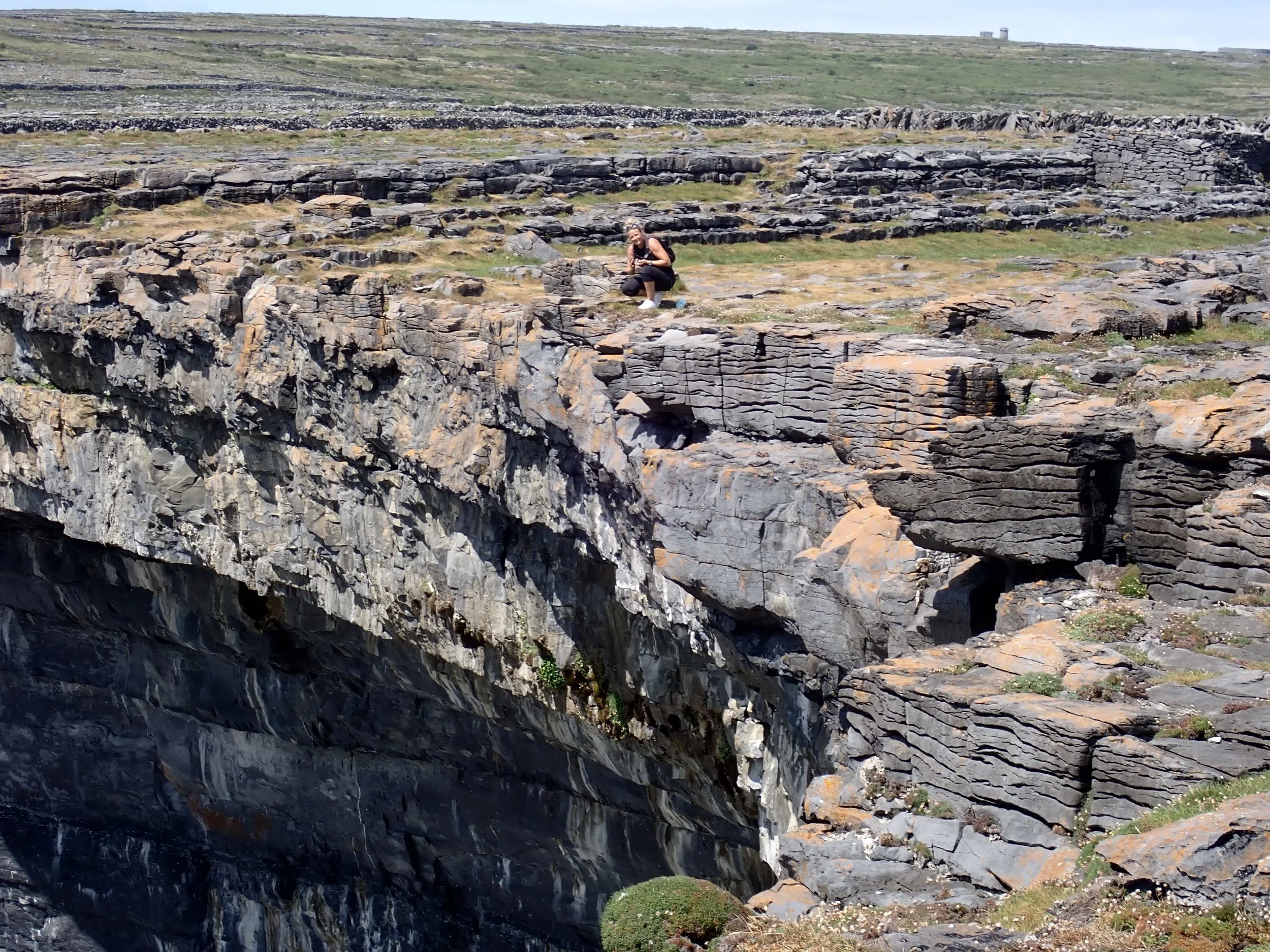
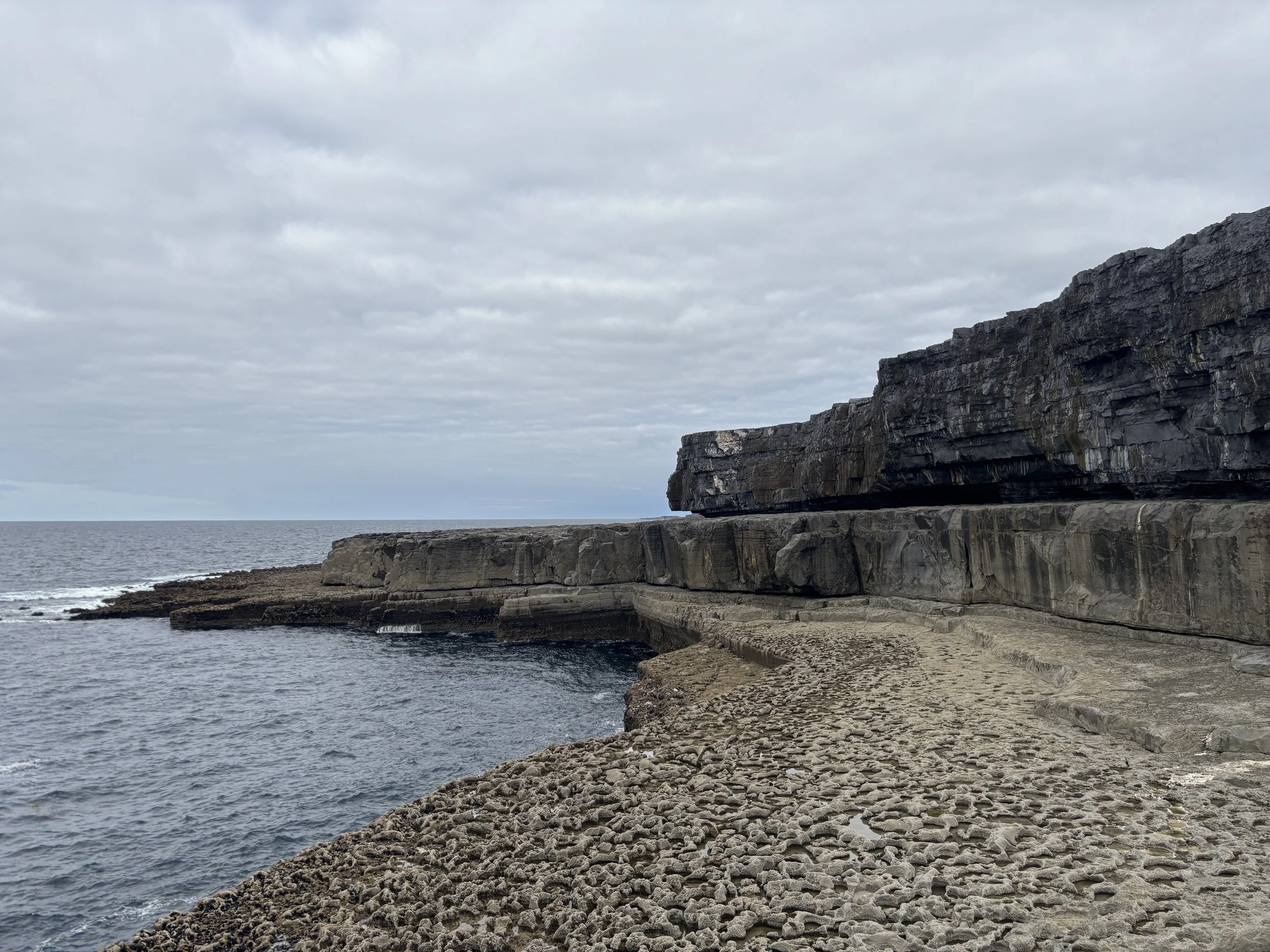
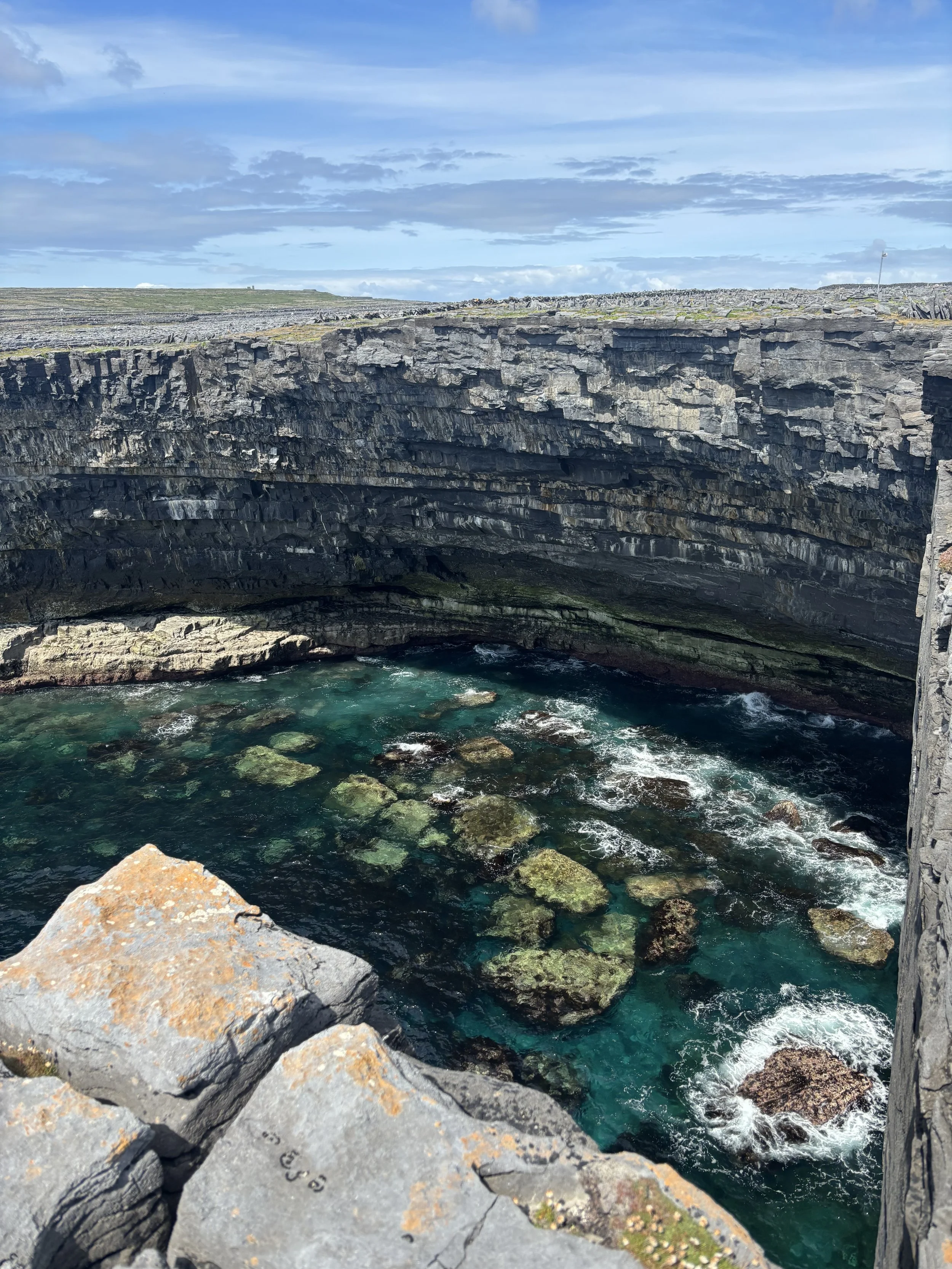
Next, we visited the Wormhole, or Poll na bPéist. This natural wonder, sometimes referred to as the Serpent’s Lair, is an almost perfect rectangular natural tidal pool. It is so perfect it looks man-made, but it’s not. It is reportedly around 300m deep and a popular scuba diving spot.
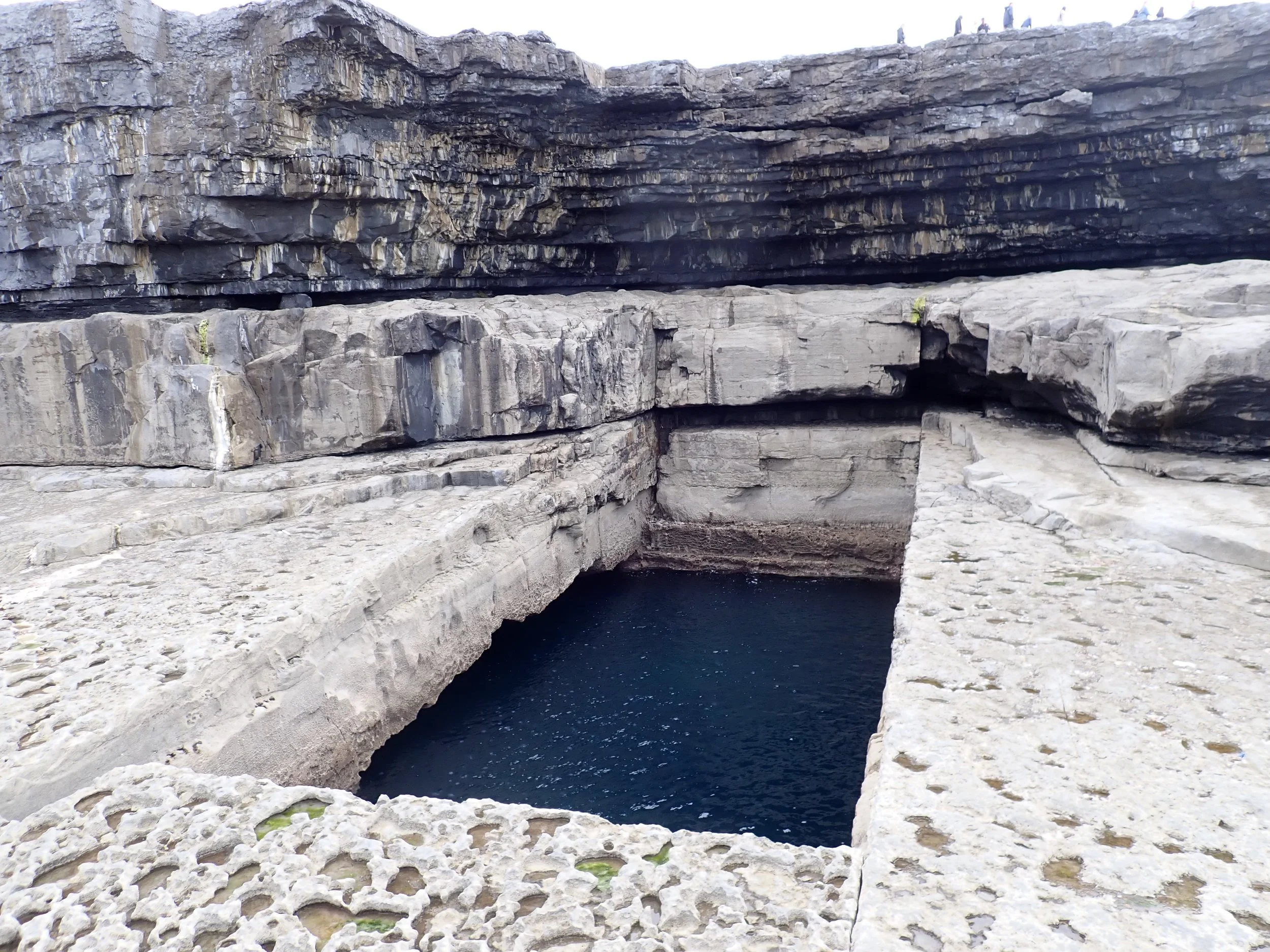
The Wormhole, Inishmore, Ireland
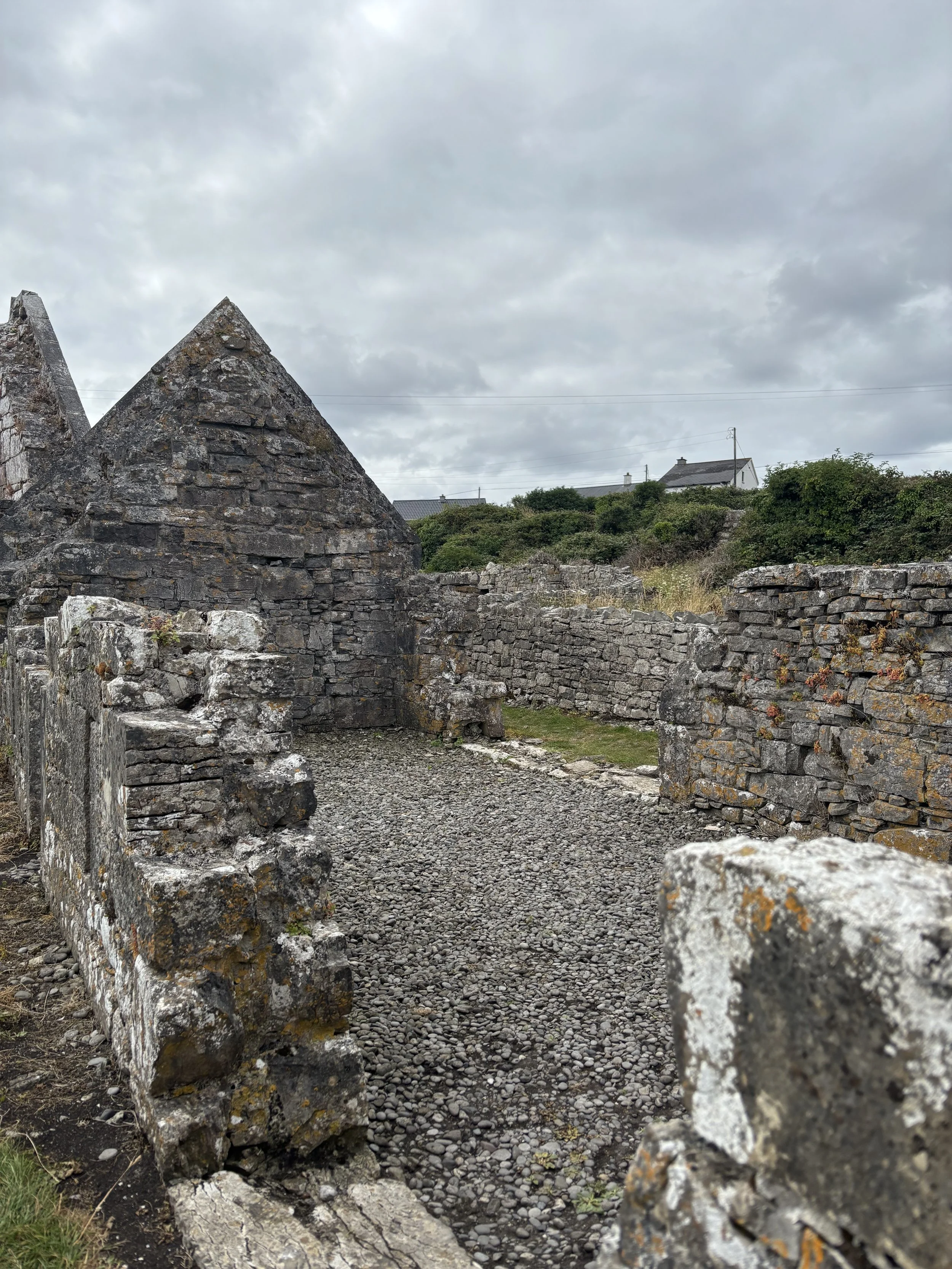
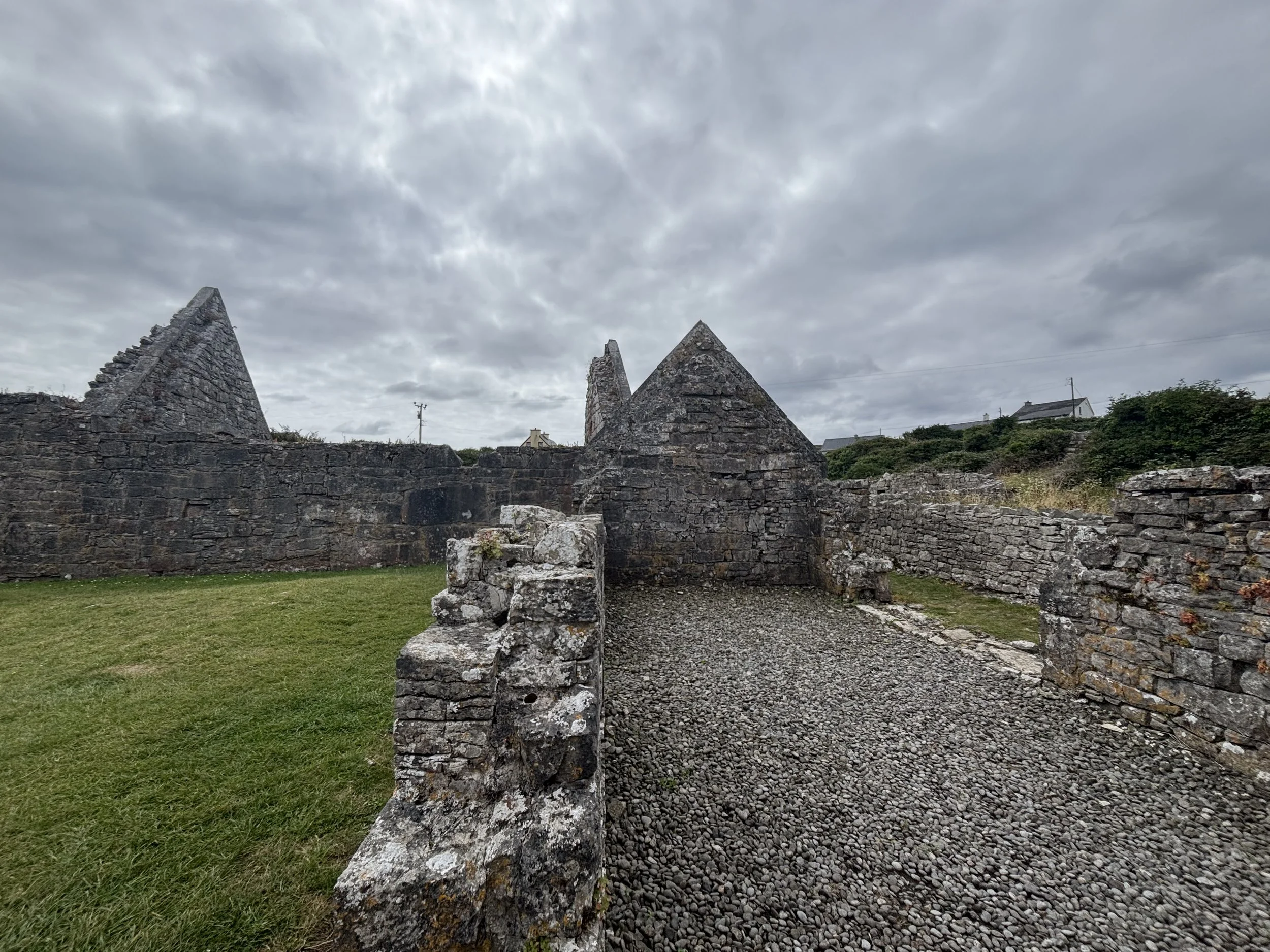
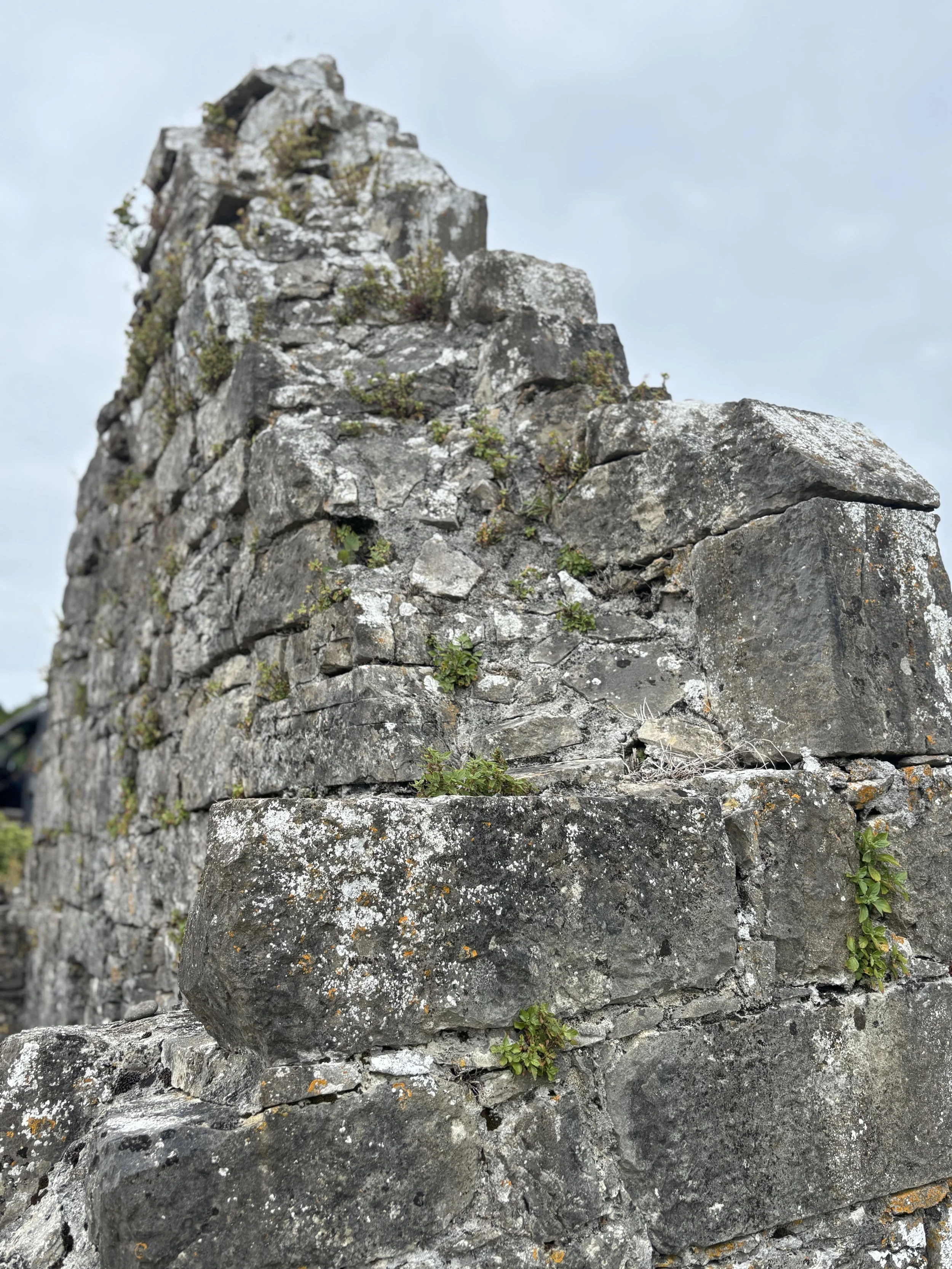
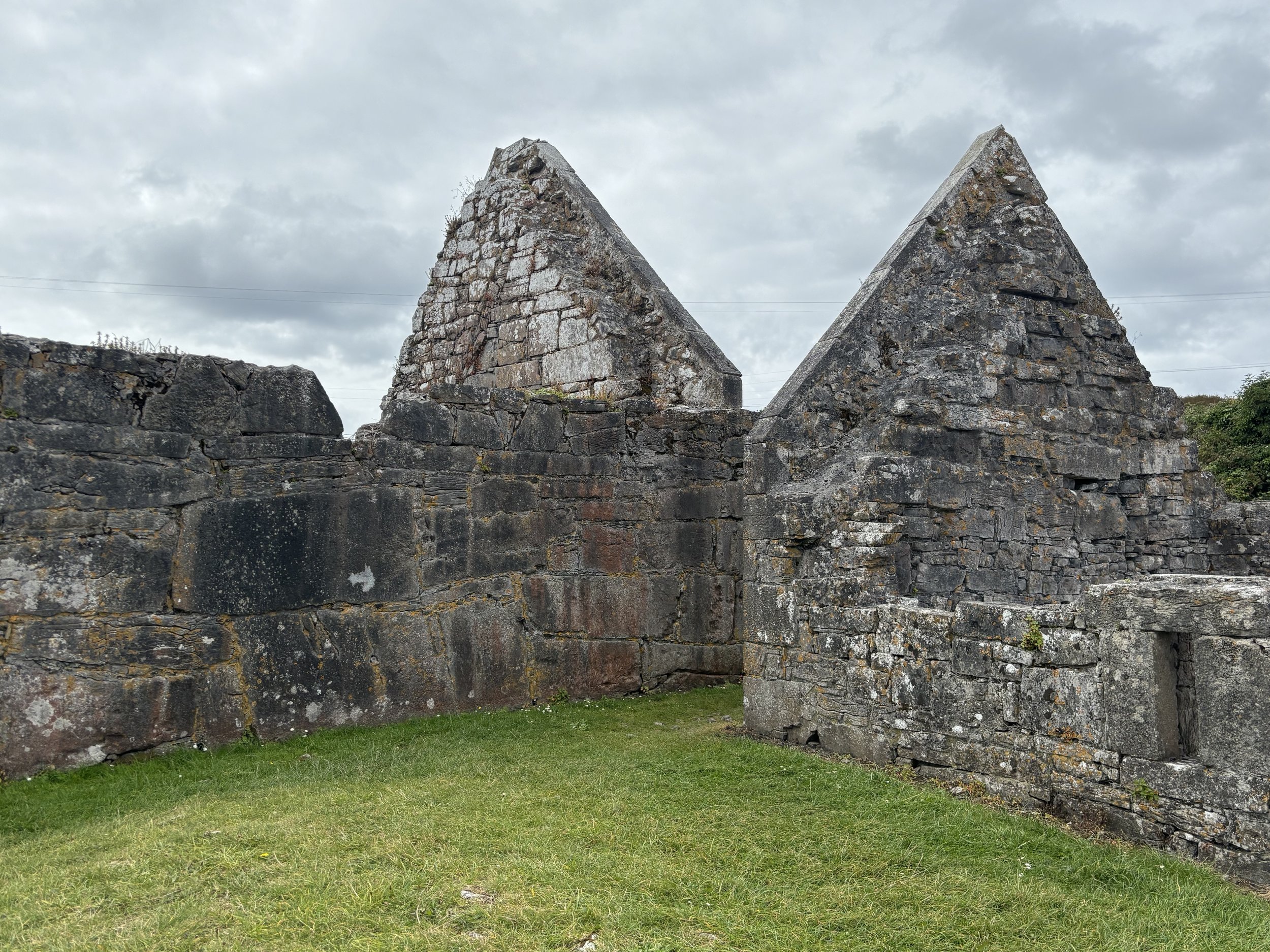
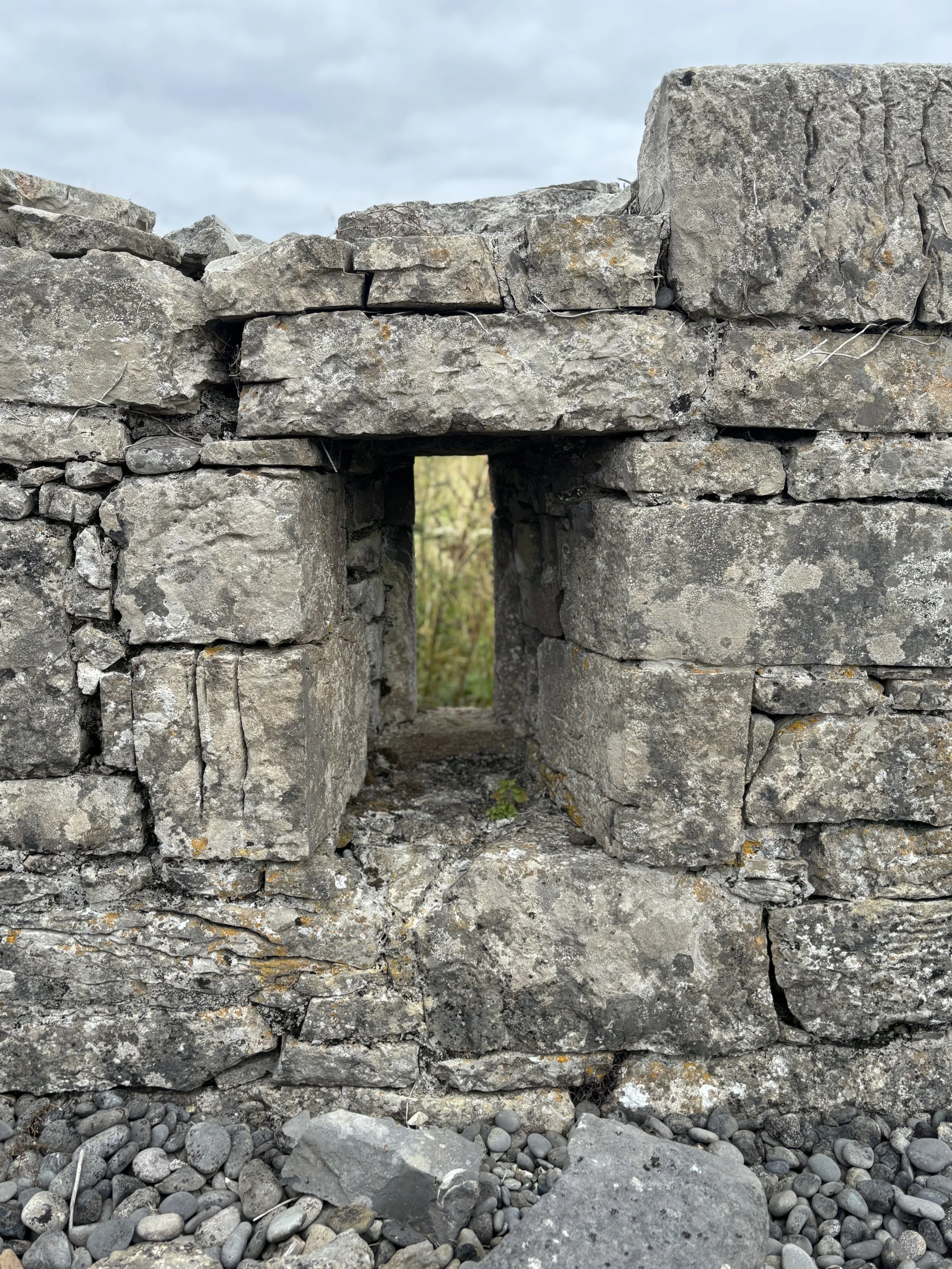
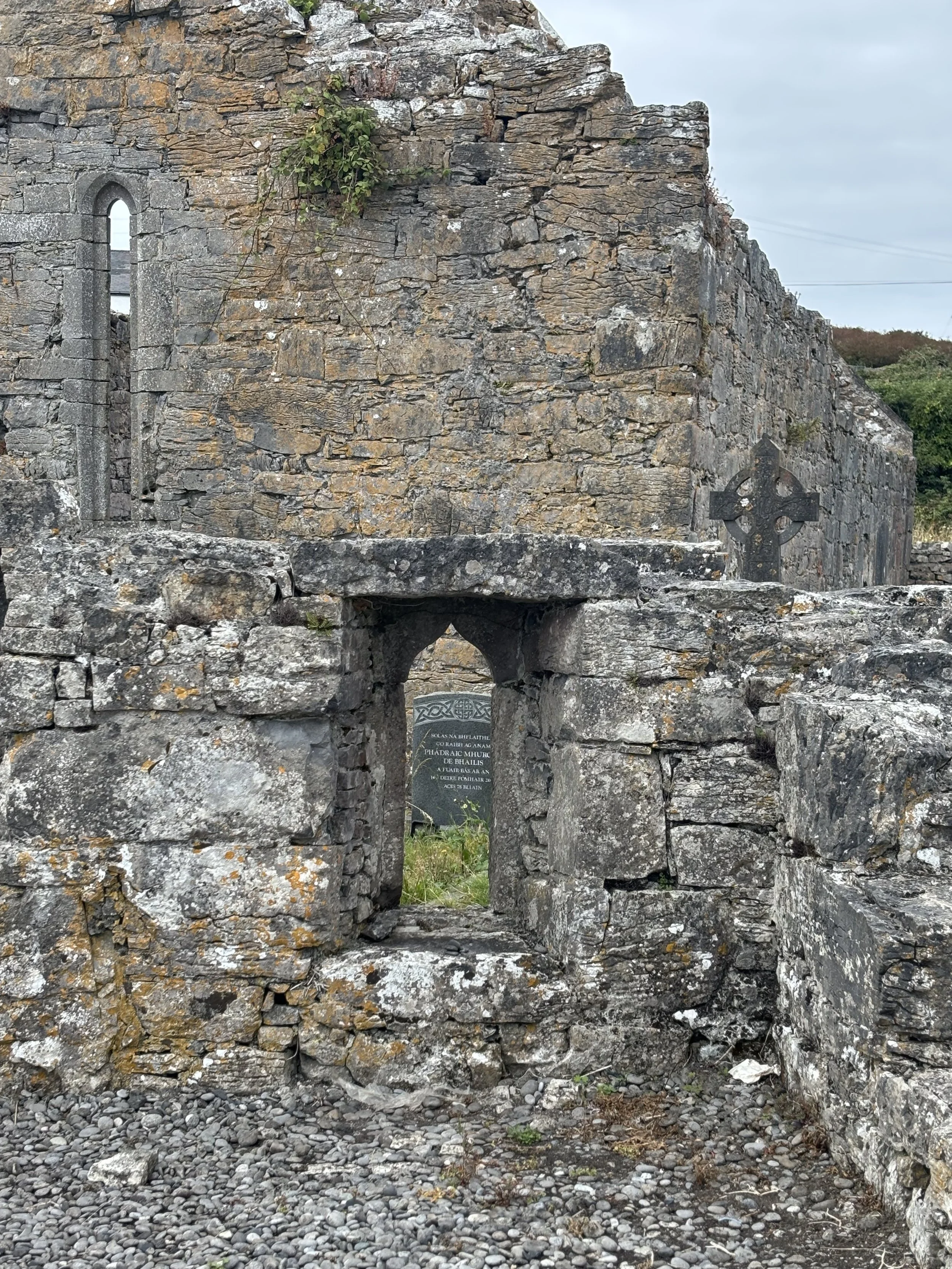
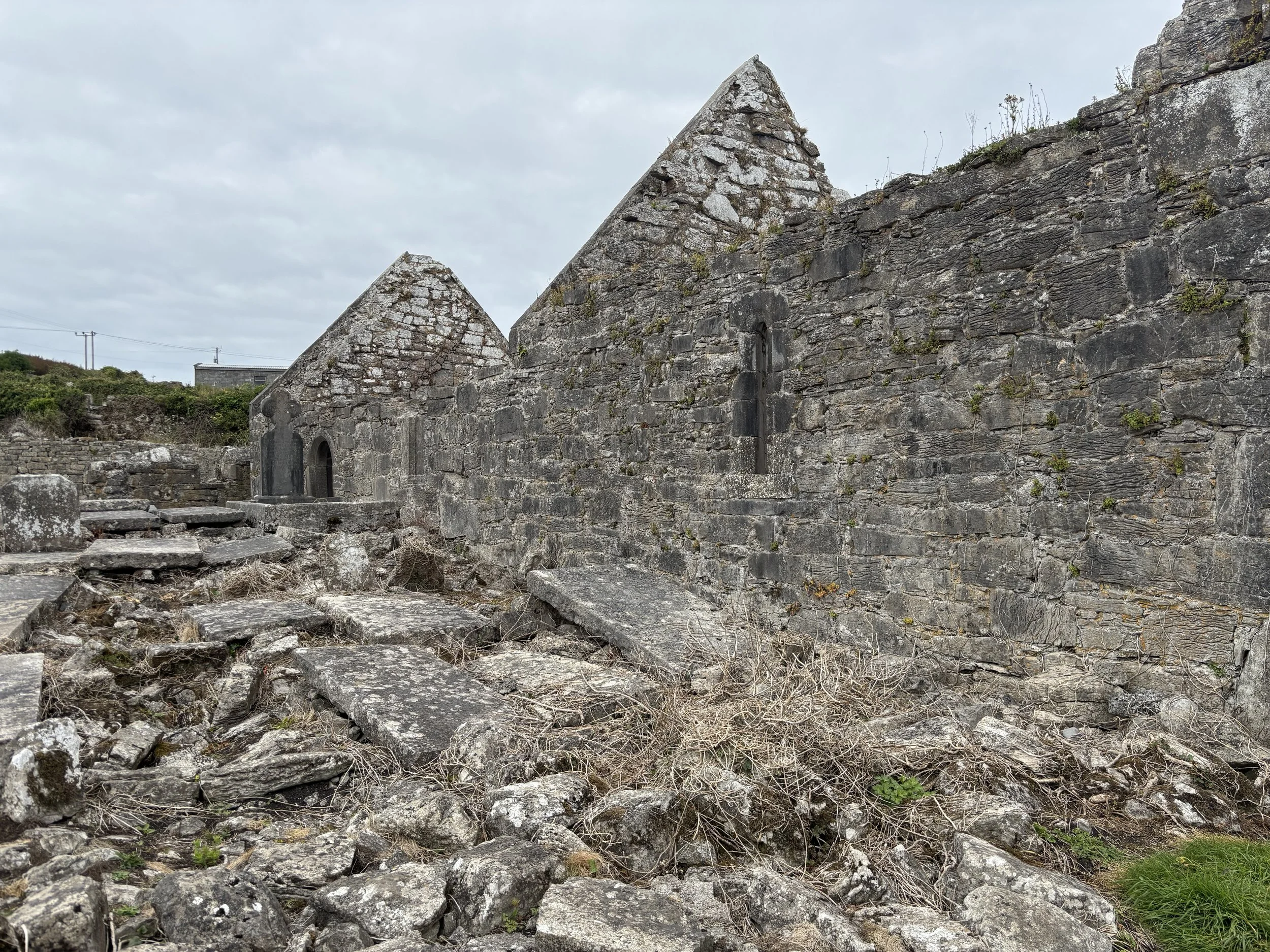
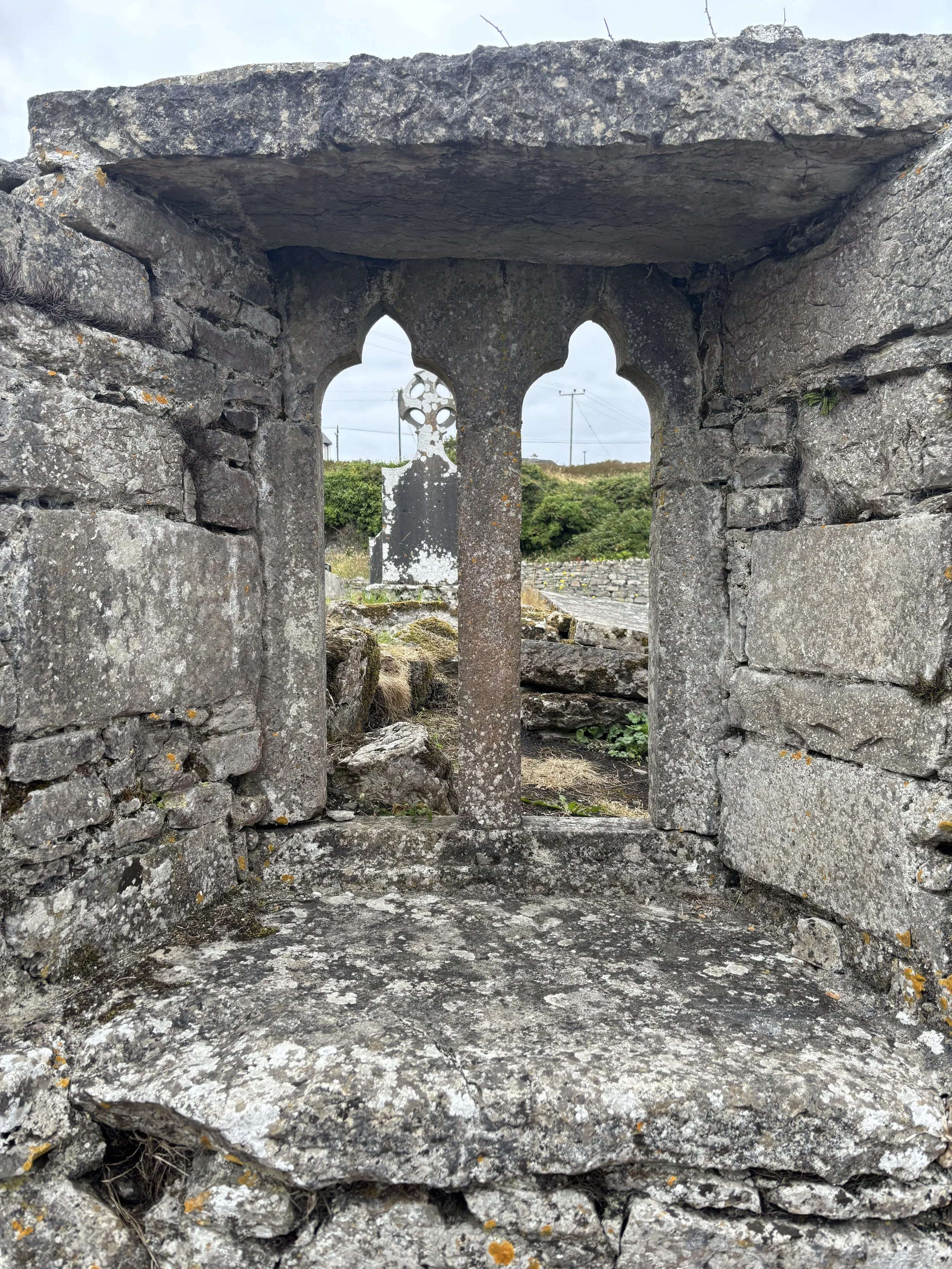
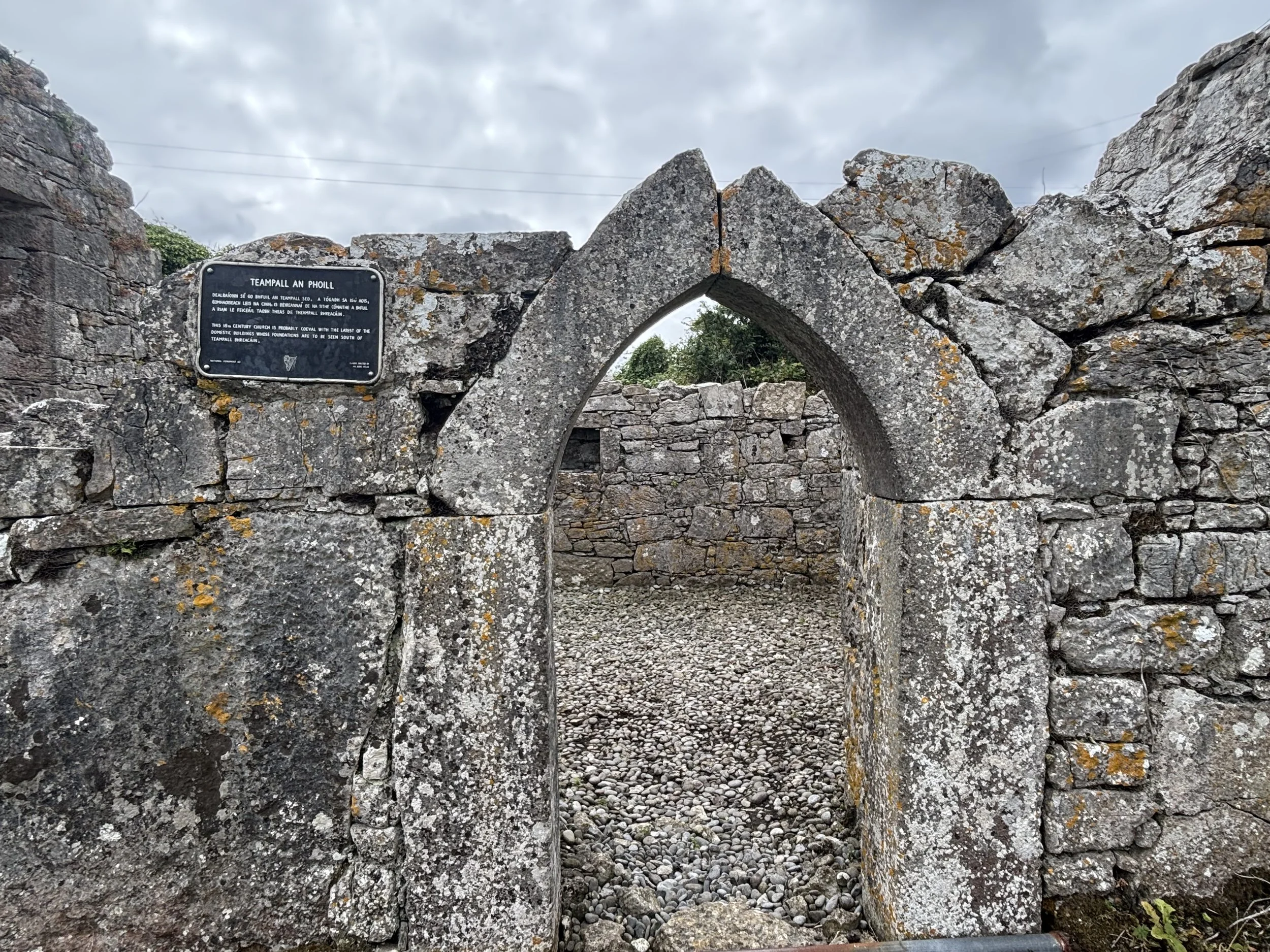
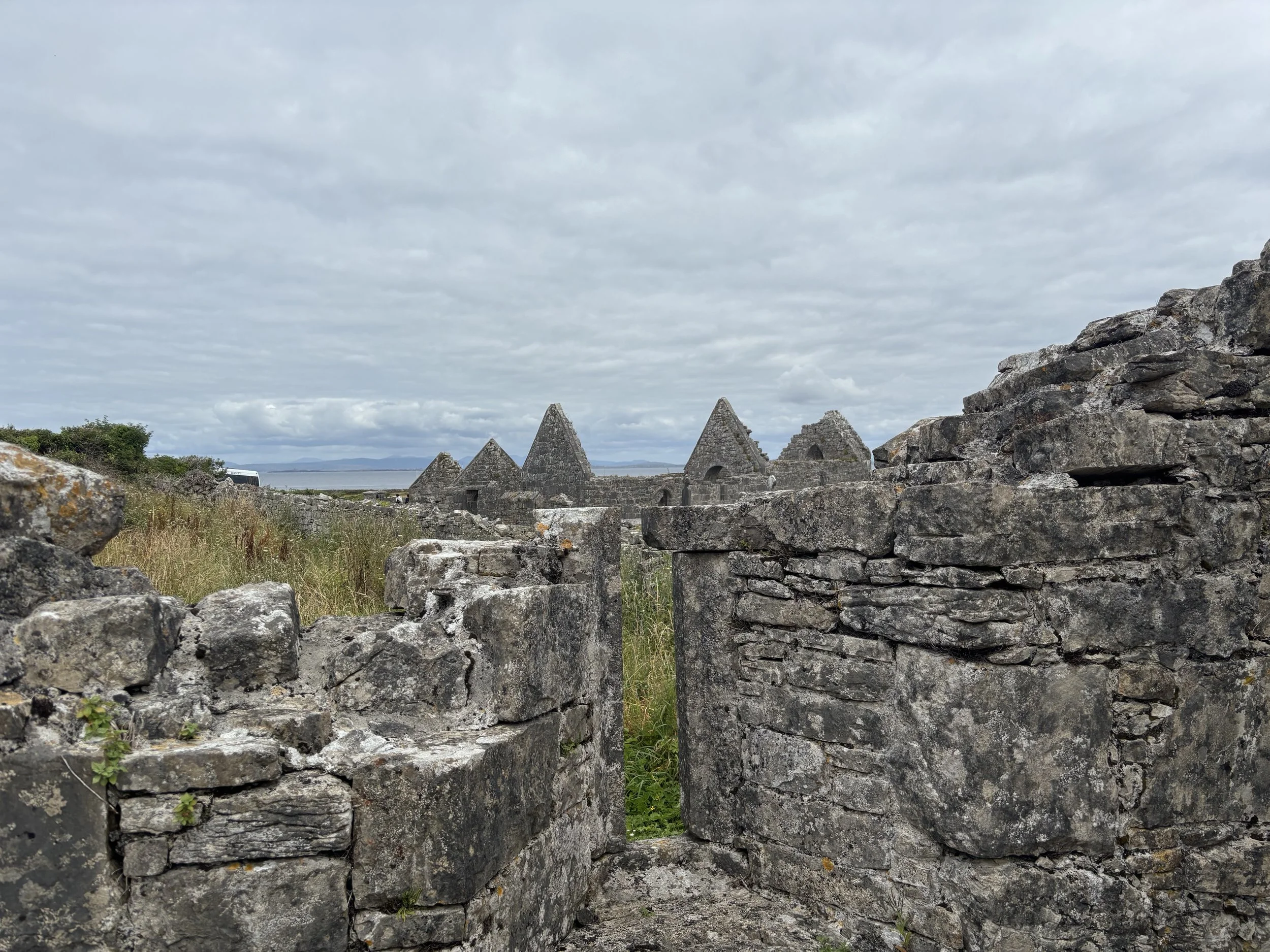
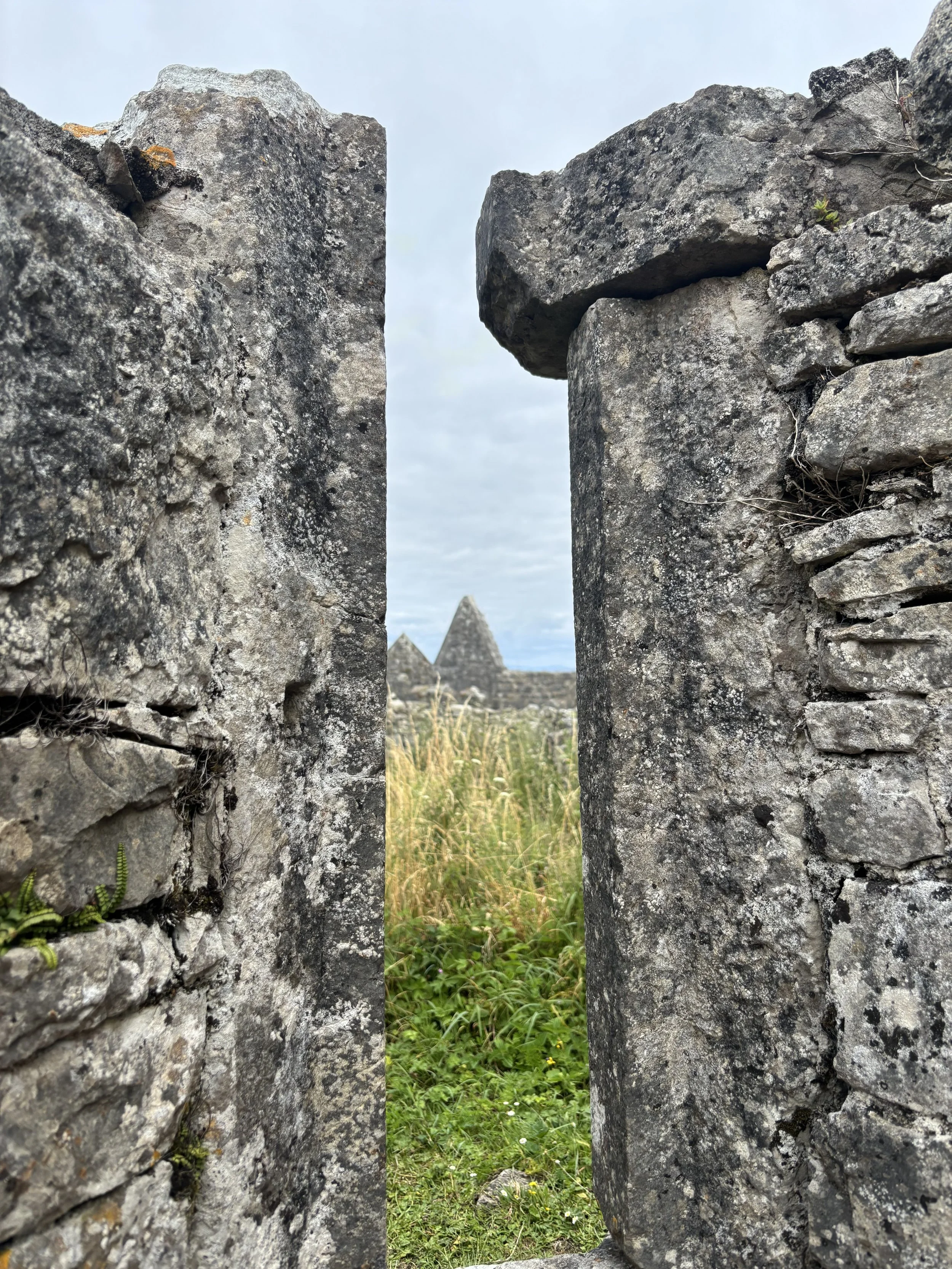
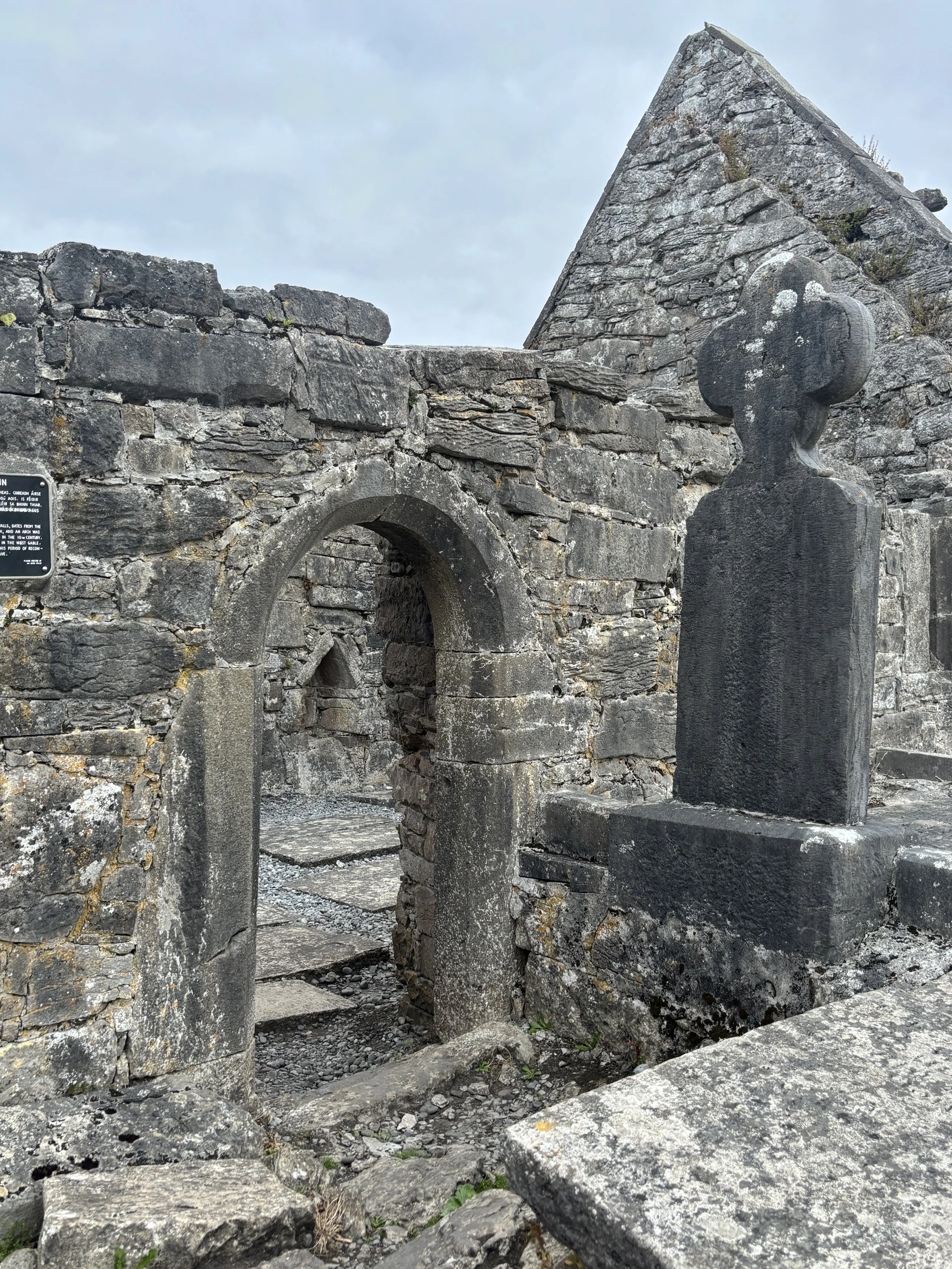
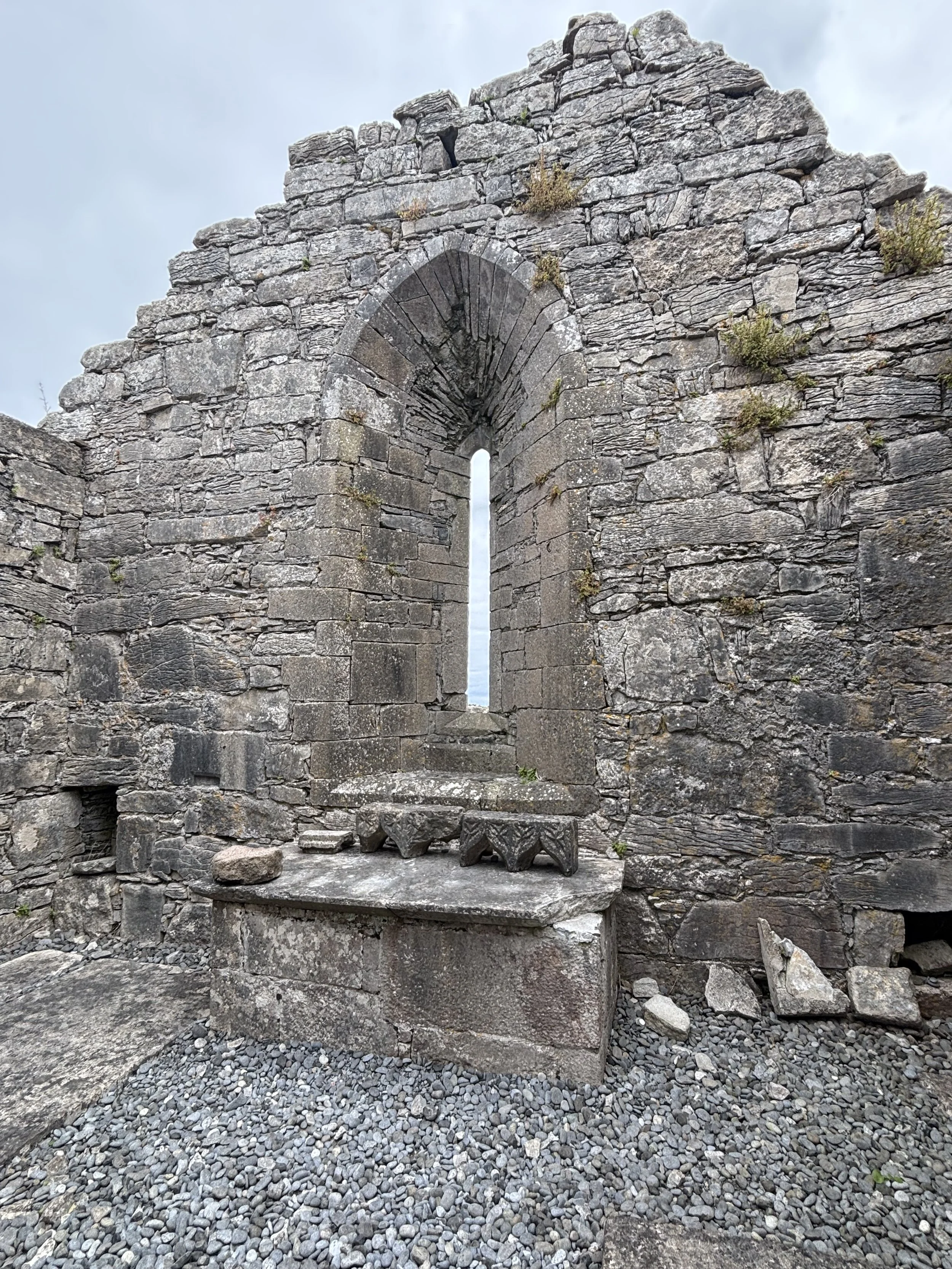
The Seven Churches, or Na Seacht dTeampaill, was one of the biggest monastic foundations and centers of pilgrimage along the west coast of Ireland for centuries. The buildings date between the 8th and 13th centuries. Though it was called the seven churches, there were only two churches on the site, along with numerous other buildings.
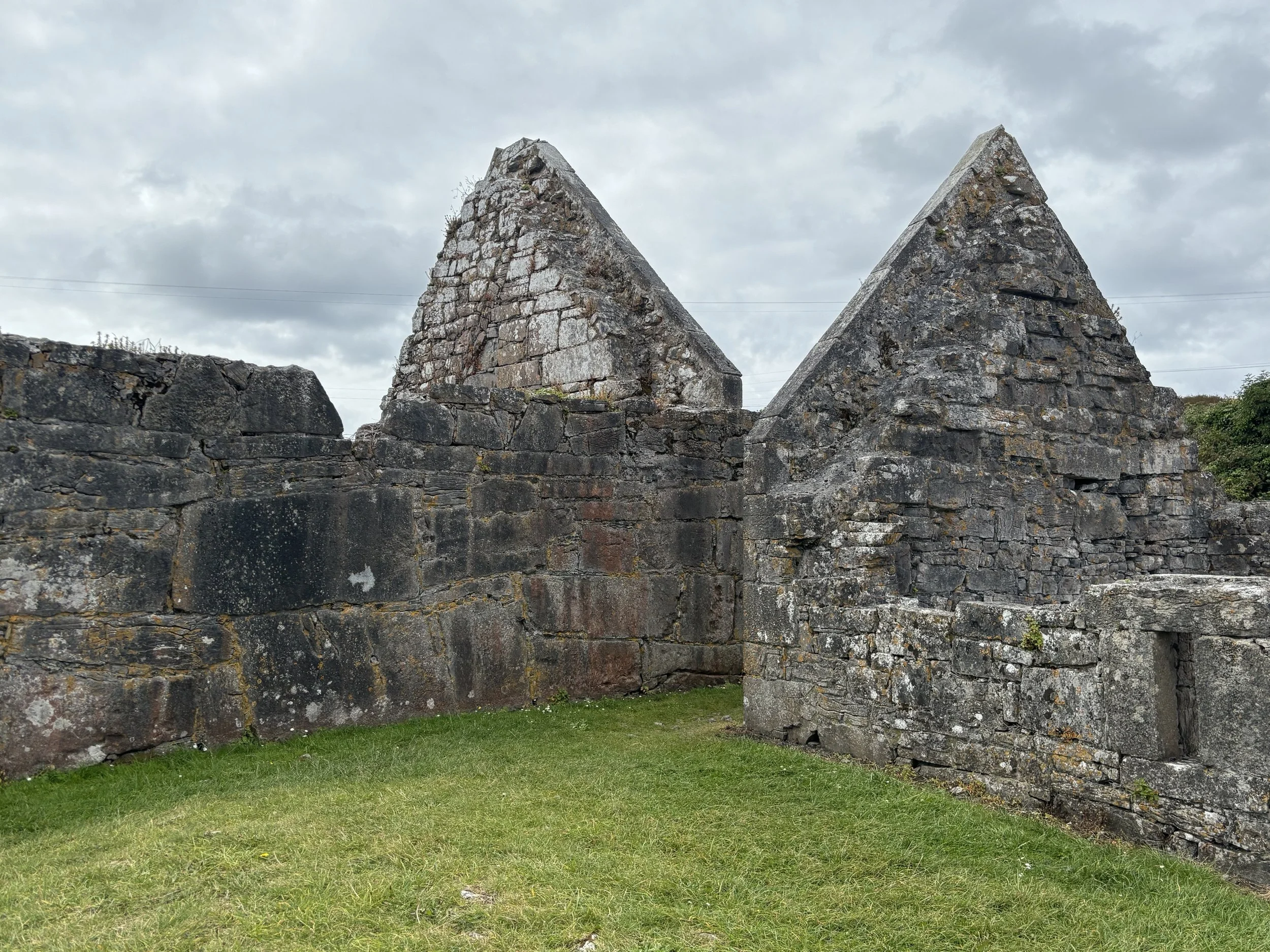
Seven Churches, Inishmore, Ireland
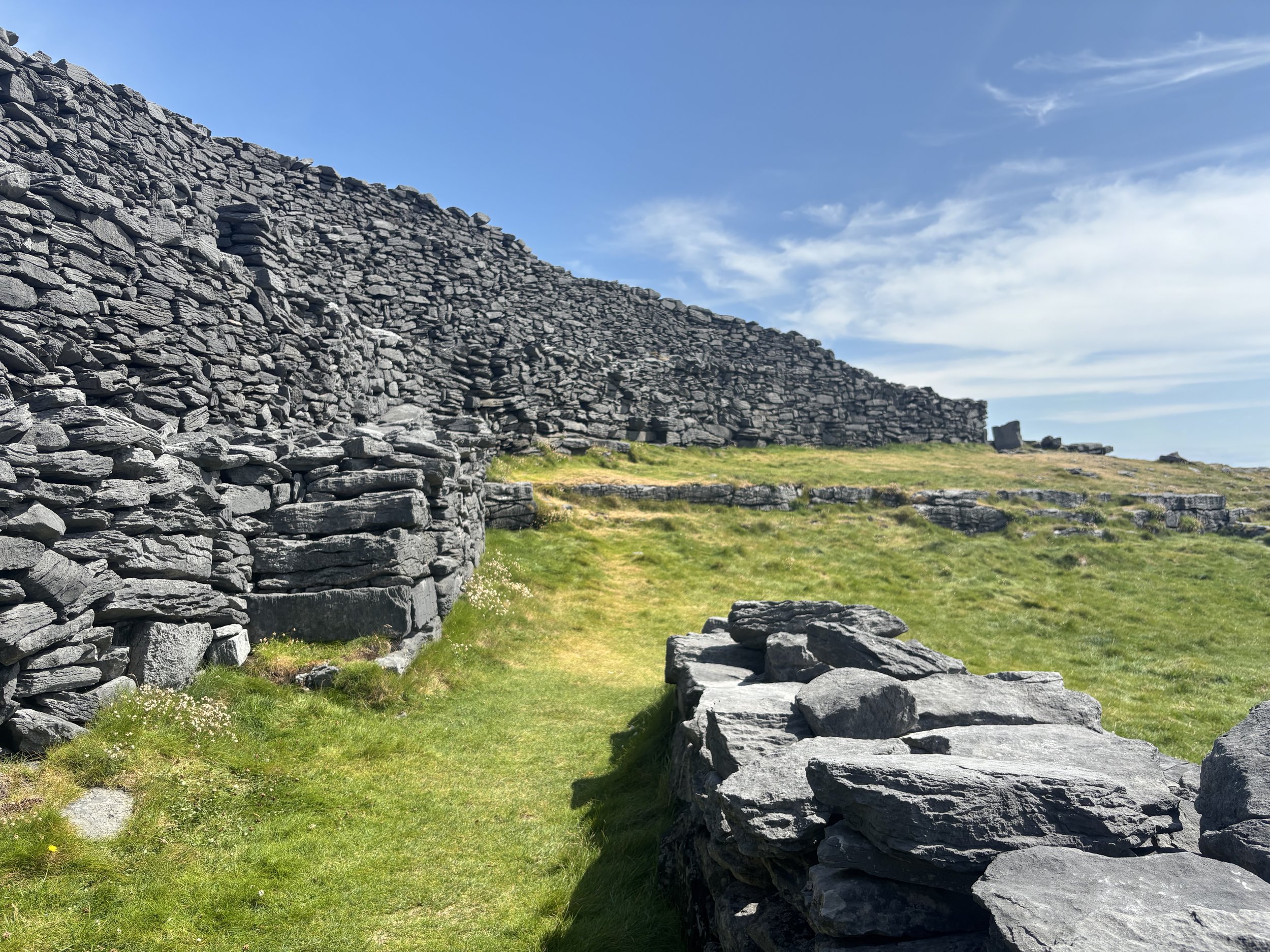
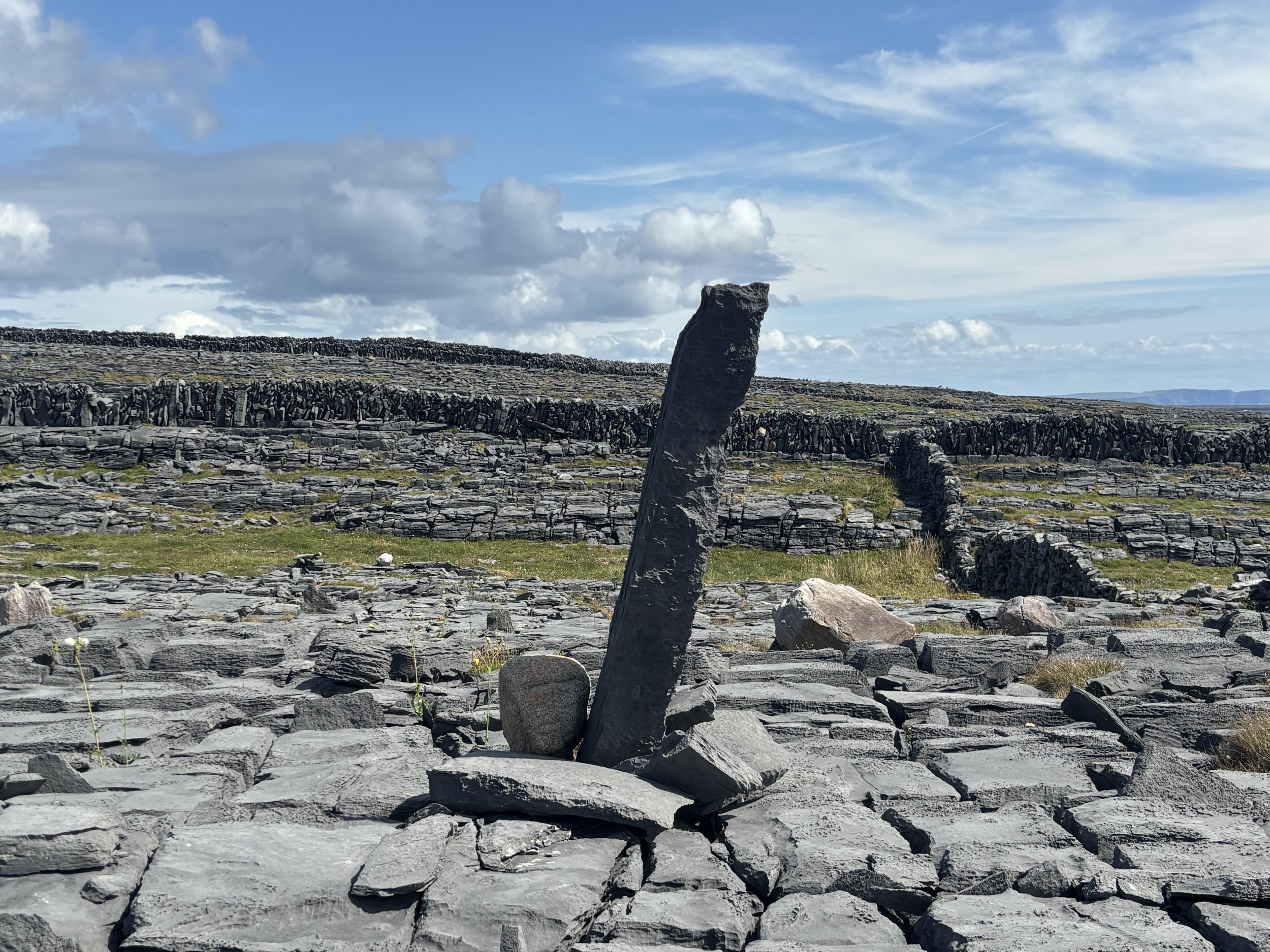
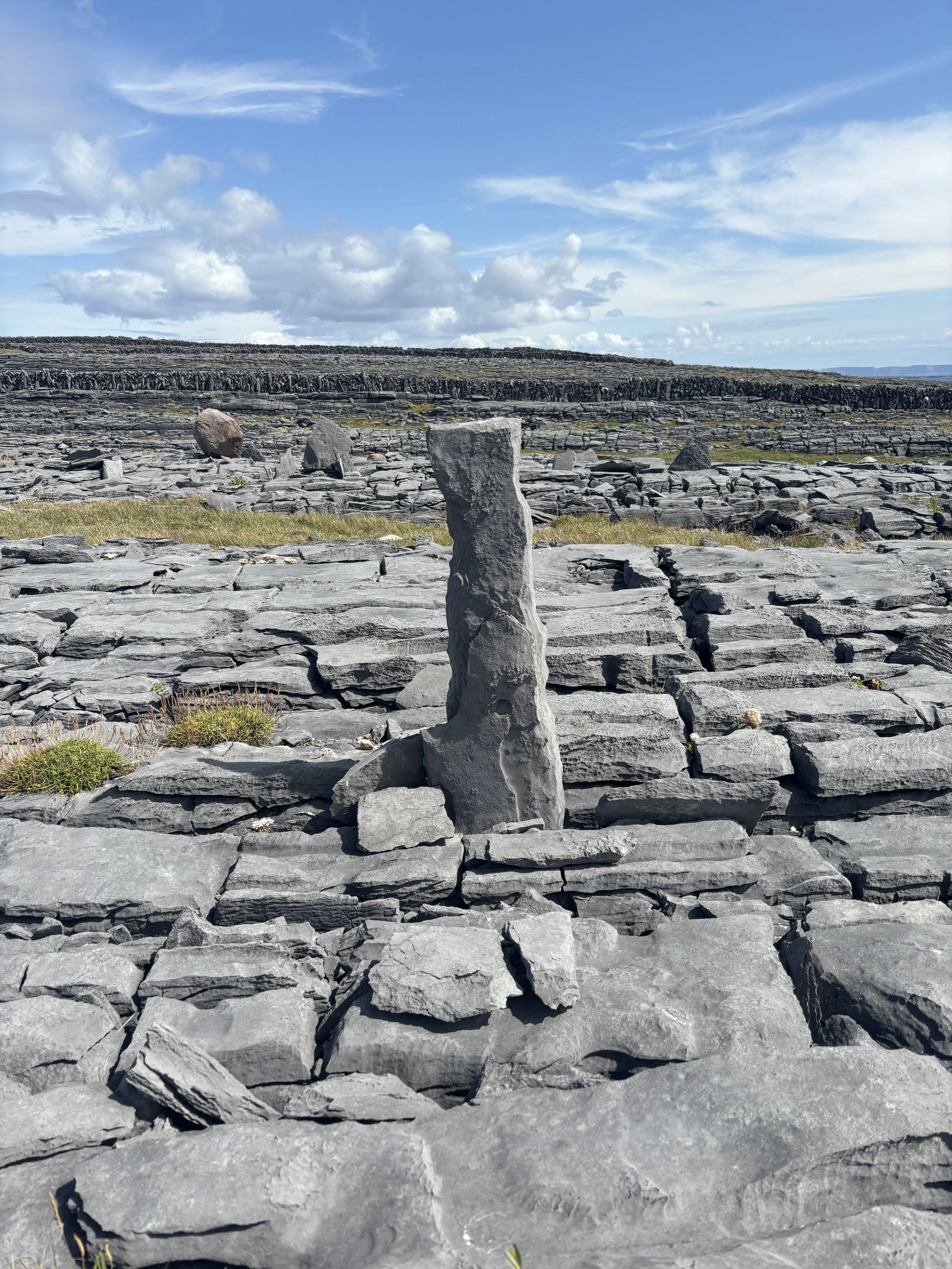
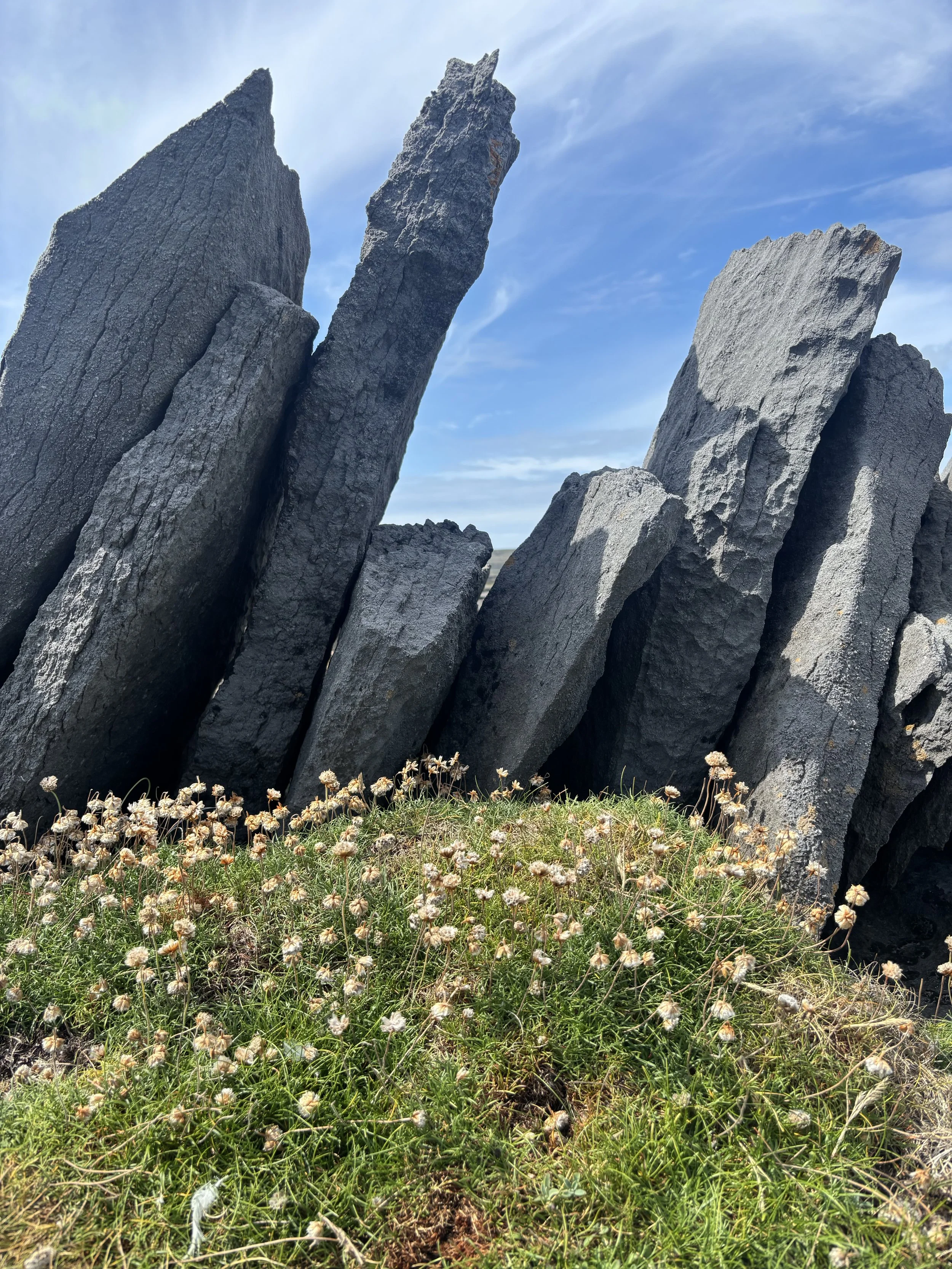
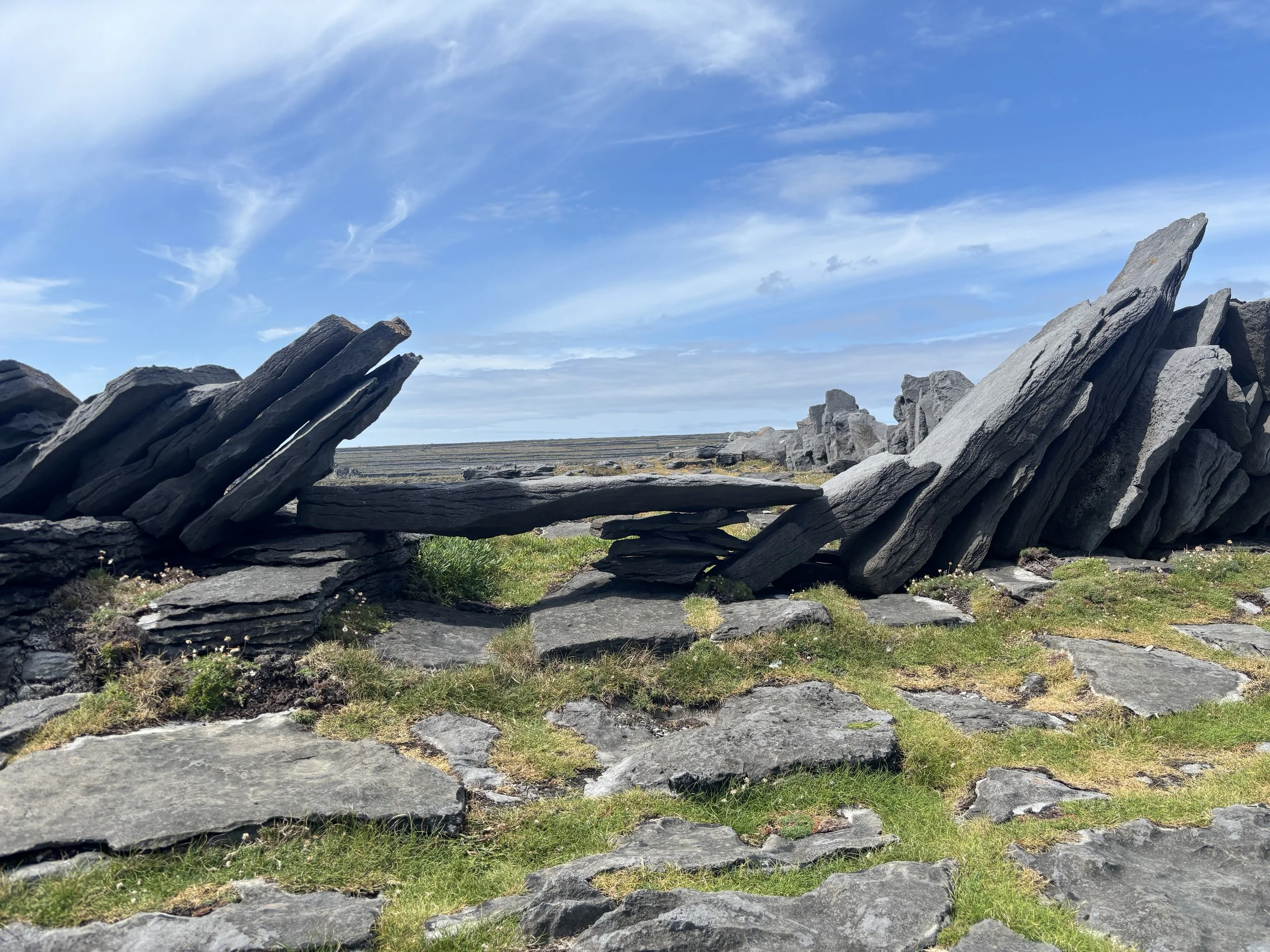
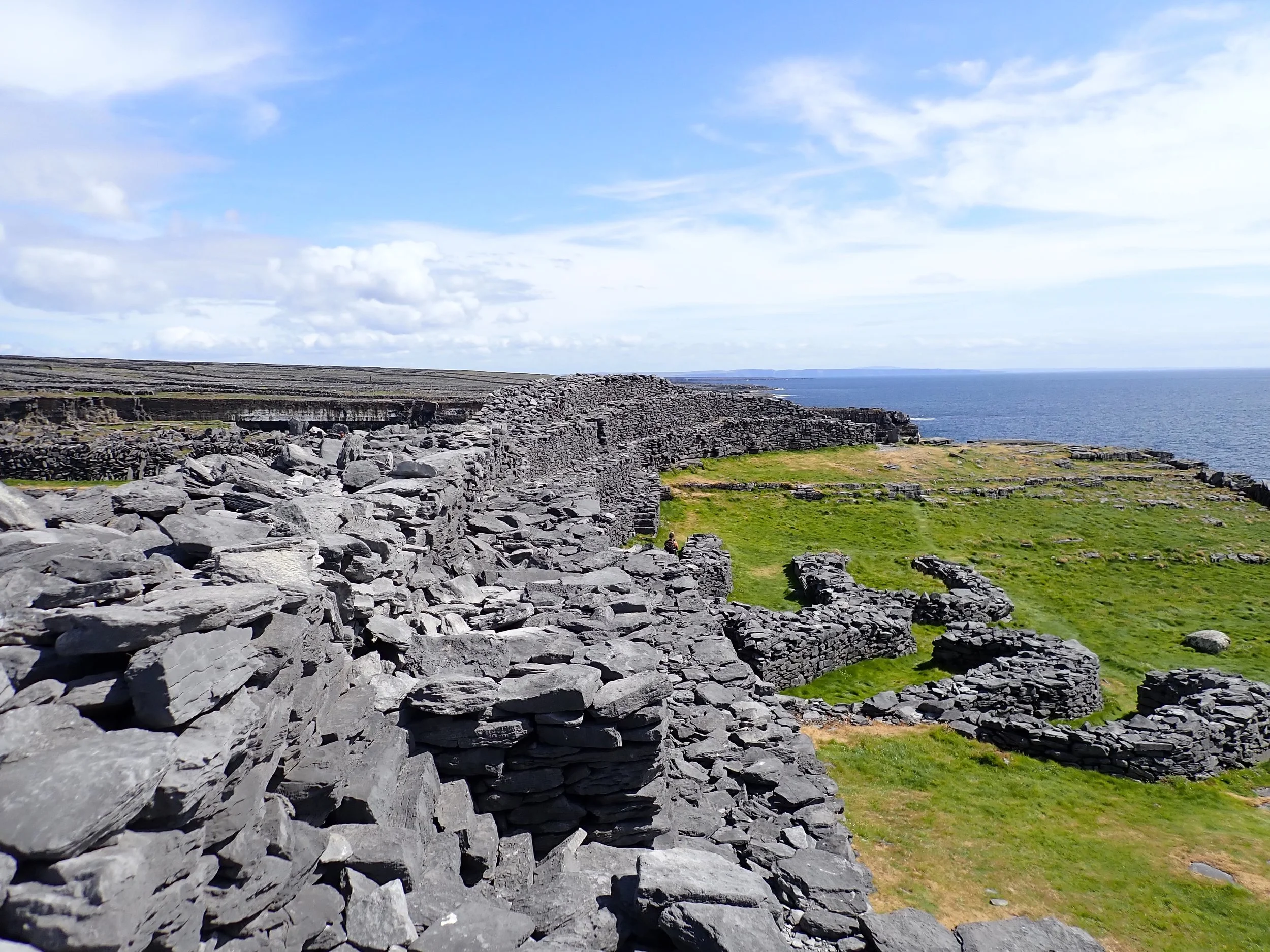
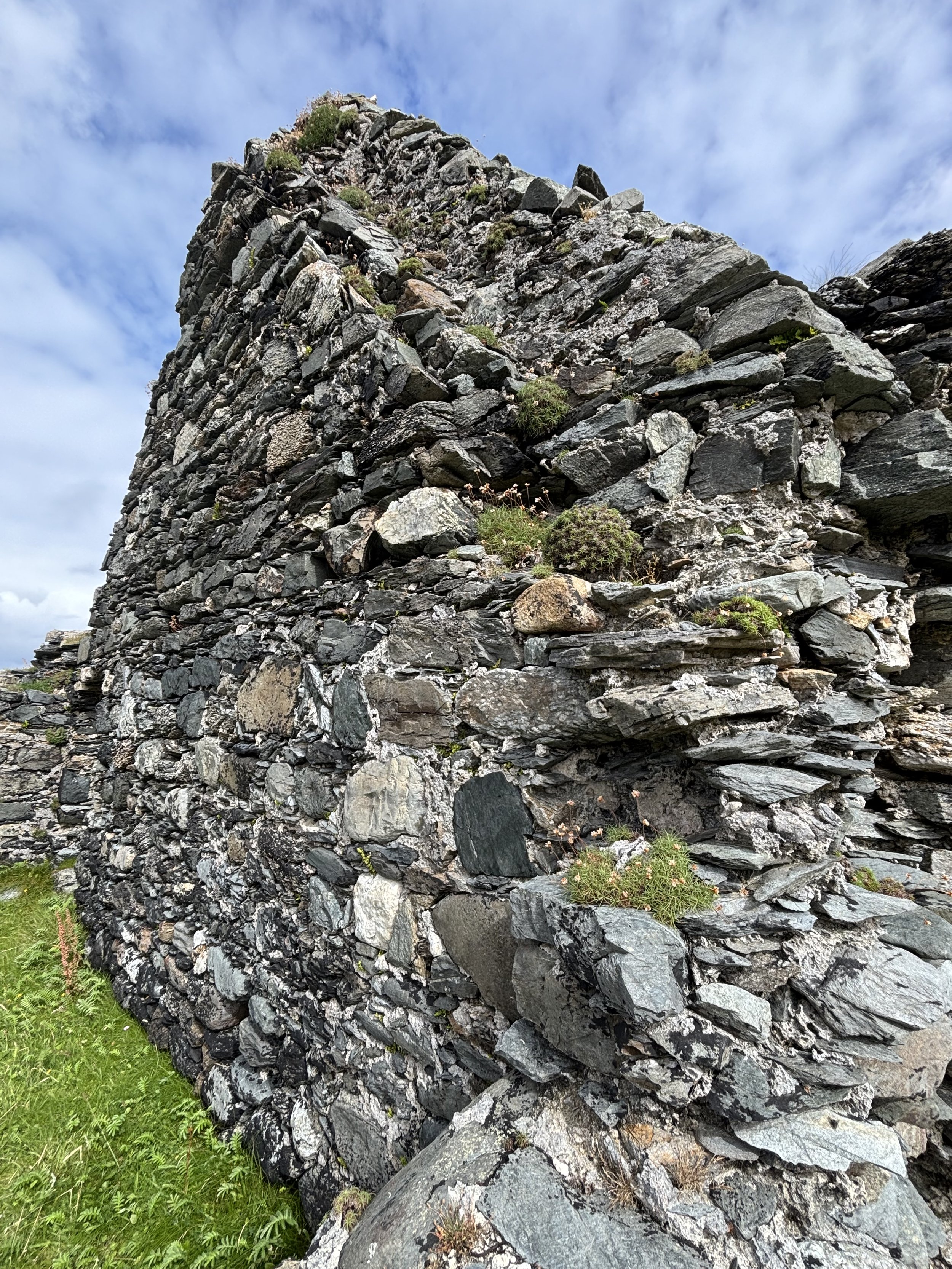
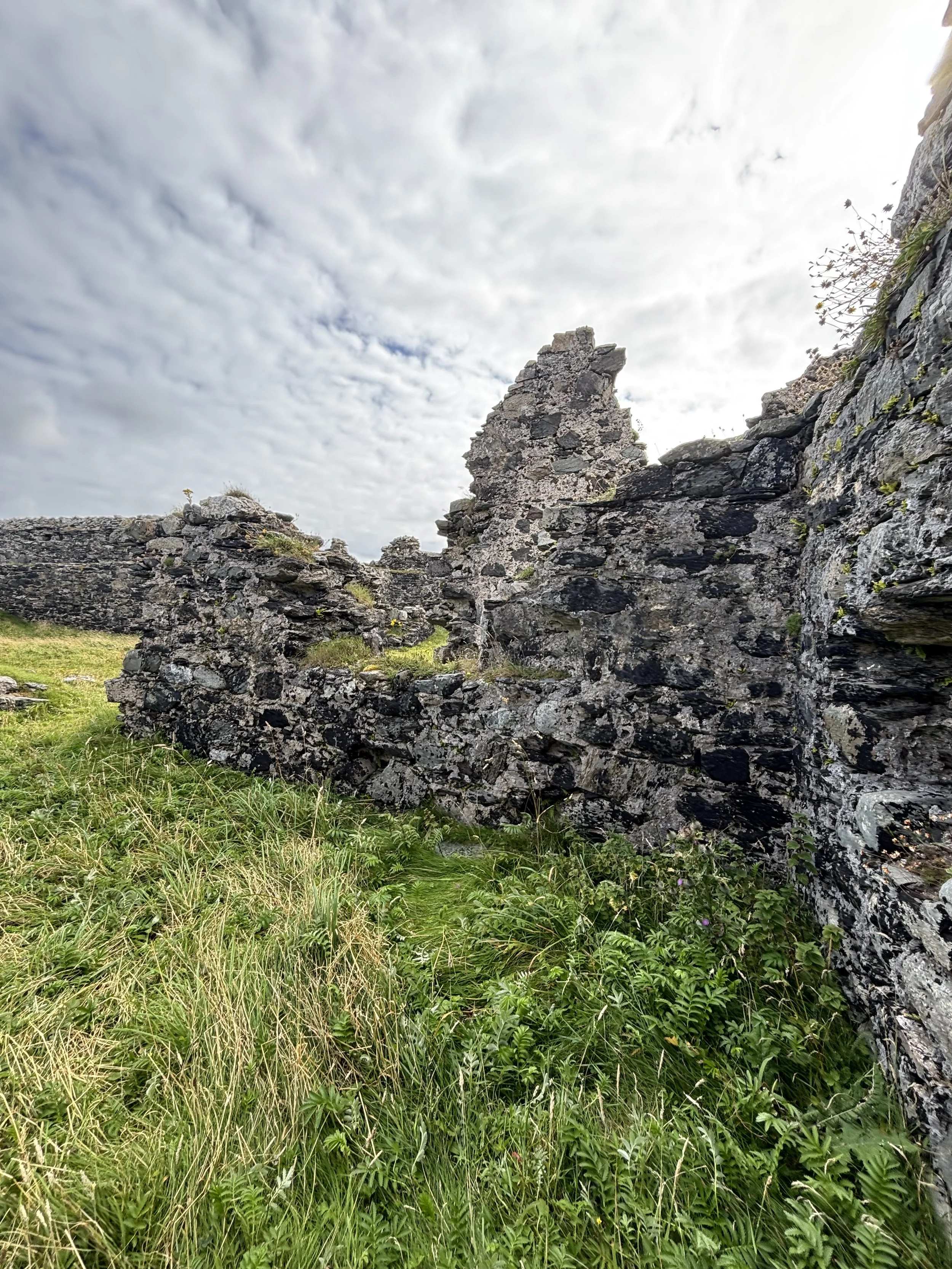
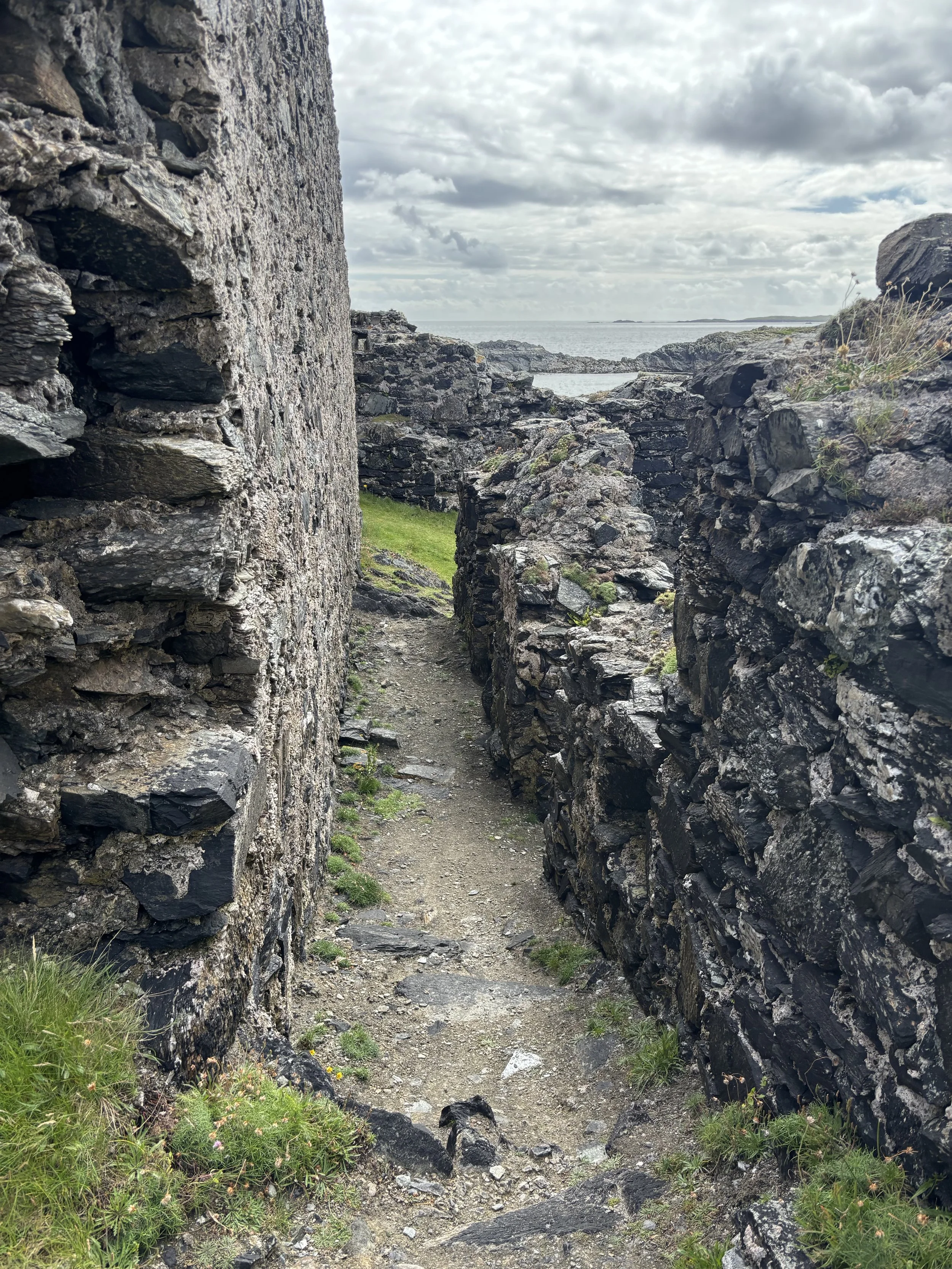
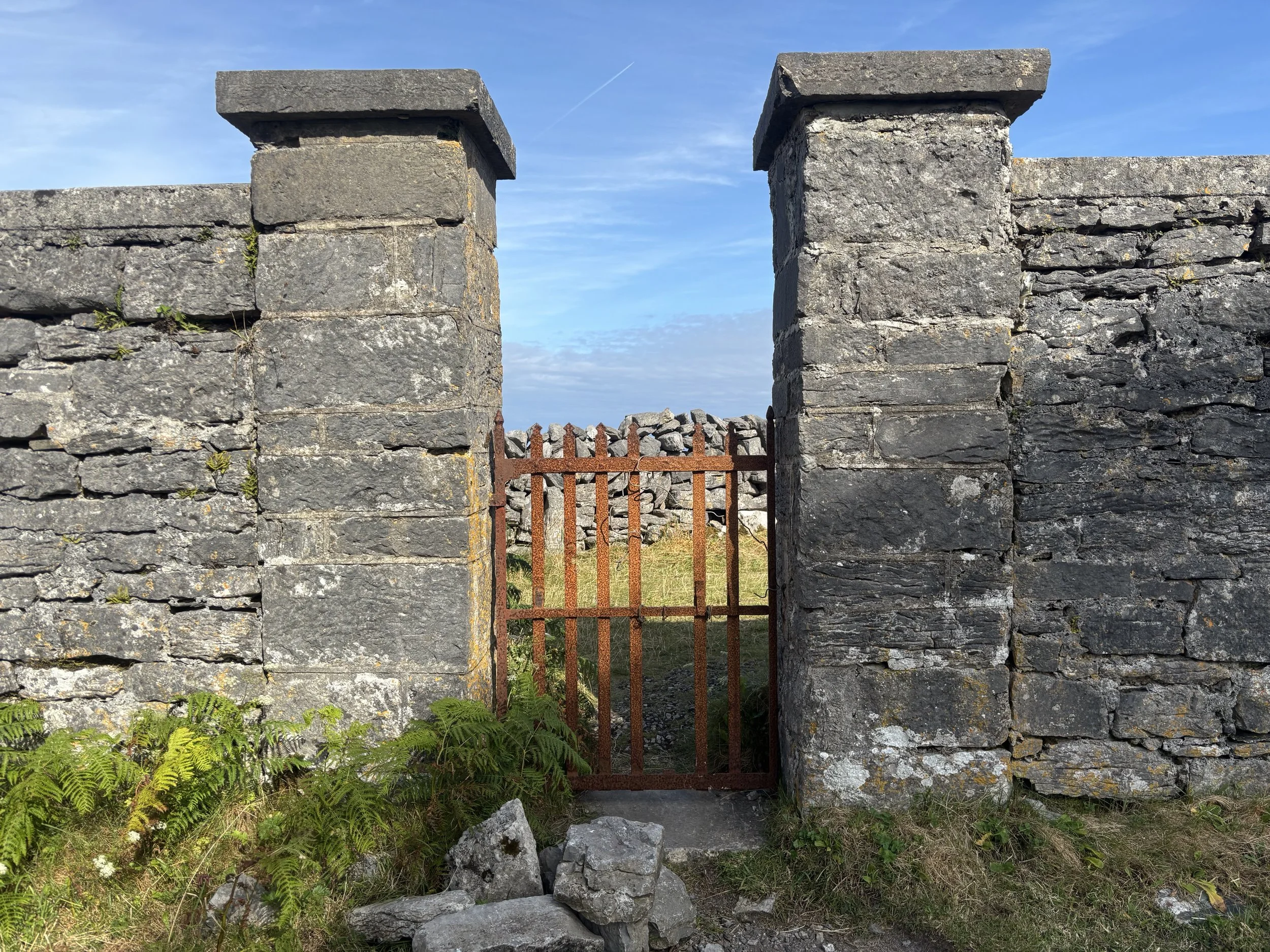
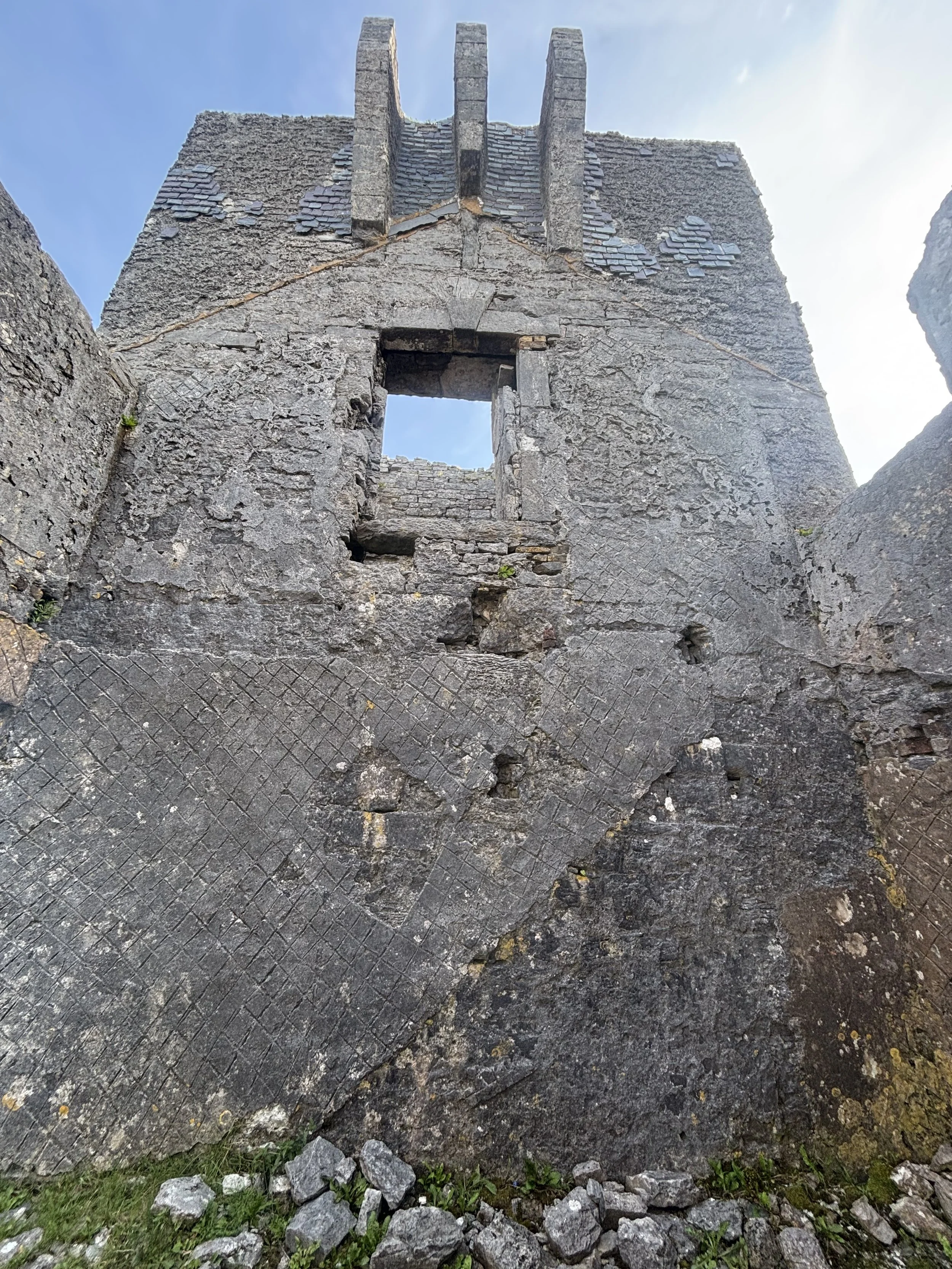
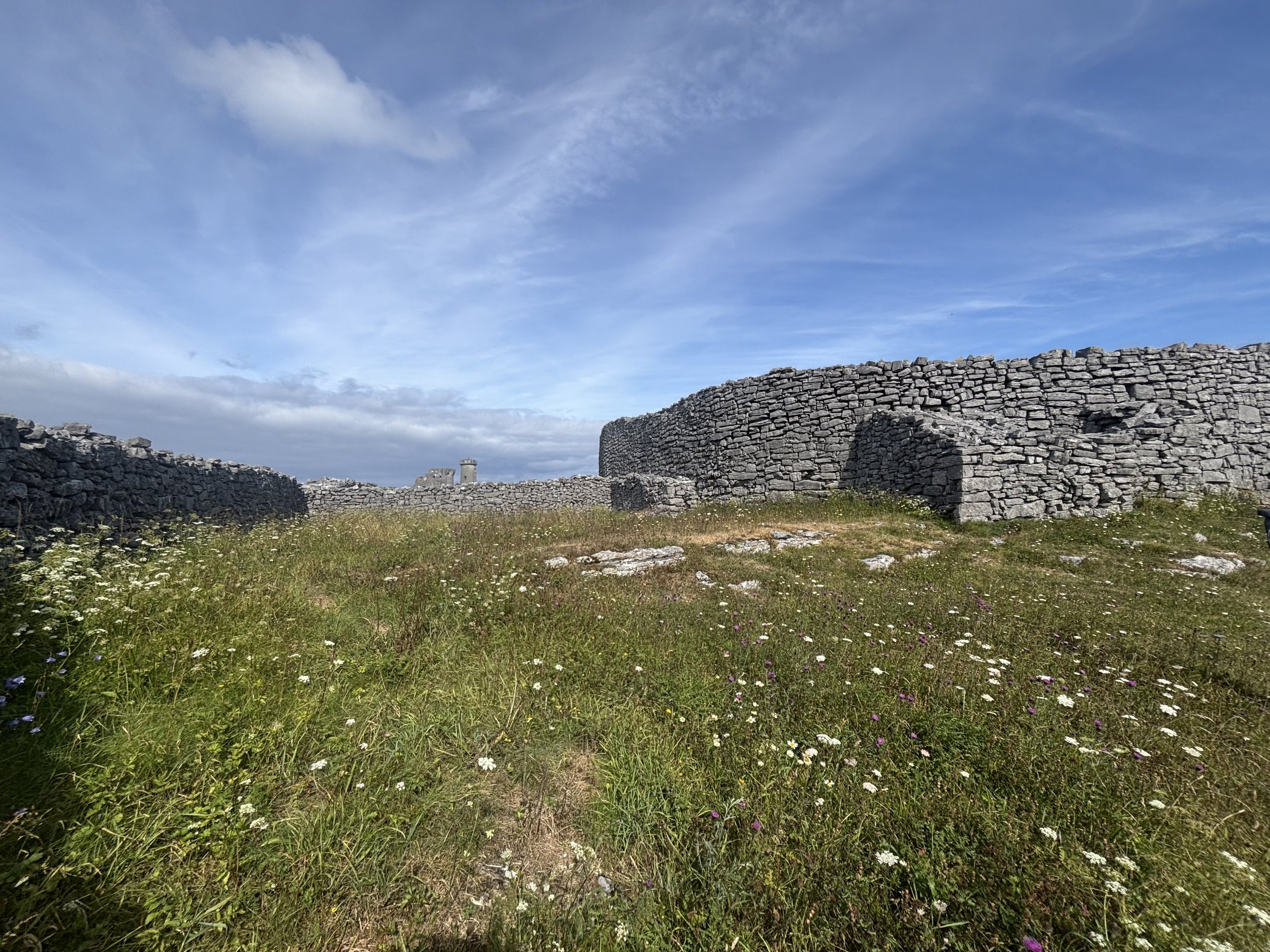
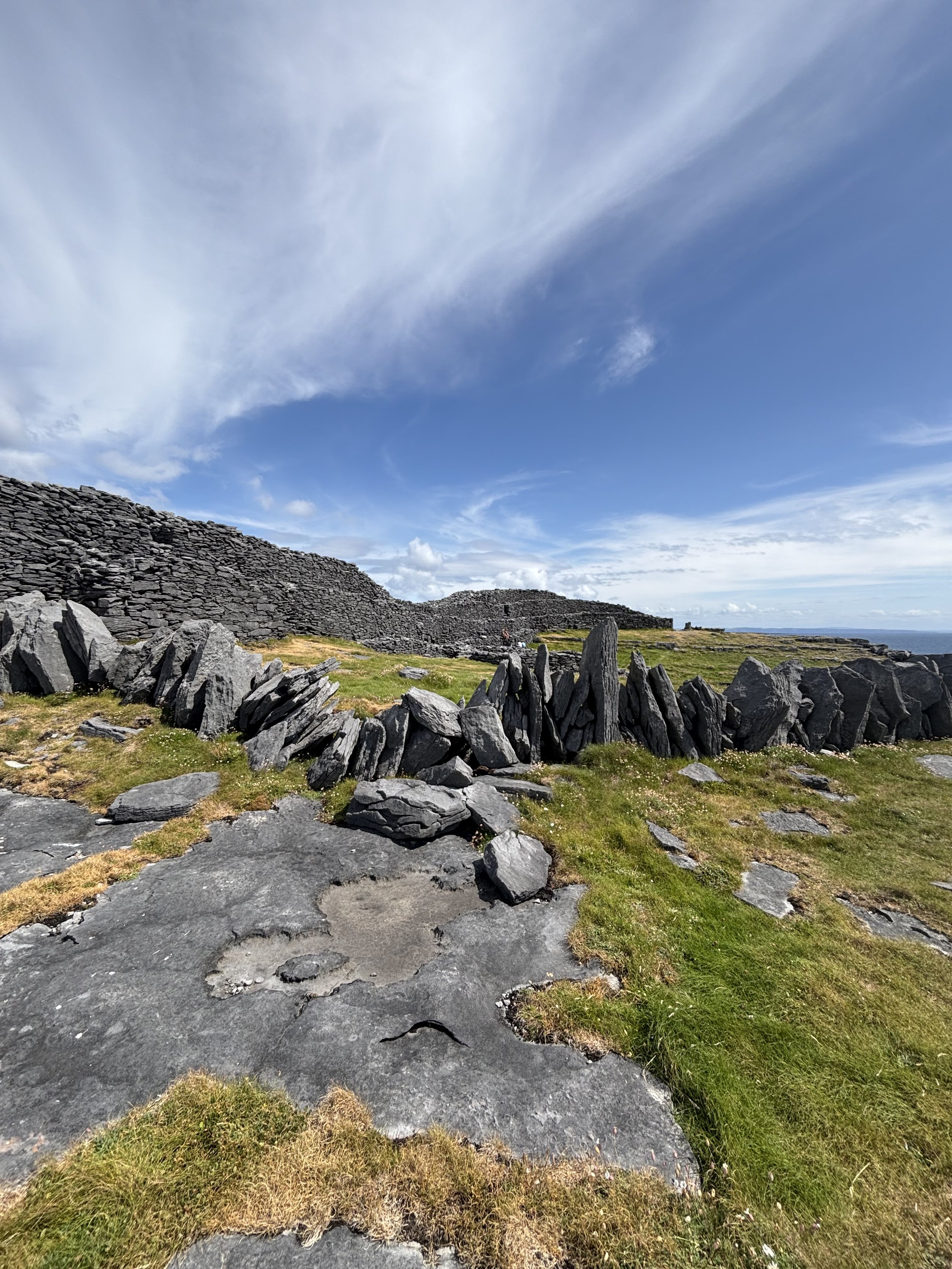
Finally, we visited the Black Fort, or Dún Dúchathair. The fort consists of a terraced wall surrounding the remains of early dwellings known as Clocháns (stone houses). Though it has not been officially confirmed, Black Fort is thought to date back to the Iron Age, more than 1,500 years ago.
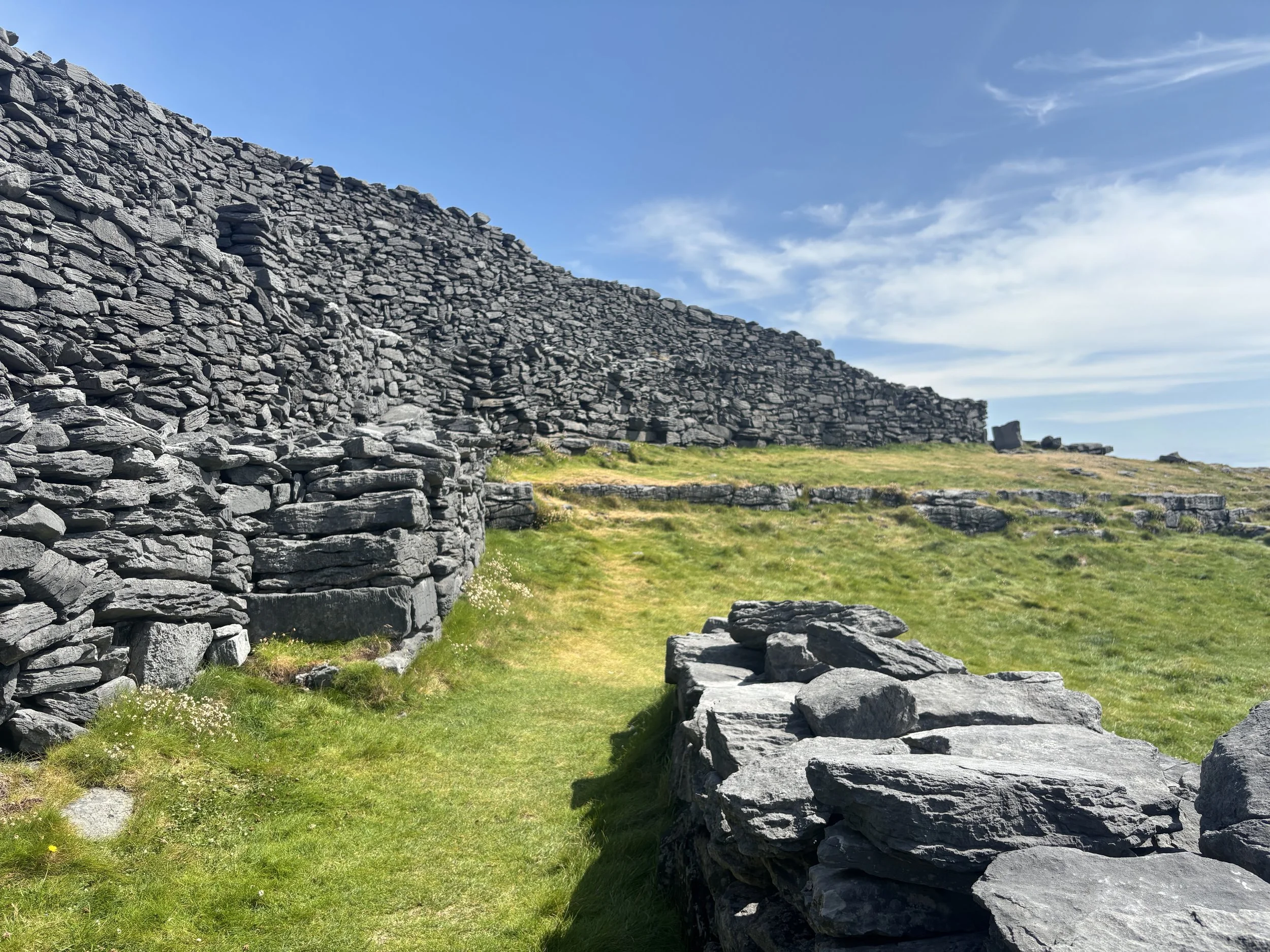
Black Fort, Inishmore, Ireland
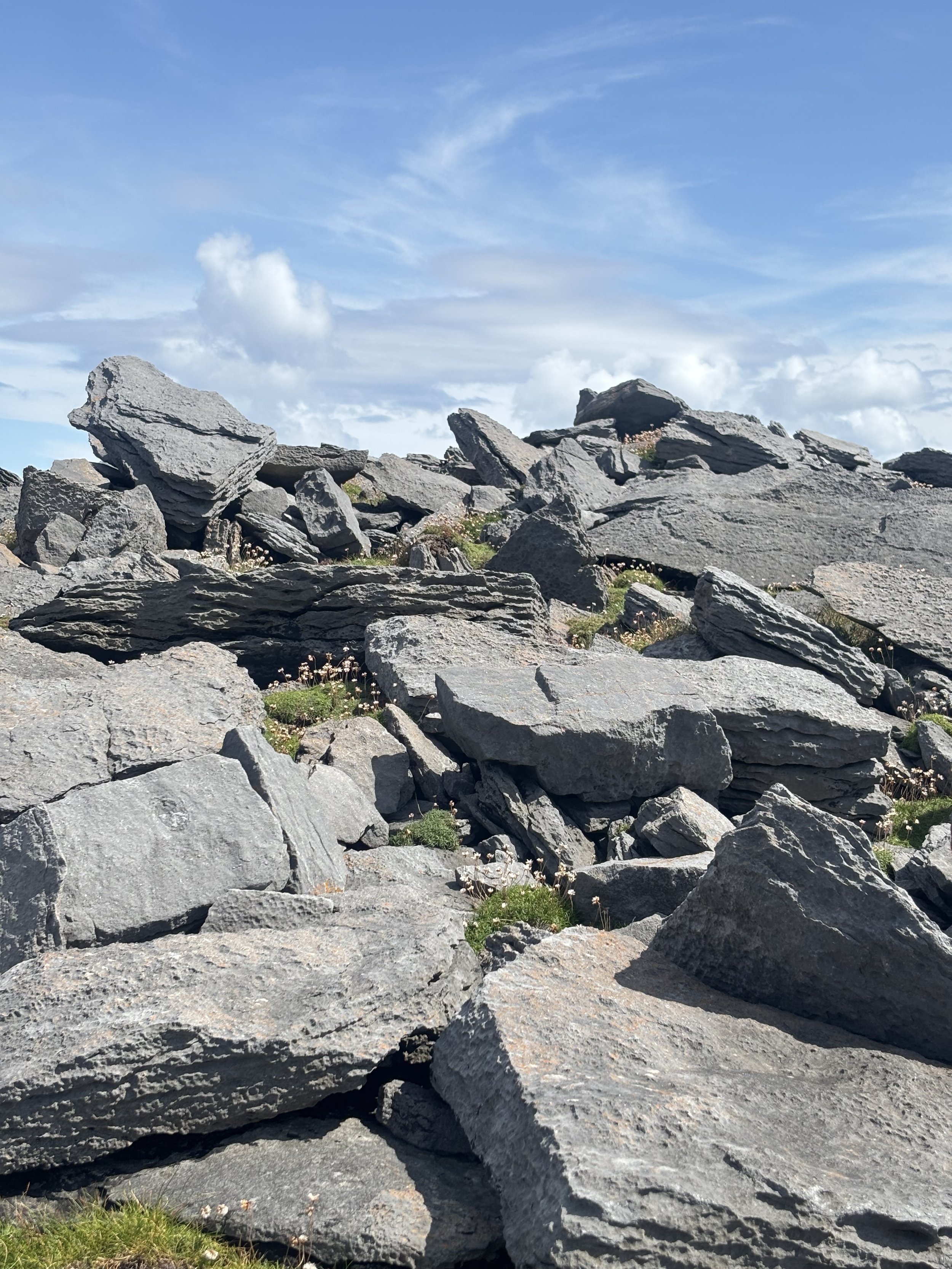
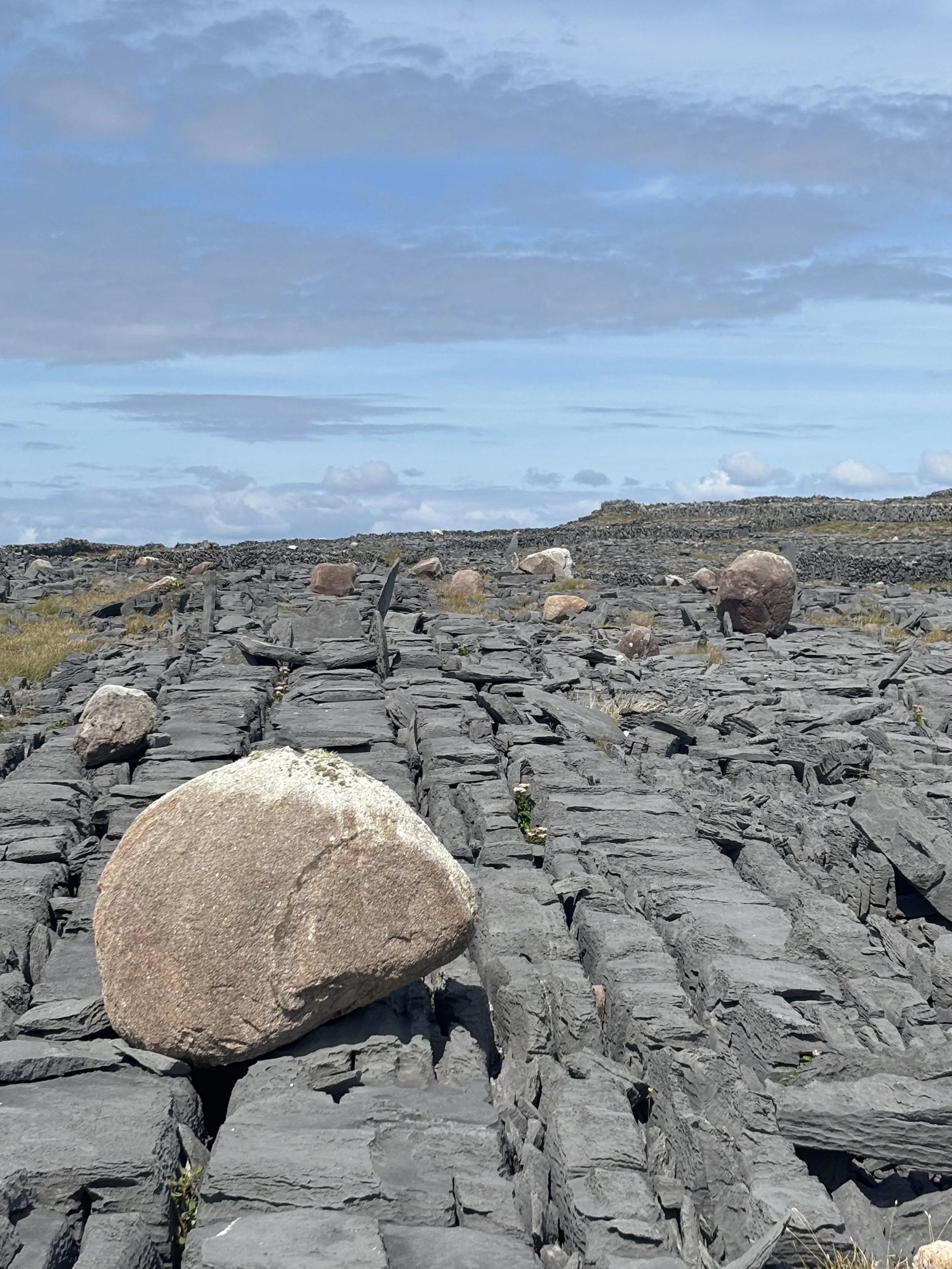
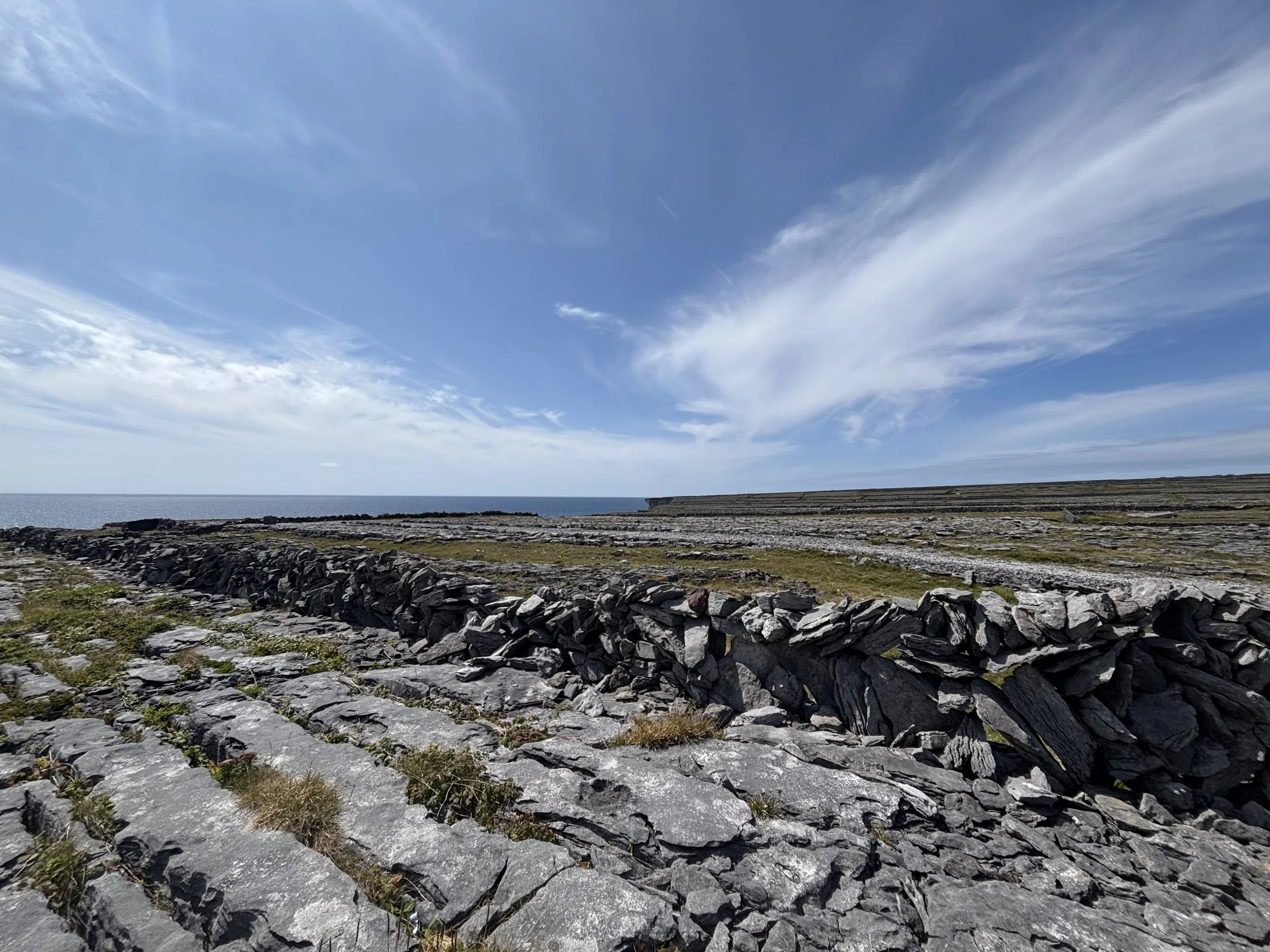
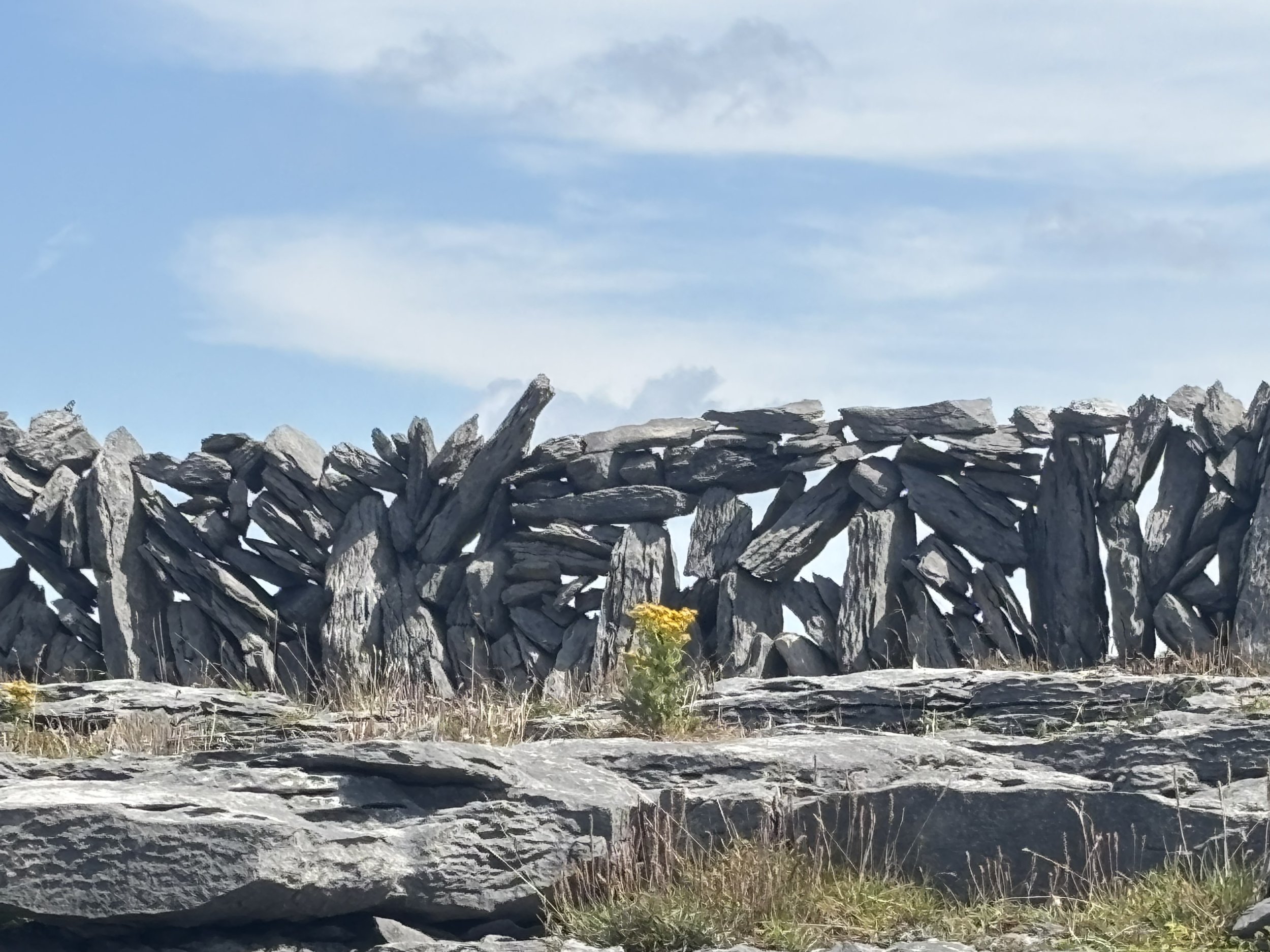
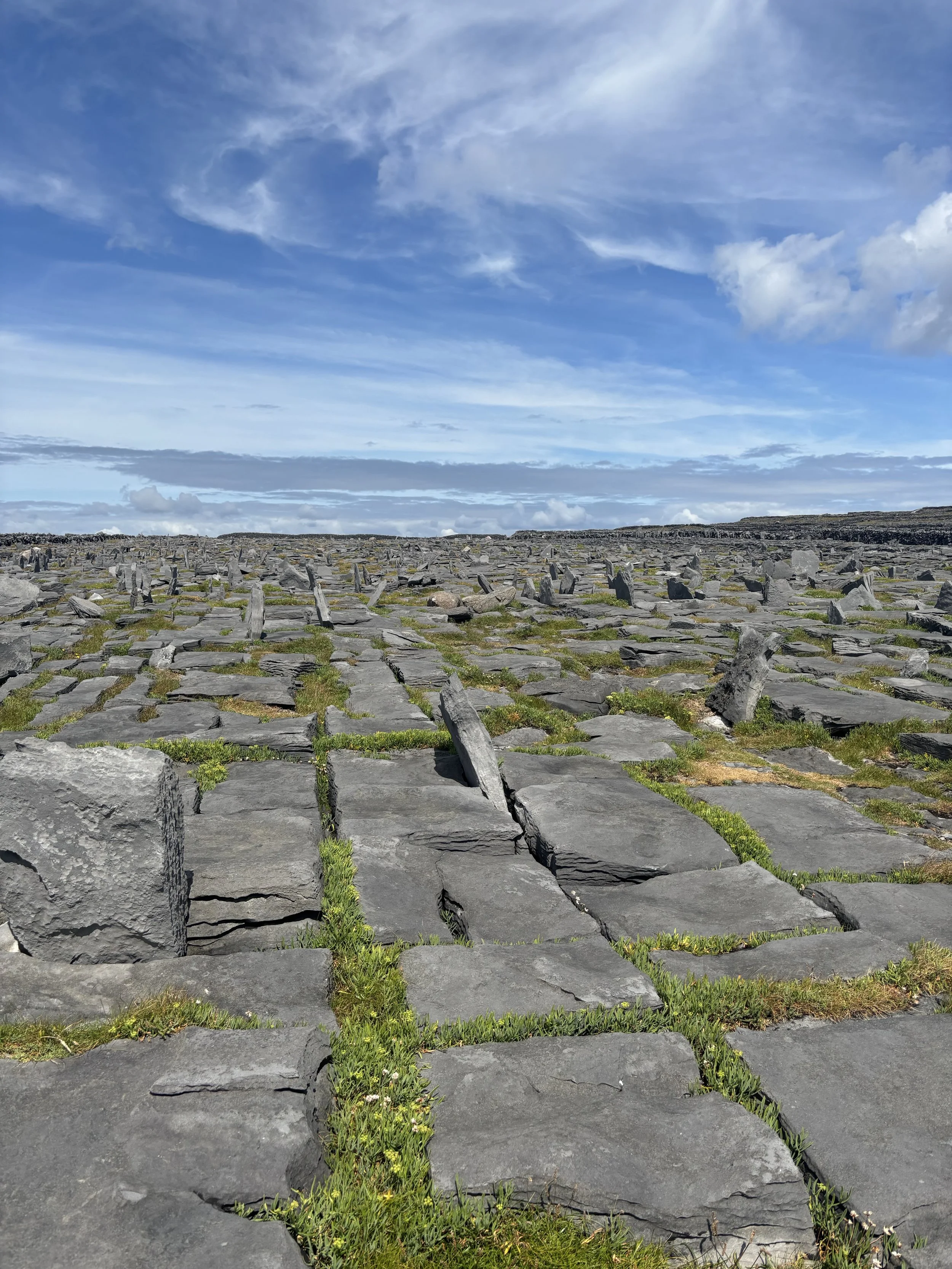
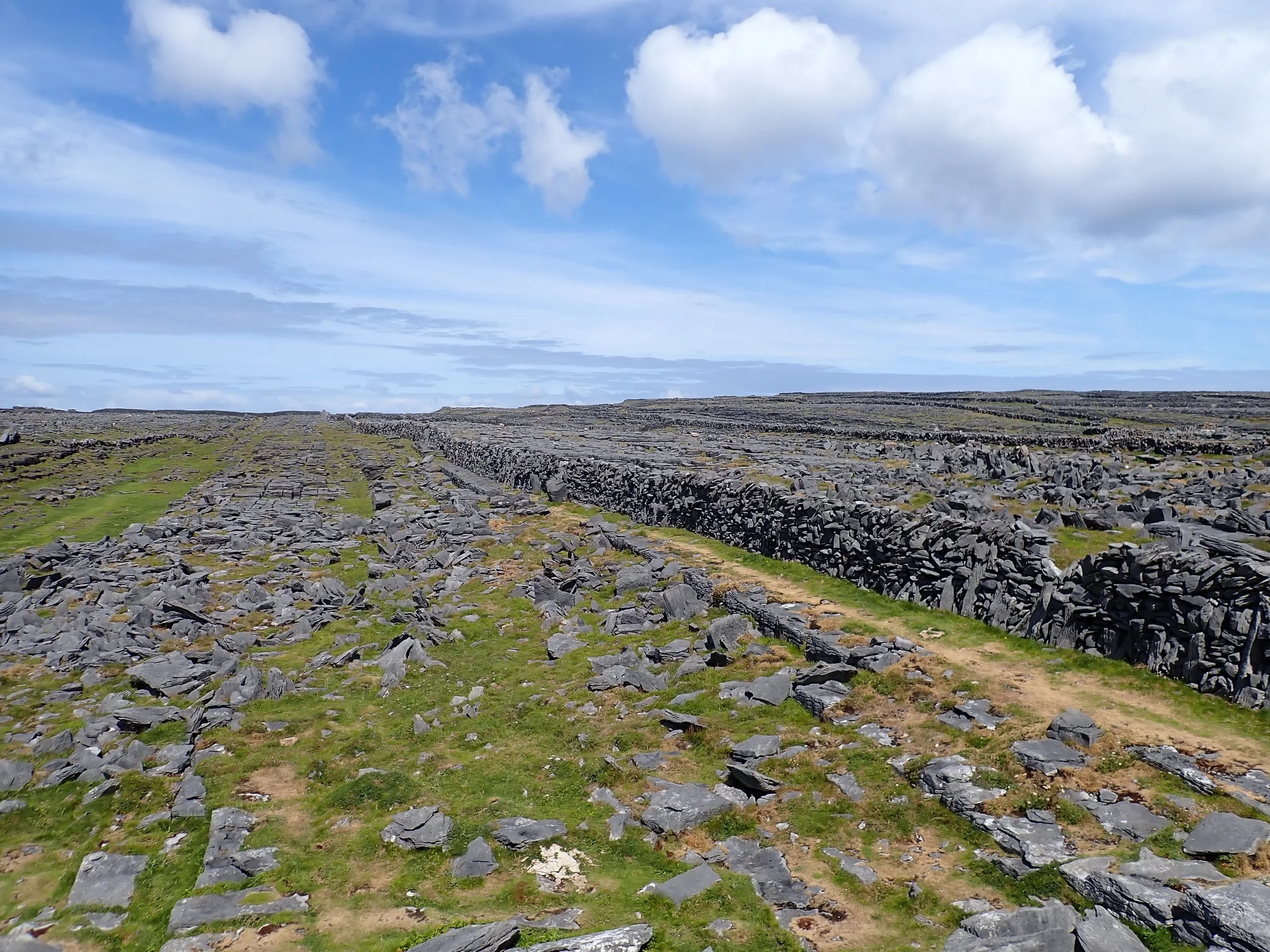
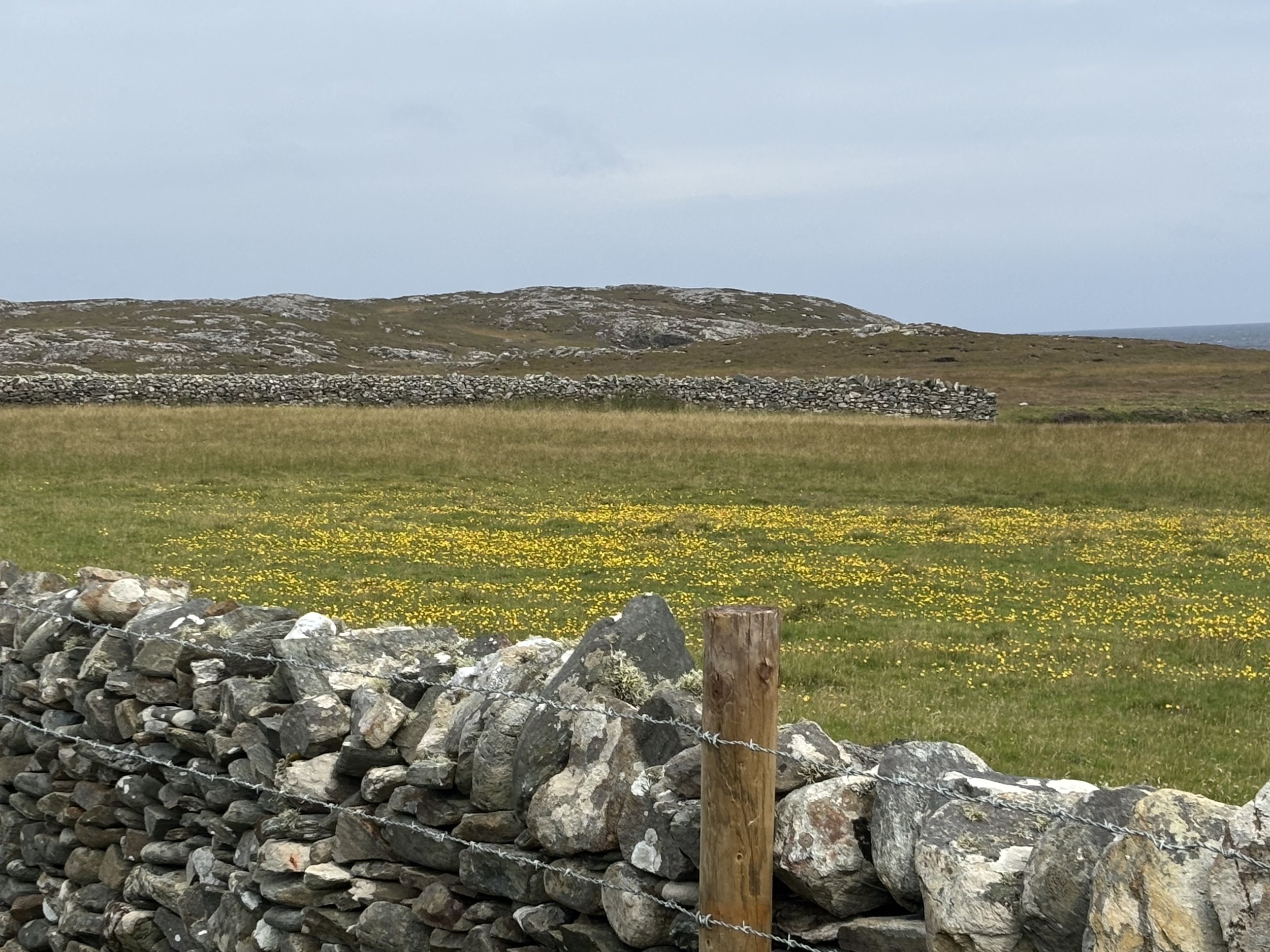
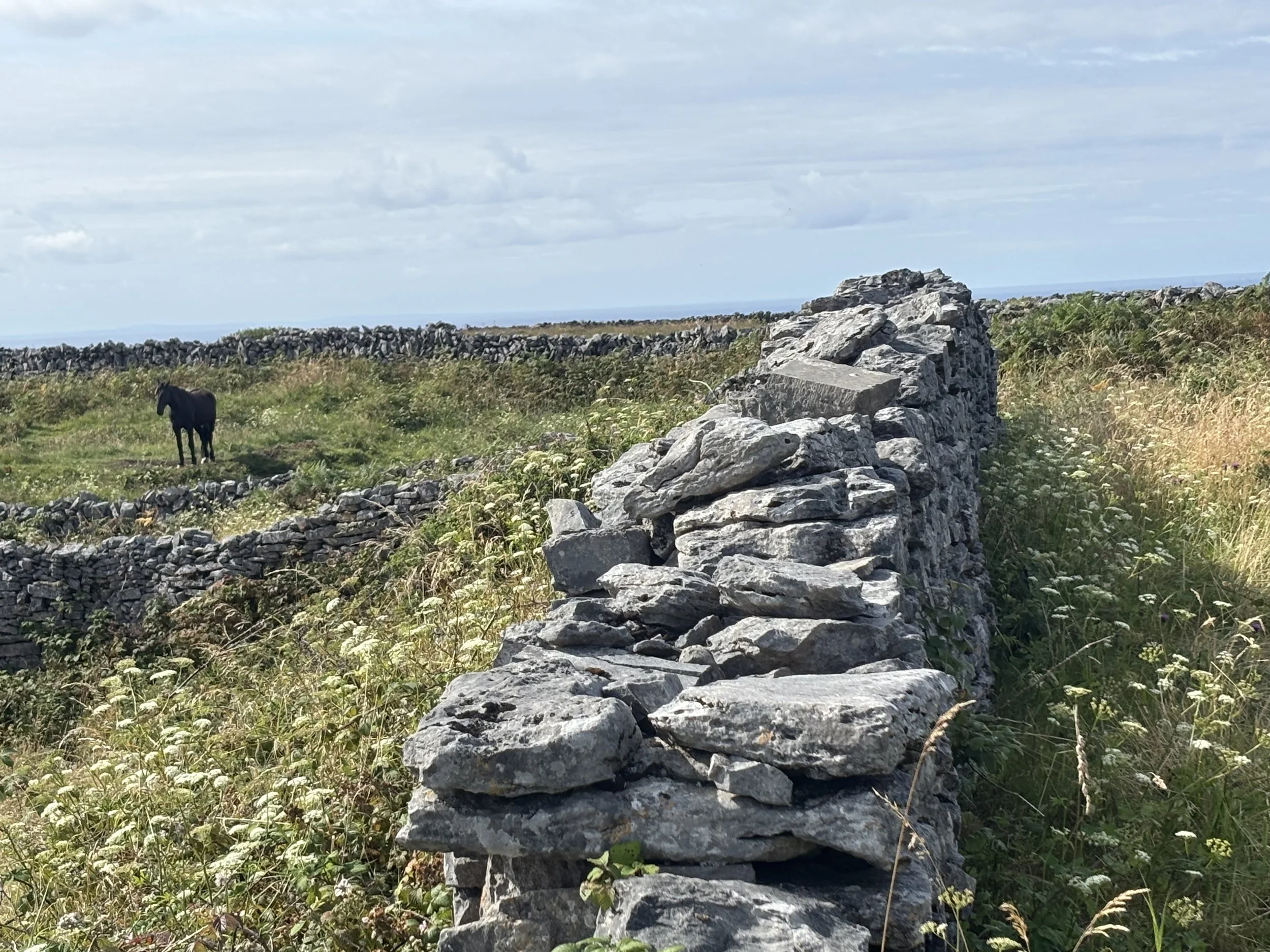
Surrounding Black Fort were miles of stone walls that divided the land into tiny fields, where people farmed and raised livestock. The remarkable part of all of this is that there is only a small layer of soil on top of bedrock. So early dwellers had to be creative. When they cleared stones from their plot of land, they used the stones to build the walls. These walls protected the land from erosion from the Atlantic winds. Then they brought in sand, seaweed, and manure to create a layer of fertile soil for farming. I’m amazed by how hard these farmers would have worked to produce crops in such an environment.
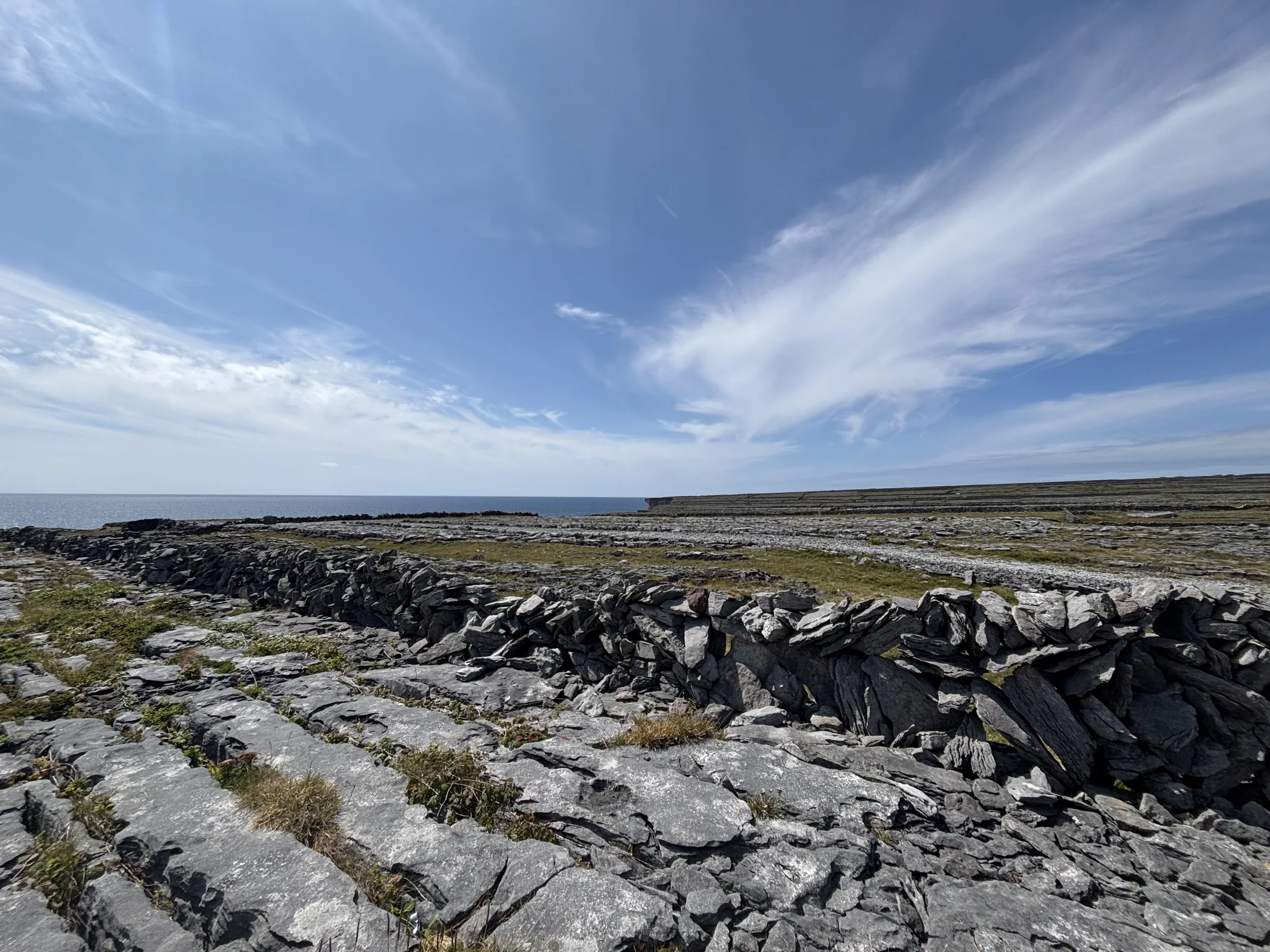
Divided fields near Black Fort—stretching for miles, as far as the eye could see
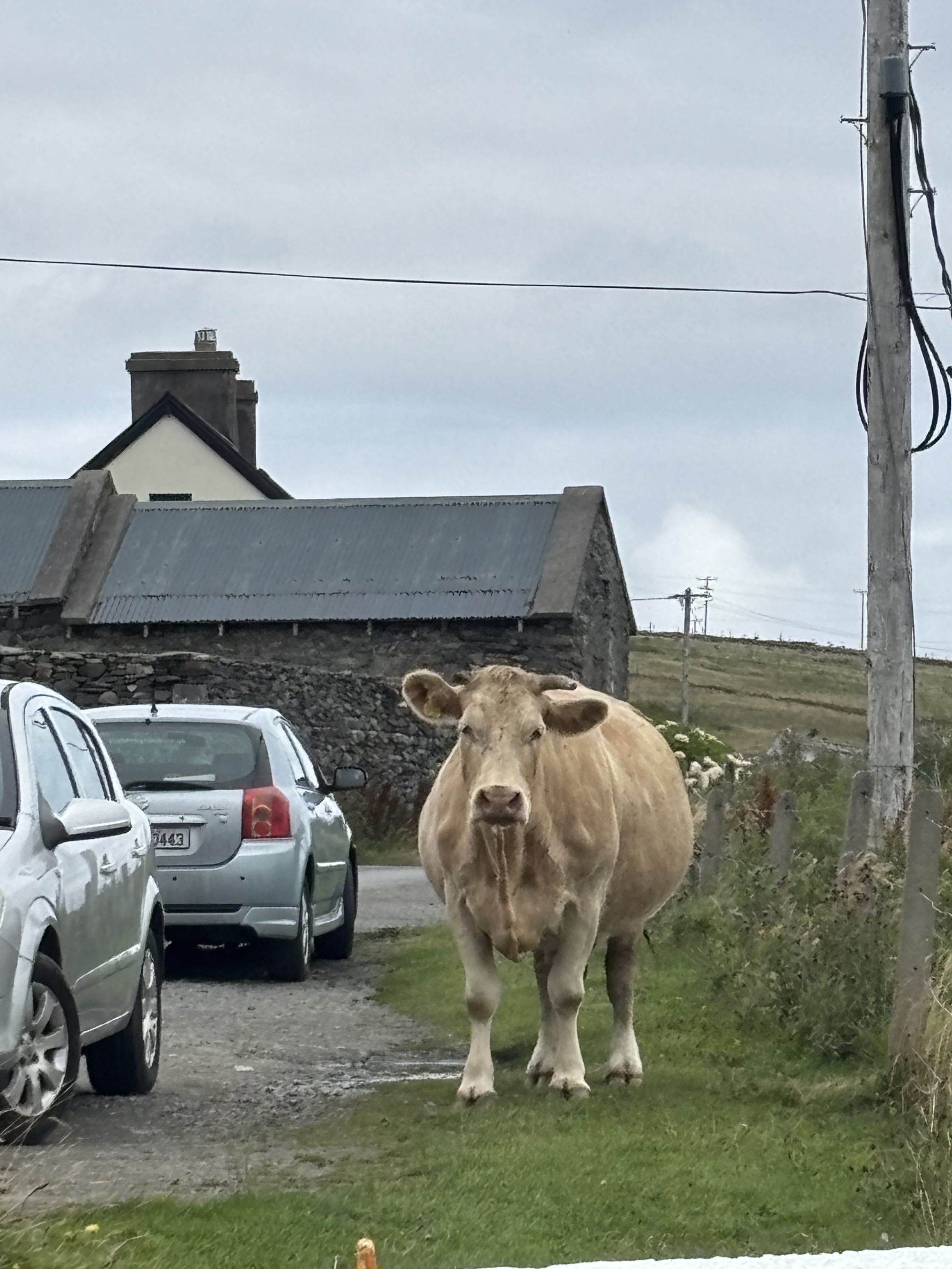
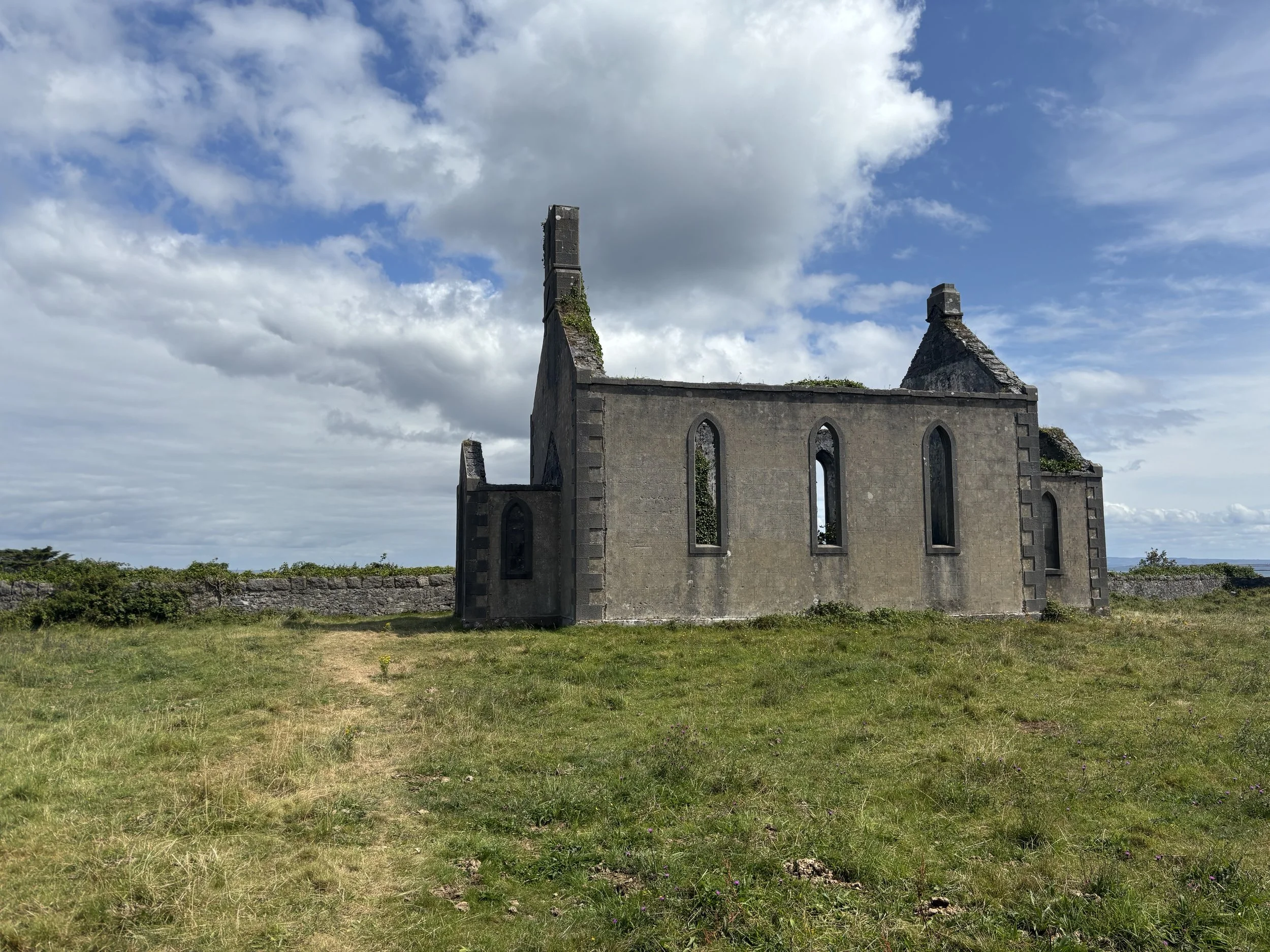
We loved exploring Inishmore, but as always, it was time to move on. Our next stop was Inishbofin, also known as the Island of the White Cow. It is believed to have been inhabited as early as 8000-4000BC.
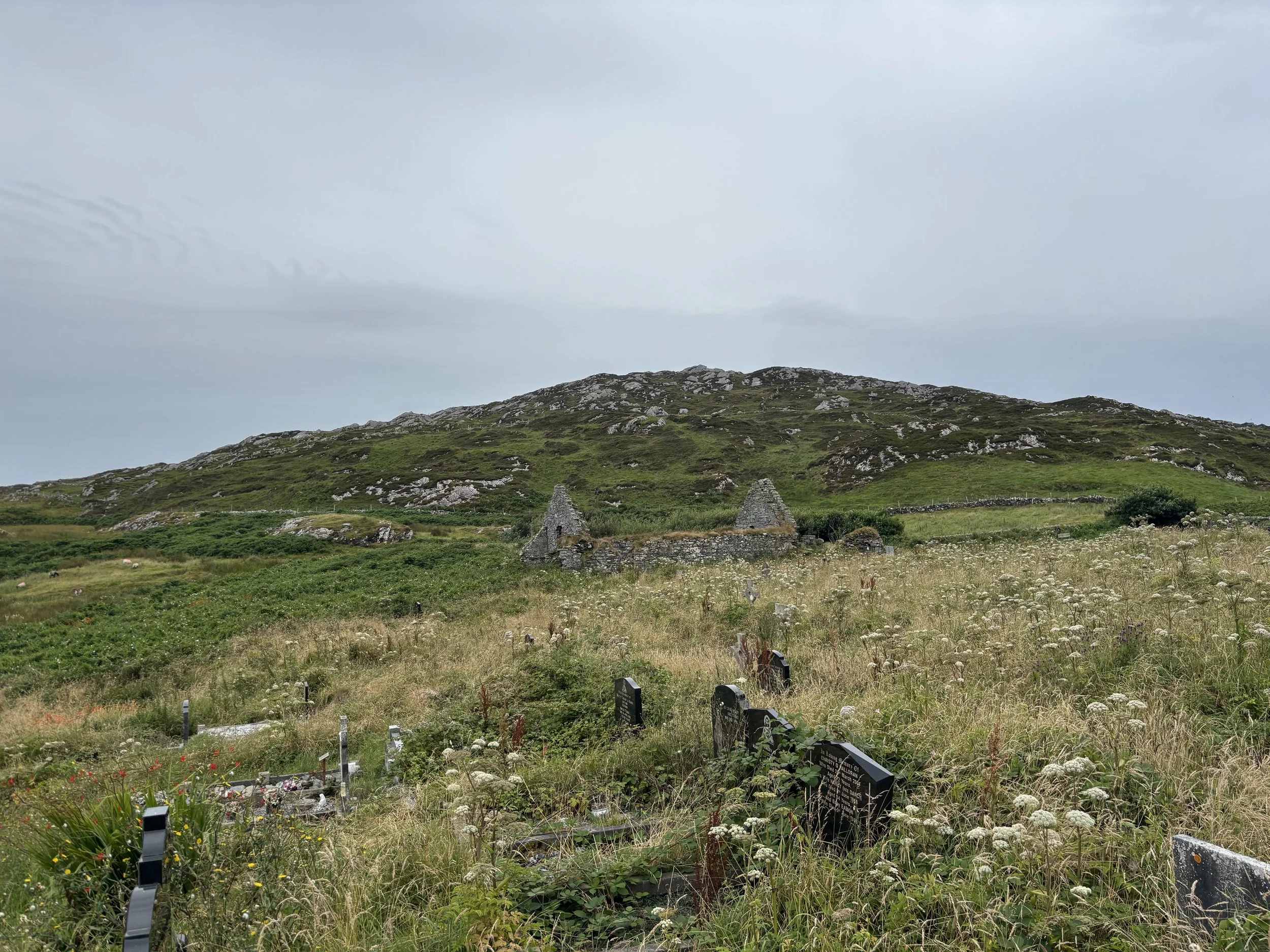
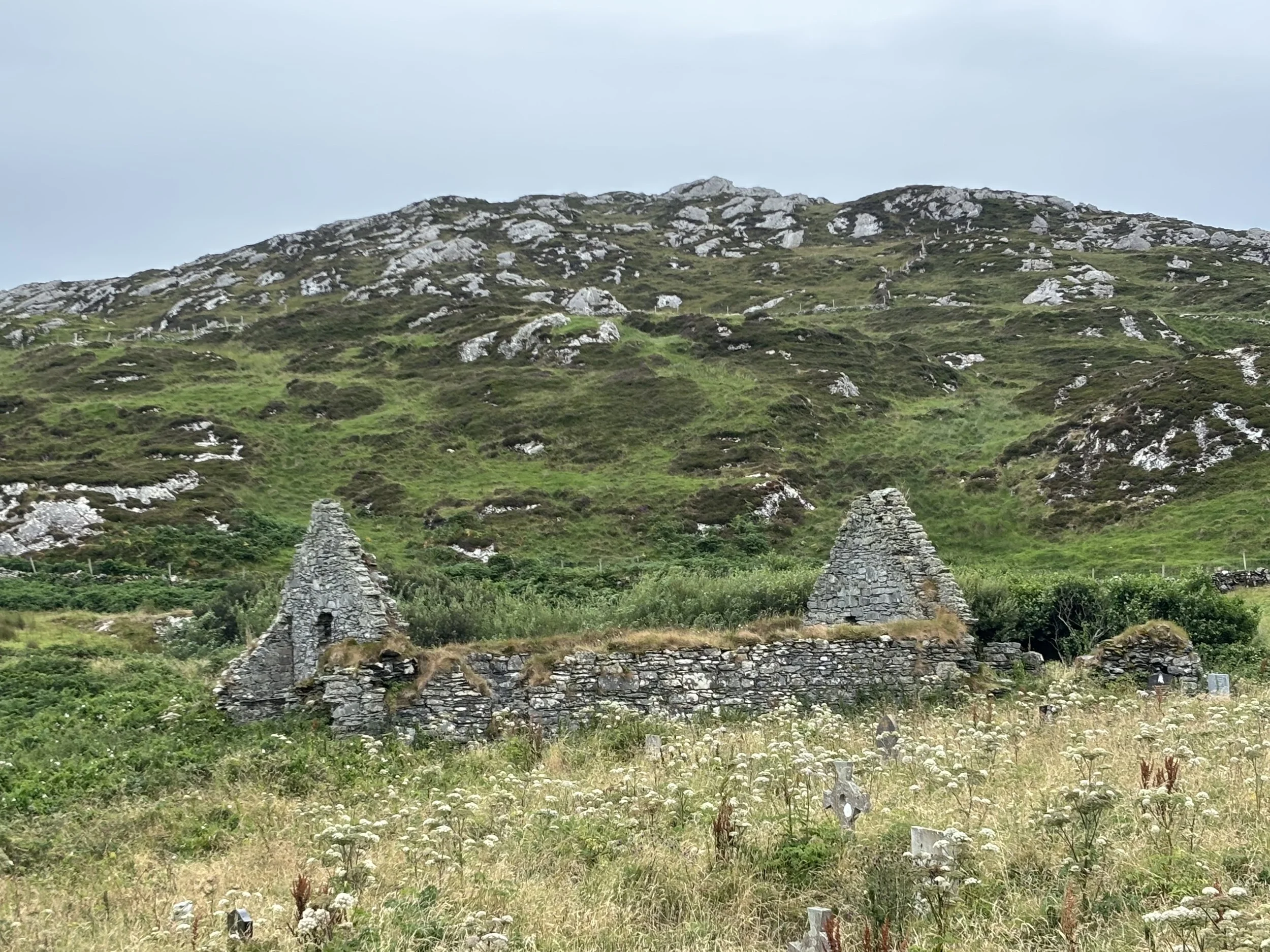
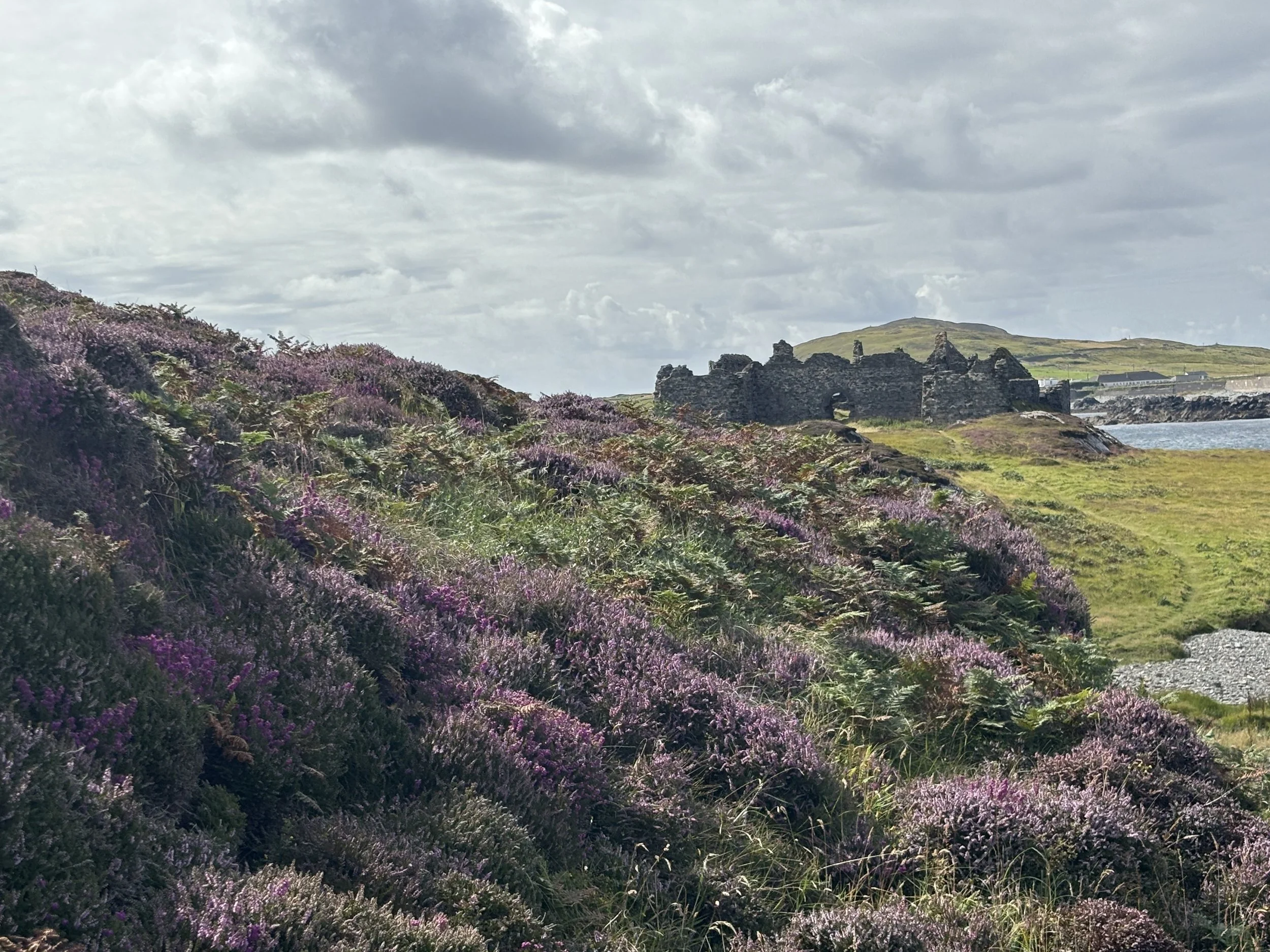
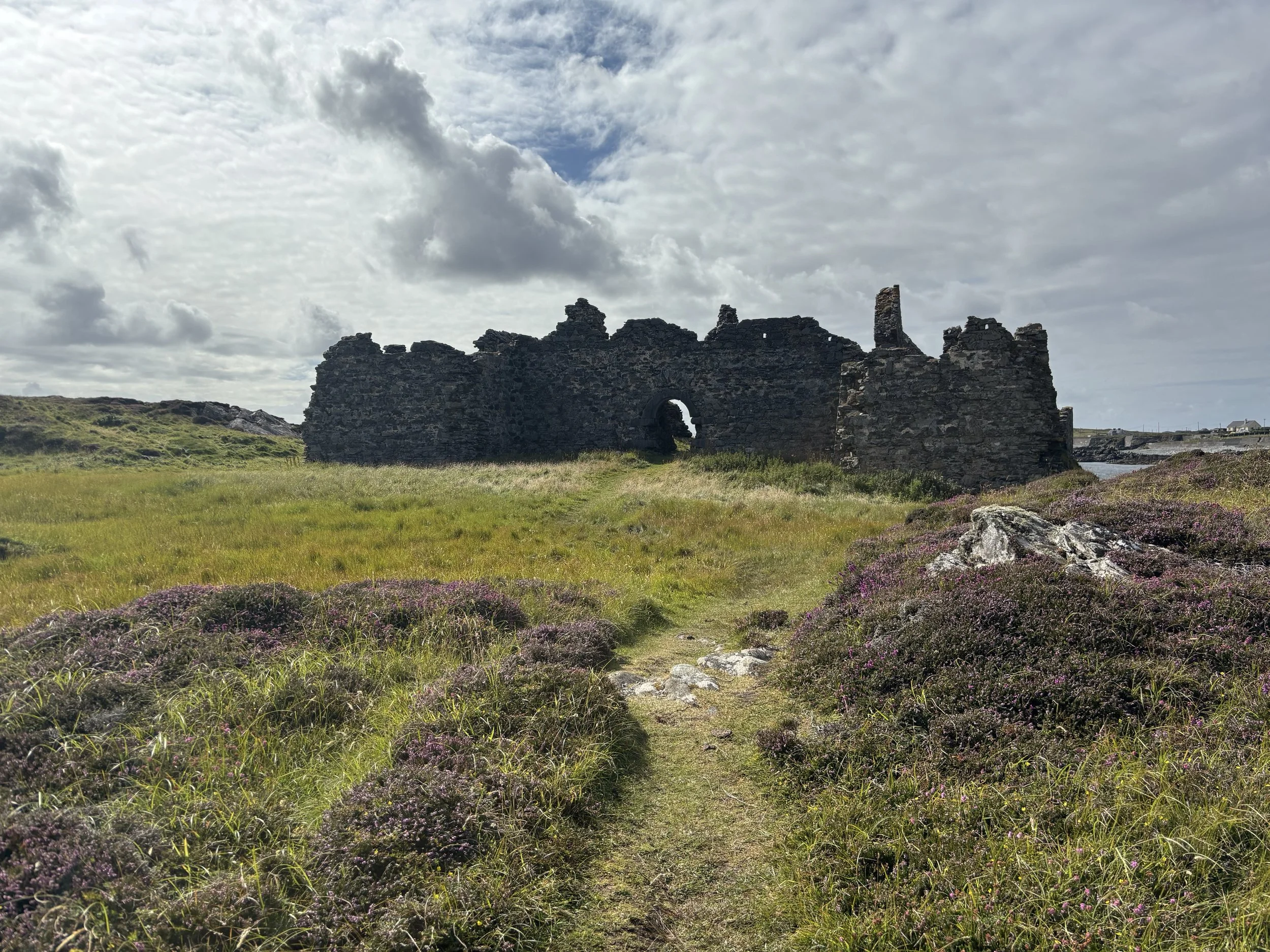
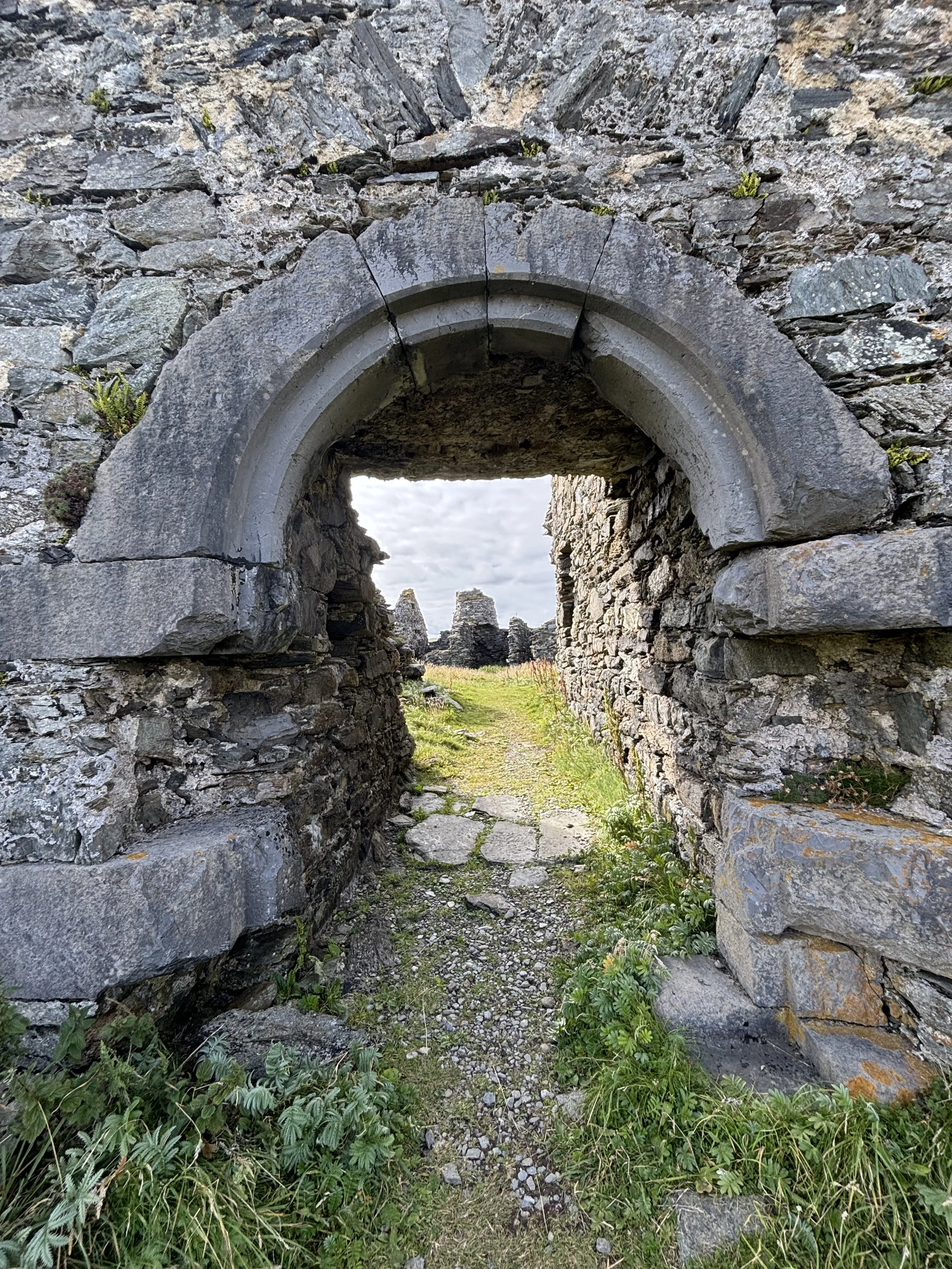
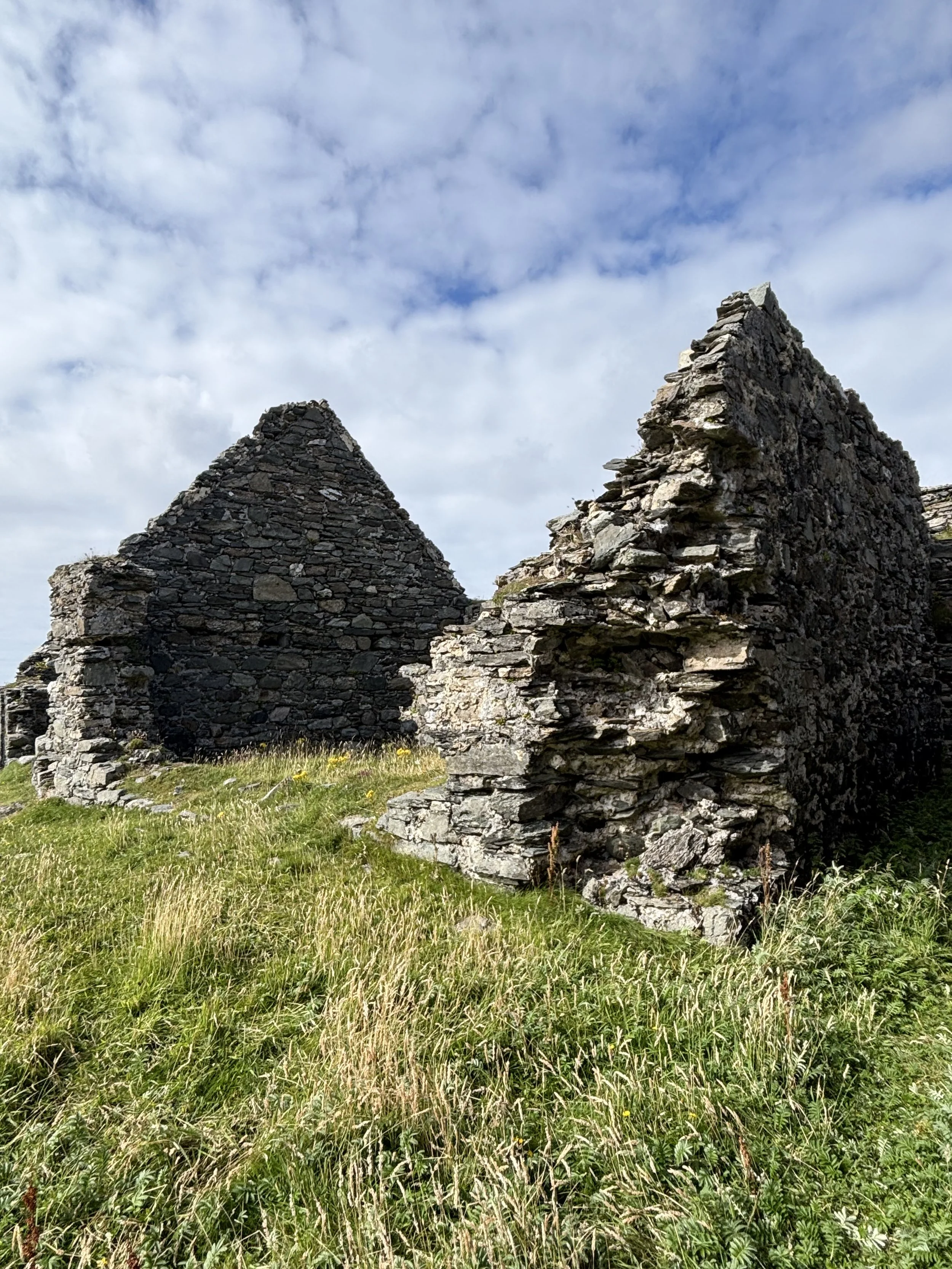
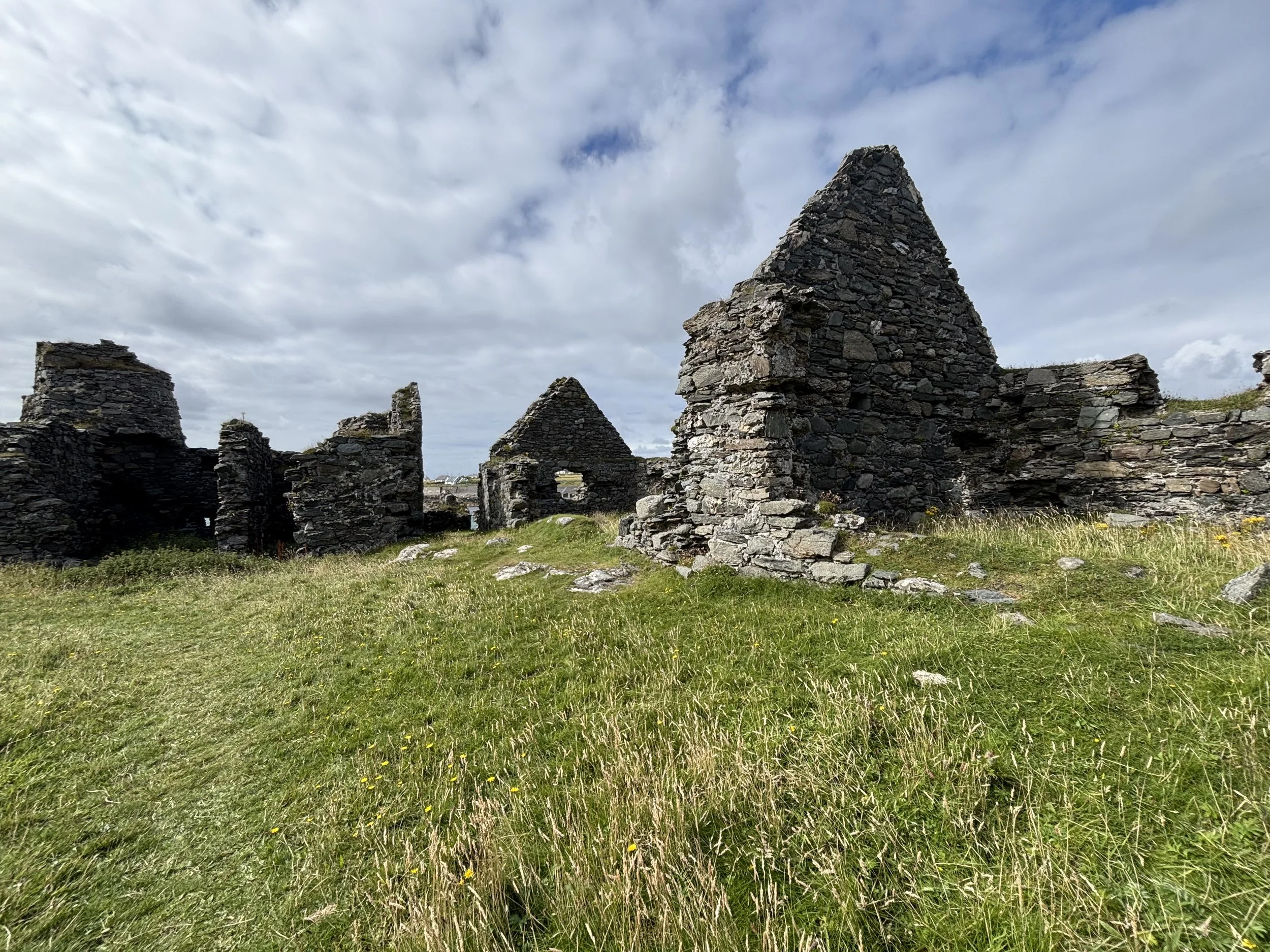
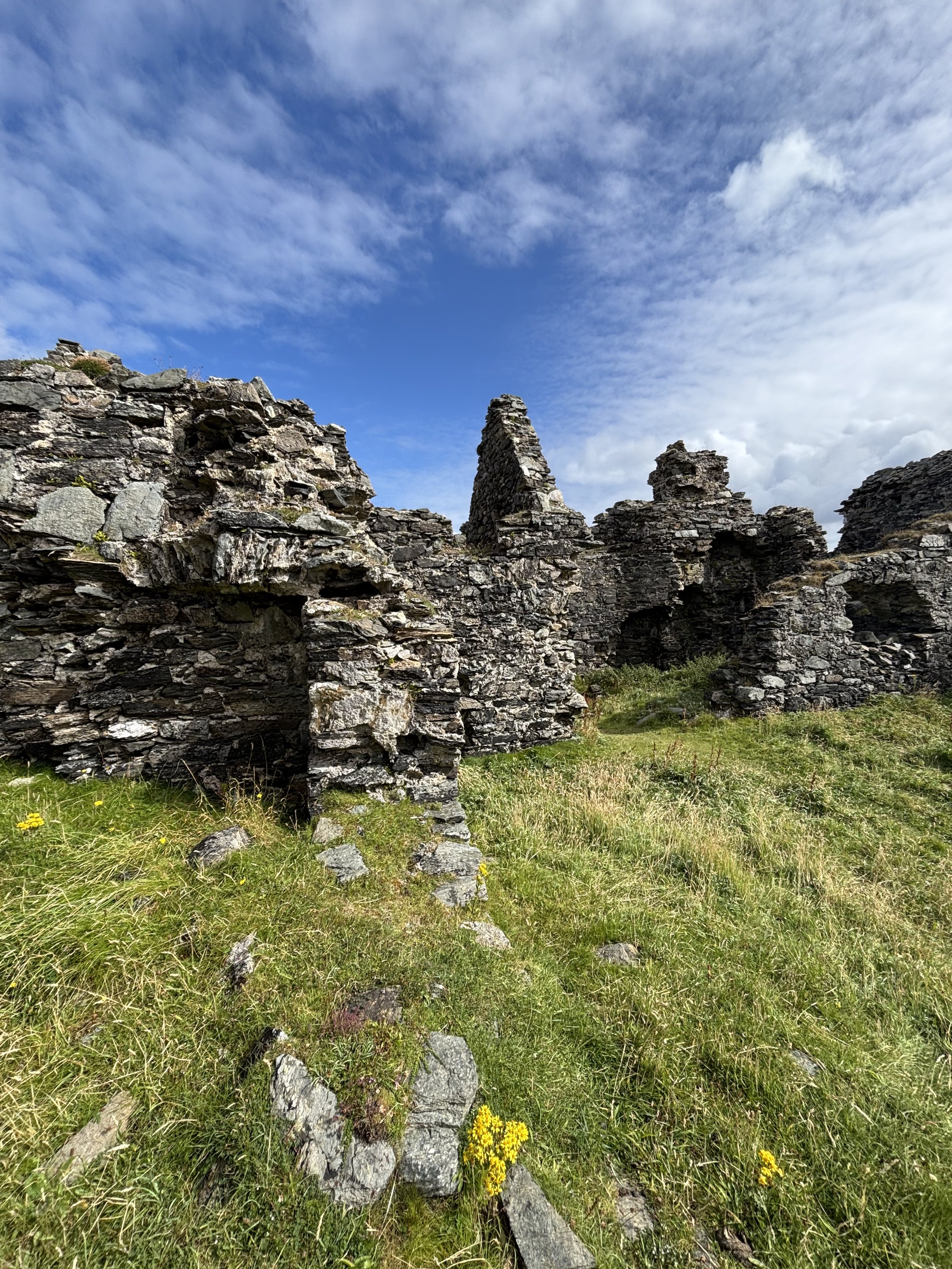
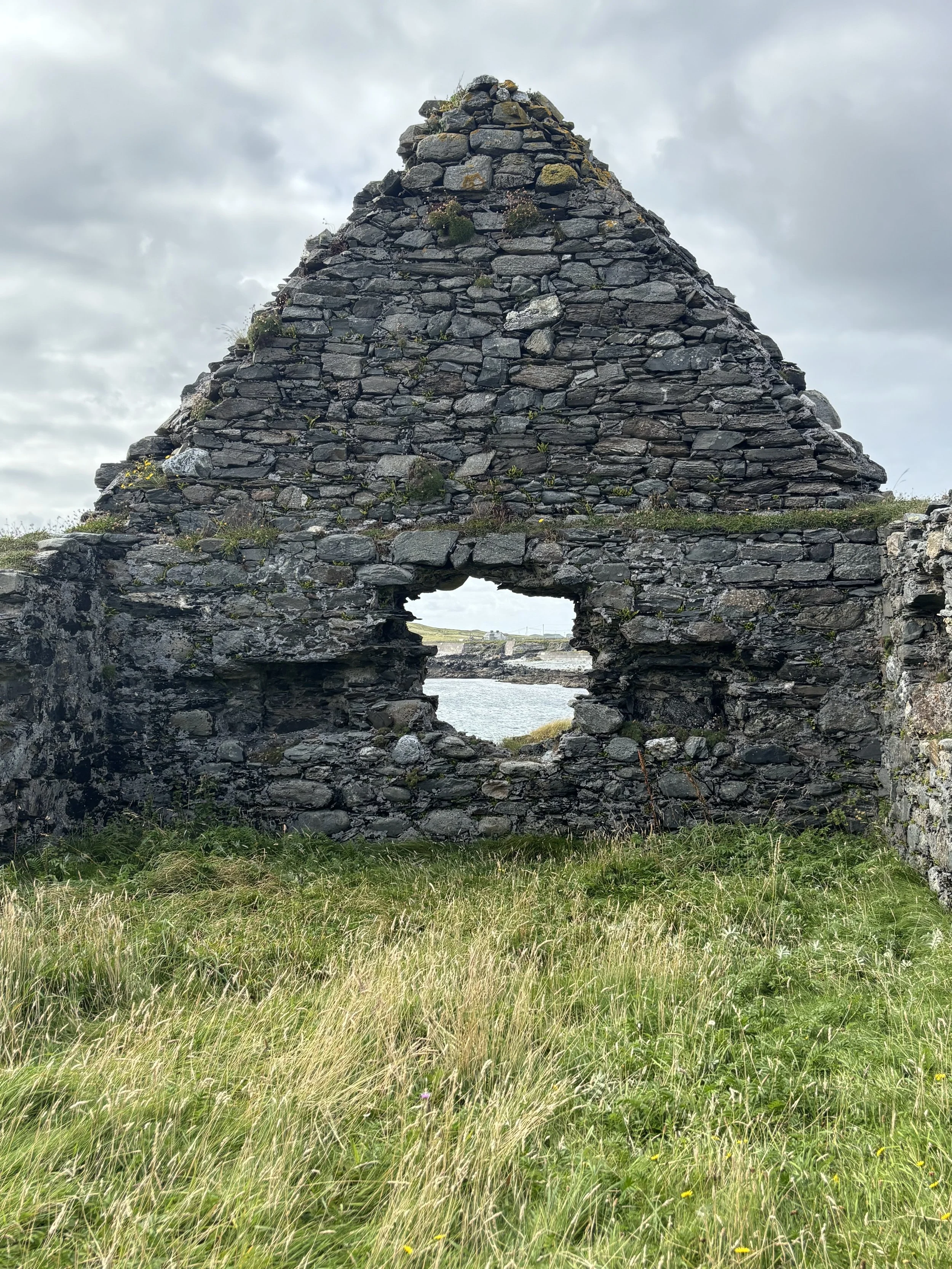
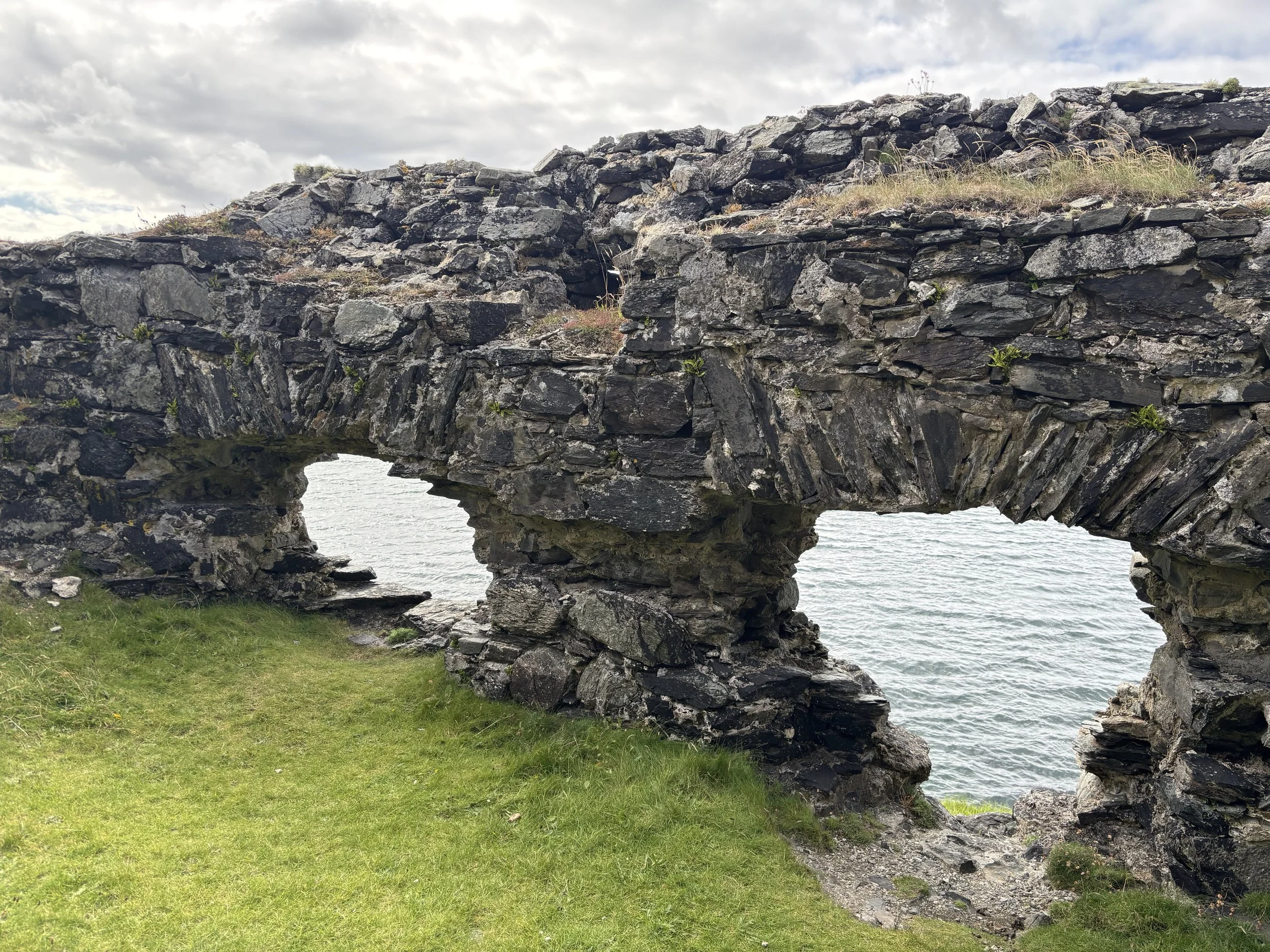
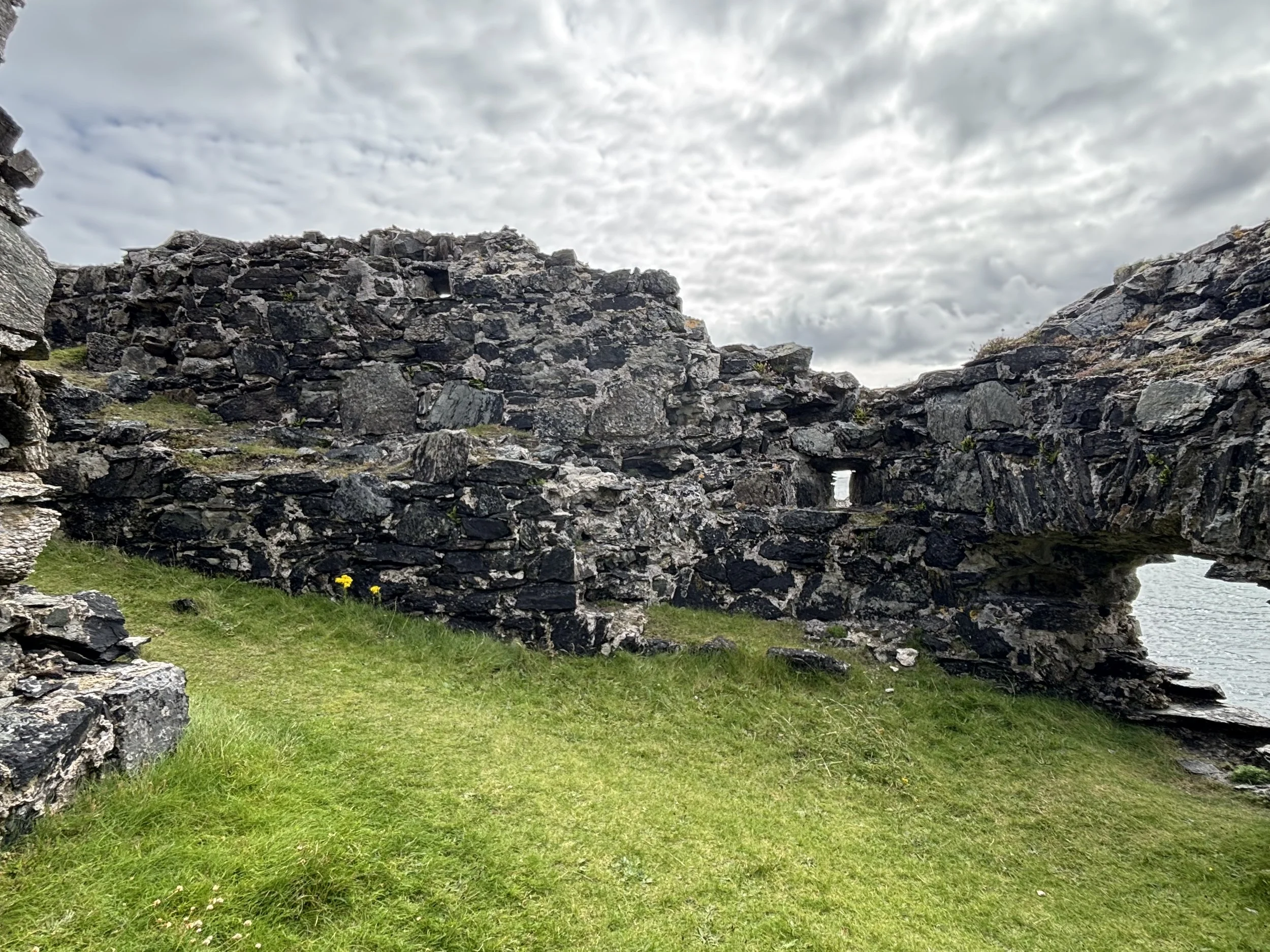
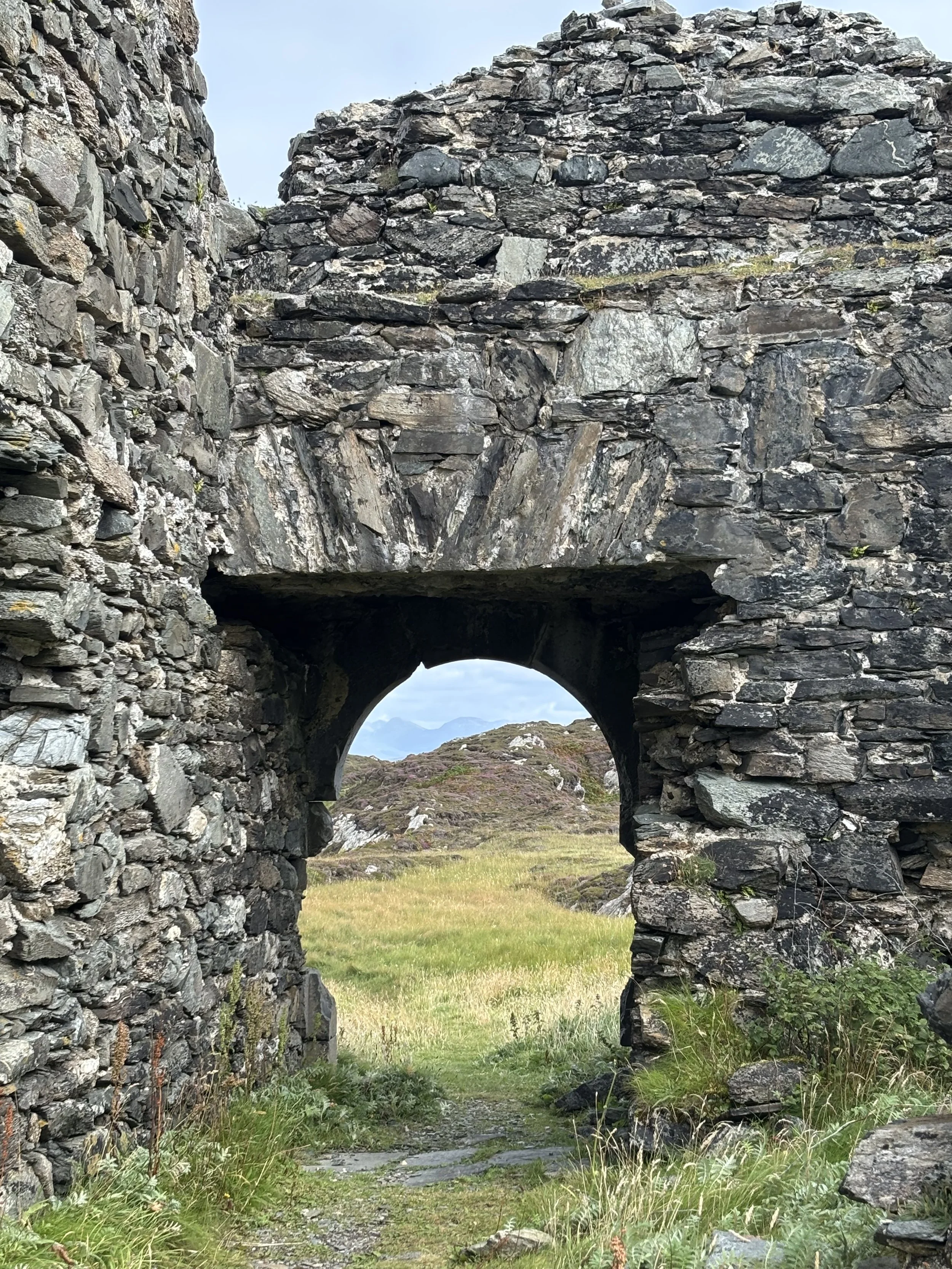
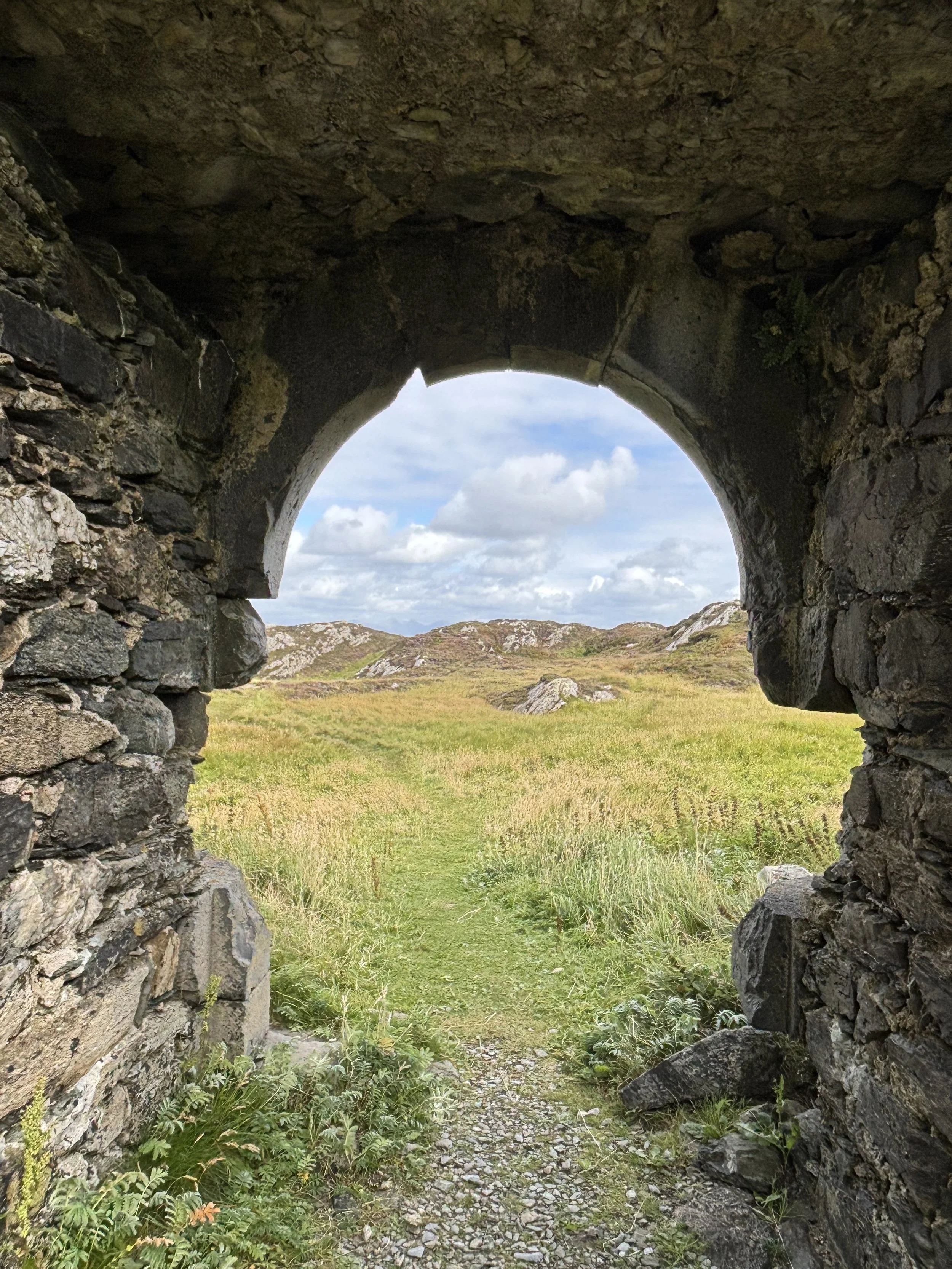
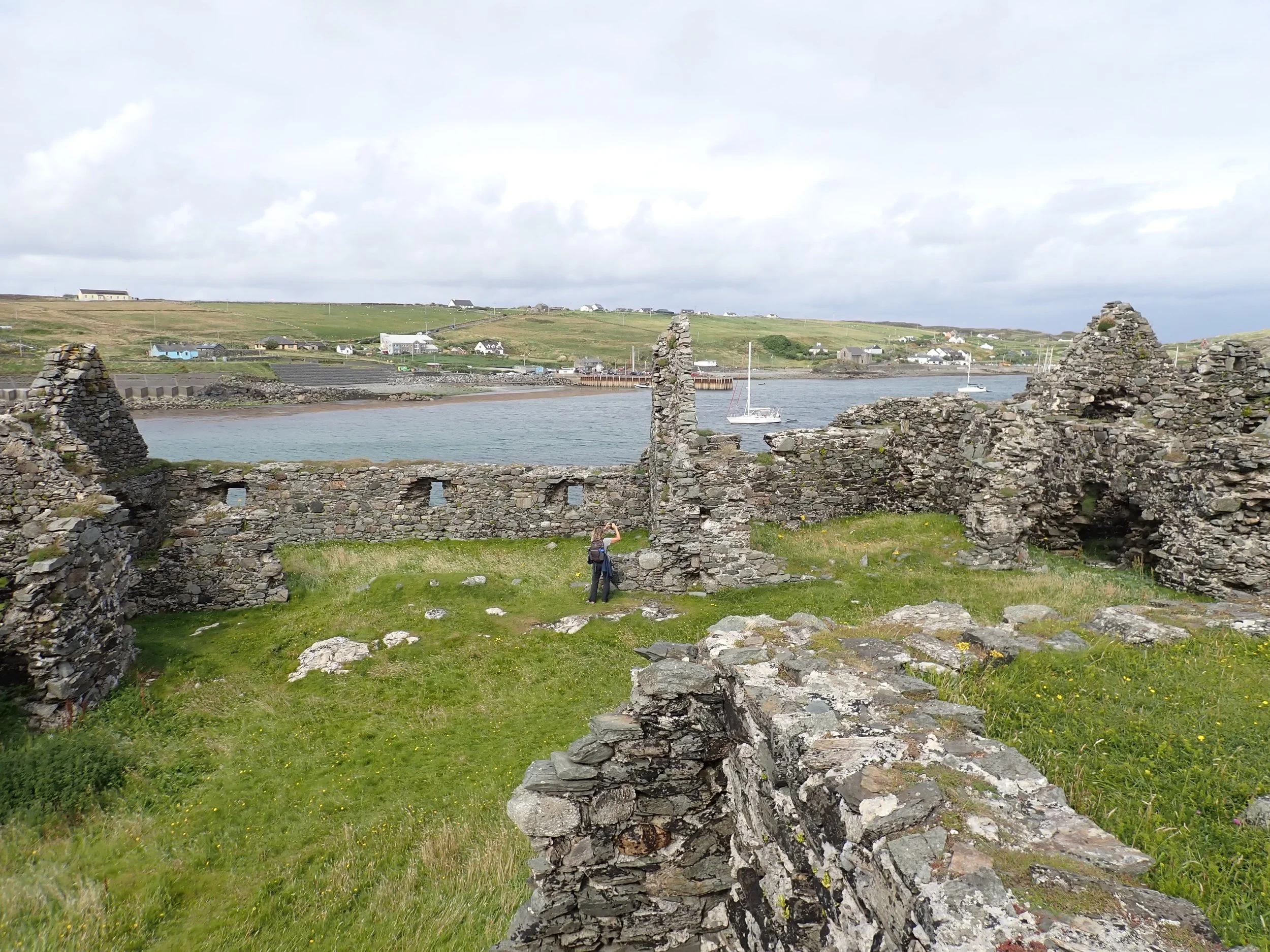
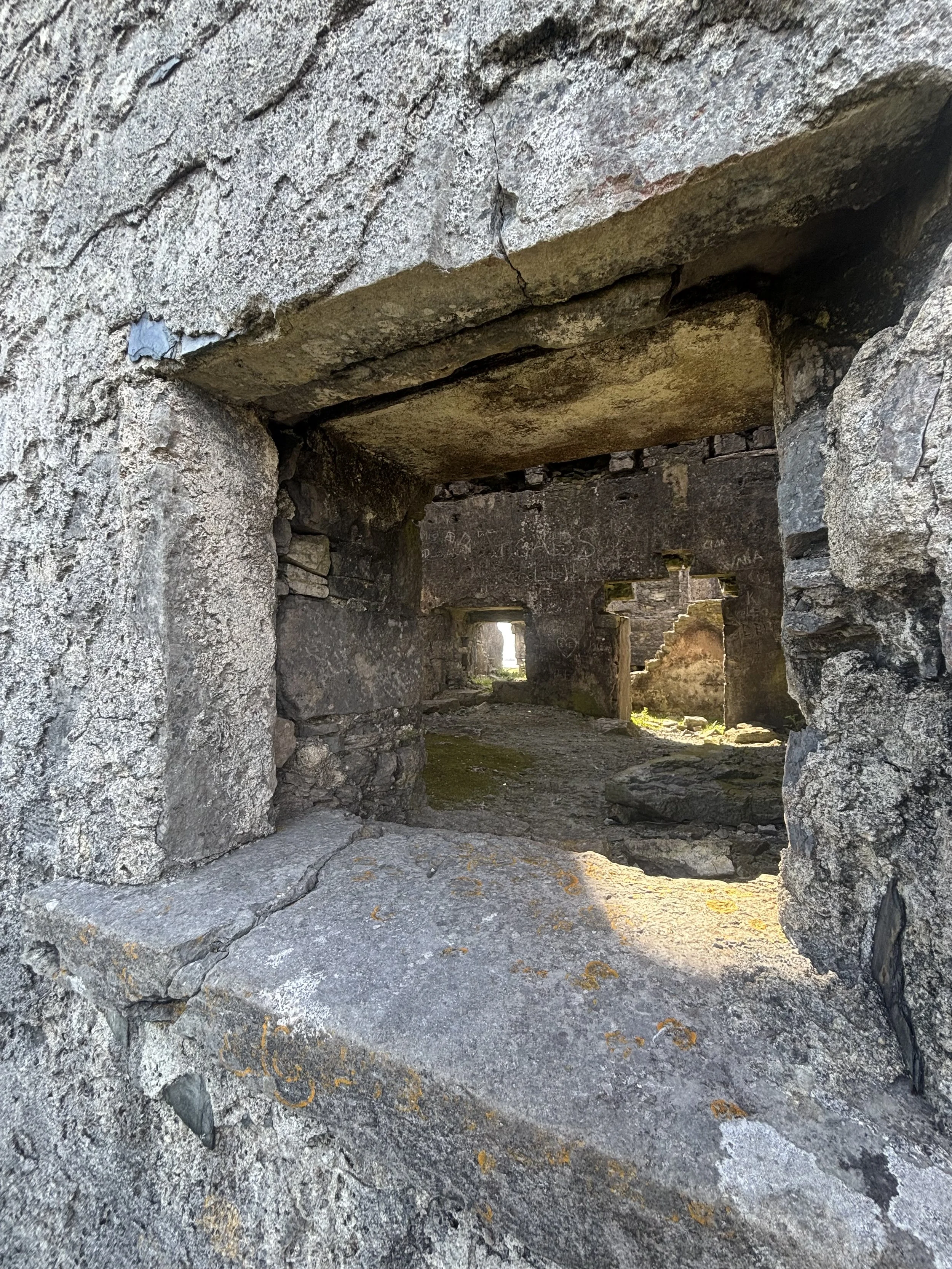
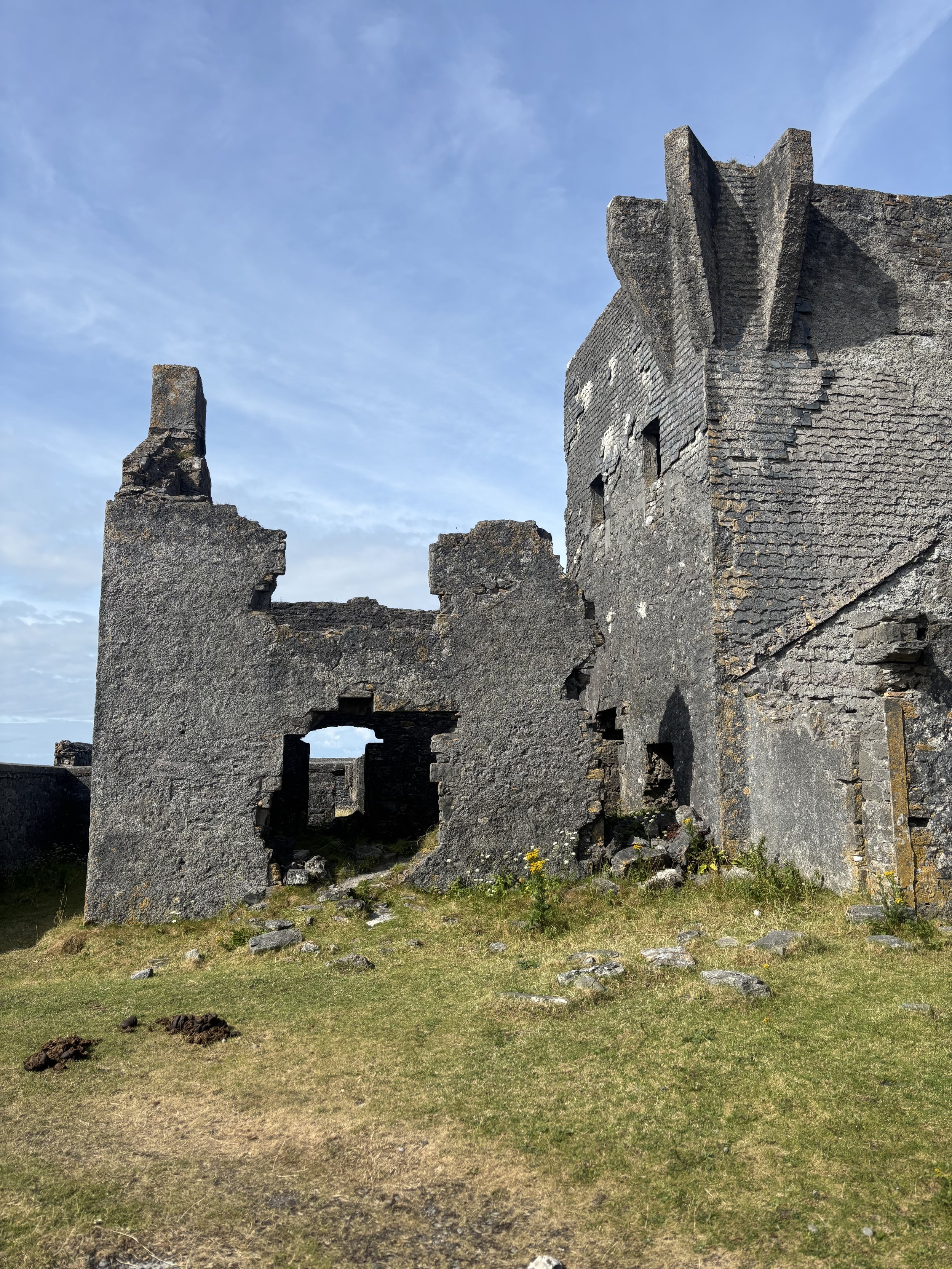
We were anchored just off a 16th-century fort known as Cromwell’s Barracks. The spot was picturesque, but some of the history is gruesome. The fort was used as a penal colony for Catholic priests. Oliver Cromwell’s Puritan regime viewed Catholic priests as traitors, executing some and imprisoning and exiling others. There is even a local legend of Bishop’s Rock—the story of one priest who was stripped naked, chained to a rock in the water, and drowned.
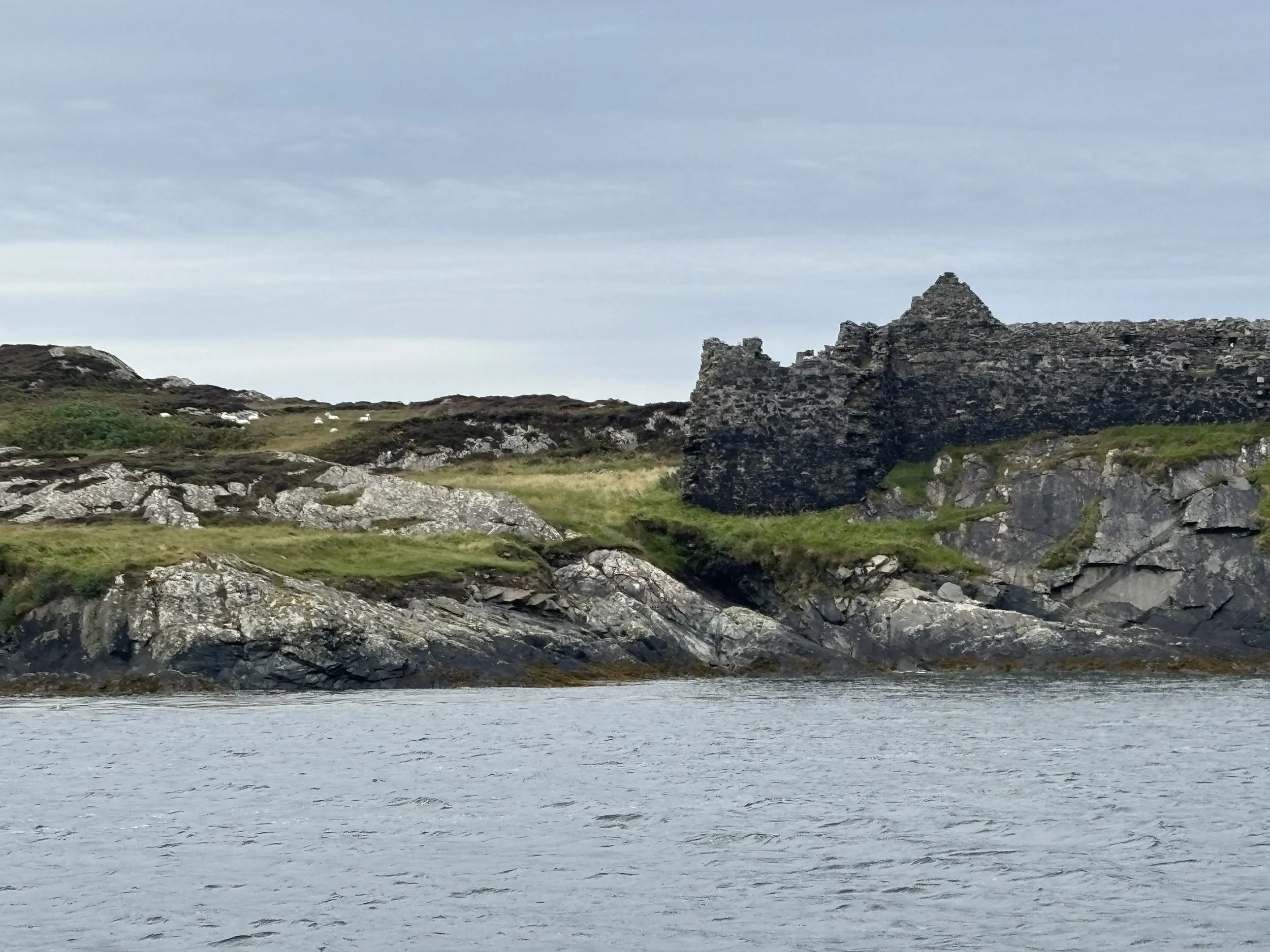
Cromwell’s Barracks, Inishbofin Ireland
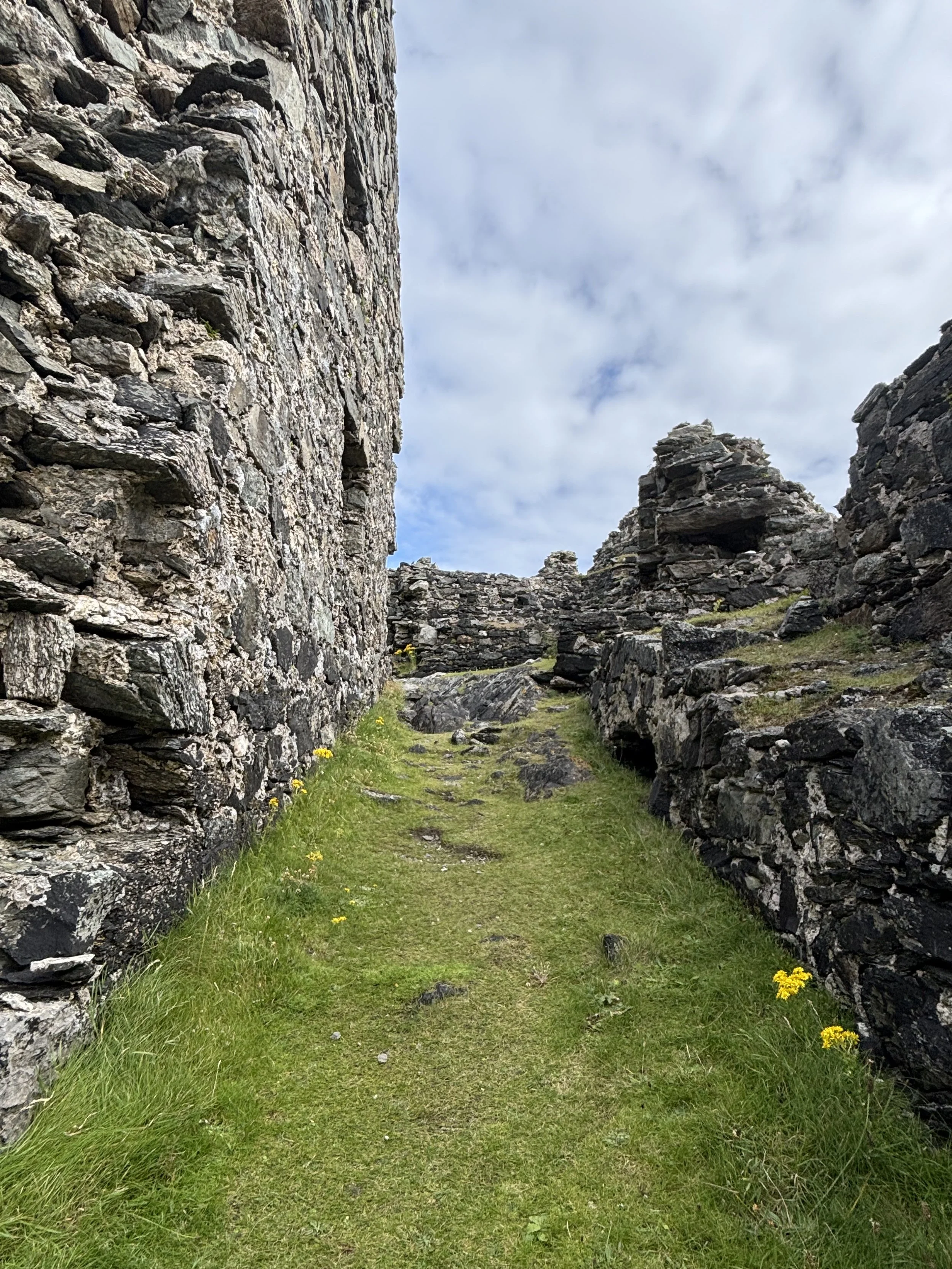
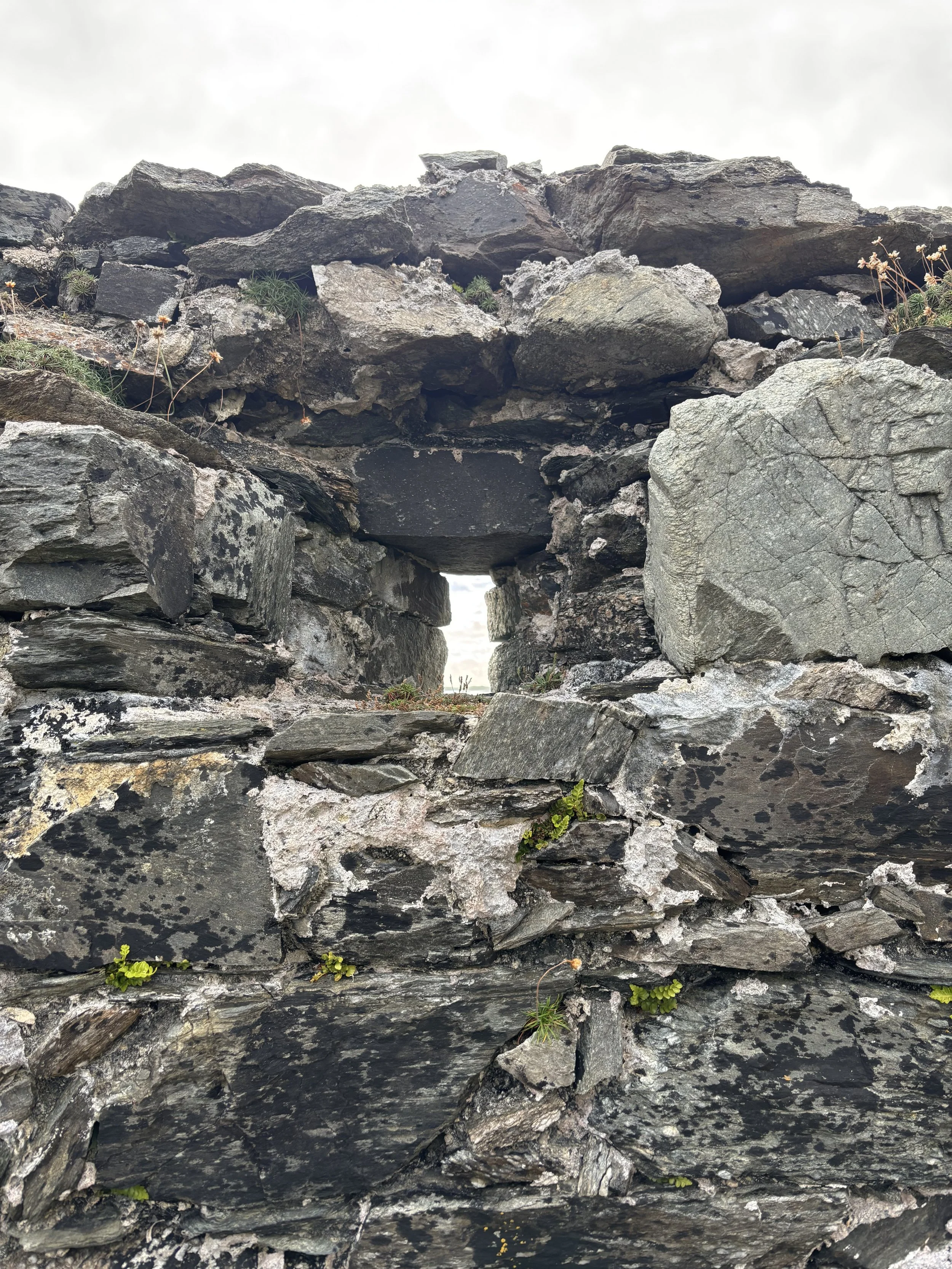
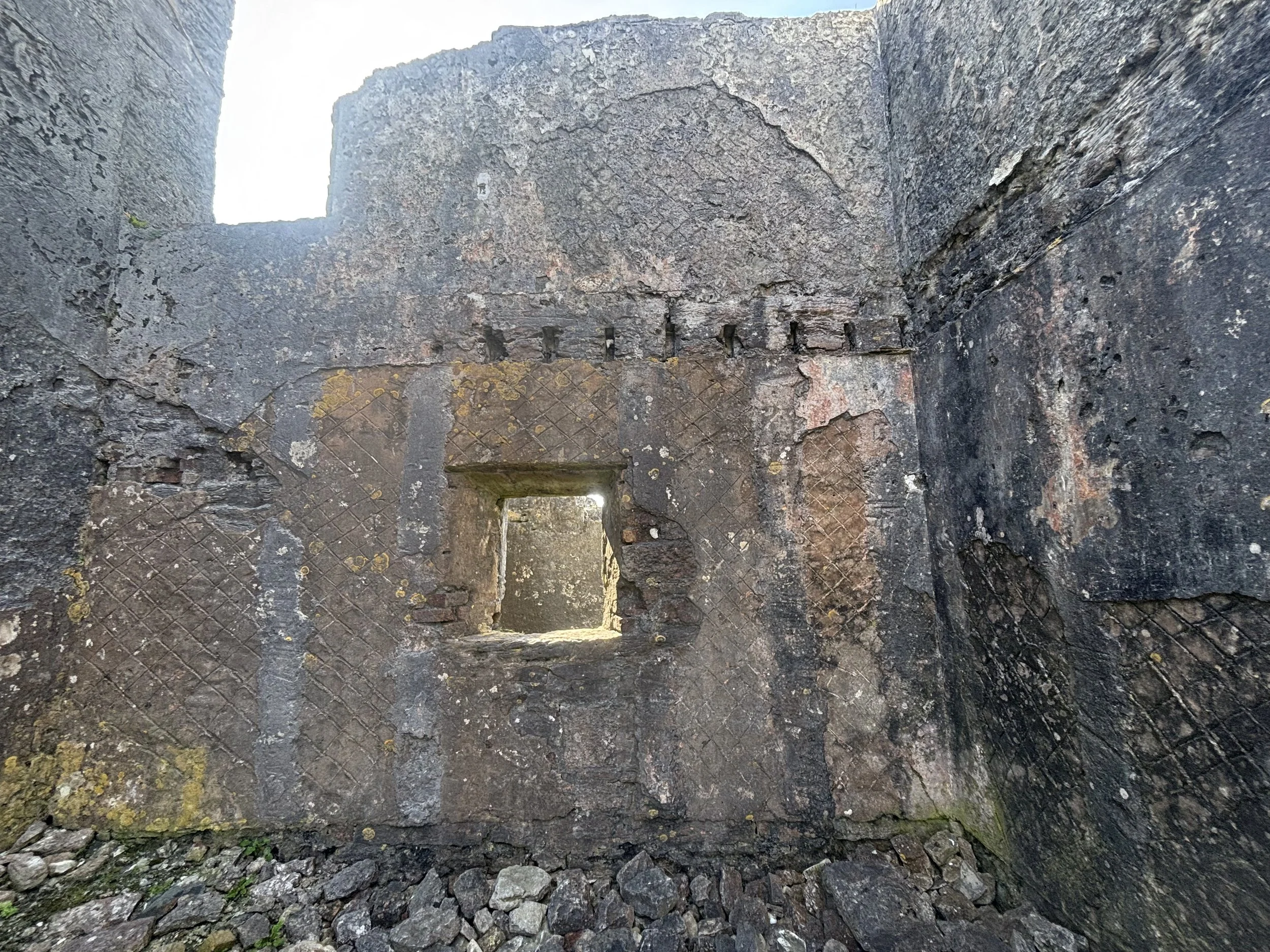
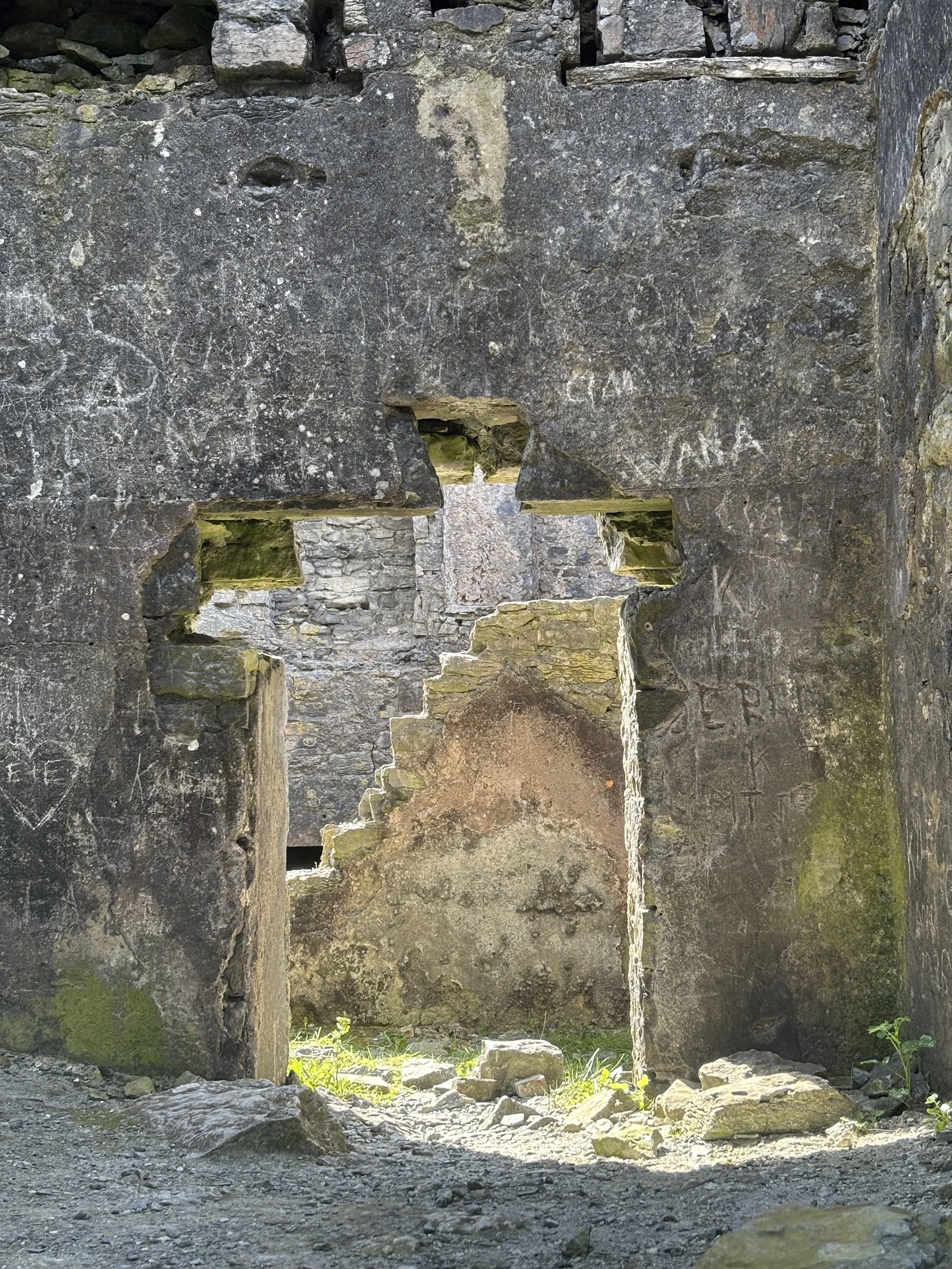
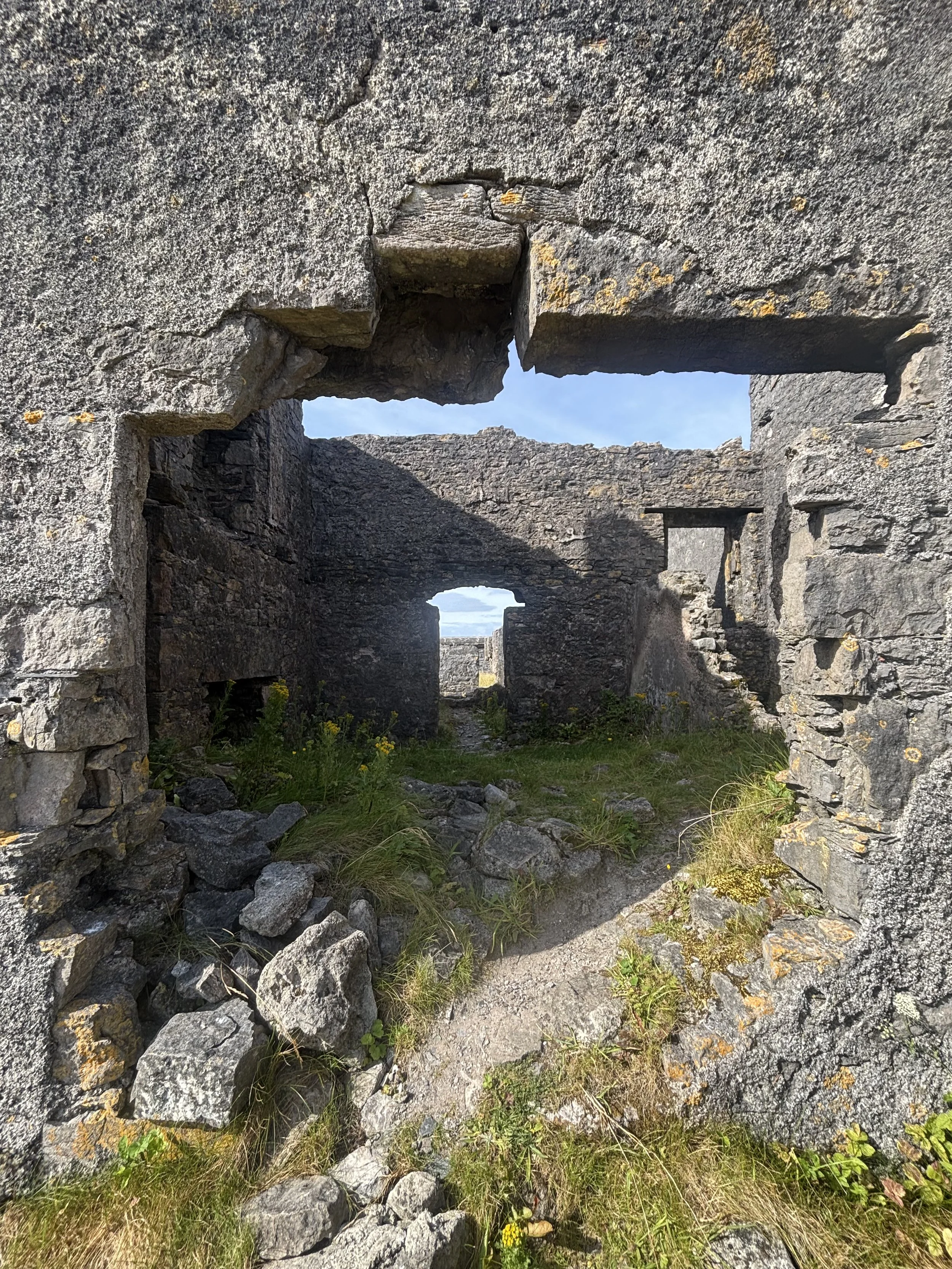
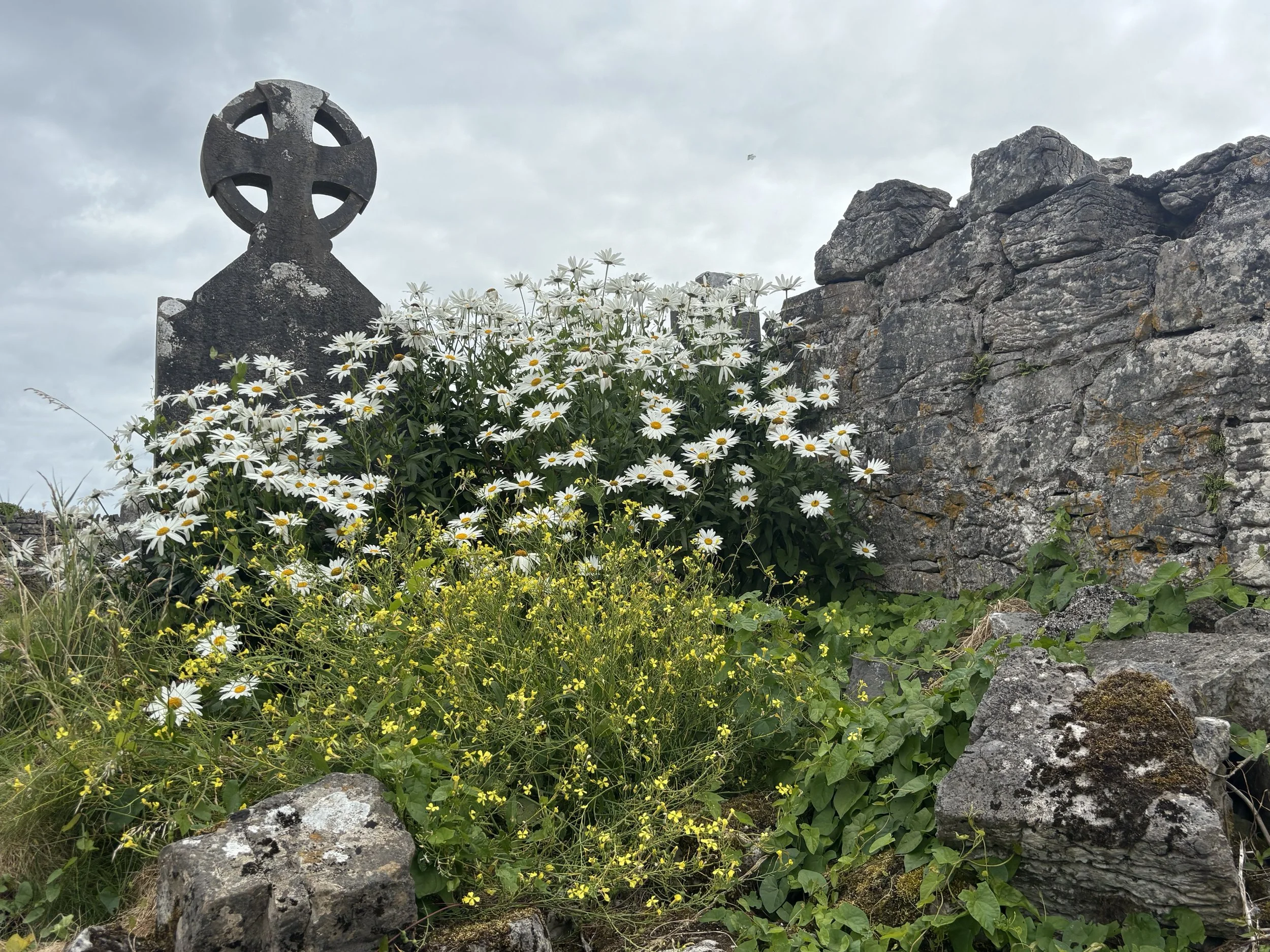
Walking through the ruins of Cromwell’s Barracks was an interesting experience. I loved the beauty of the ancient structure, the surrounding landscape, and wildflowers growing in and among the ruins. And yet, as I walked through it, I kept imagining how it would have been anything but beautiful to the priests imprisoned behind its walls.
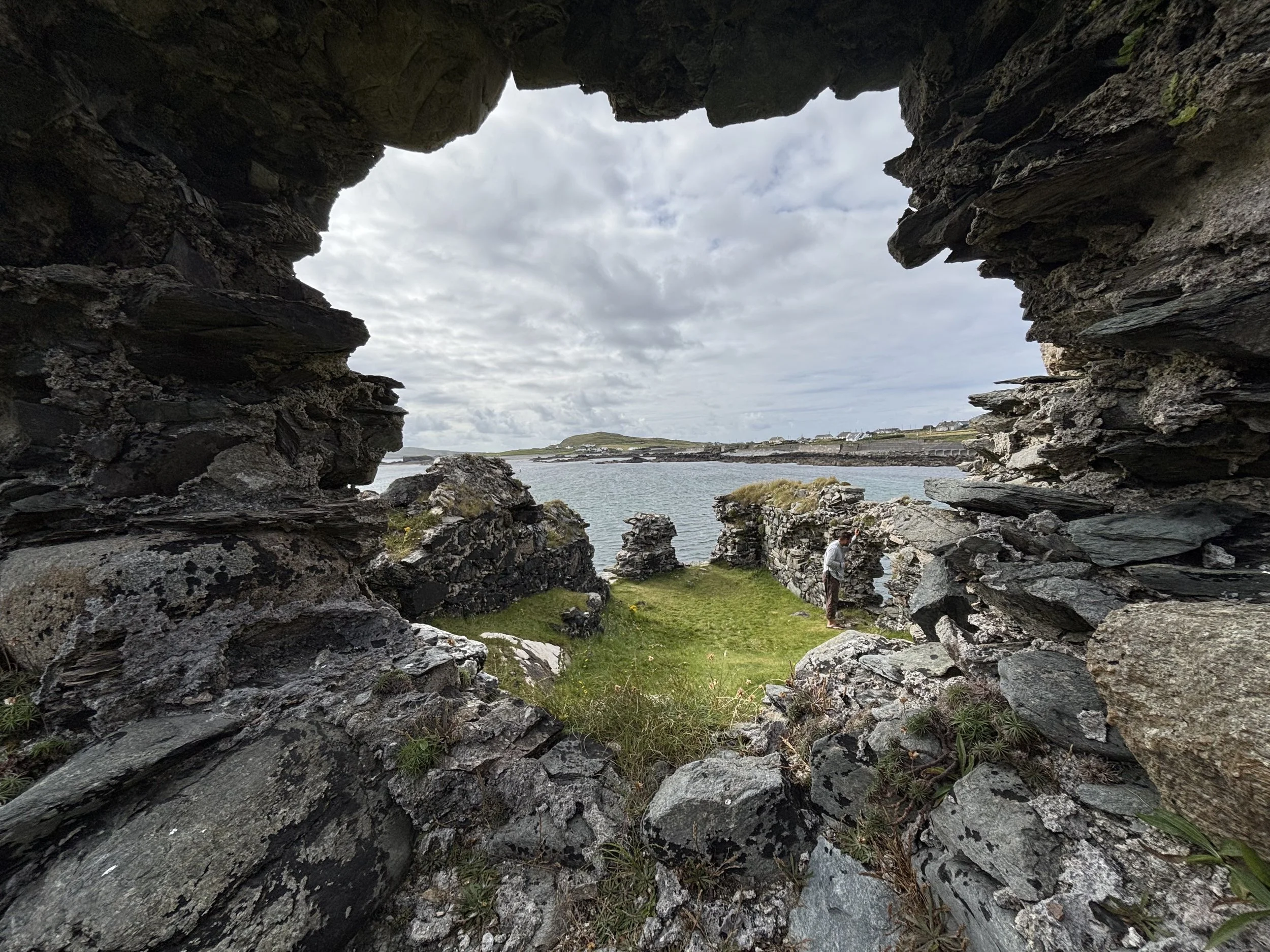
Inside Cromwell’s Barracks
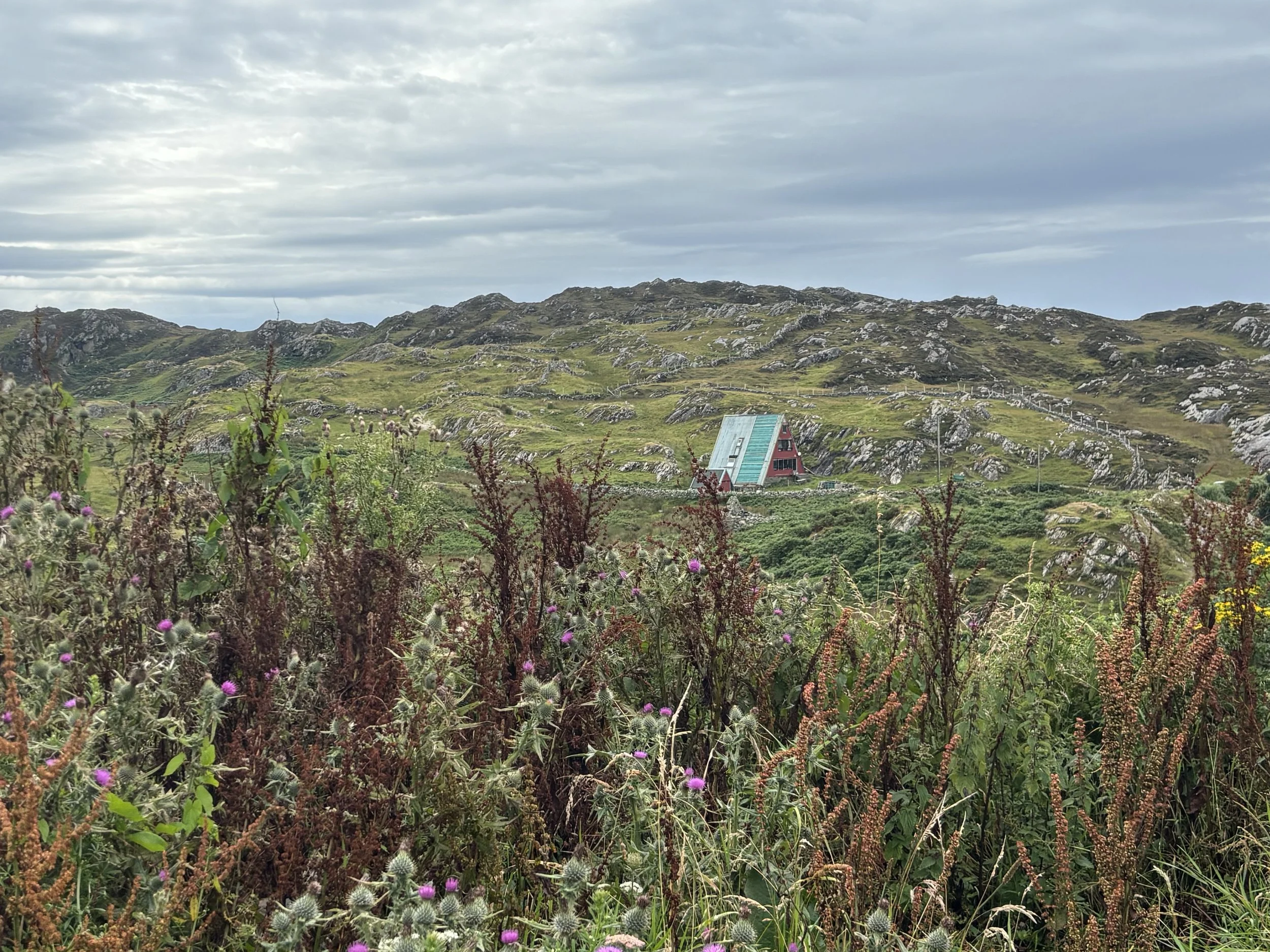
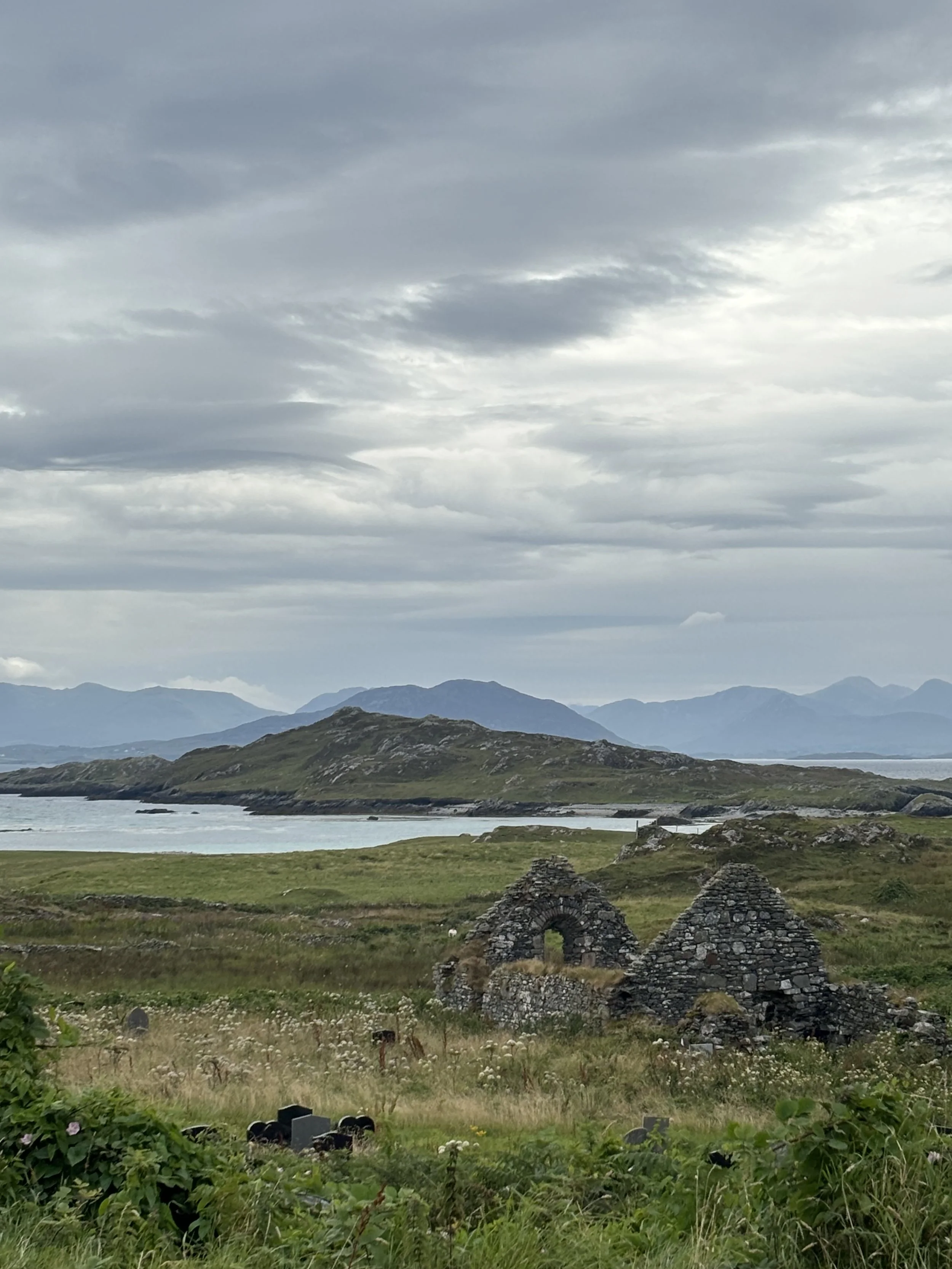
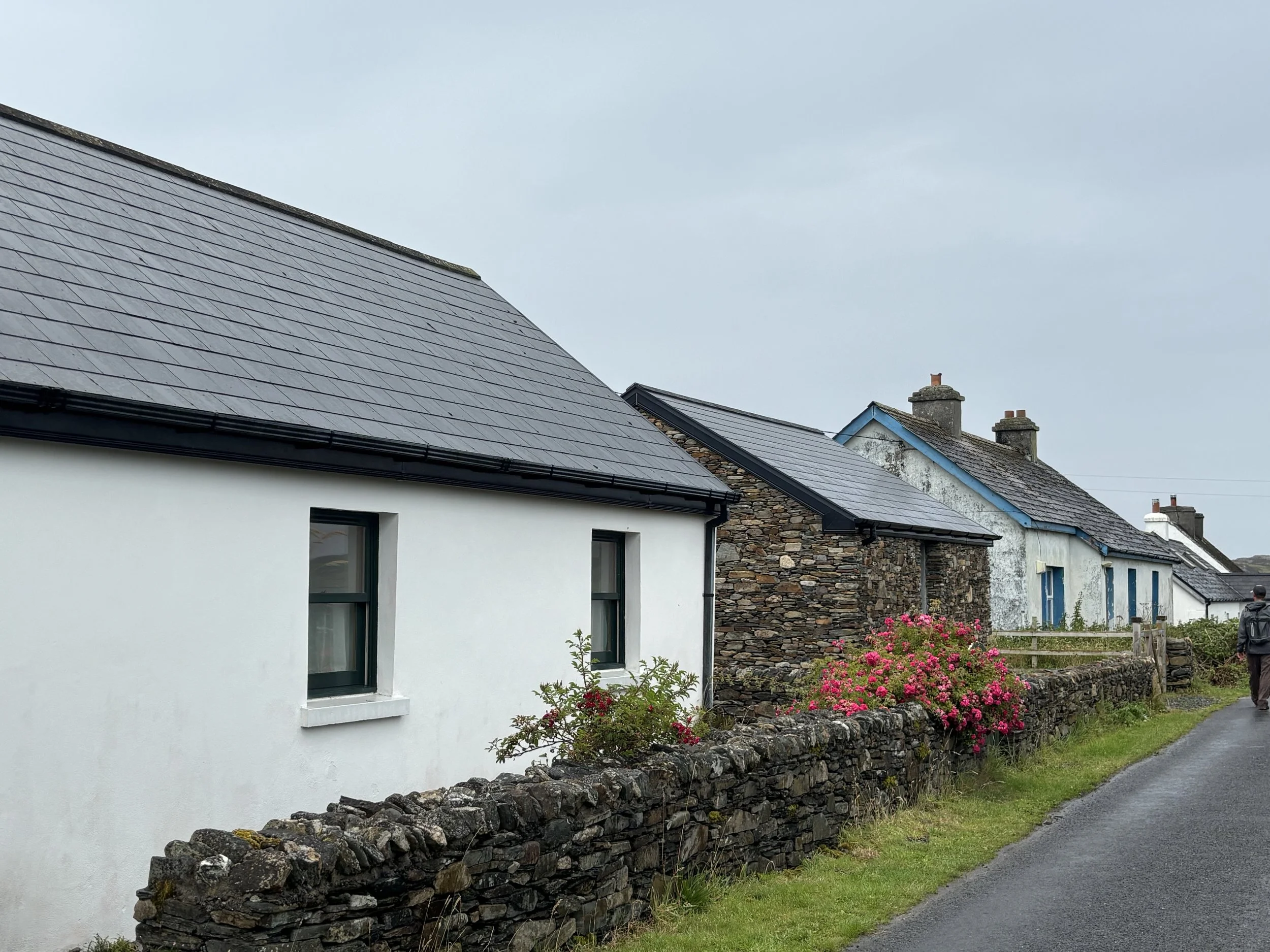
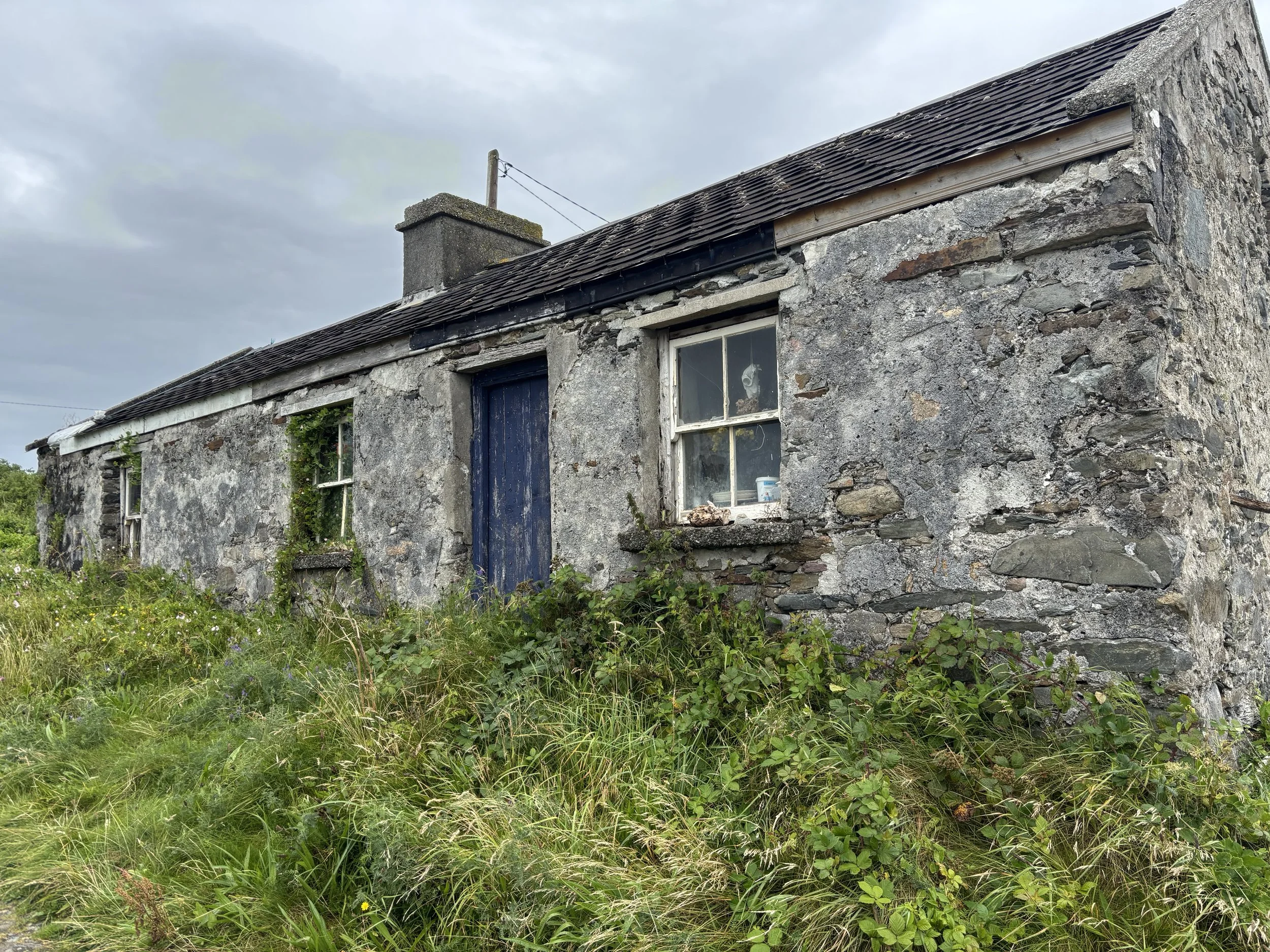
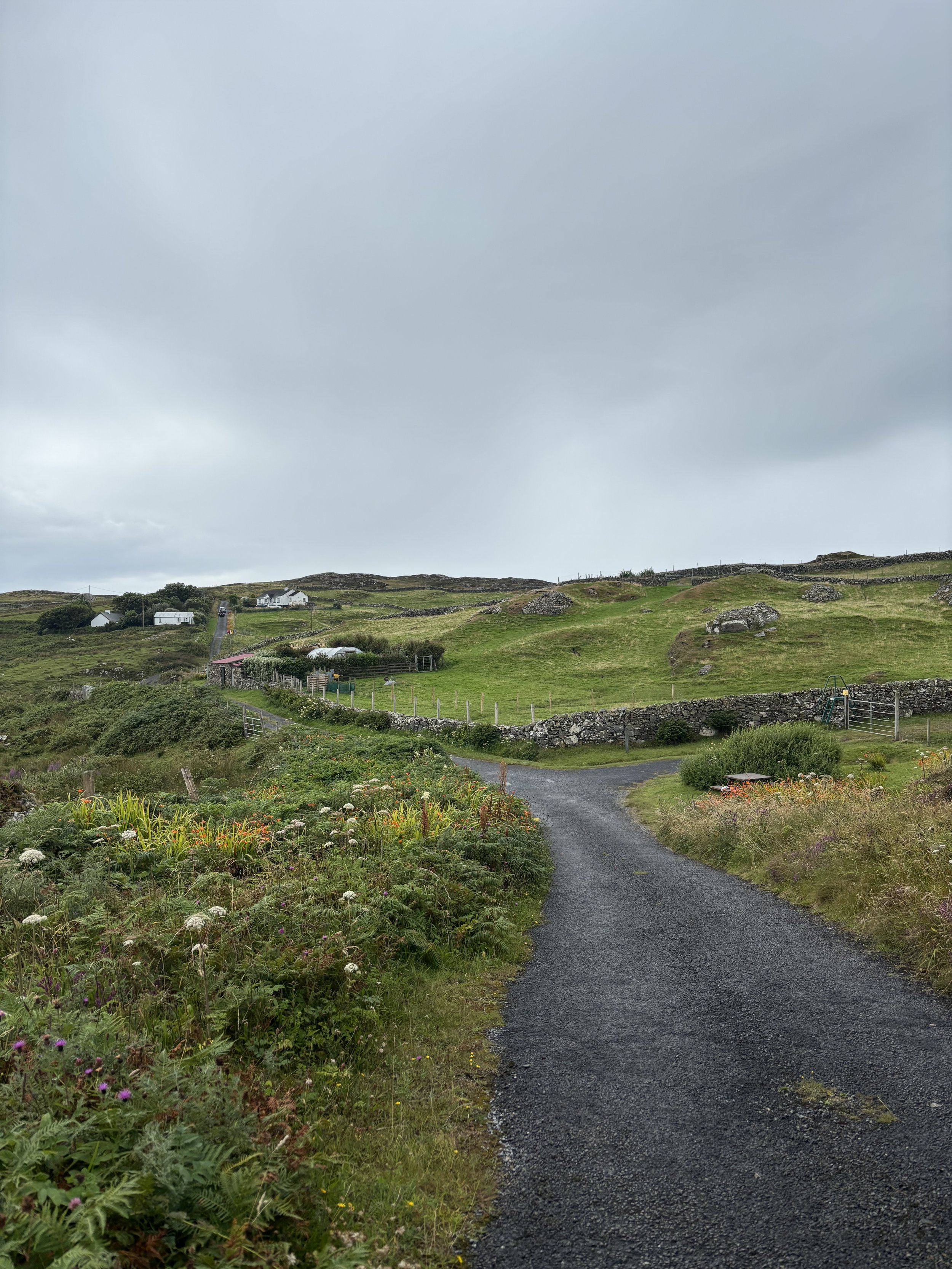
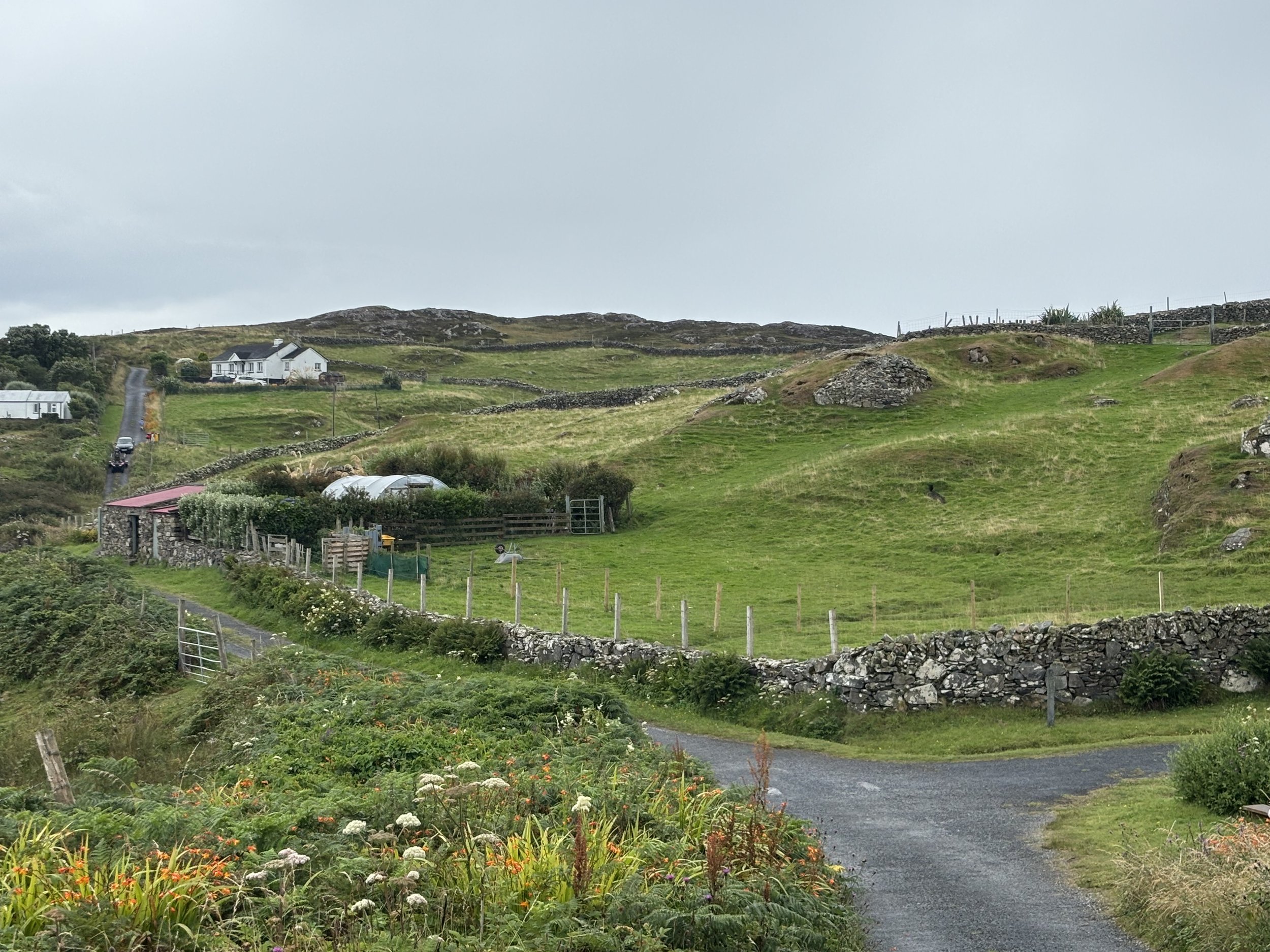
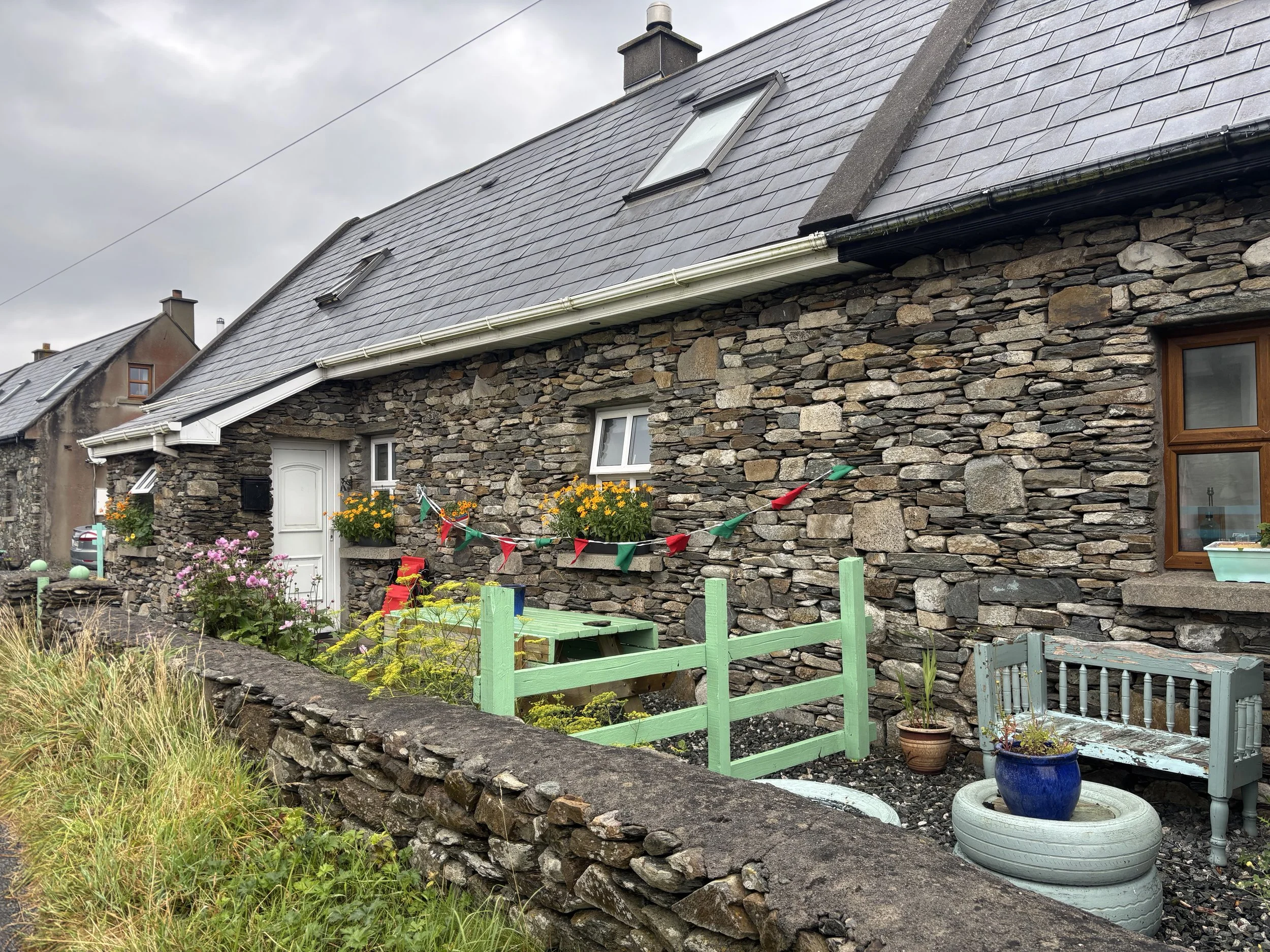
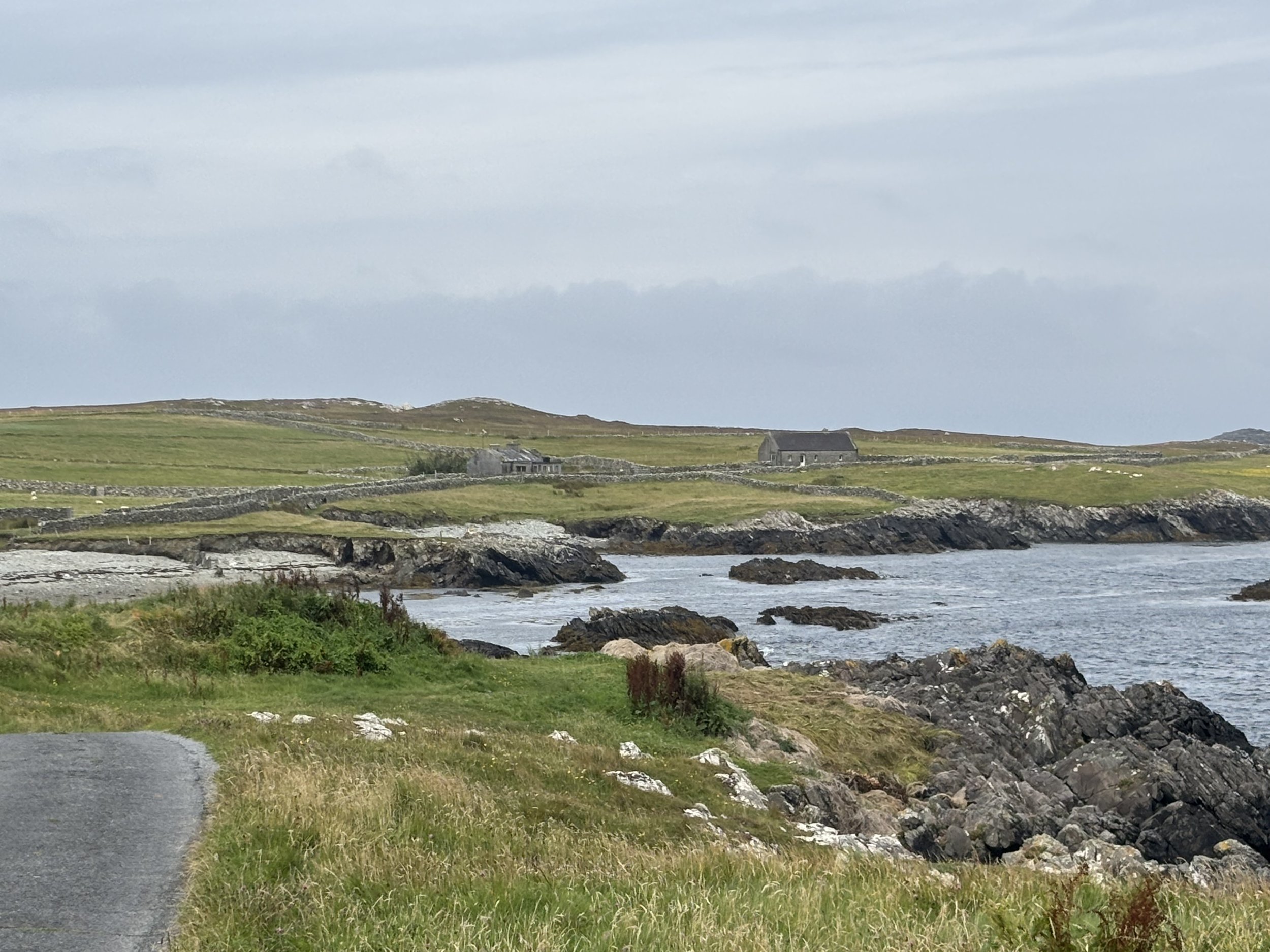
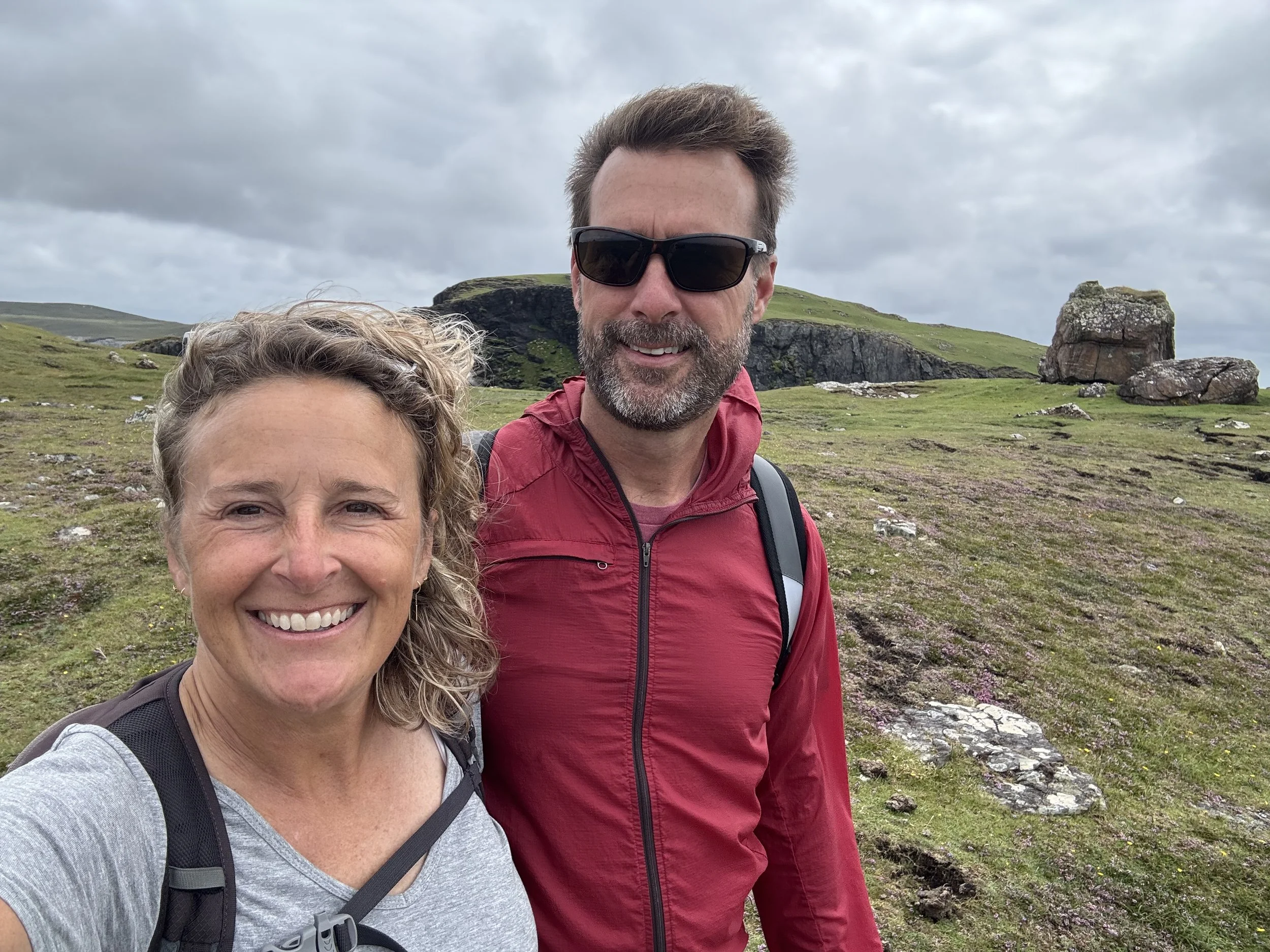
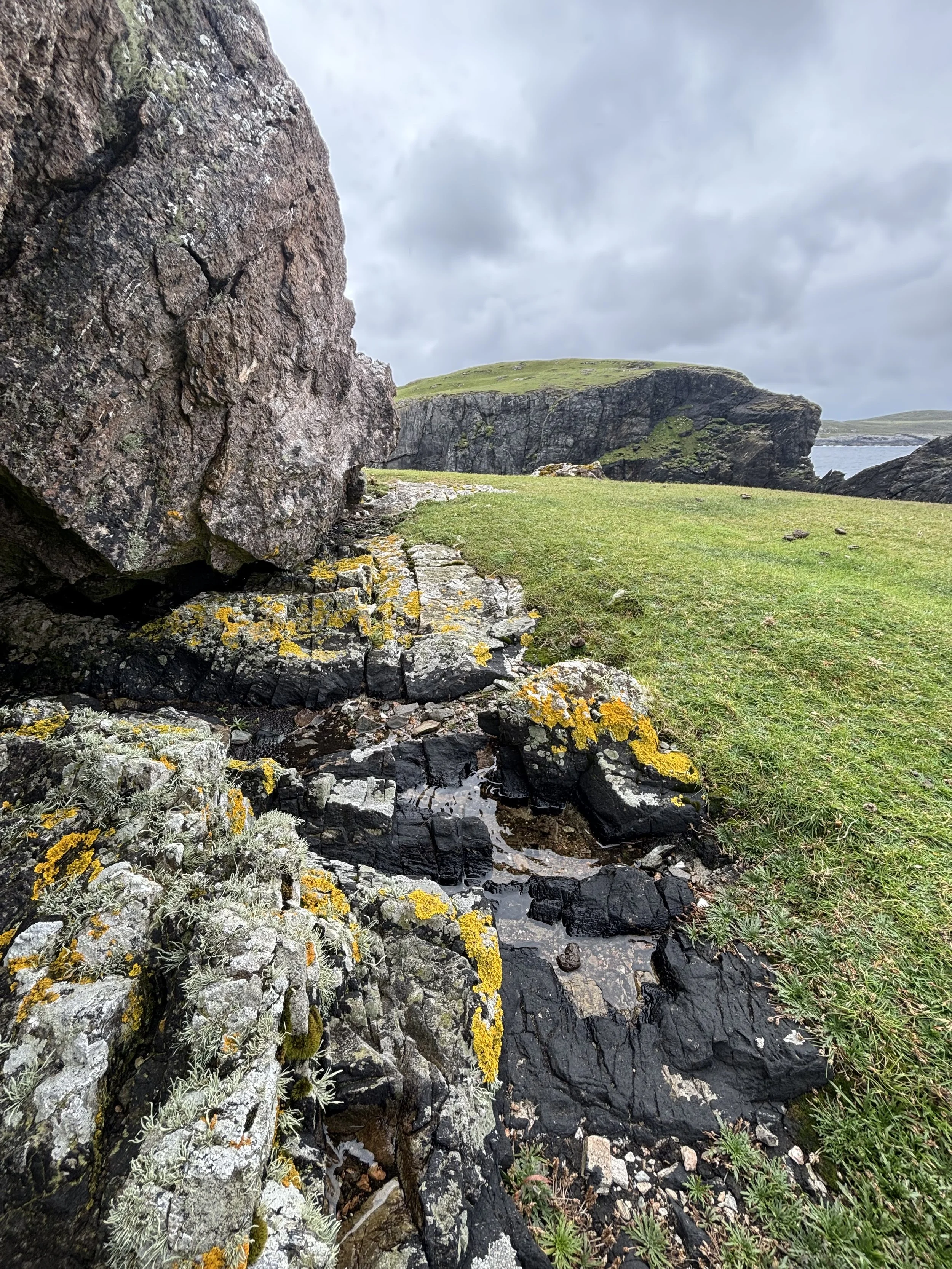
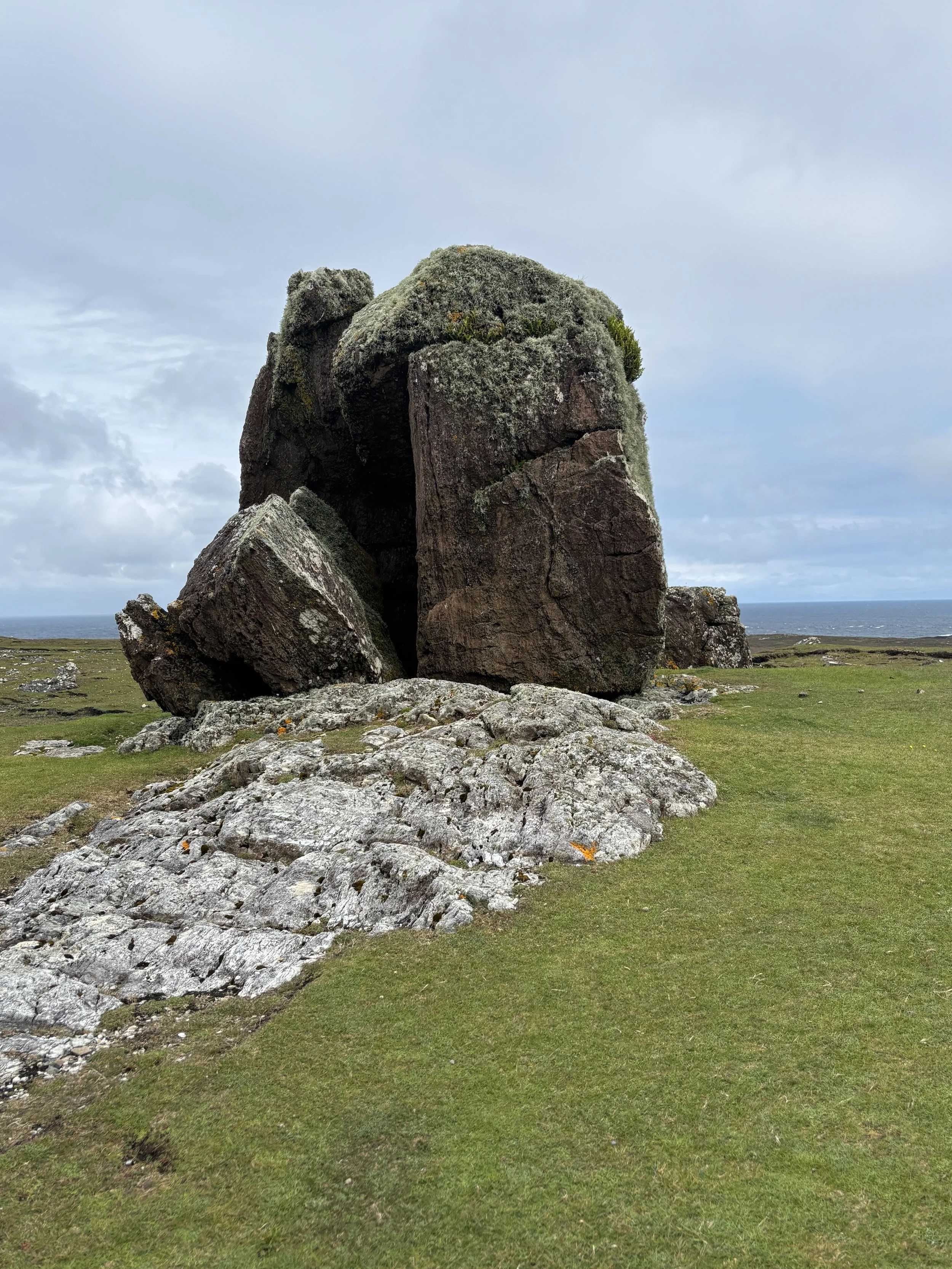
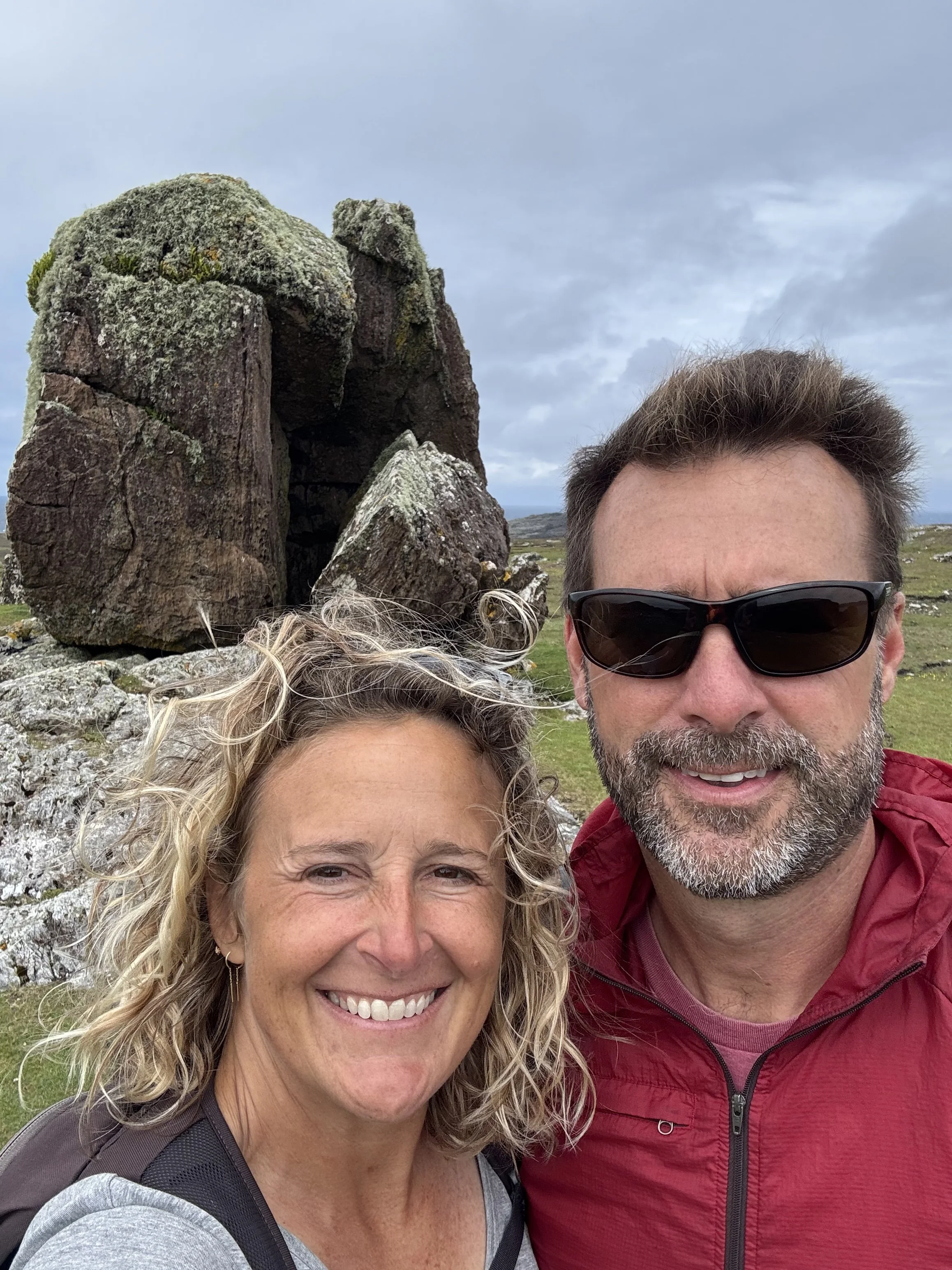
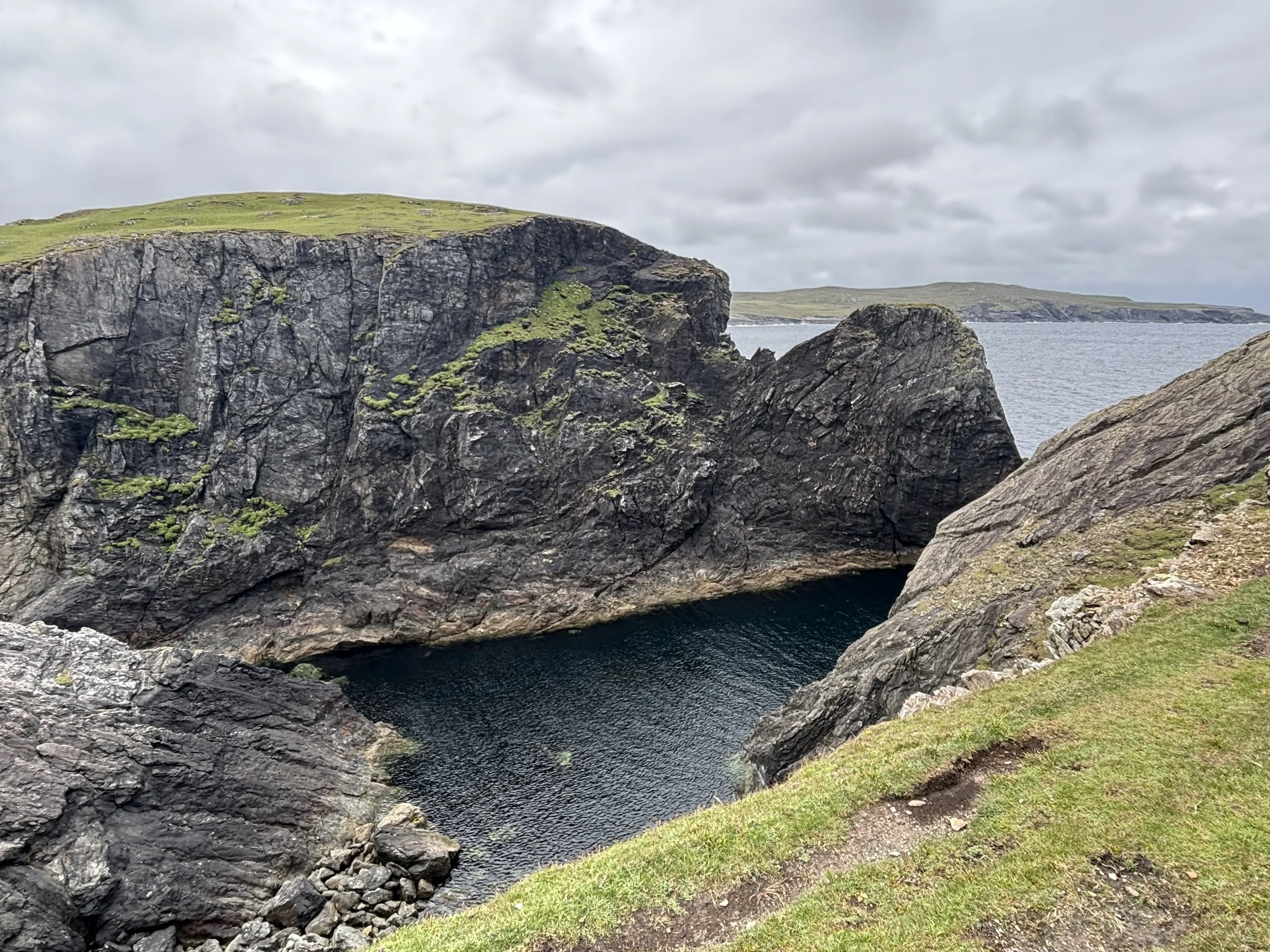
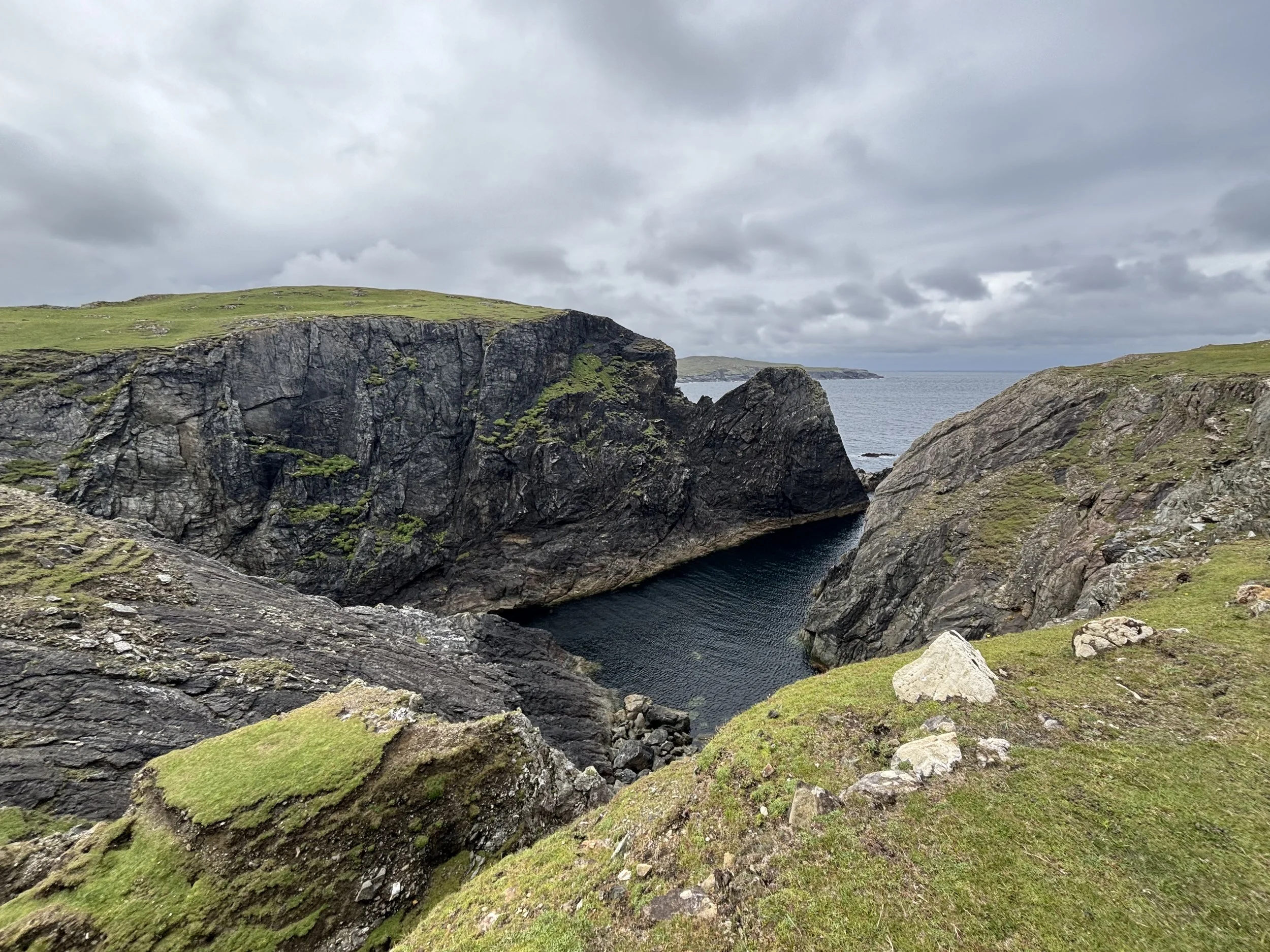
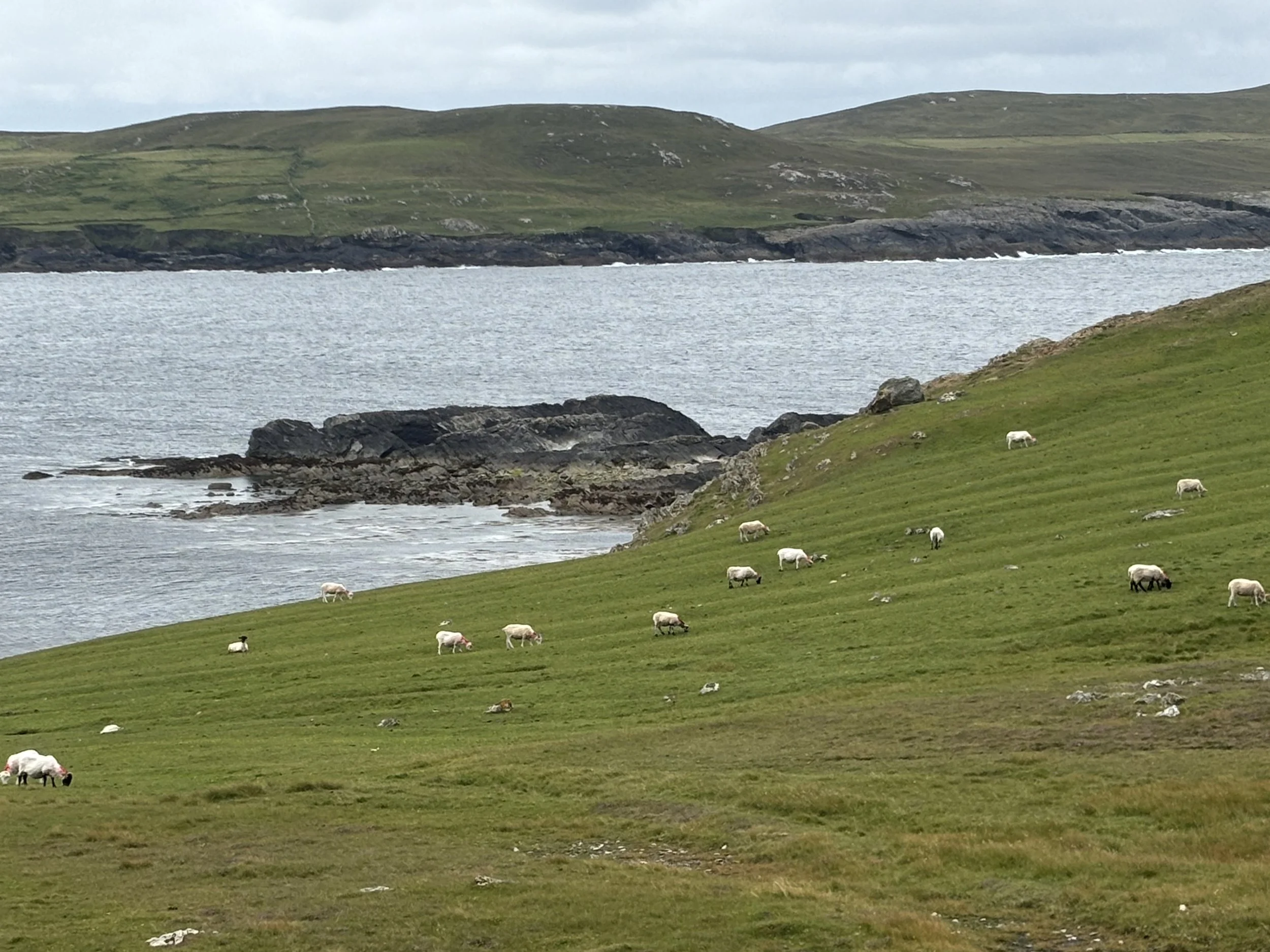
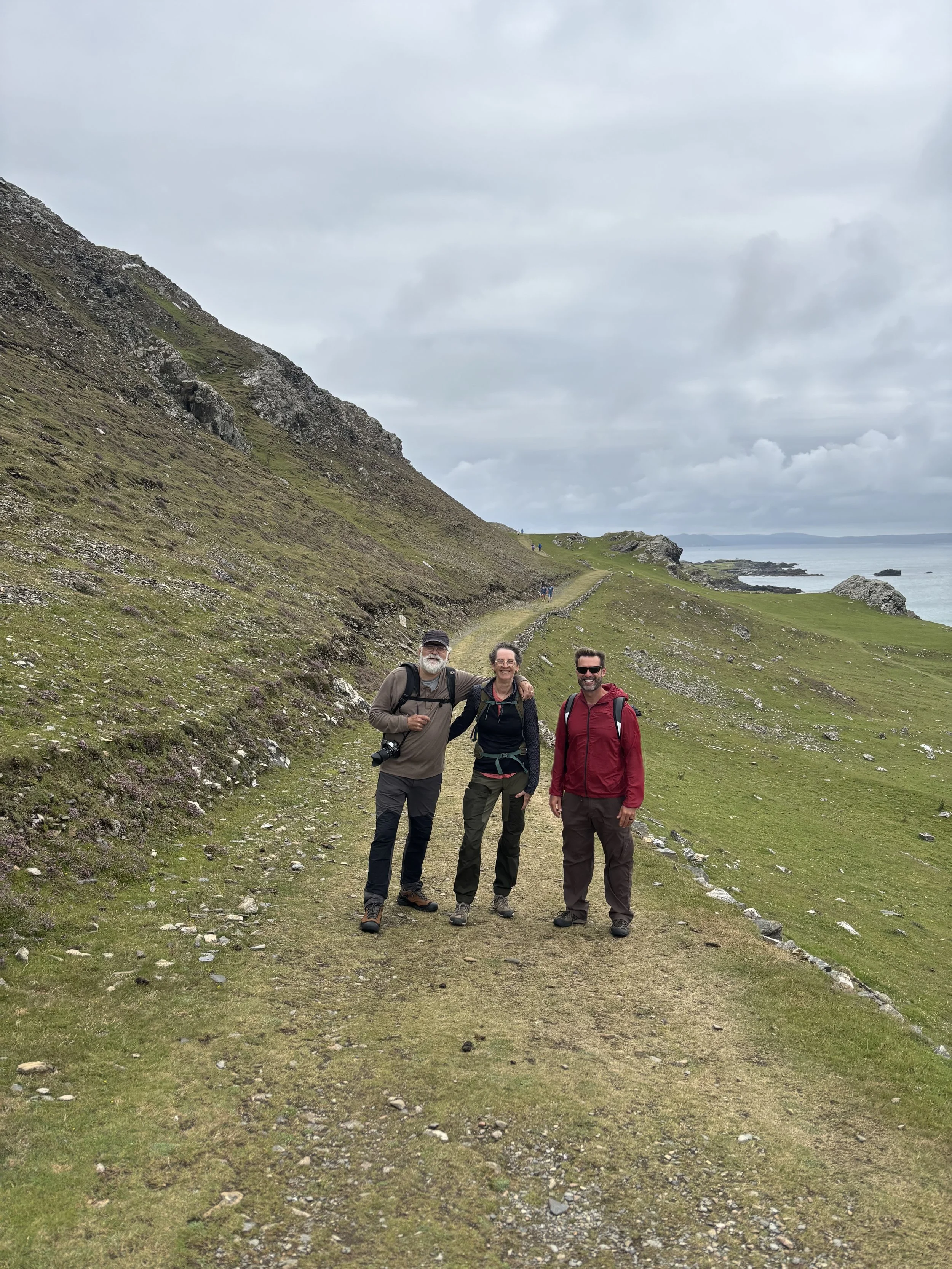
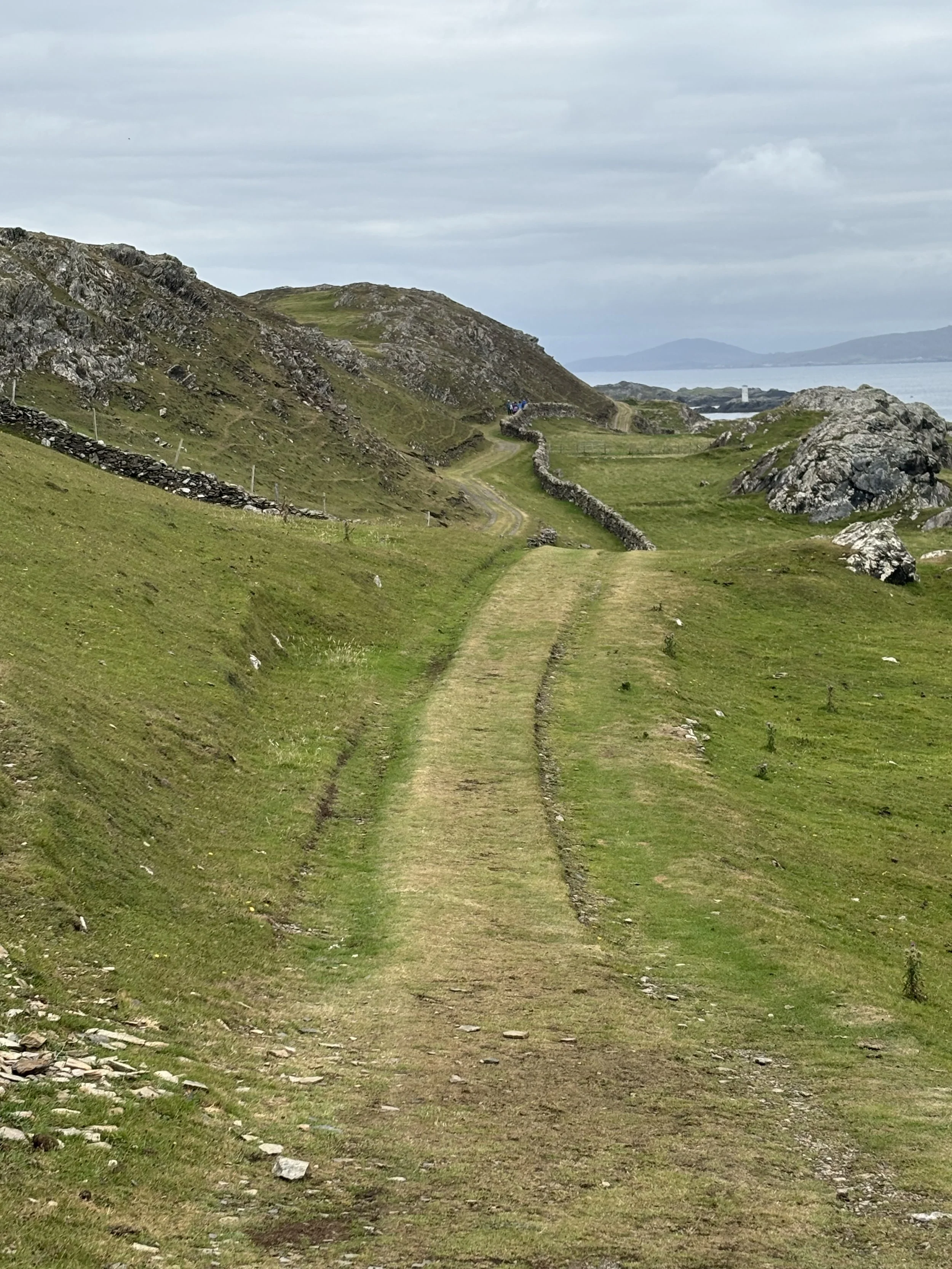
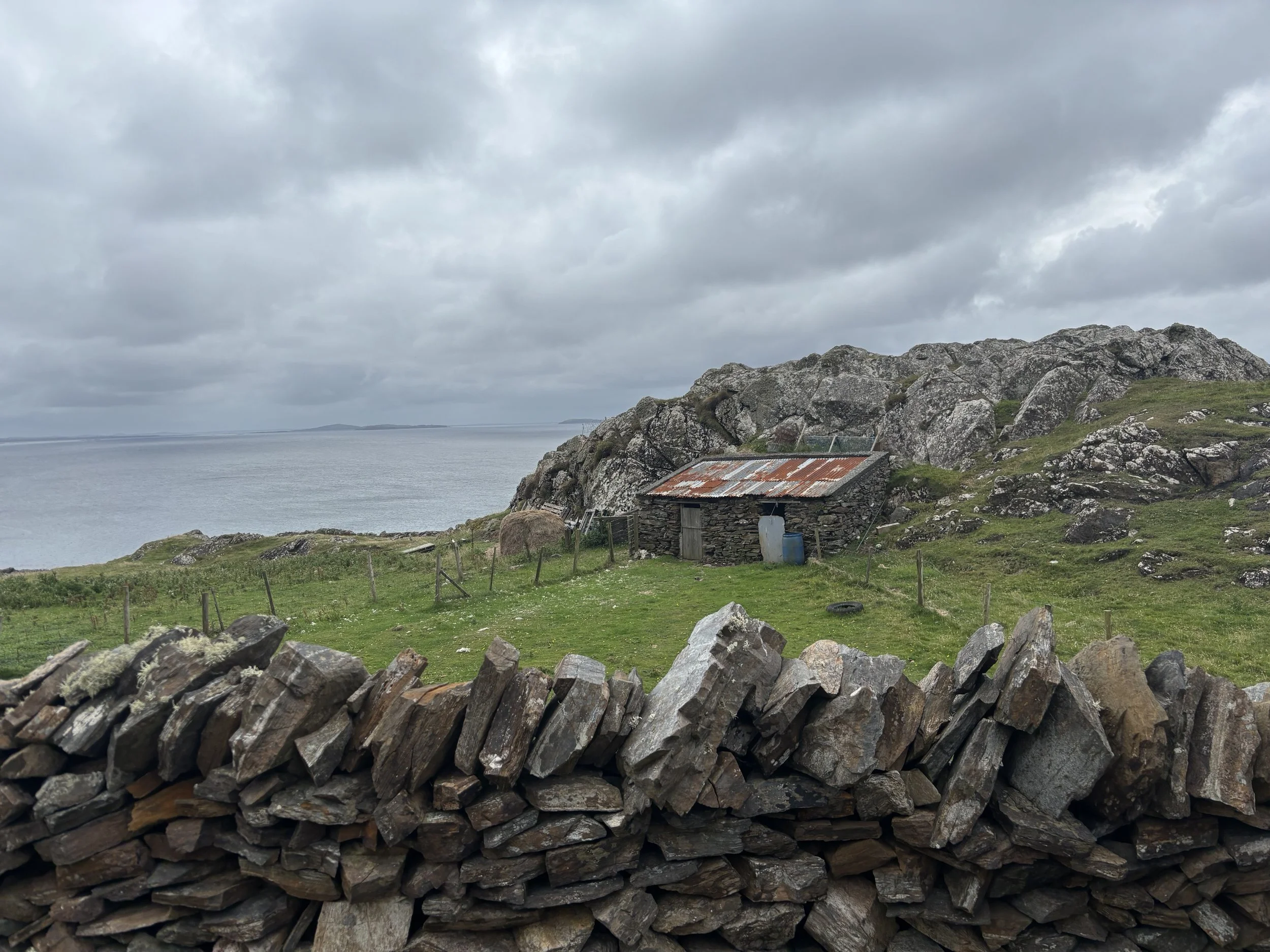
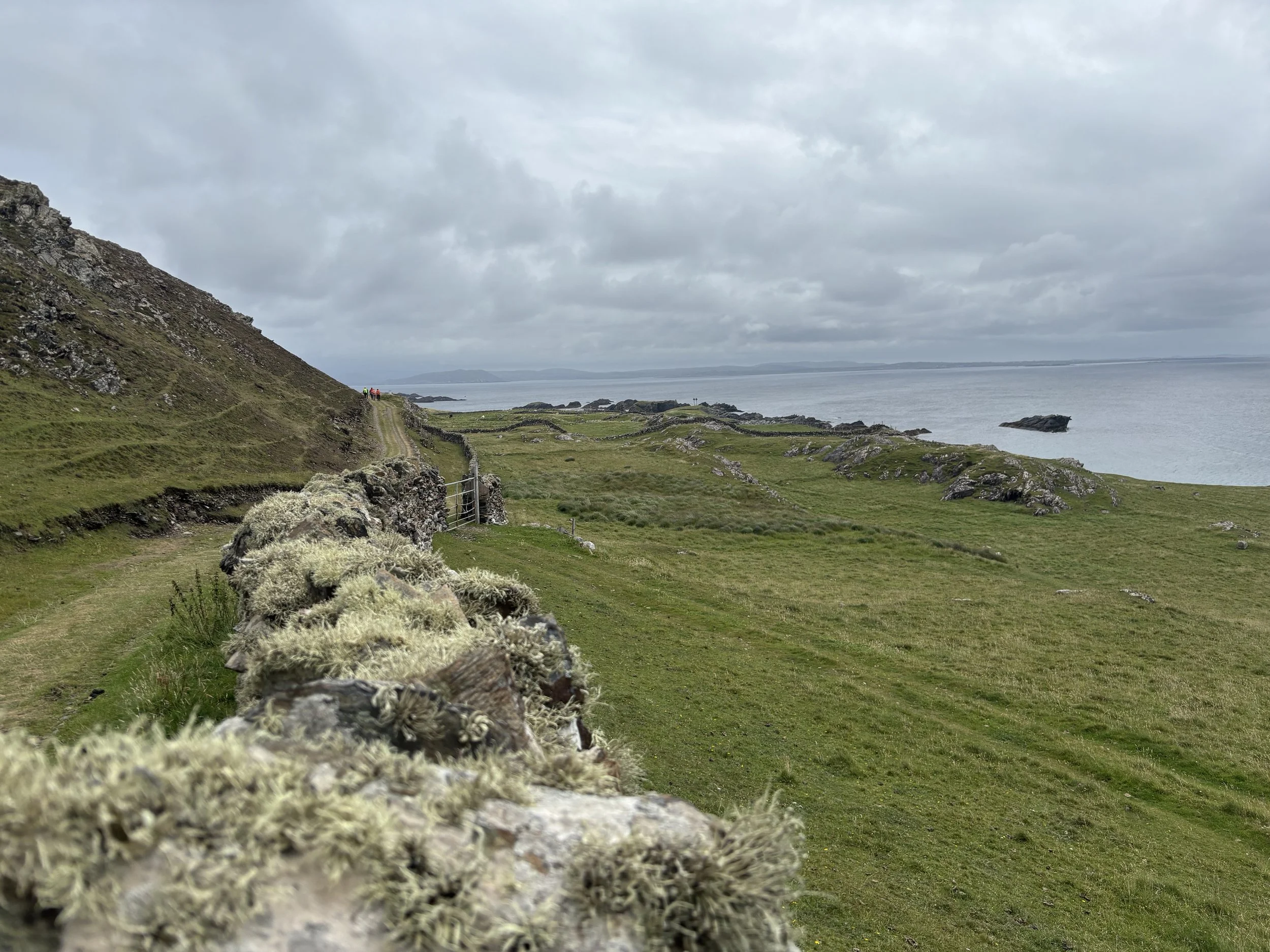
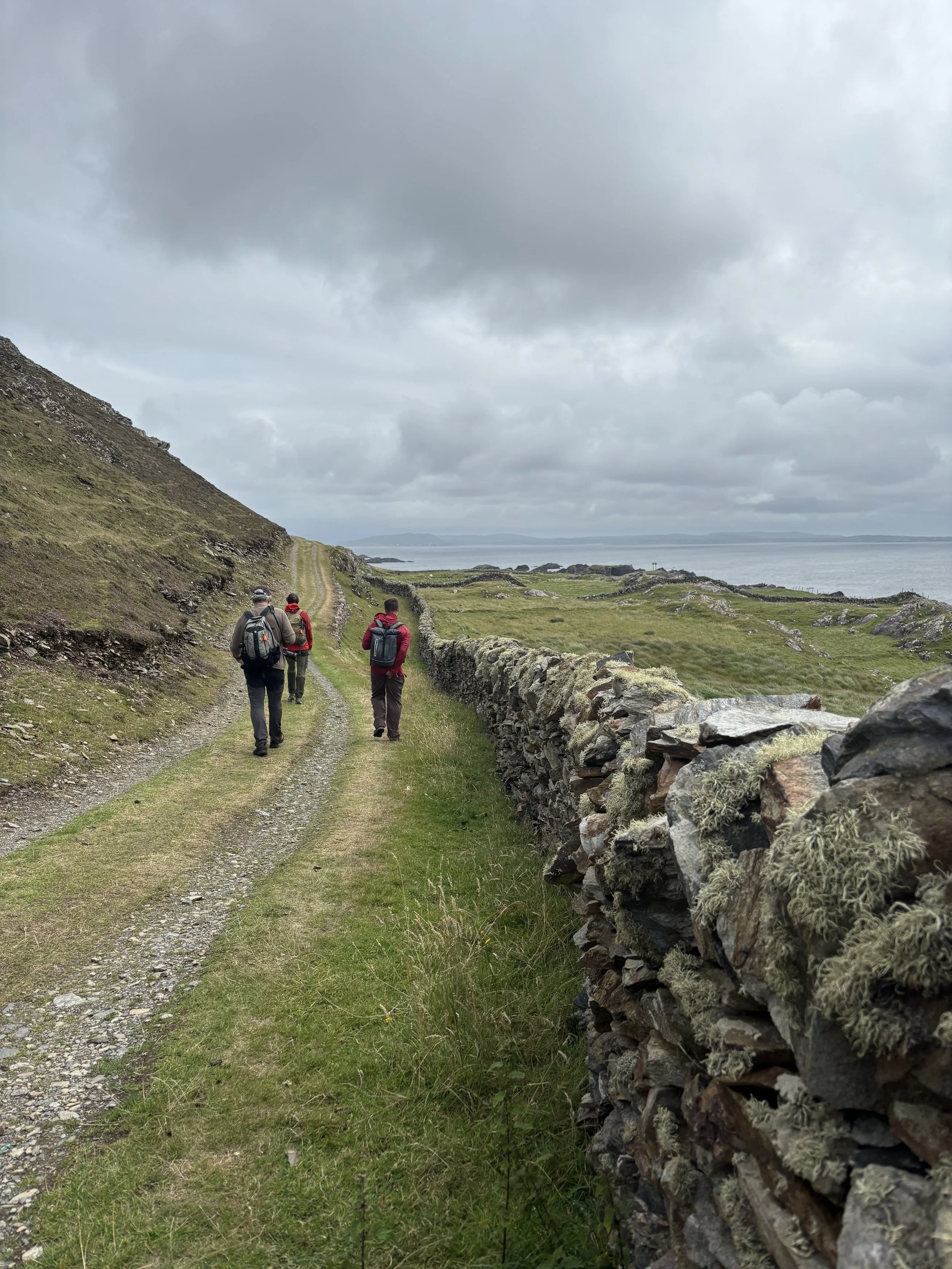
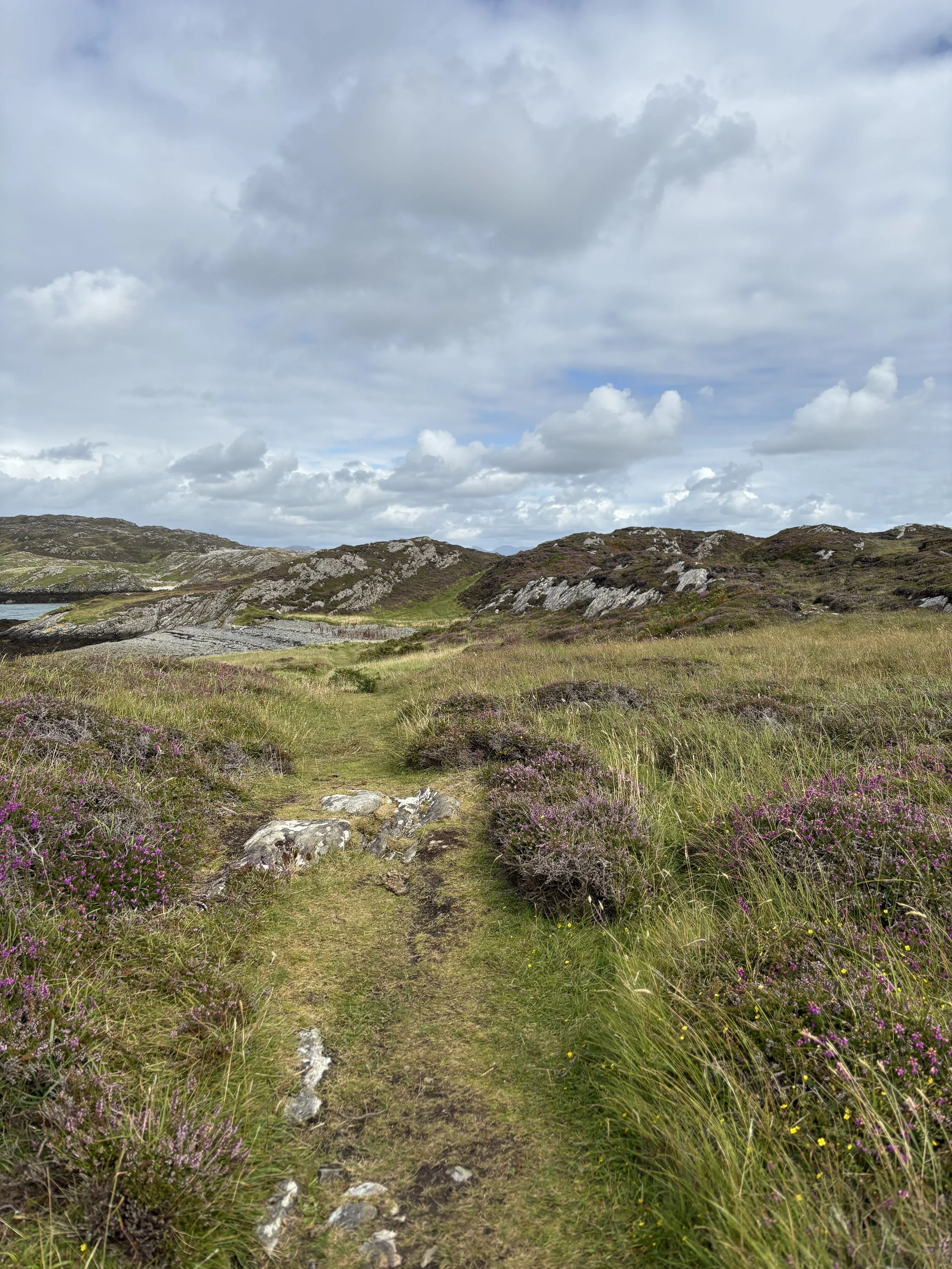
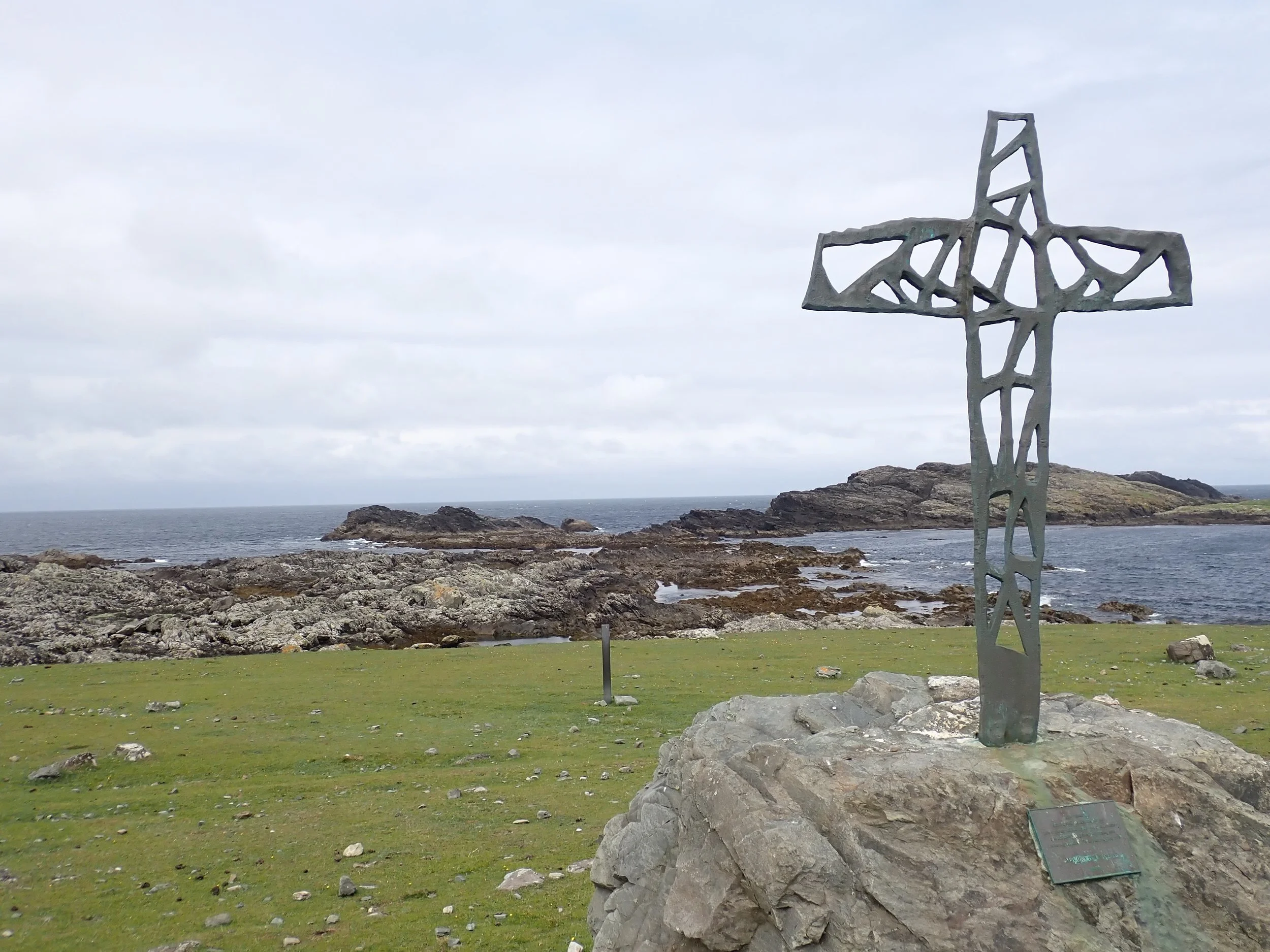
Inishbofin was amazing—a very quaint island full of natural beauty and ancient architectural ruins. We spent a few days there with our friends, Helen and Brian from Helacious. We hiked the east and west sides of the island, which offered quite different scenery—all of it stunning.
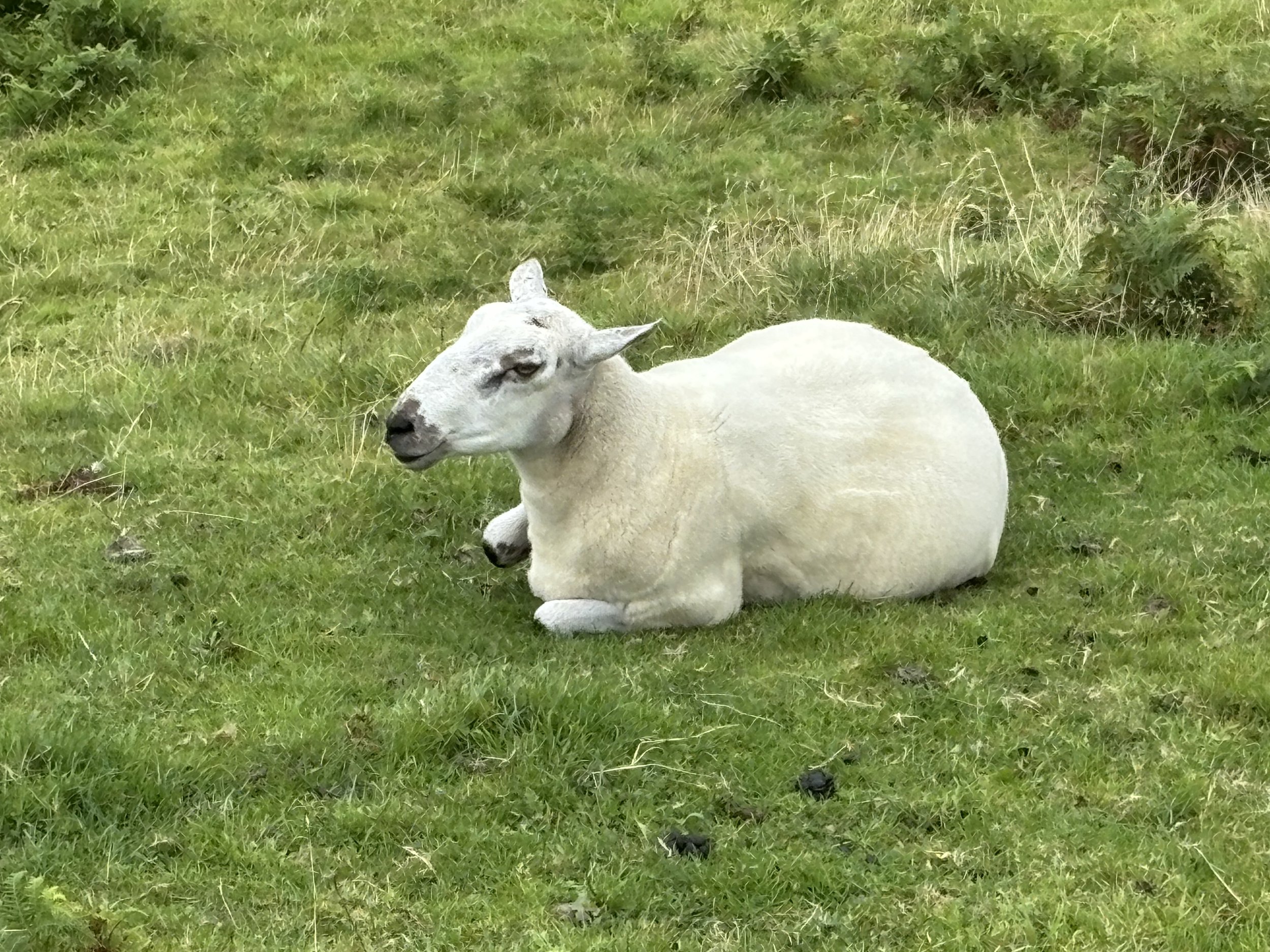
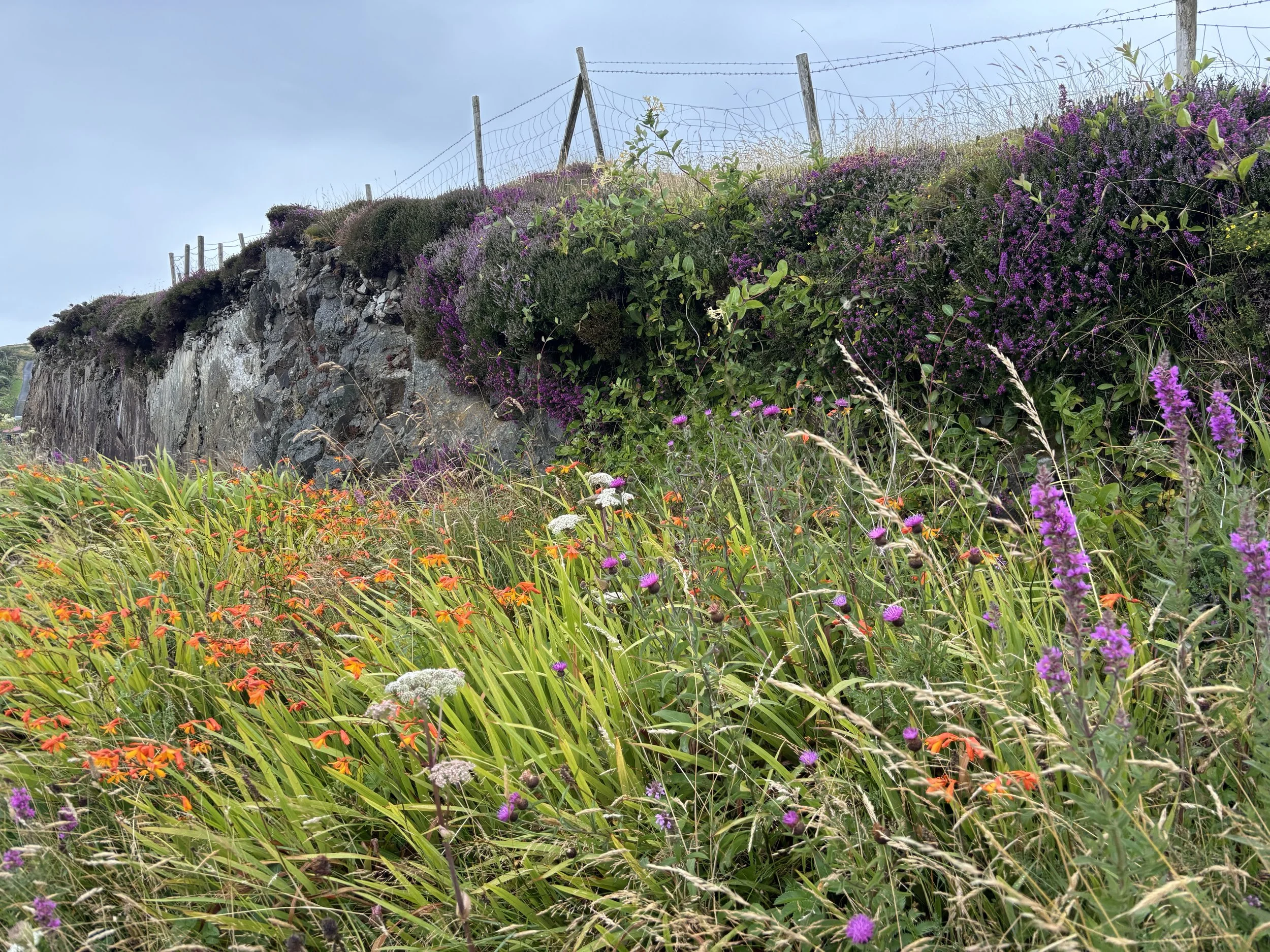
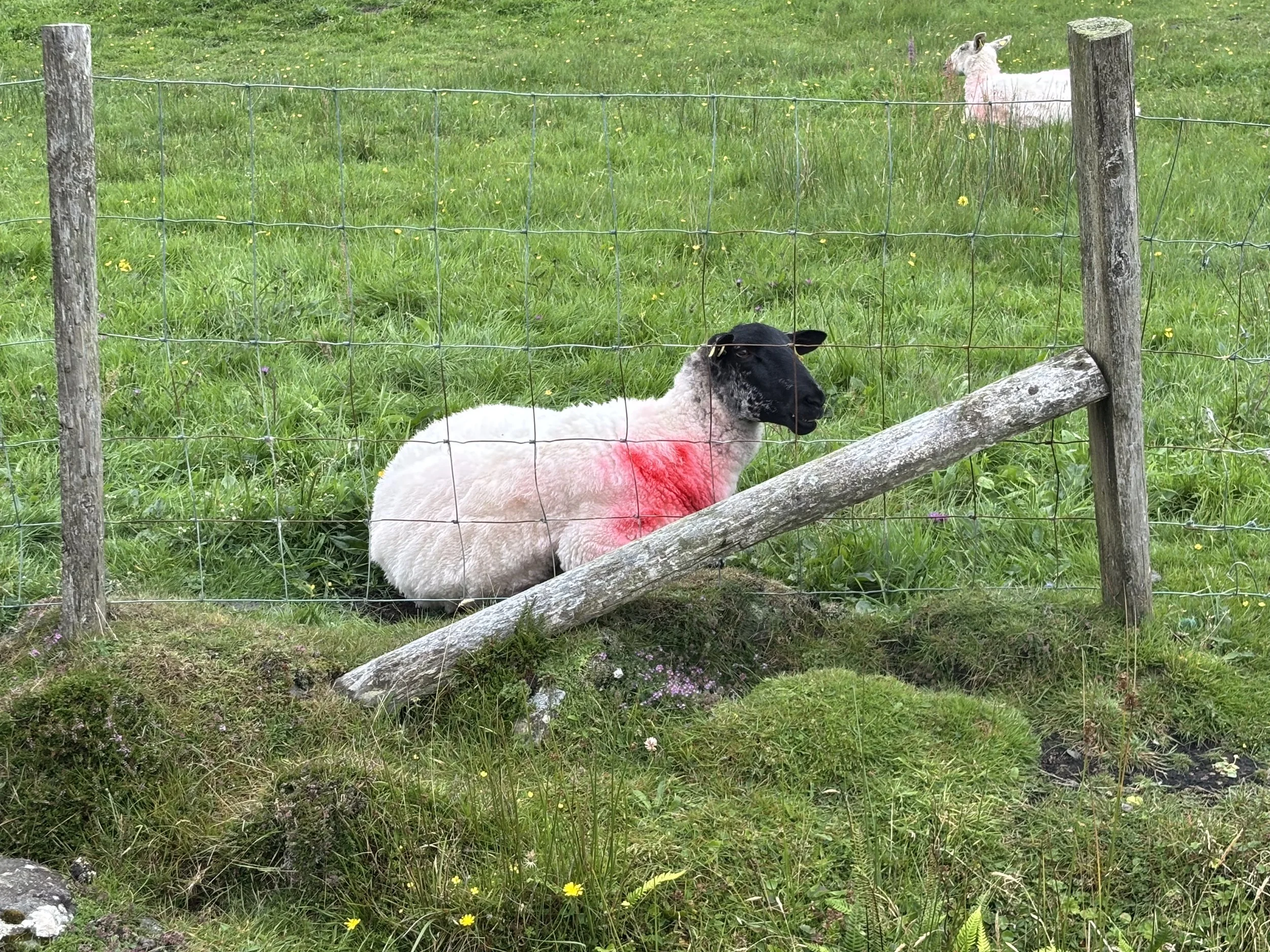
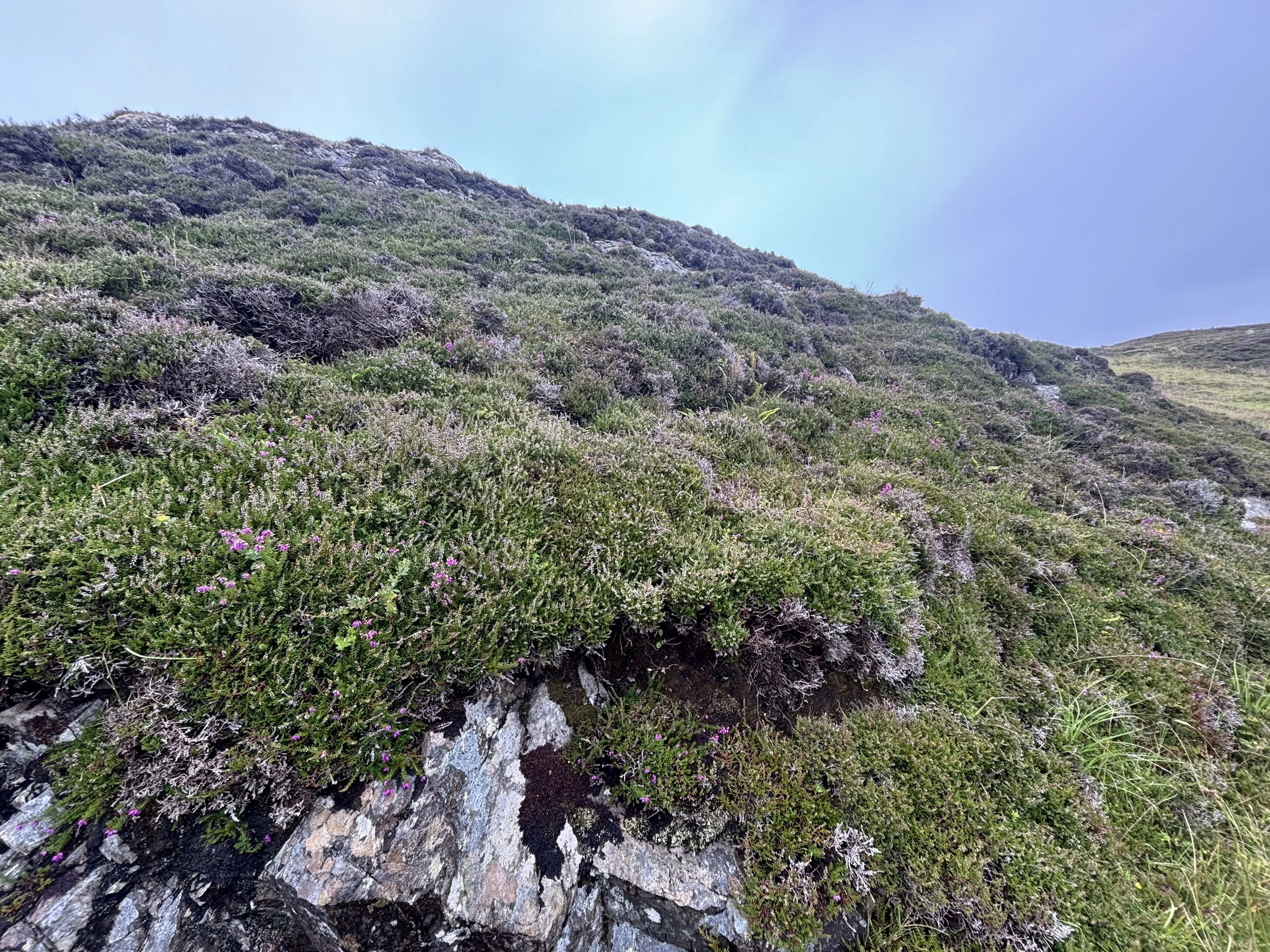
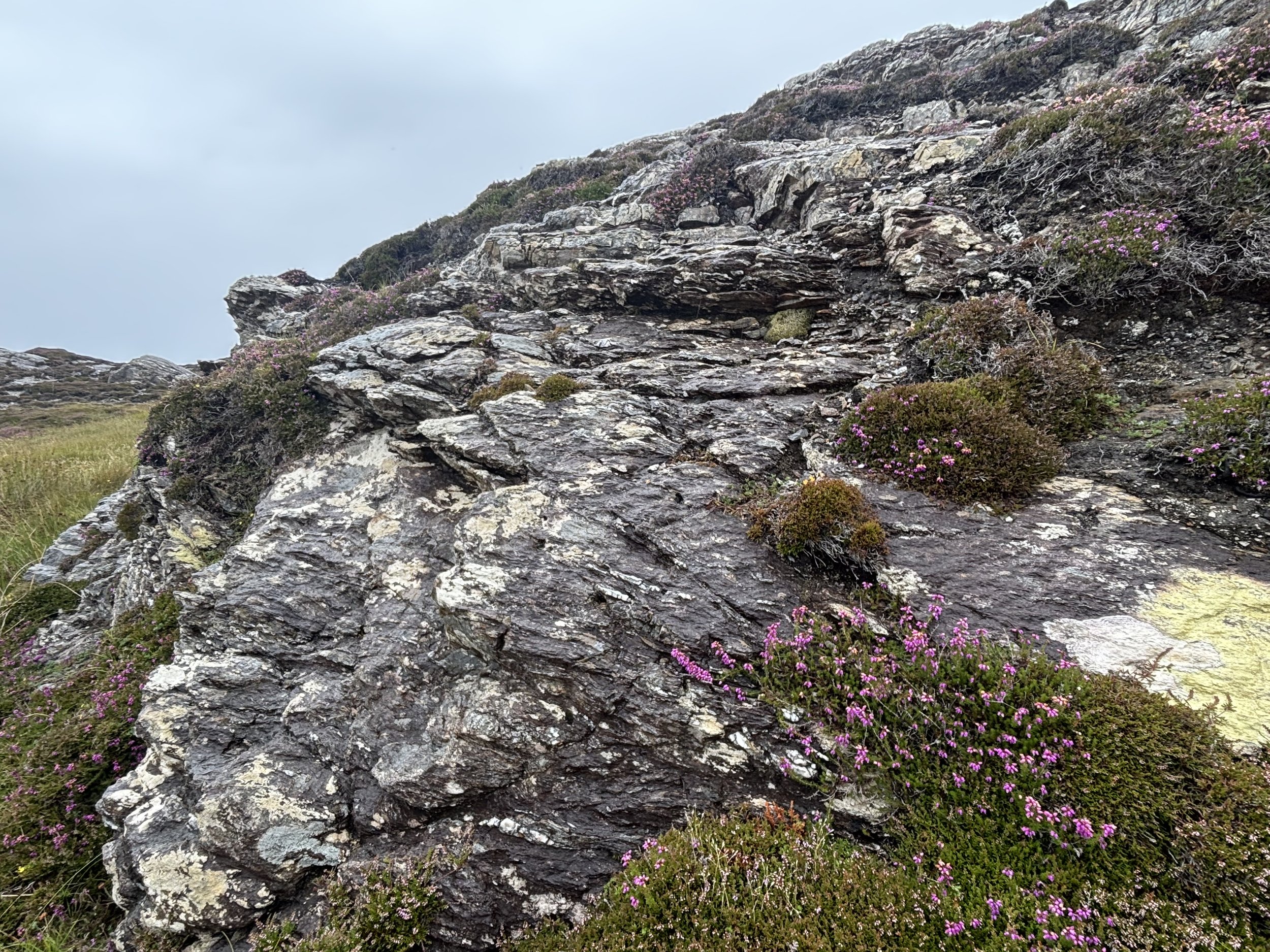
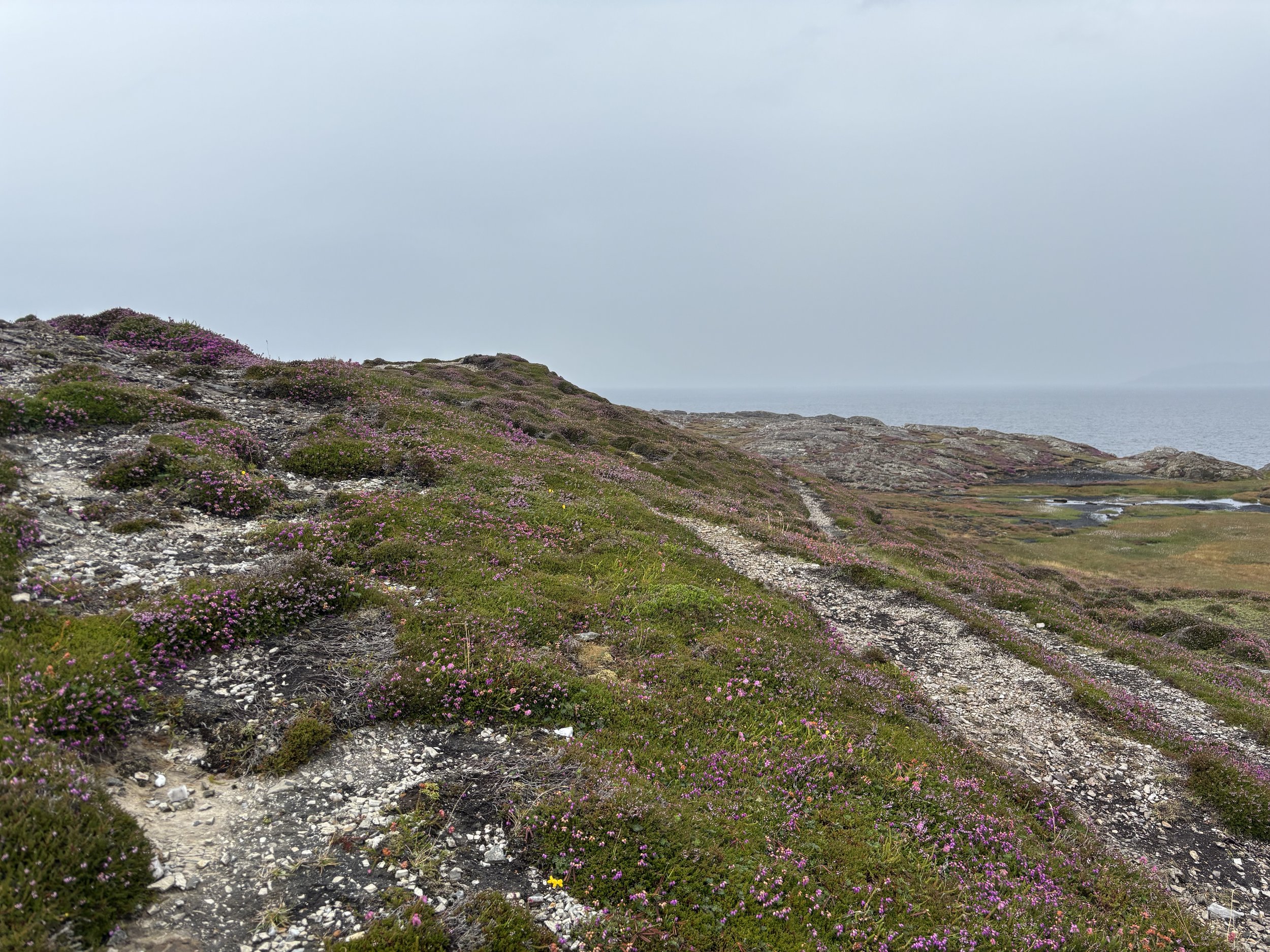
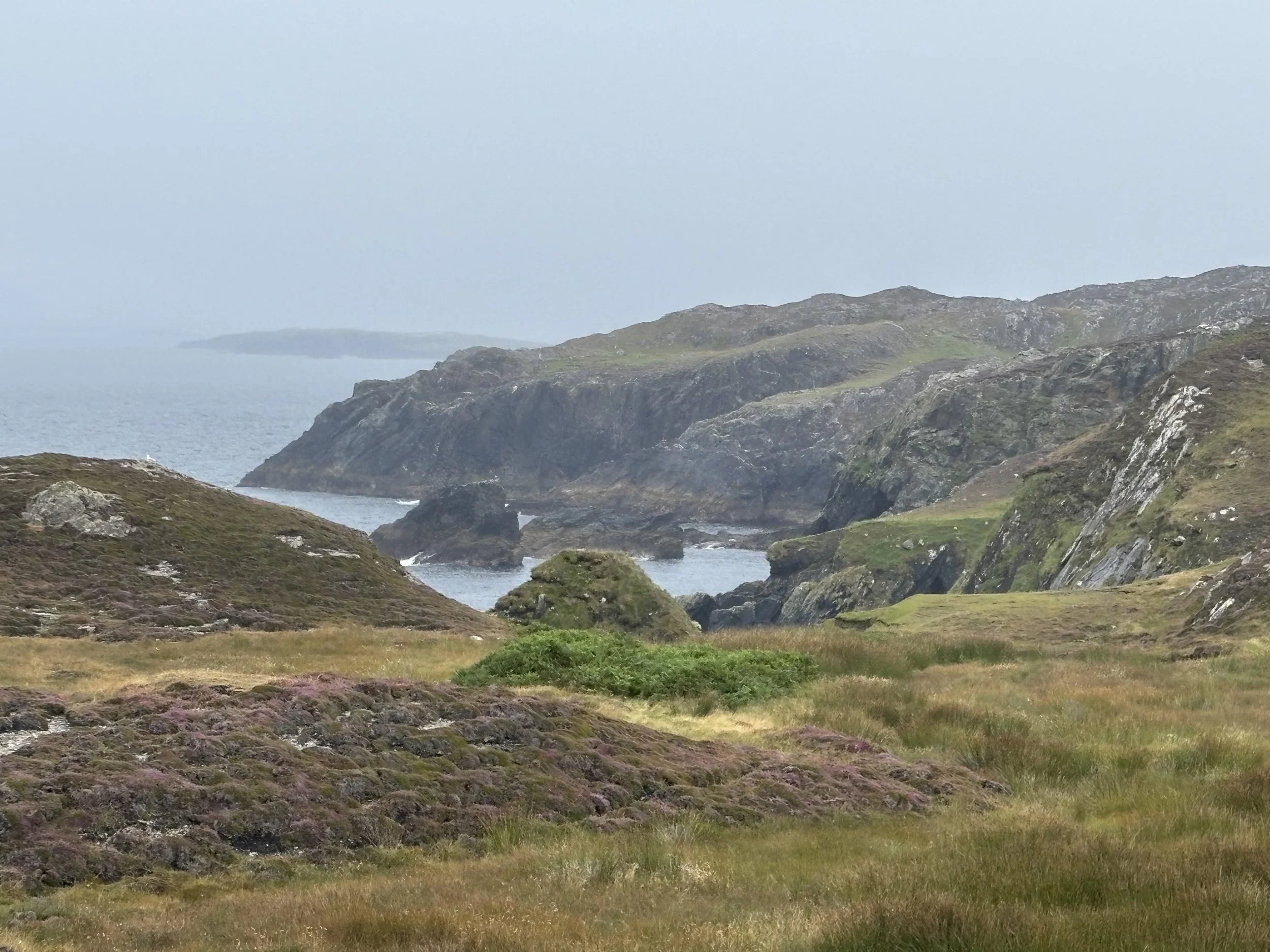
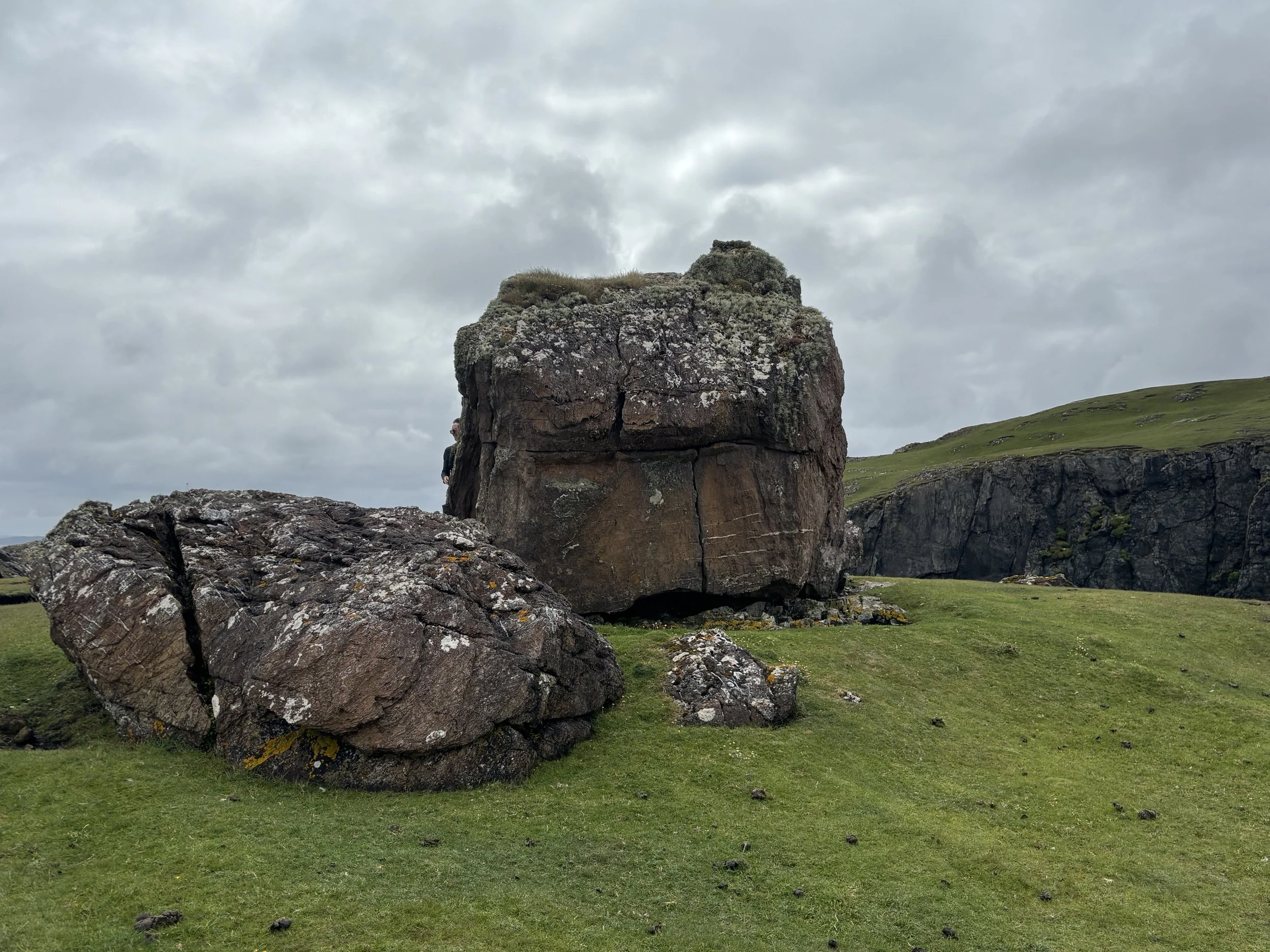
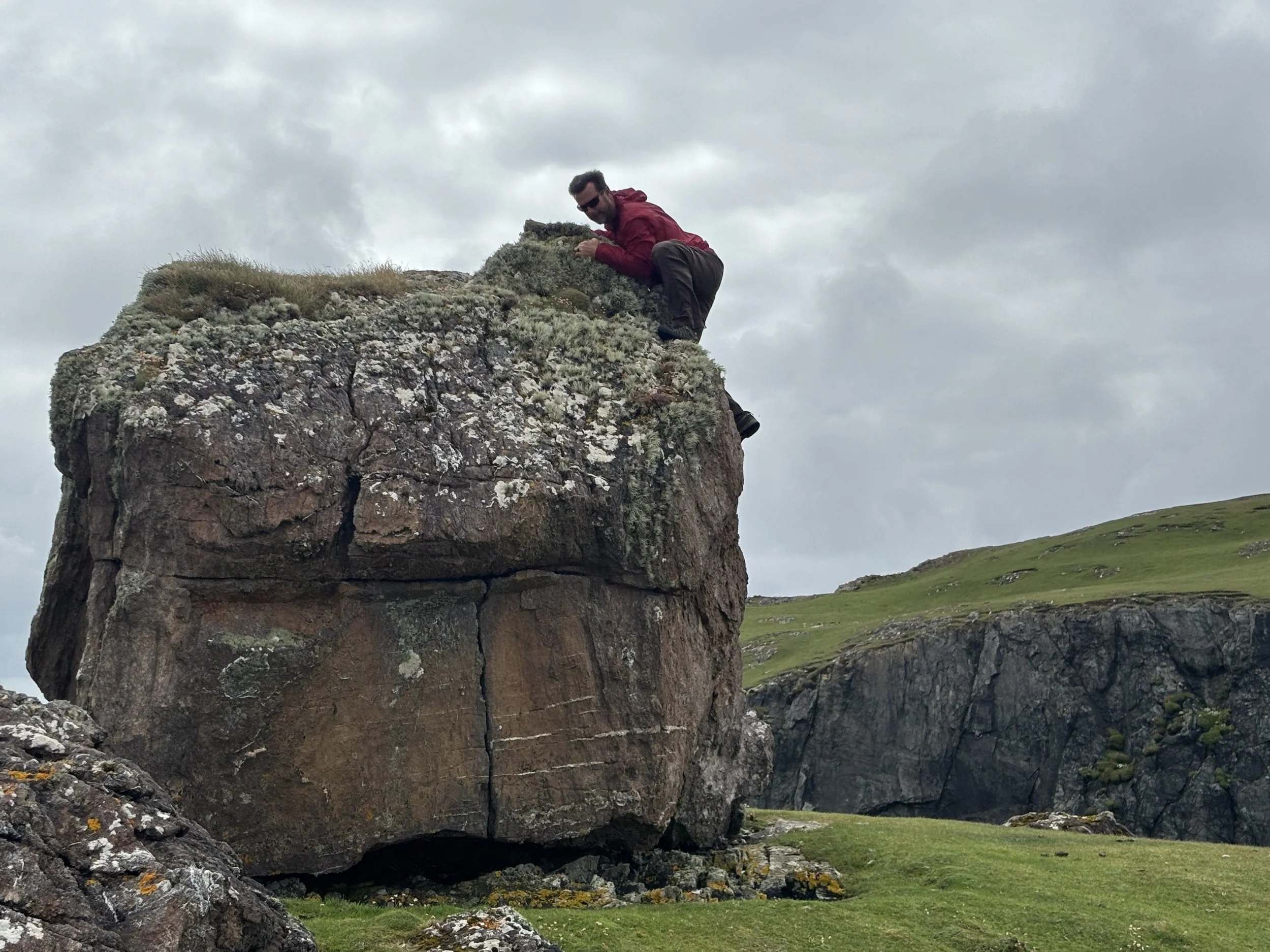
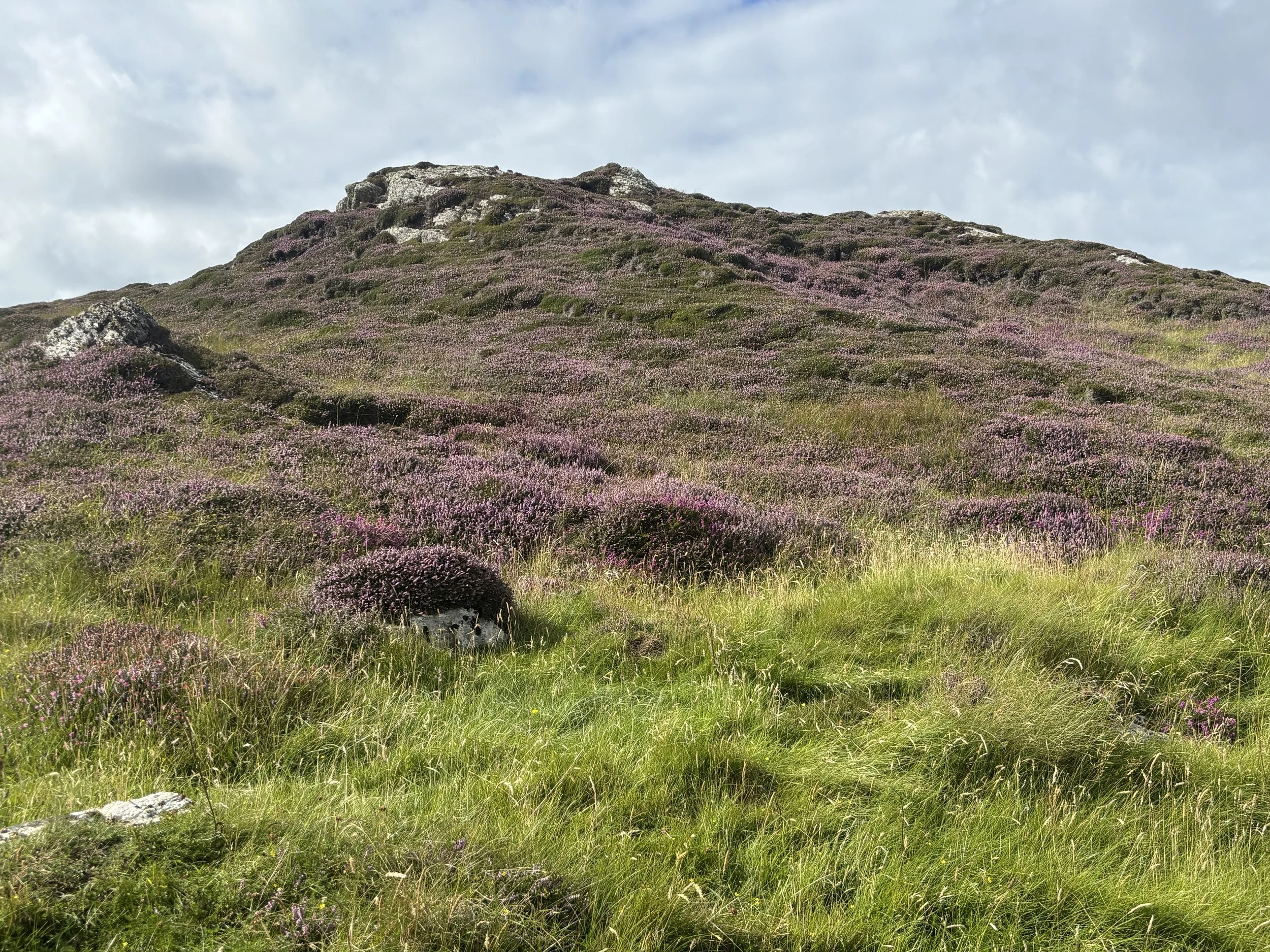
I’ve never really enjoyed hiking. But I have loved hiking in Ireland. It is unlike anything I have ever seen. Some days it feels like I am walking on the surface of a barren planet, where the rock surface spans as far as the eye can see. Other days, I am skirting basalt cliffsides, with lush green ground cover, colored by tons of heather, with sheep grazing all around me.
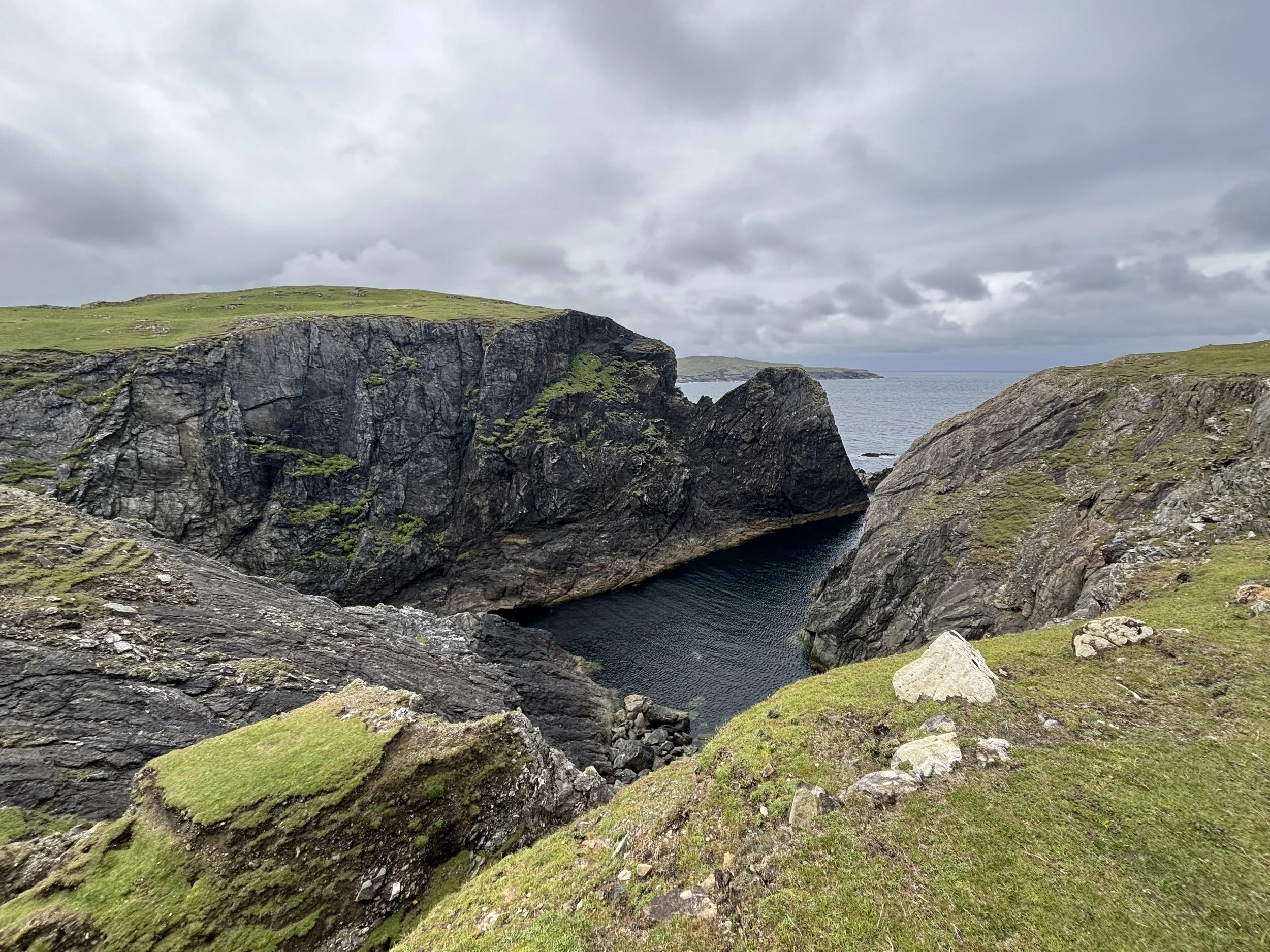
Hiking east side of Inishbofin
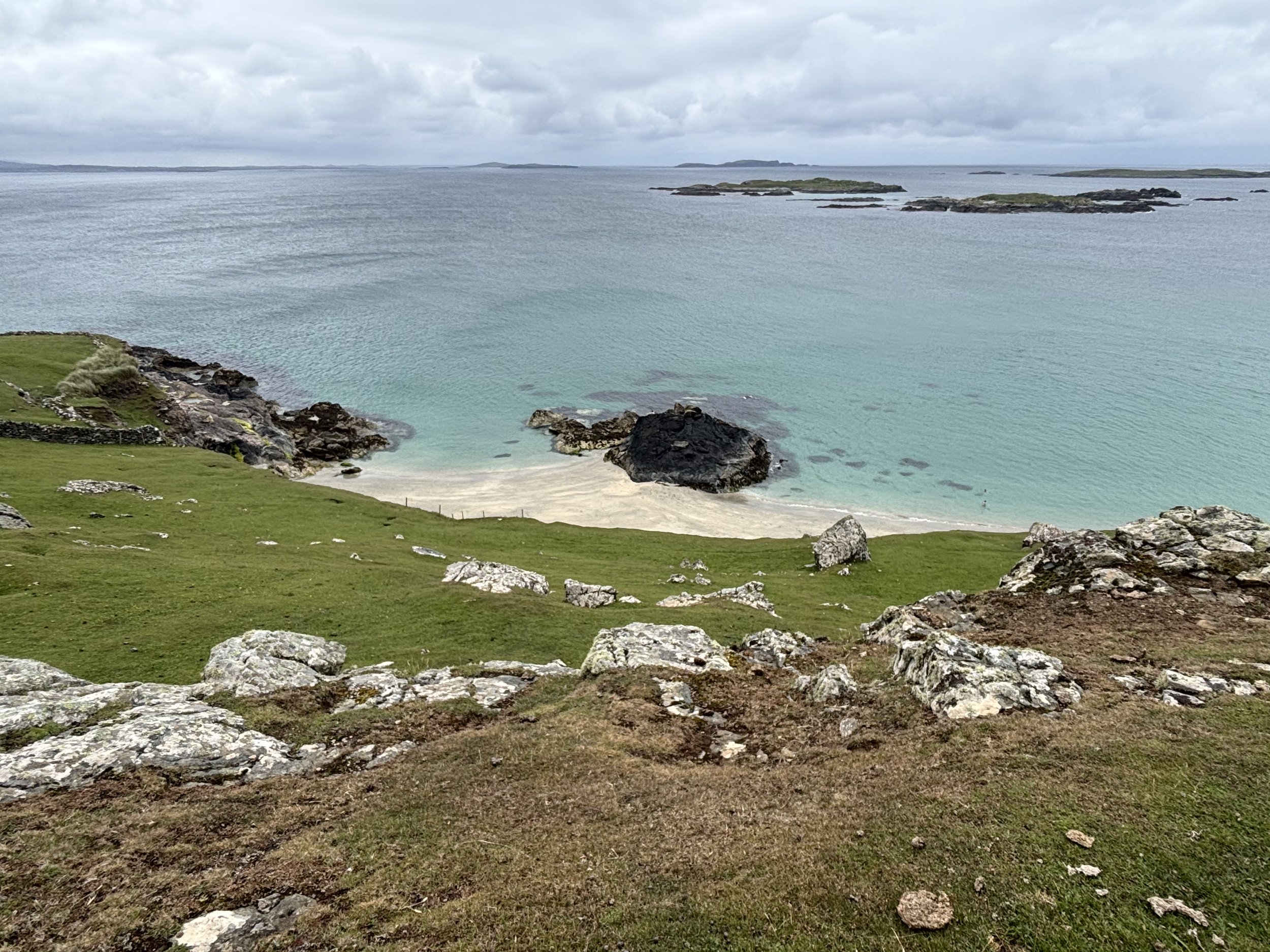
Hiking west side of Inishbofin
At the recommendation of a local merchant, we ate lunch at Inishwallah—a double-decker bus in the middle of the countryside. Ken ate a mutton sandwich, which was full of flavor! And I had some delicious fish tacos. Inishwallah was a gem!
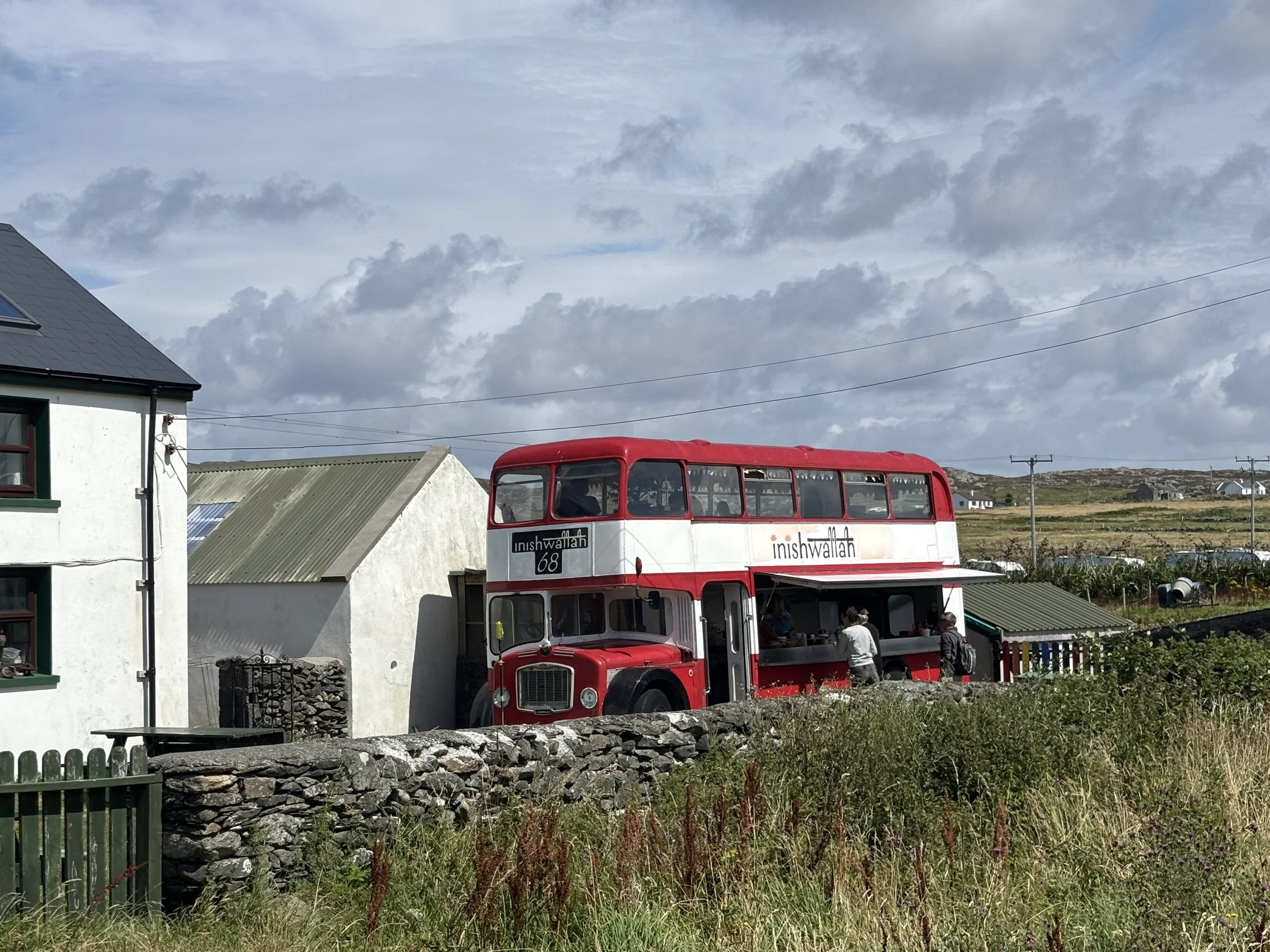
After a few days at Inishbofin, it was, once again, time to move on. The next stop would be Clare Island in Clew Bay.
Living Untethered, but held fast.
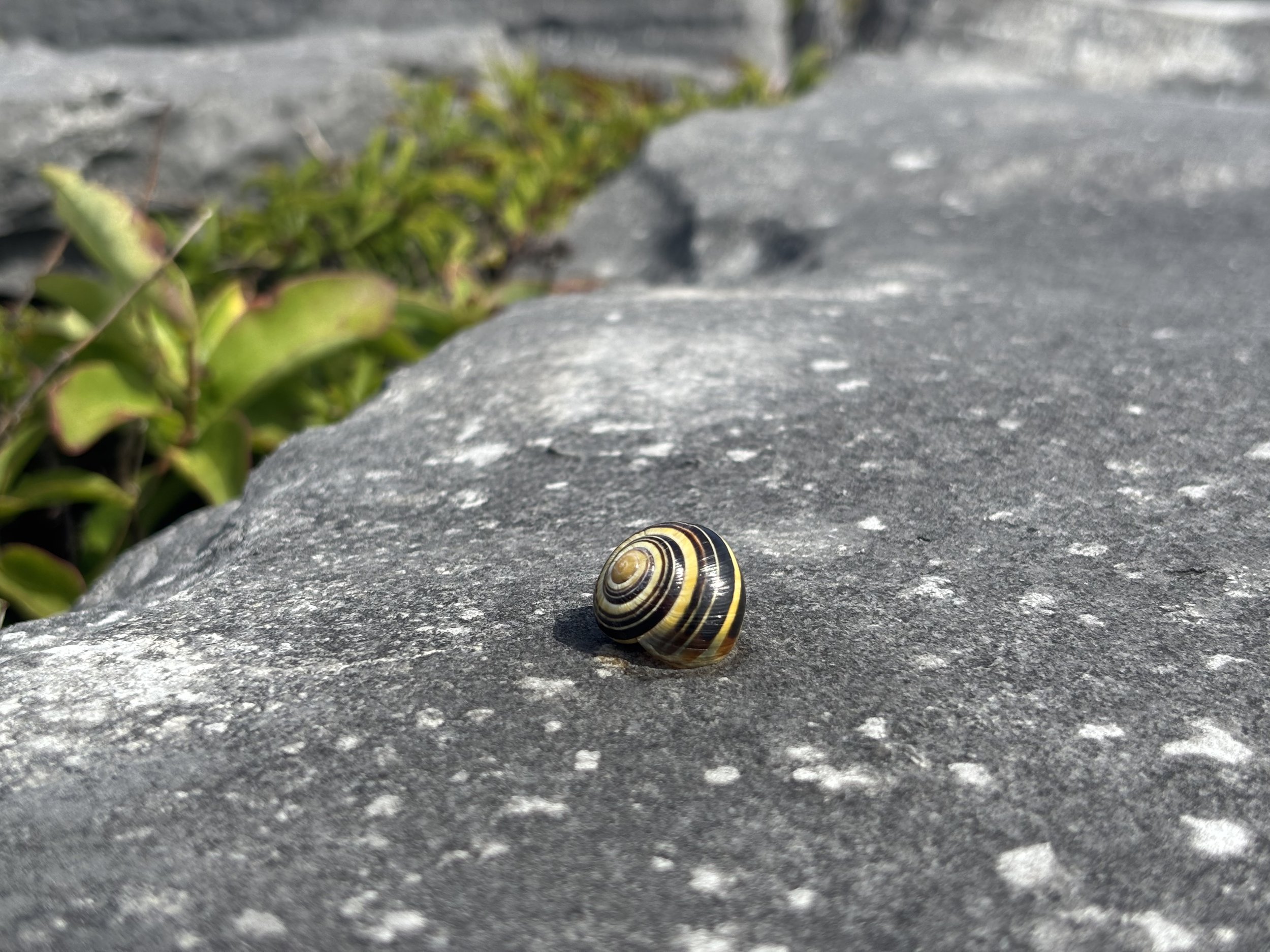
We have so many incredible photos. Here is a gallery of photos from our time in Inishmore and Inishbofin. If you are reading this in your email, you will need to click this link to view them.