Clew Bay
We hated to leave Inishbofin. It is probably one of our favorite stops in Ireland so far! But the time came to move on again. From Inishbofin, we sailed to Clare Island, a quaint small island positioned at the mouth of Clew Bay.
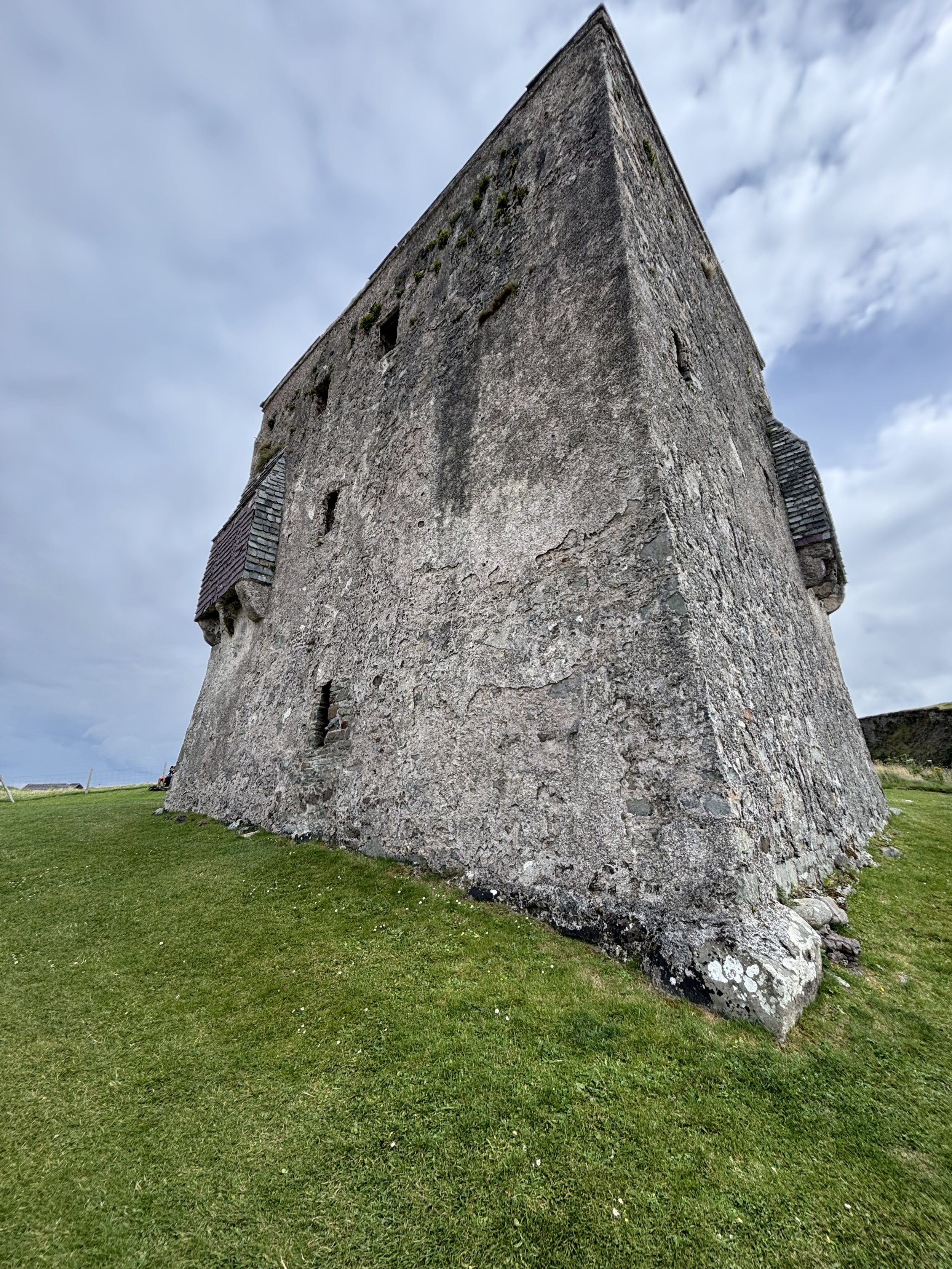
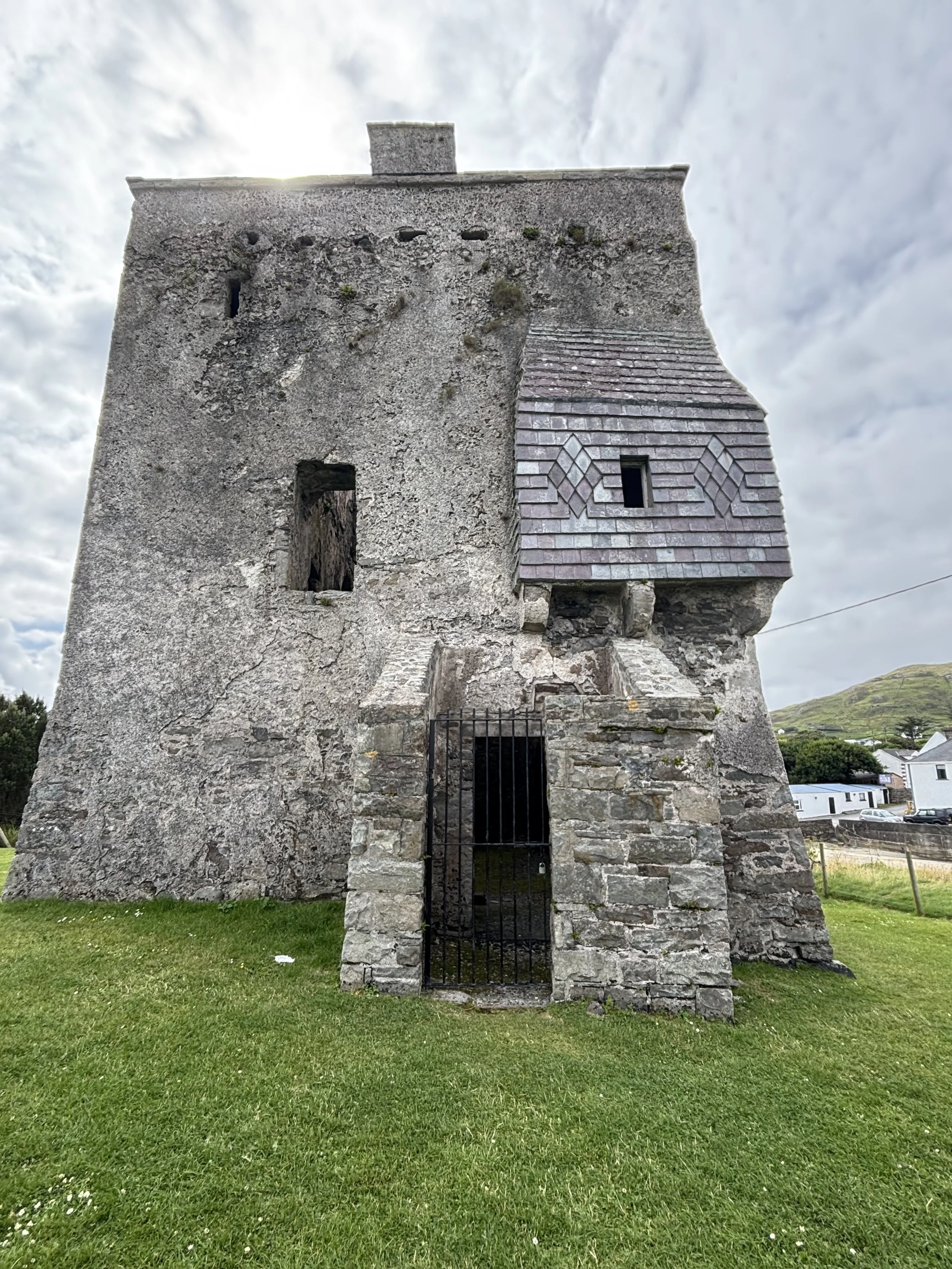
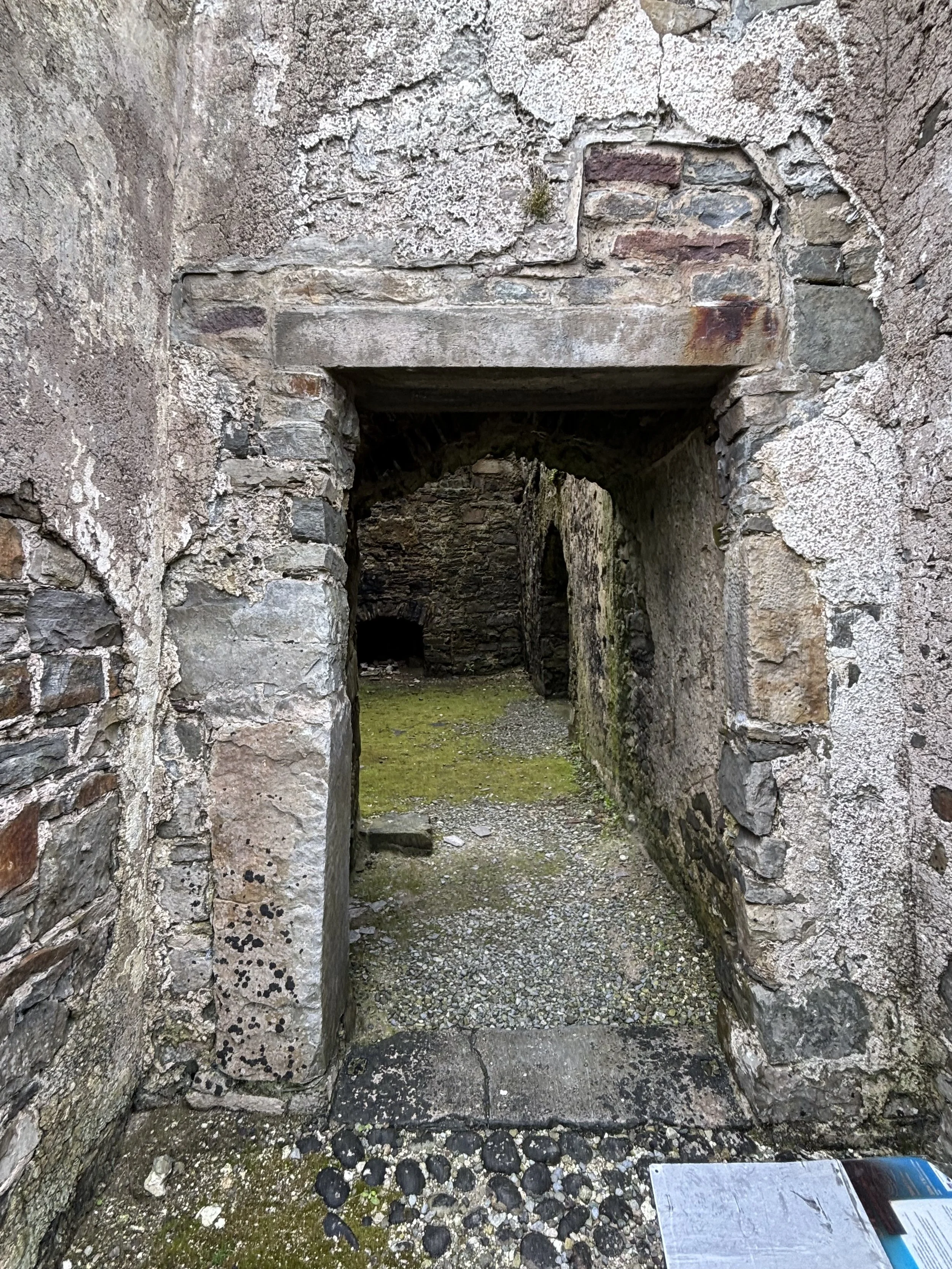
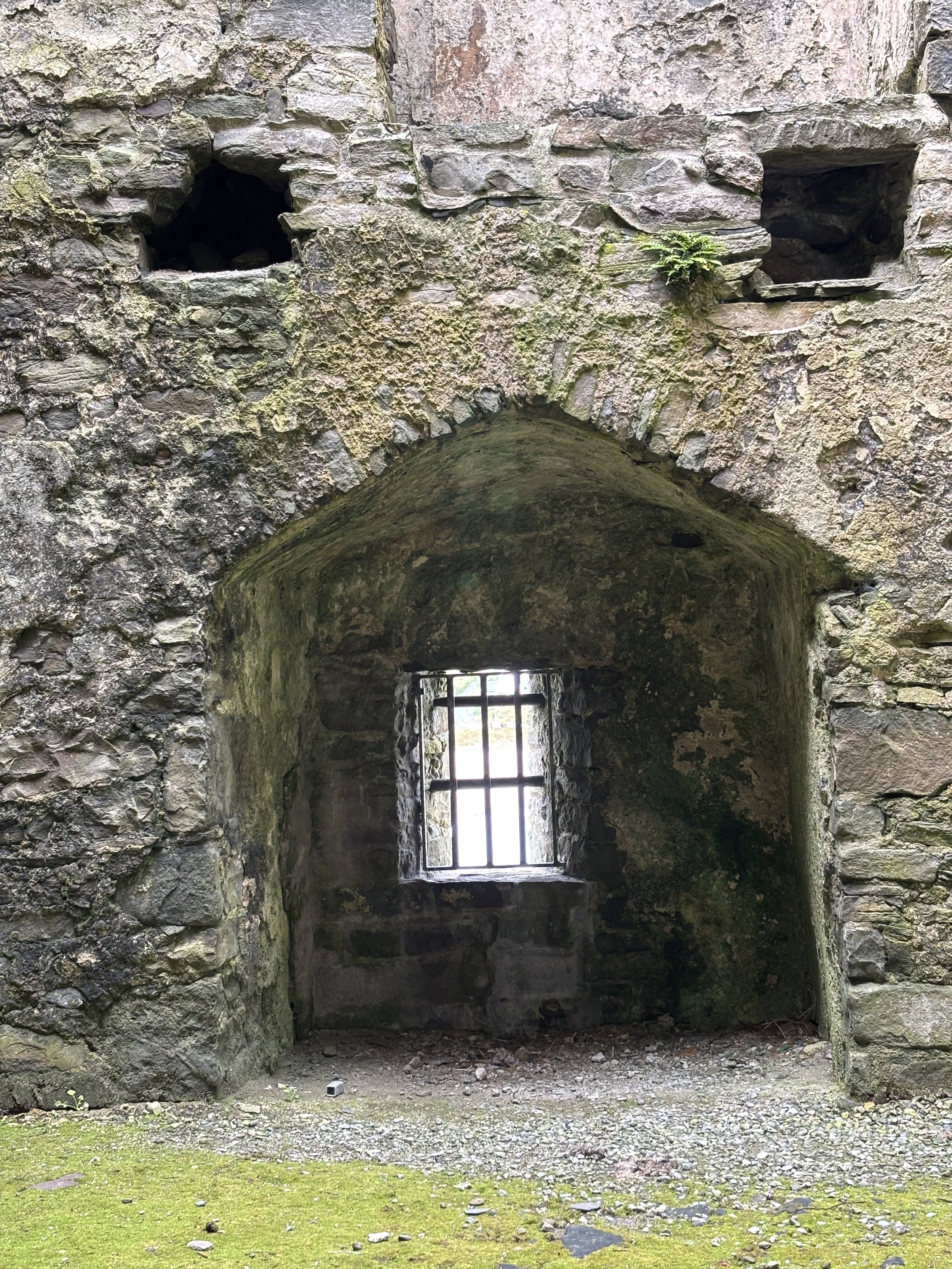
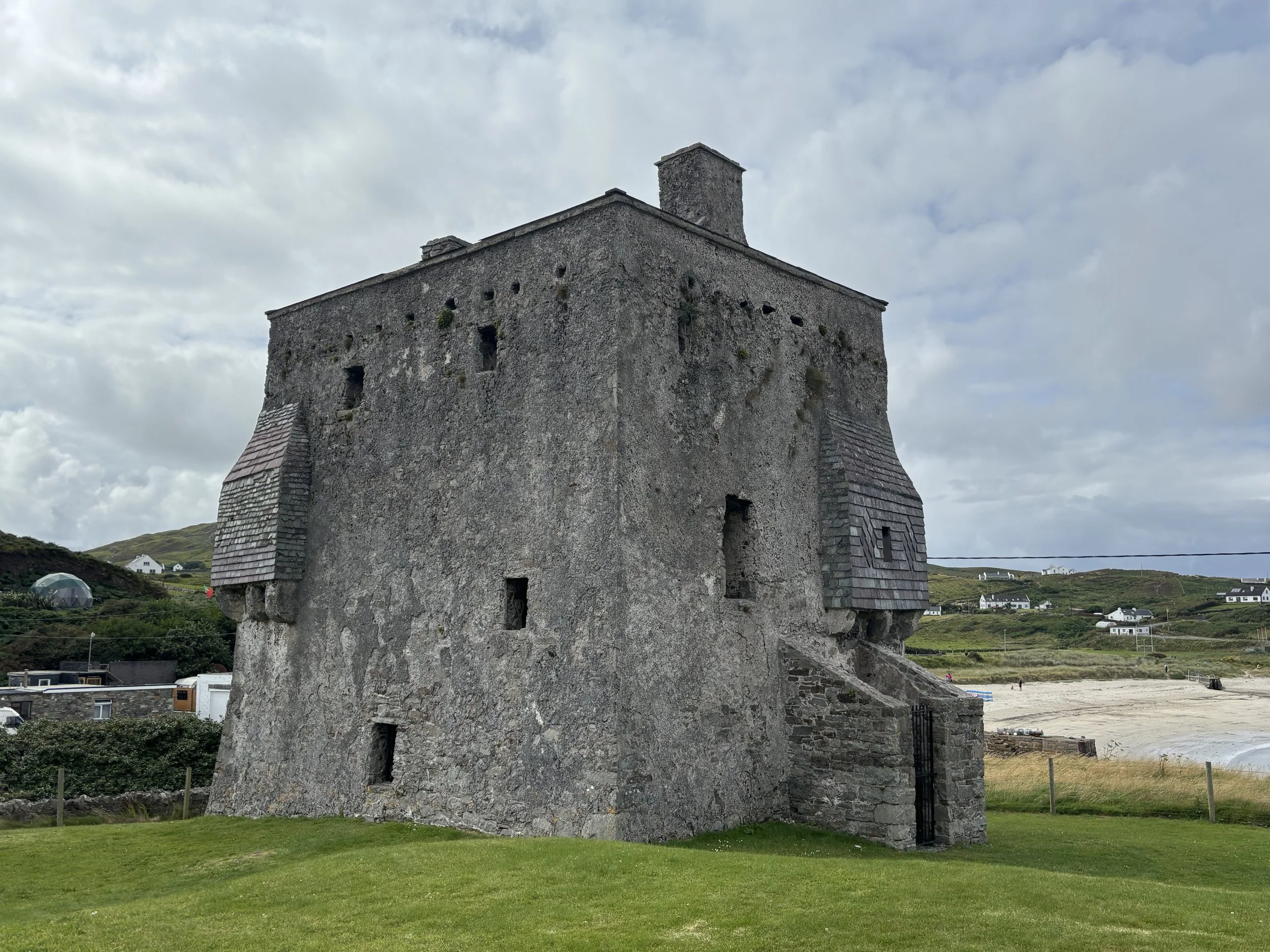
Our first stop was the 3-story tower house of the famous 16th-century pirate queen, Grace O’Malley. Tower houses were often three or four stories high, with a vault over the ground floor, and were protected by a parapet over the entrance, allowing stones or other objects to be dropped directly onto attackers below.
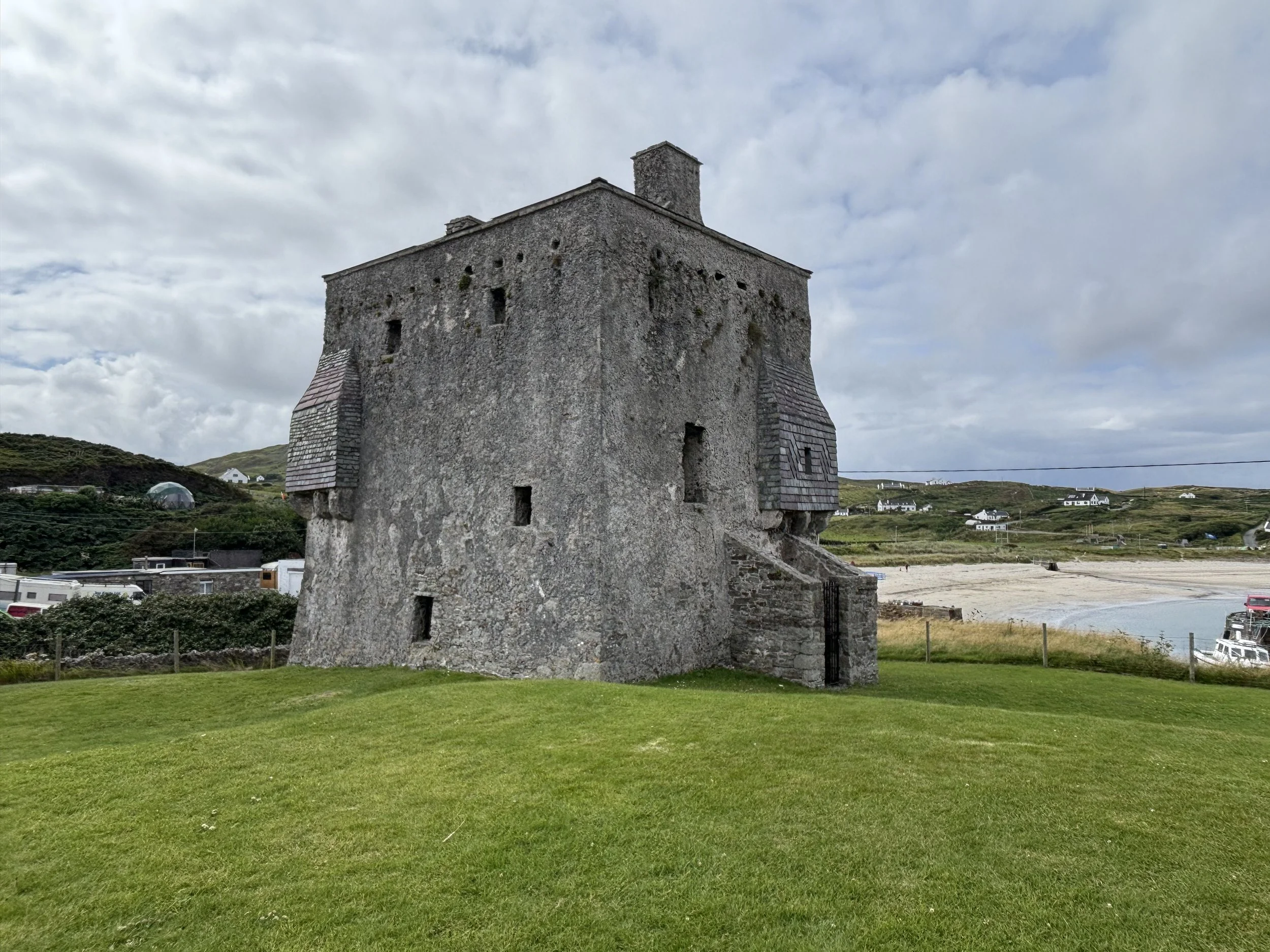
Grace O’Malley’s tower house on Clare Island
The longer we’re in Ireland, the more historical figures I want to learn about. Grace O’Malley is one more to add to my list. It’s believed that she grew up on Clare Island. She was a formidable woman who launched into her career as a pirate sometime after her first husband died in 1565.
Her castle’s location at the head of Clew Bay made it a valuable lookout spot, enabling the pirate queen to intercept ships—imposing a tax or raiding and pillaging them. In 1593, after the English governor Richard Bingham seized her property and imprisoned members of her family, Grace sailed from Ireland to London and secured an audience with Queen Elizabeth I. During their meeting, she successfully negotiated the release of her family members and the restoration of some of her position.
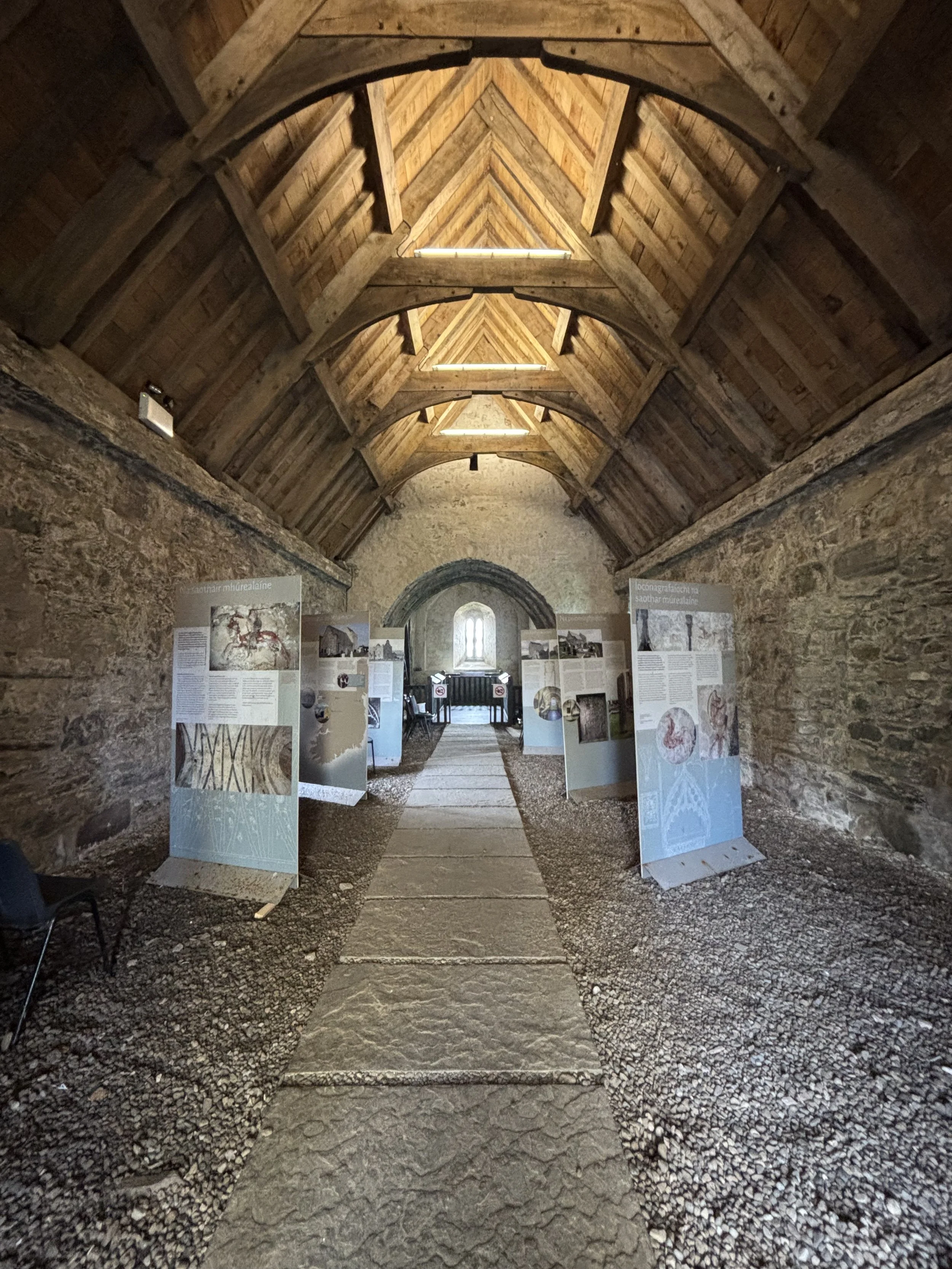
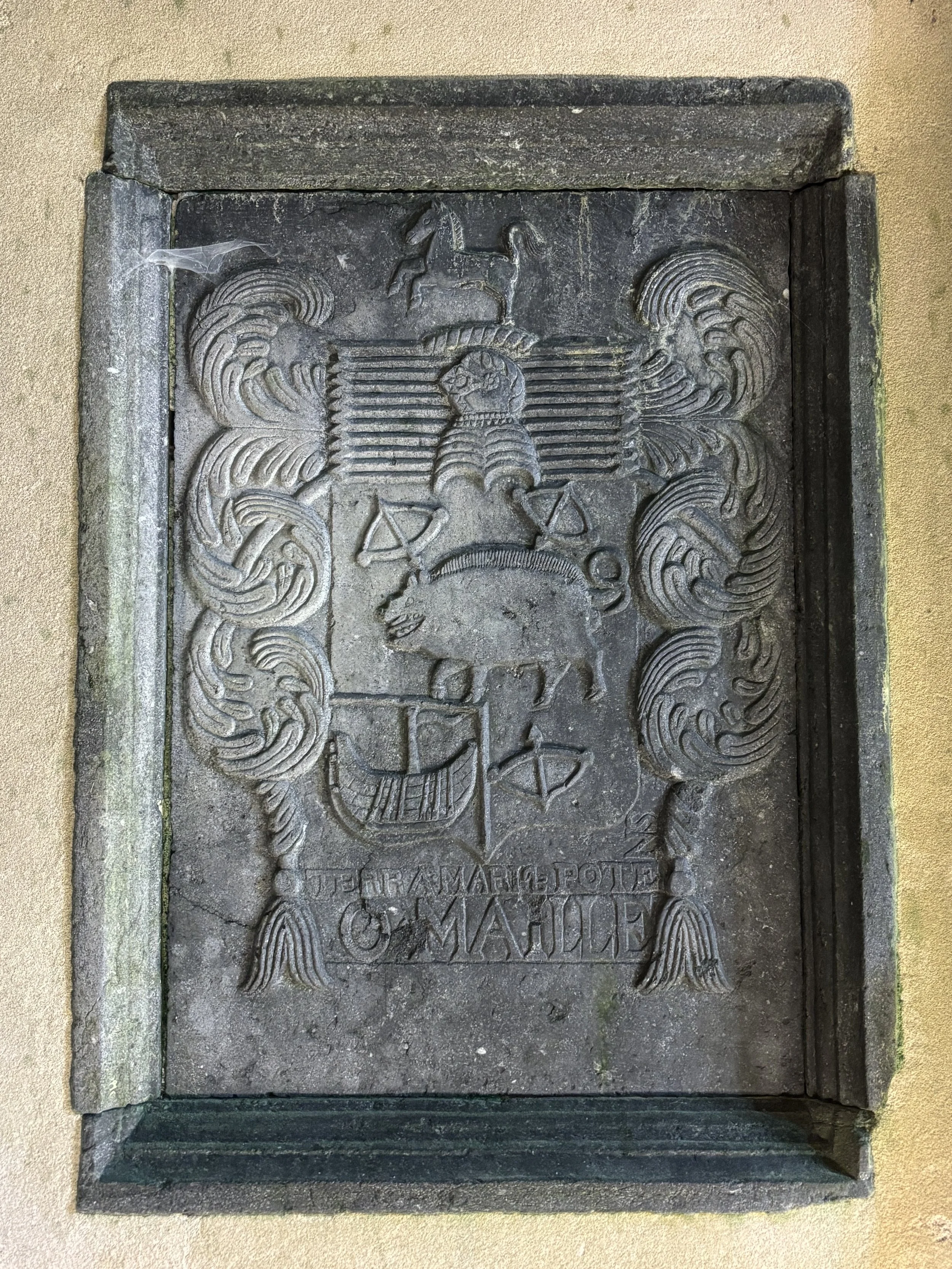
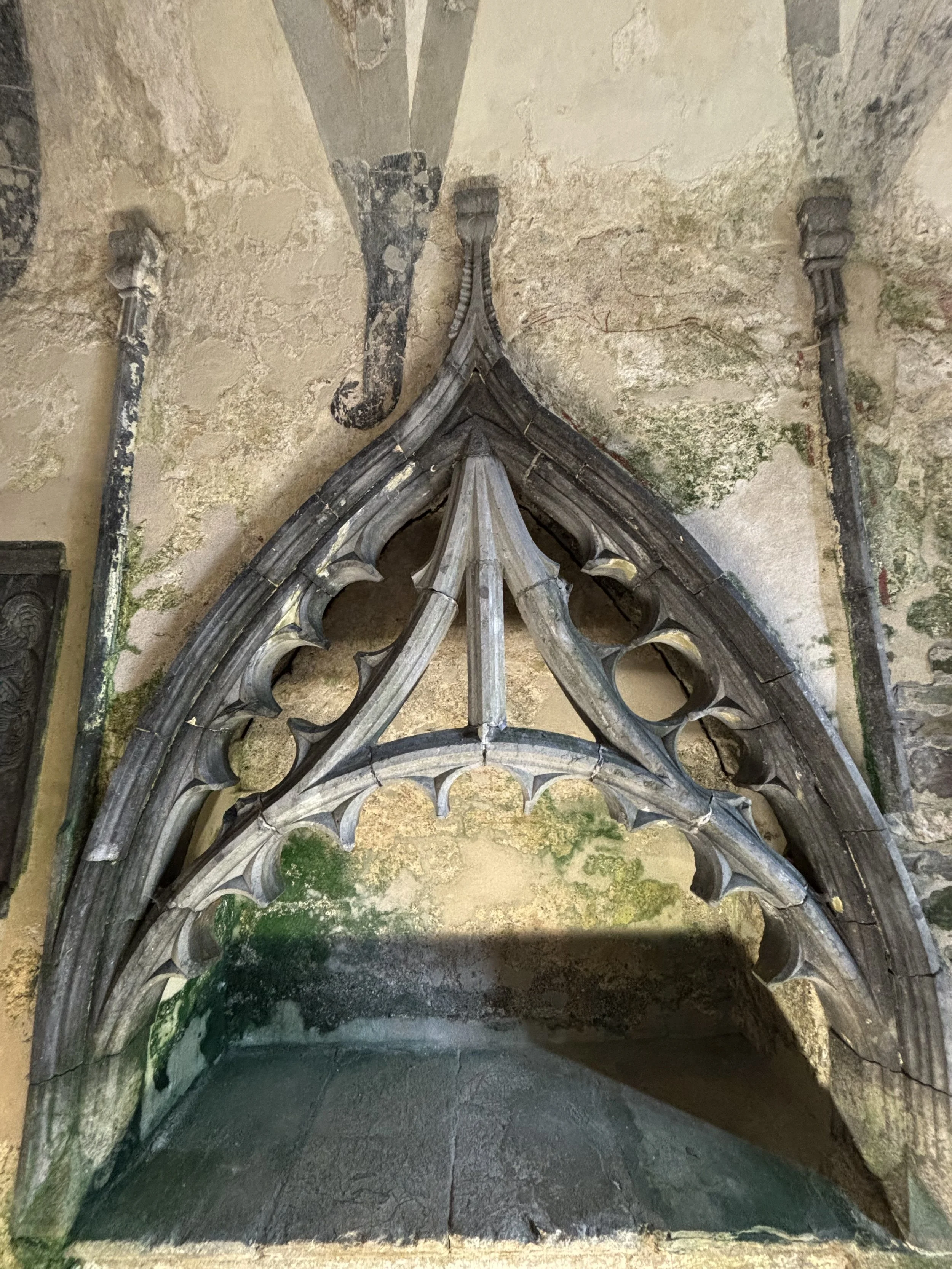
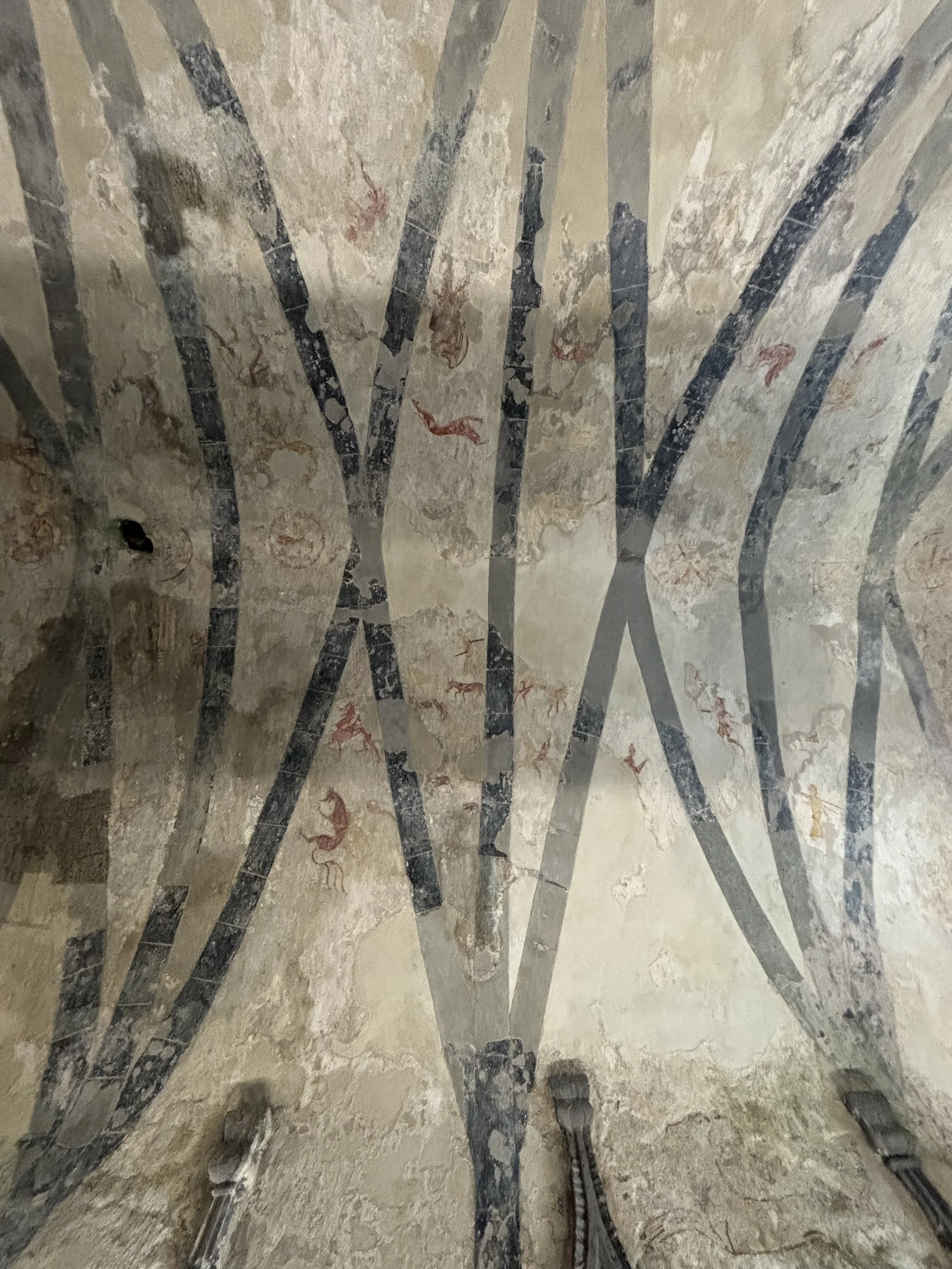
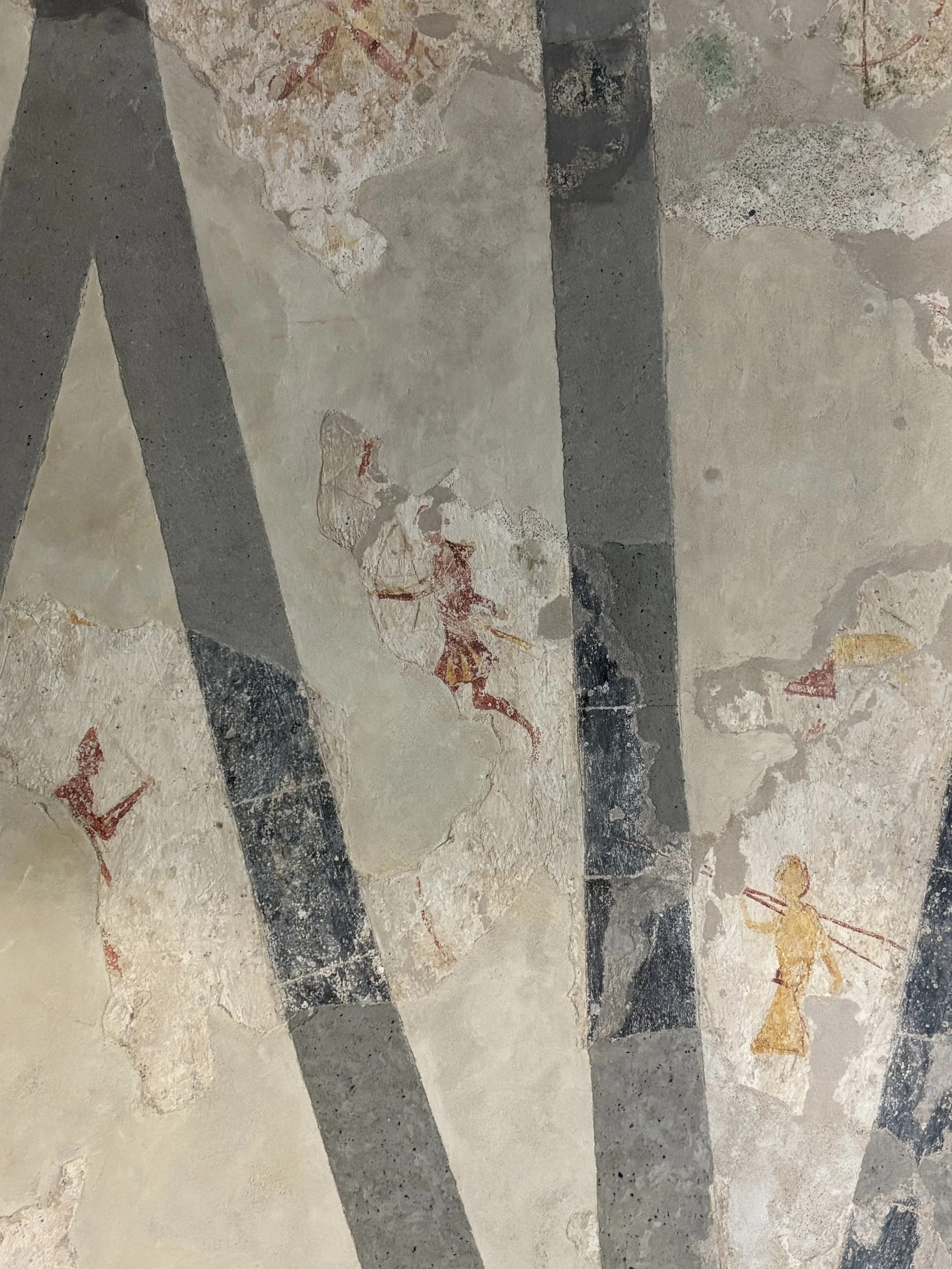
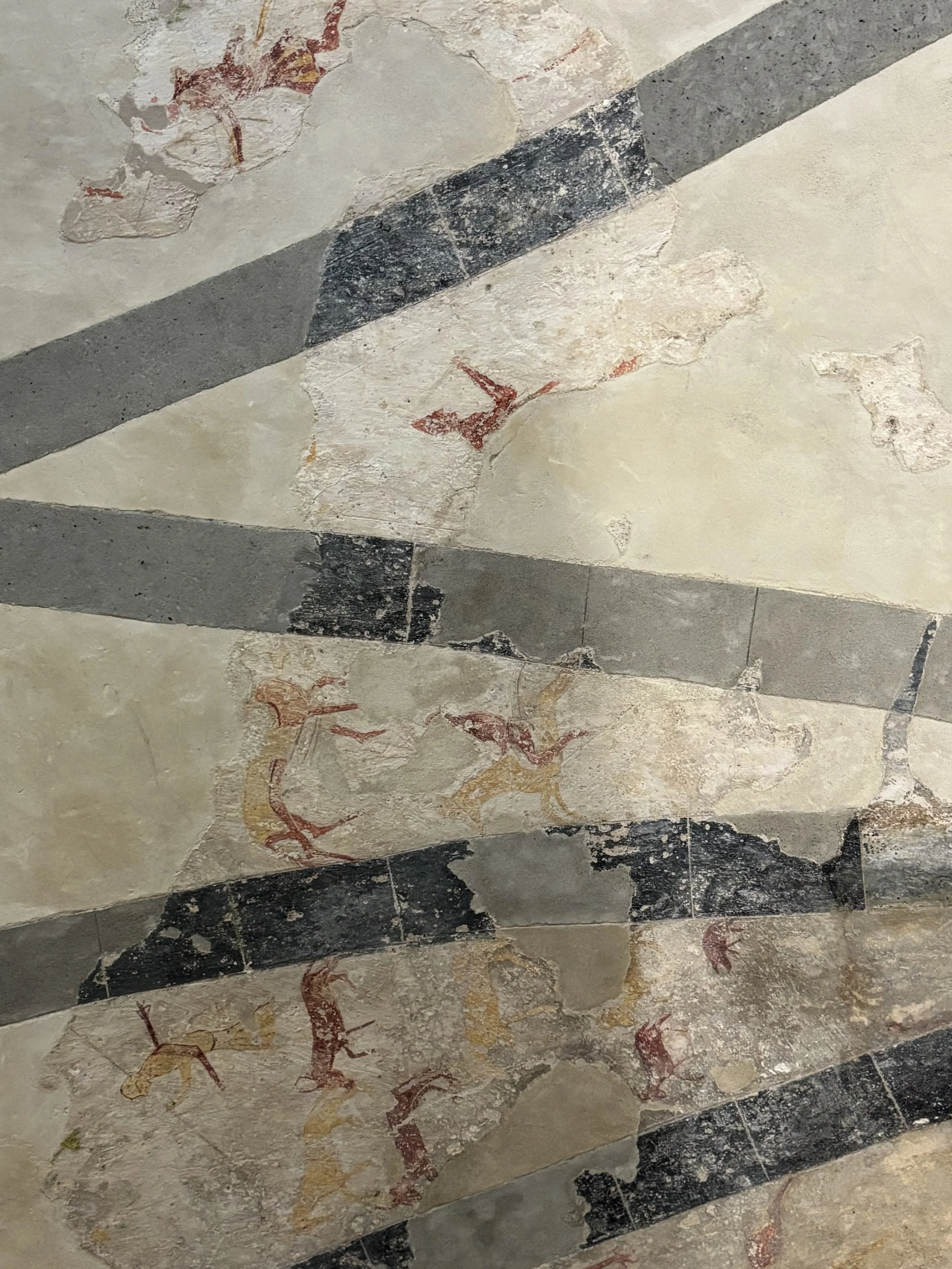
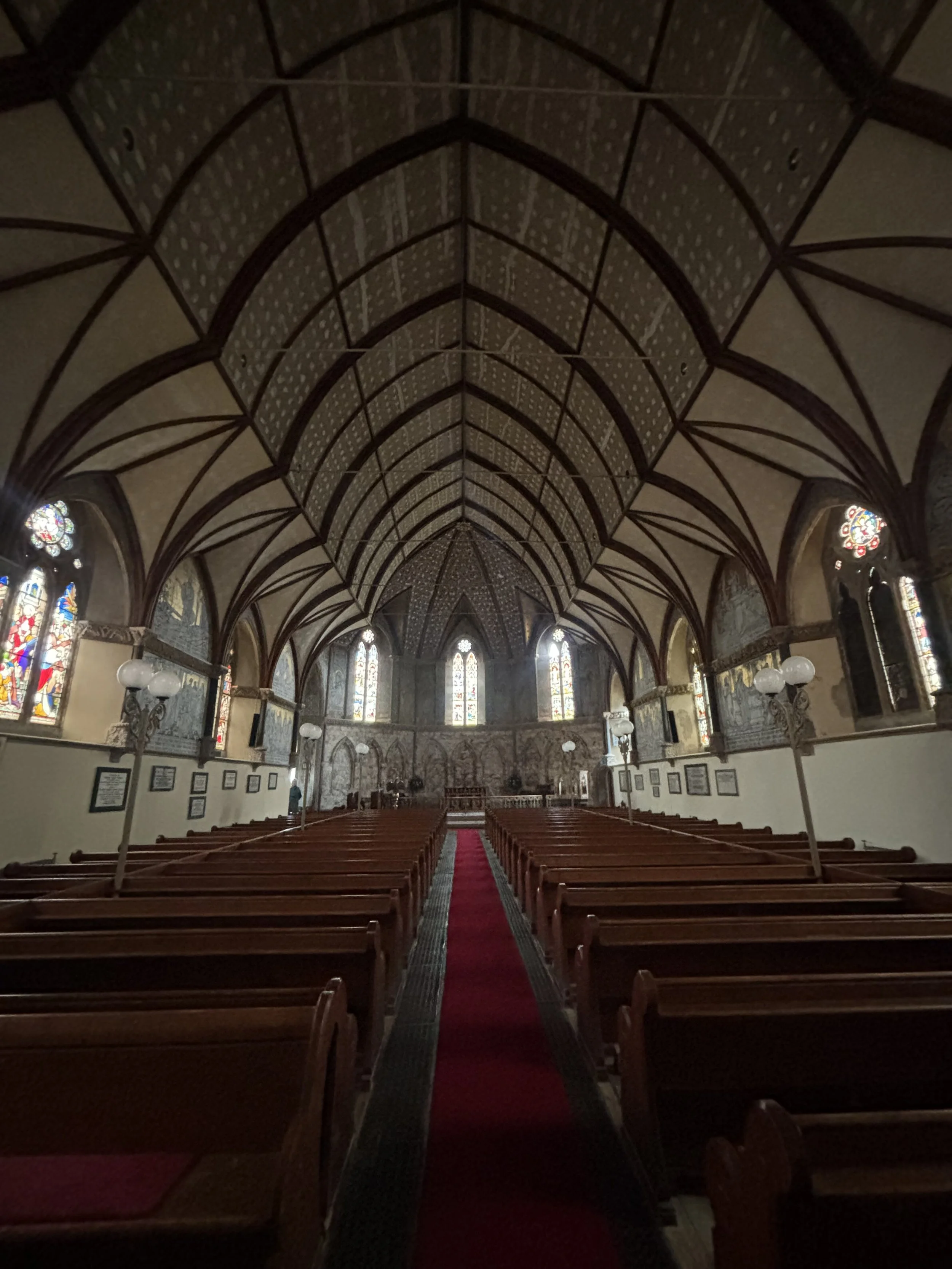
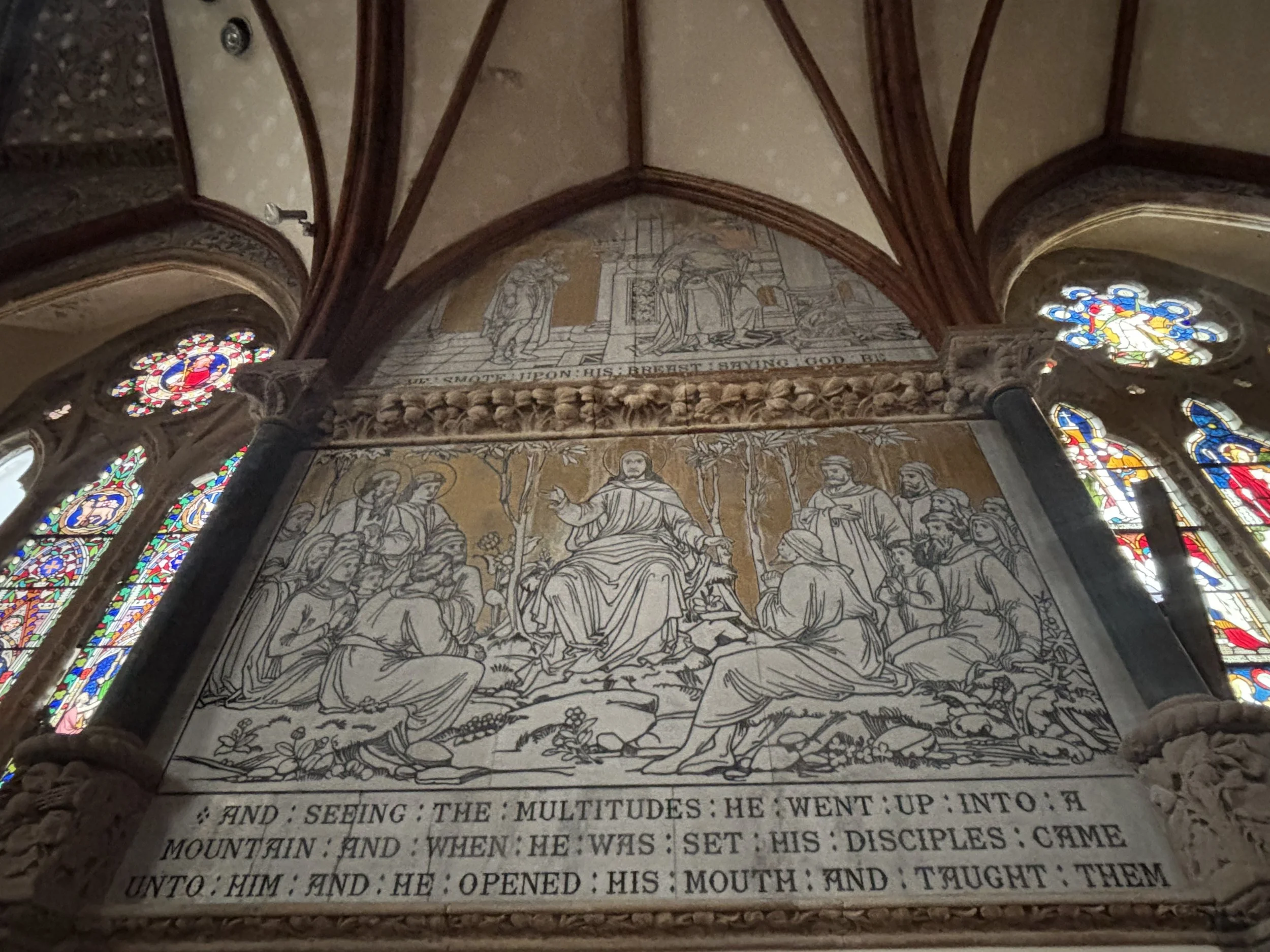
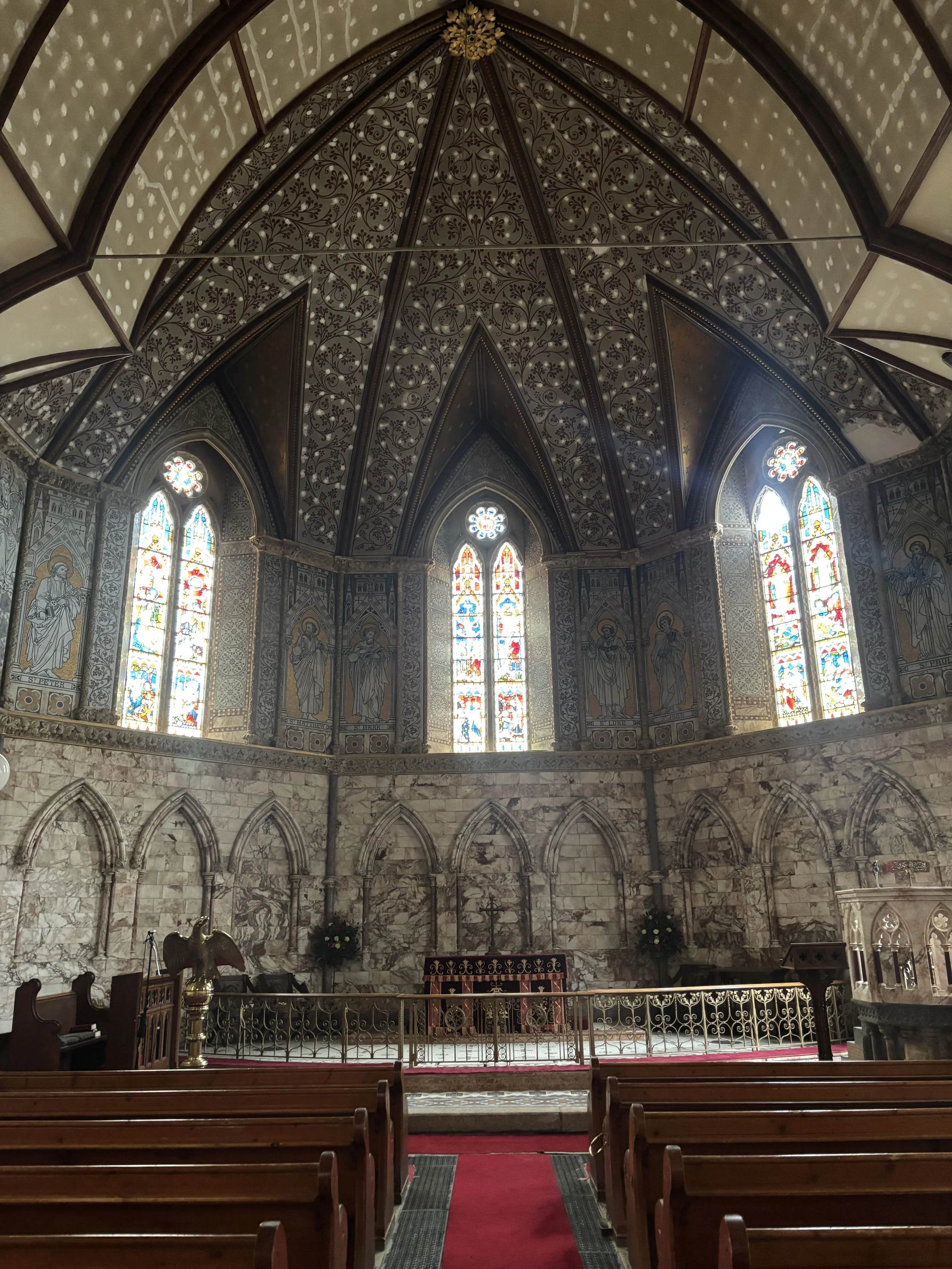
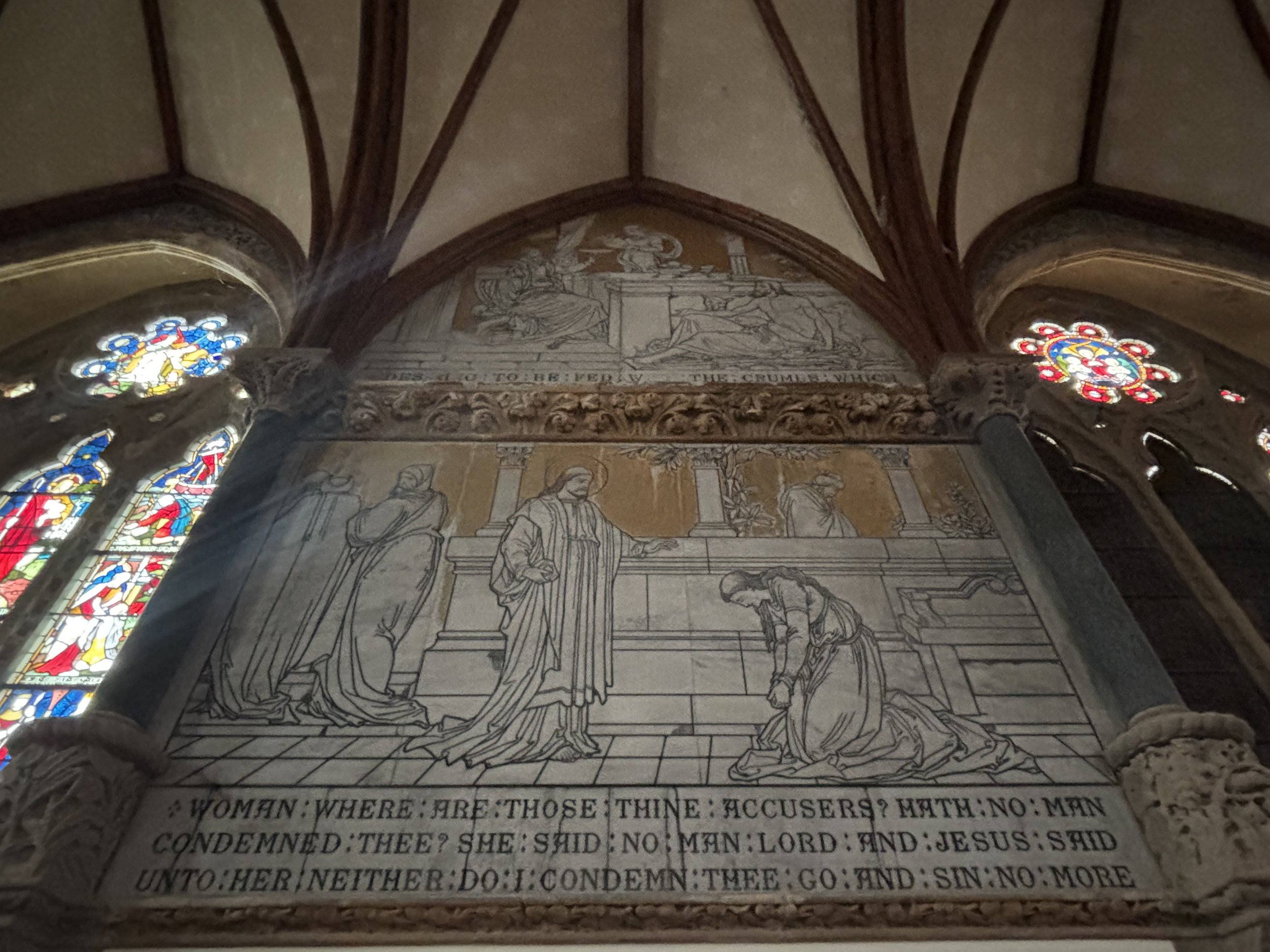
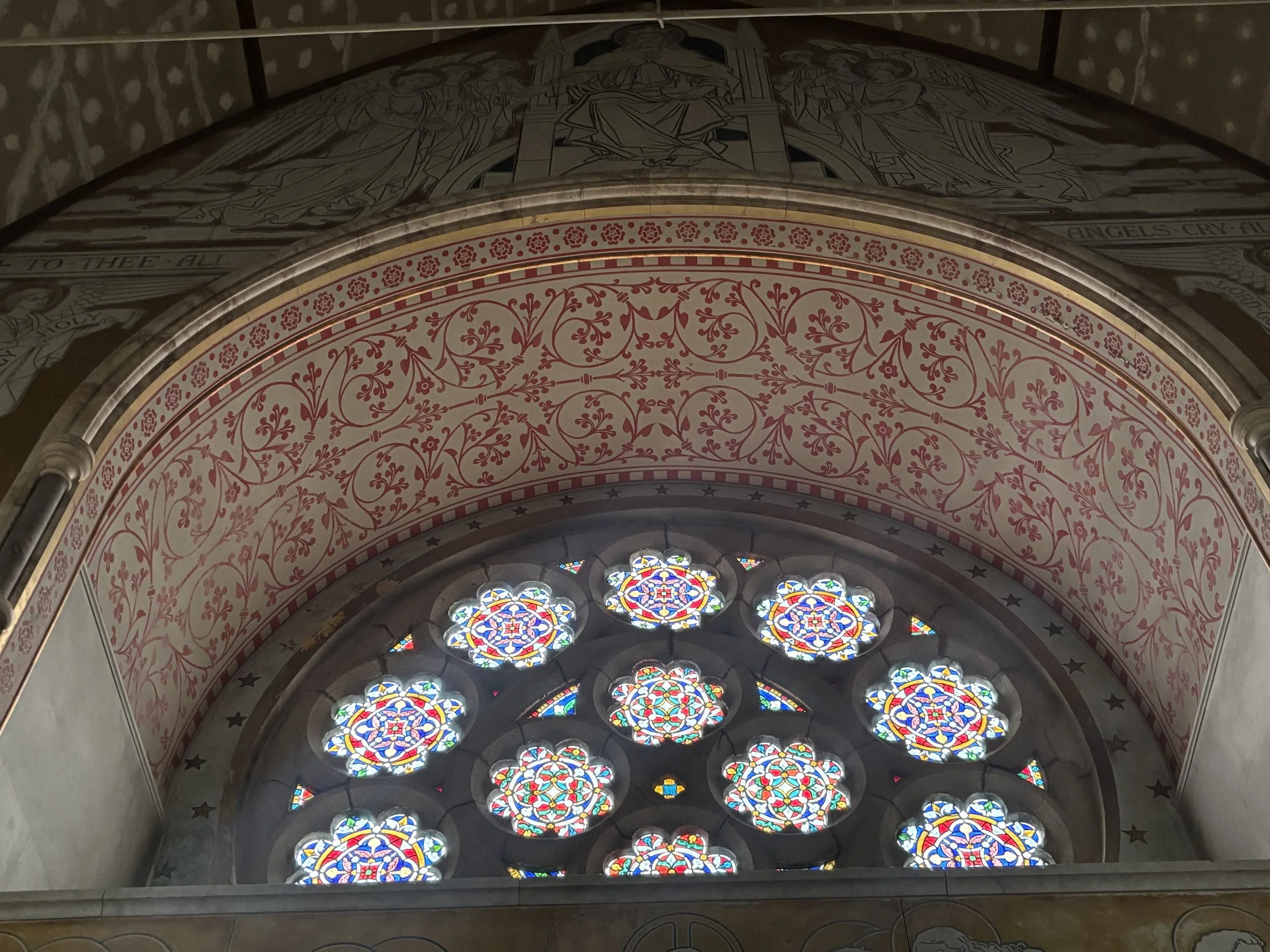
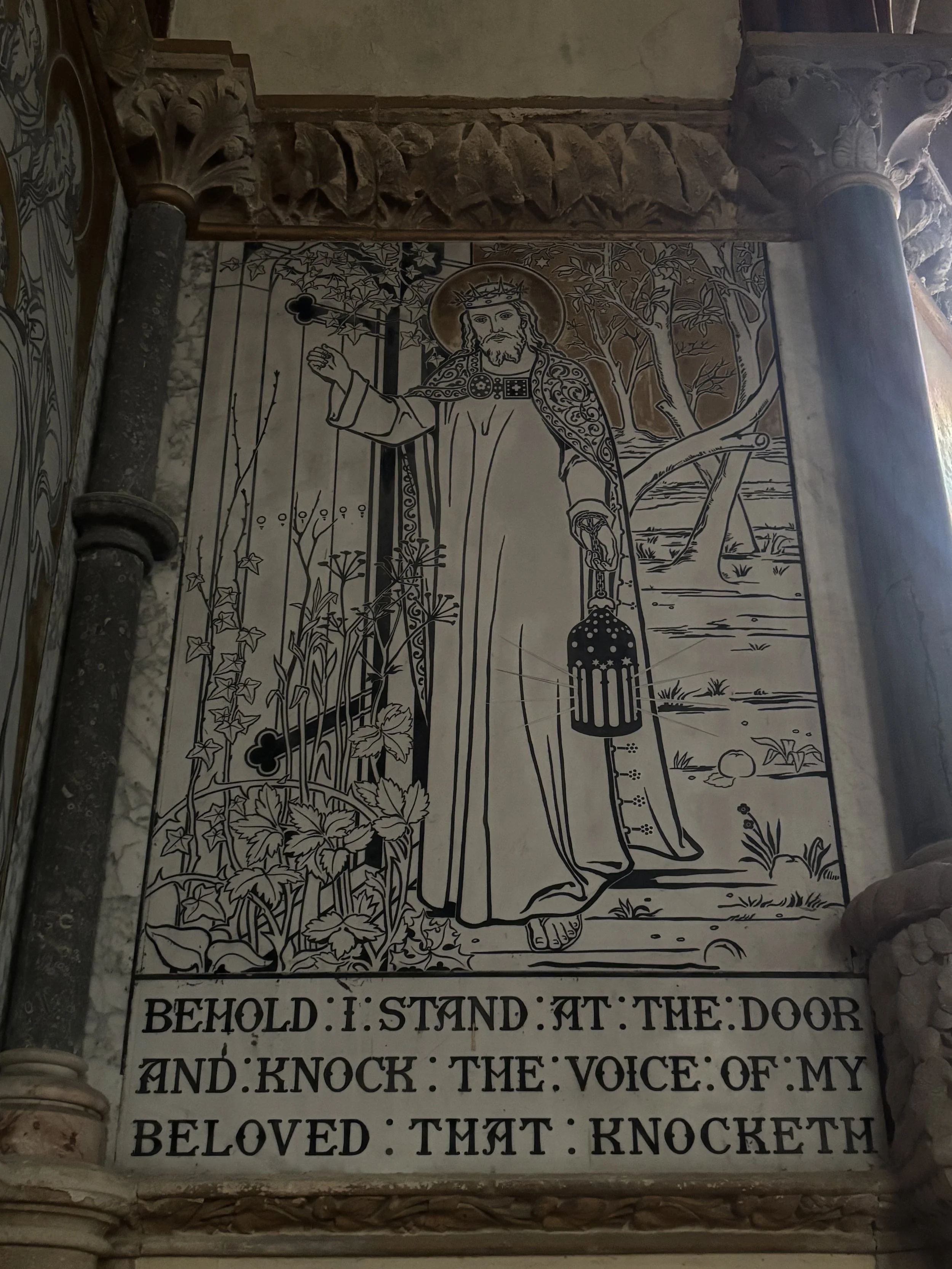
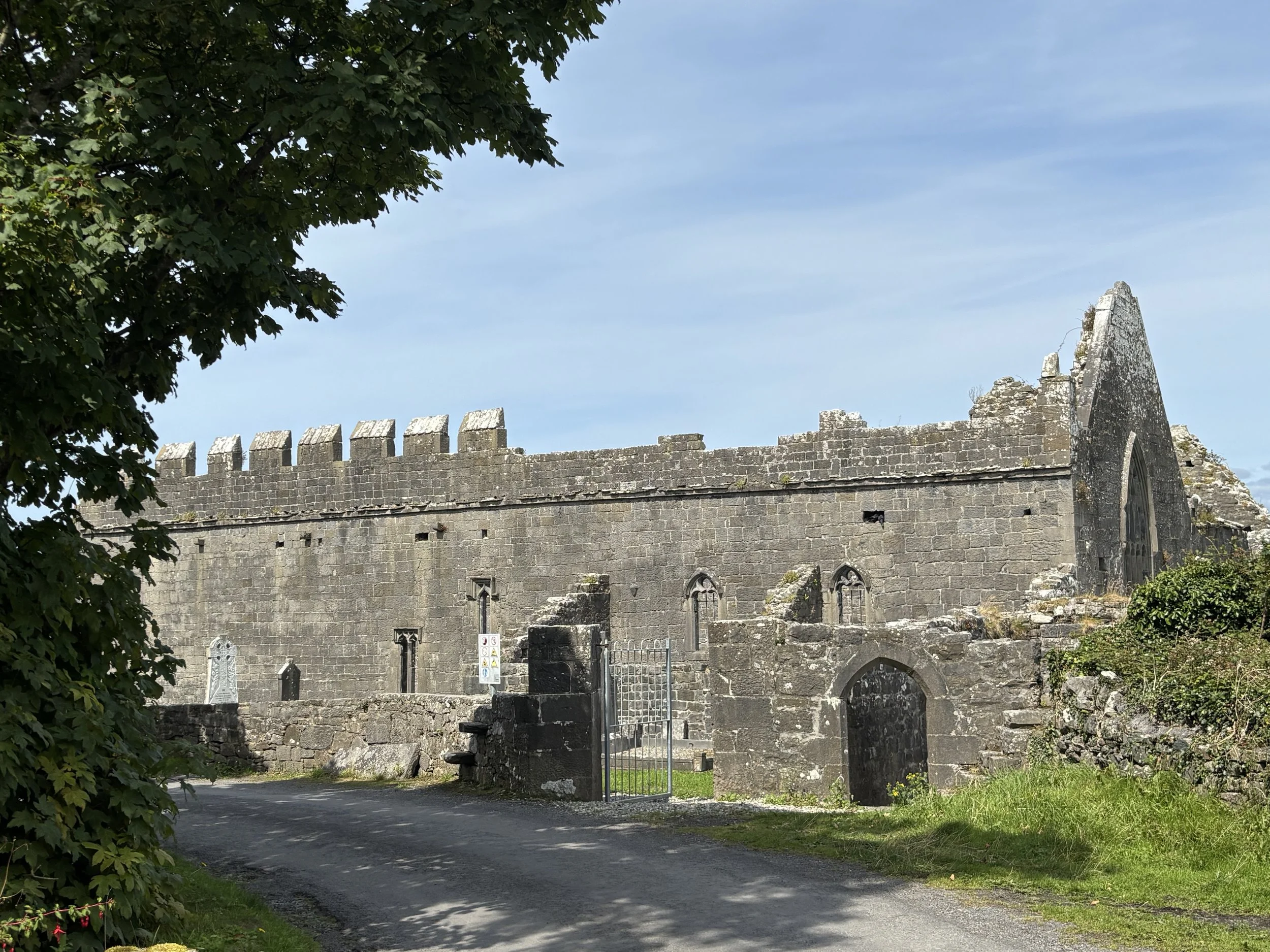
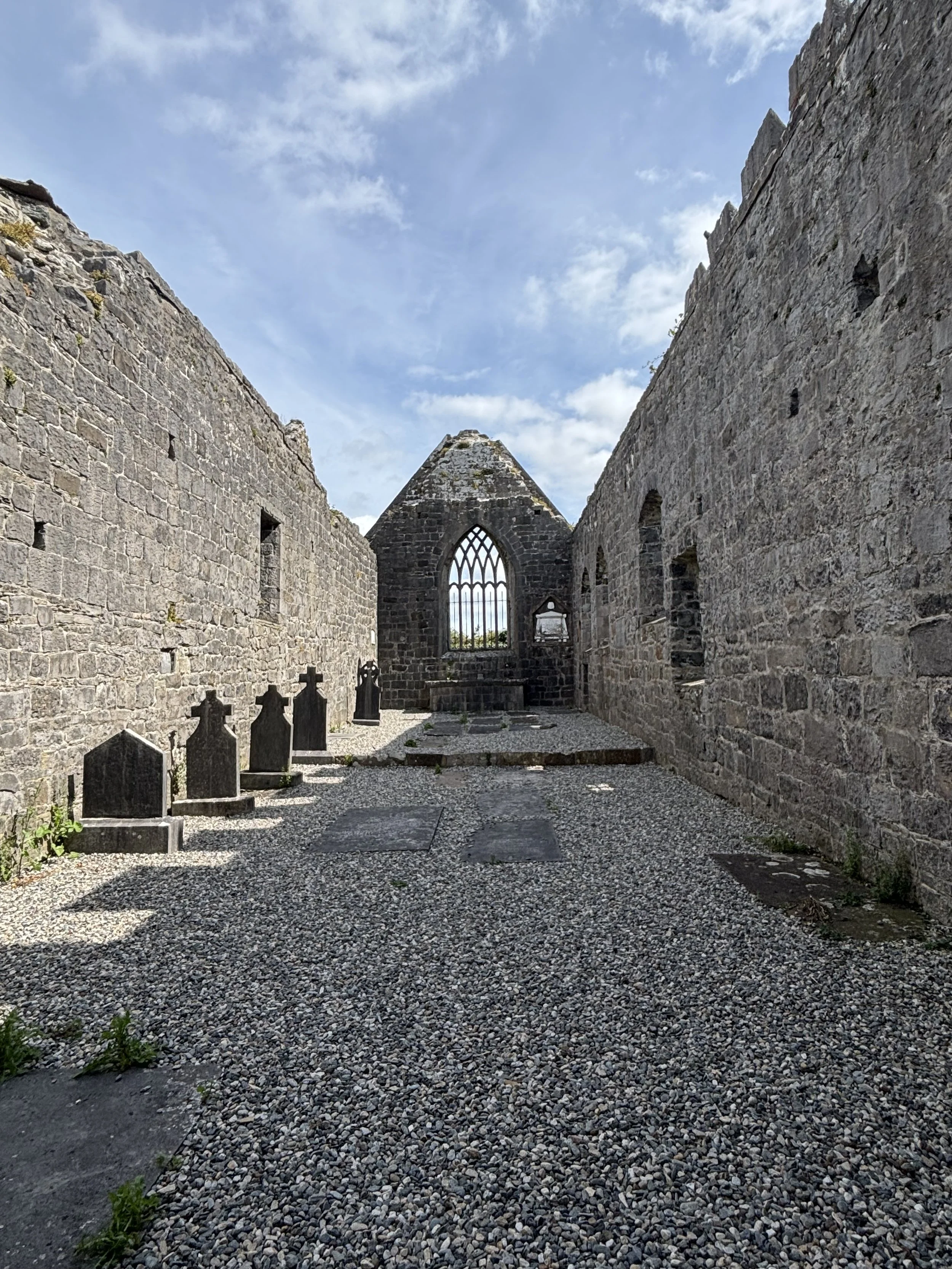
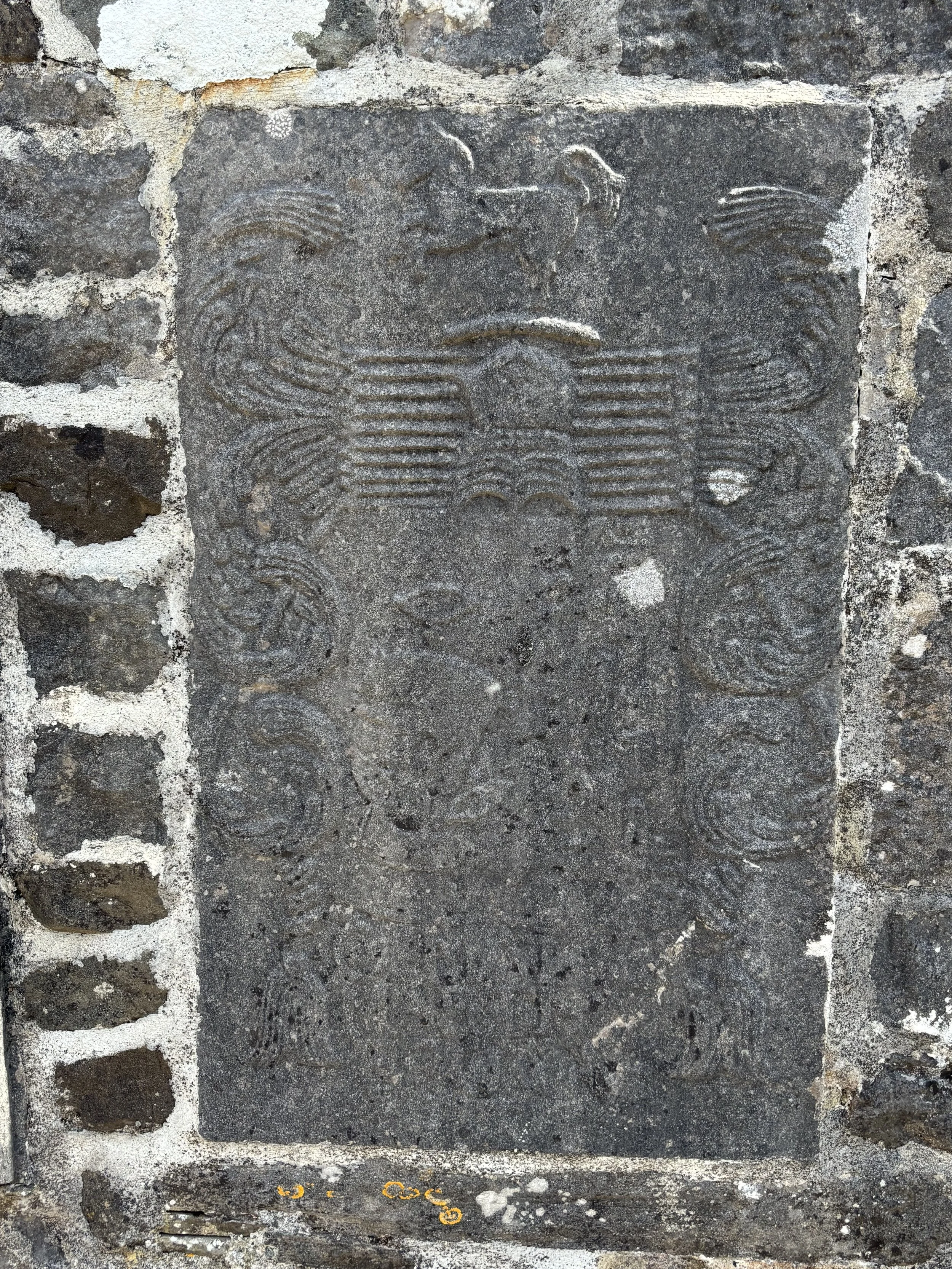
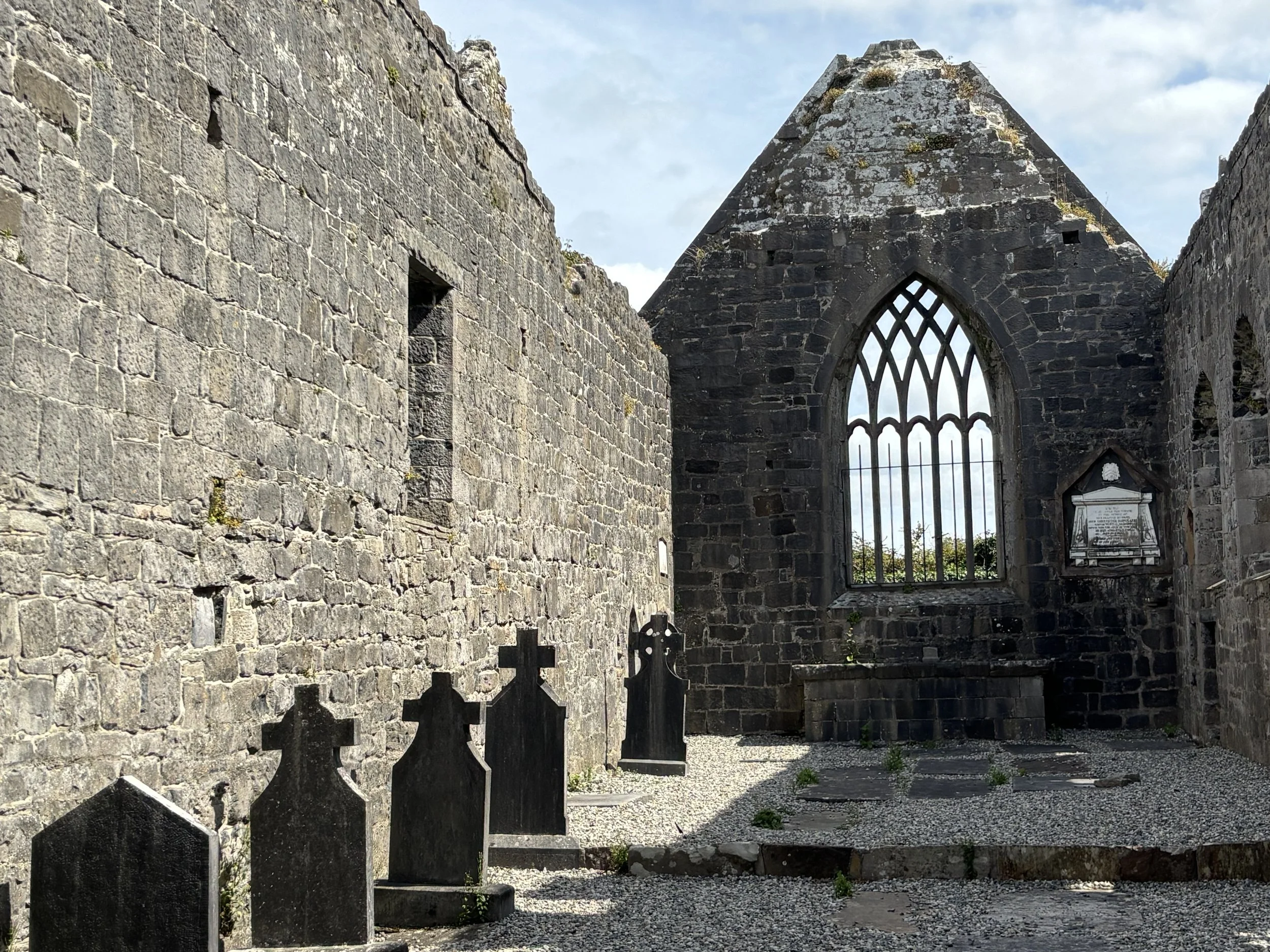
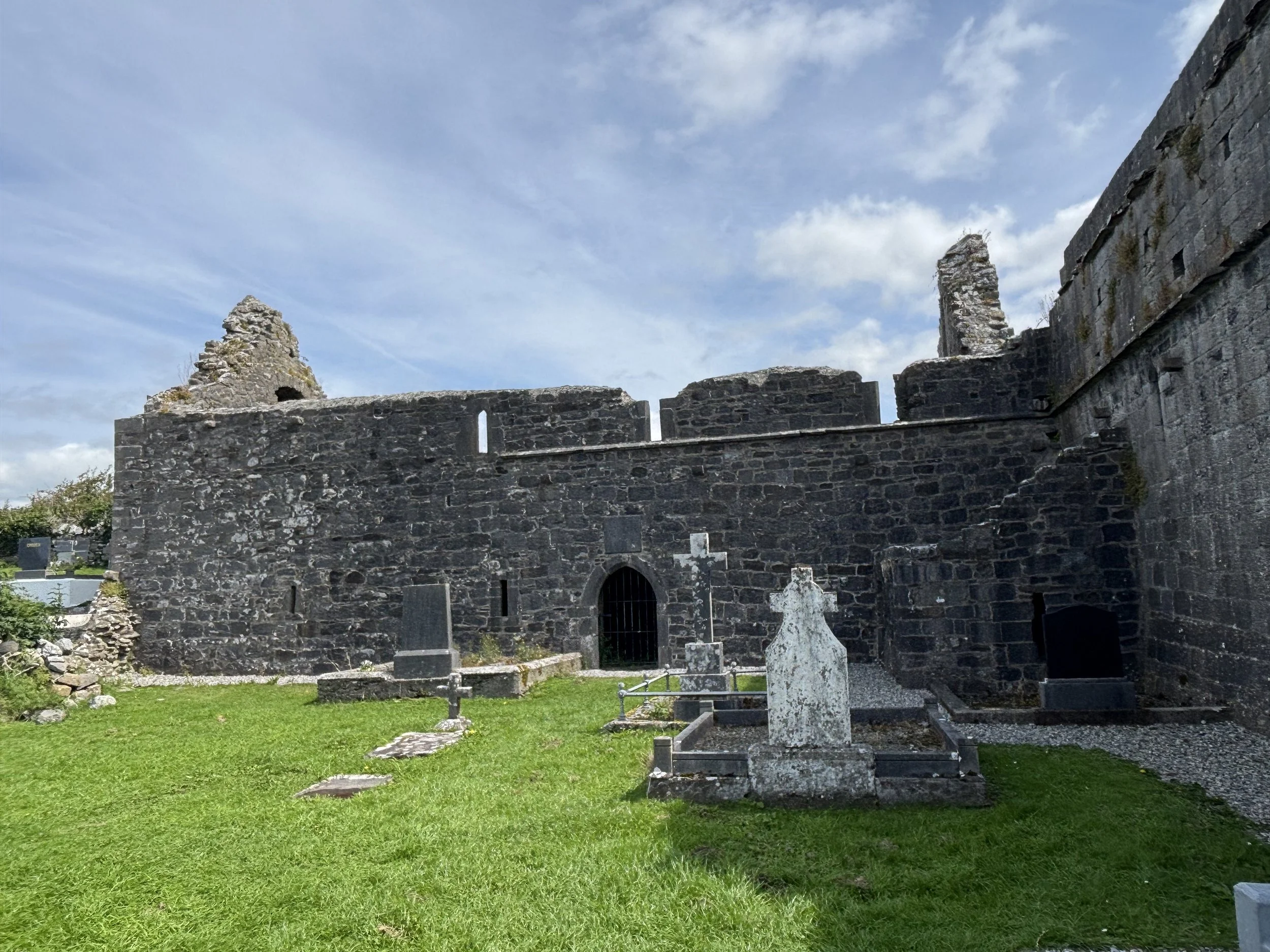
We also took a short hike with our friends Helacious to see the Clare Island Abbey. This medieval church, dating to around the 12th century, is unique in Ireland for its preserved wall paintings. The paintings depict dragons, stags, a warrior on horseback, a cattle raid scene, musicians, and trident-wielding fishermen. The Abbey also contains the O’Malley Tomb, supposedly the burial site of Grace O’Malley.
The exterior of the Abbey was undergoing preservation work, so we weren’t able to get great photos. But the inside was open and impressive. There is also a holy well somewhere nearby, and I wanted to see it. Unfortunately, we didn’t find it.
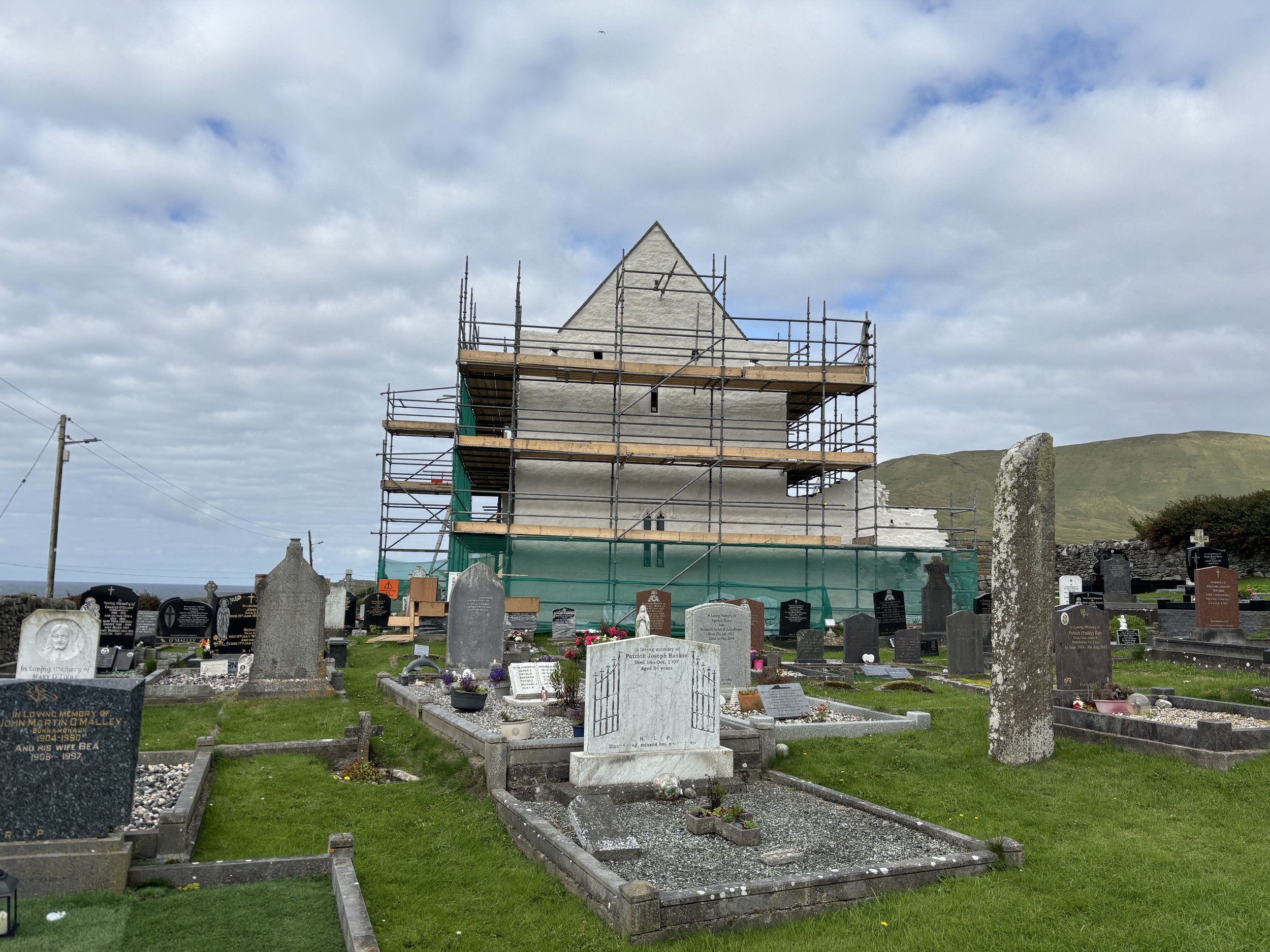
Outside of Clare Island Abbey
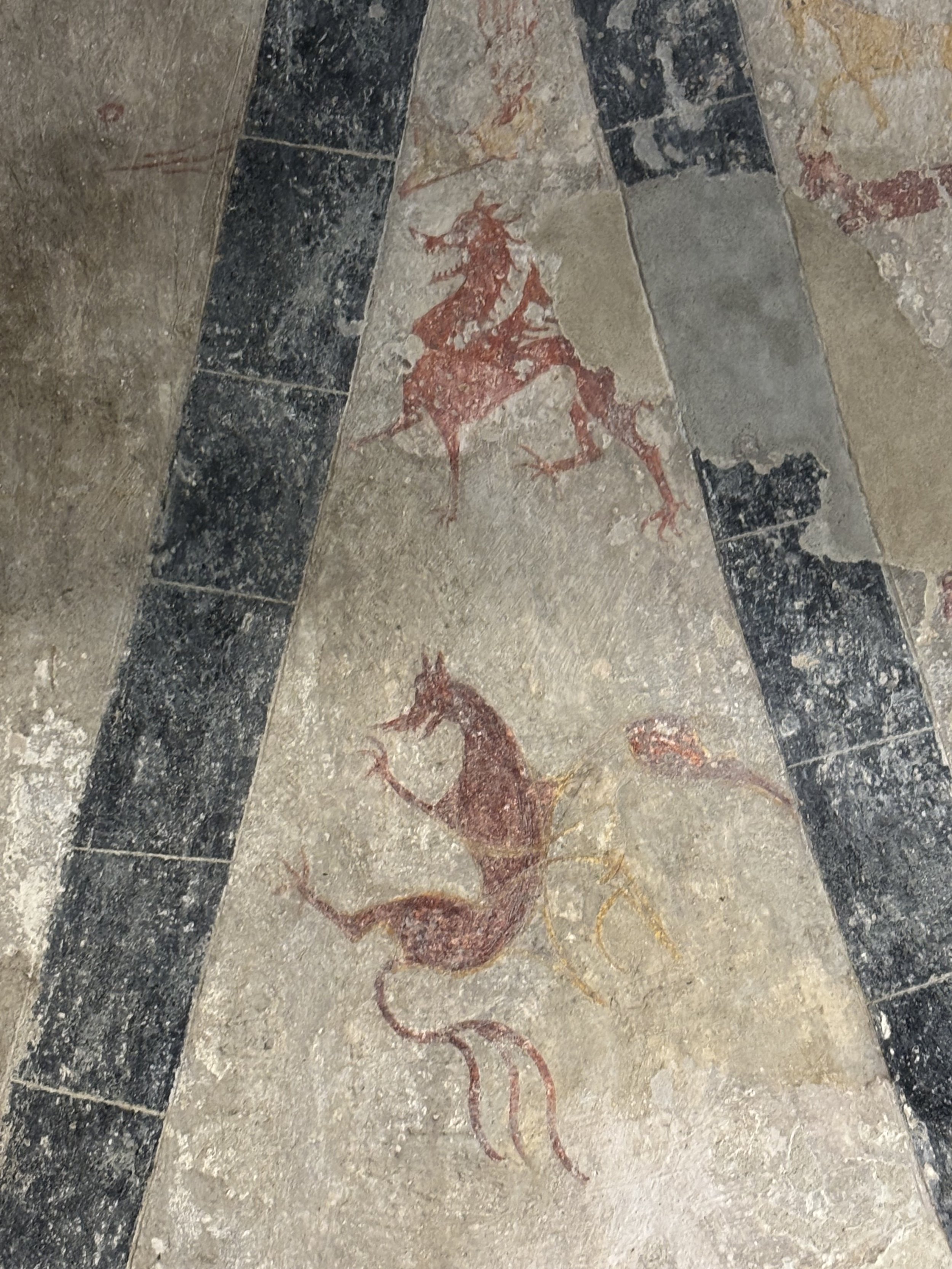
Wall paintings in Clare Island Abbey
We only stayed one night in Clare because the anchorage was a bit rolly and uncomfortable, and with higher winds and seas predicted, we needed to find a better hidey-hole. So we pulled anchor and went deeper into Clew Bay, anchoring just off of Inishlyre. We thought this would be one of those utilitarian stops—places we might not have gone except for extenuating circumstances, like weather events, boat issues, or the need for groceries. But these are often the places that surprise you.
We didn’t know much about the area, because we had mainly researched its potential for good protection from the impending weather. But this area stands out as a favorite!
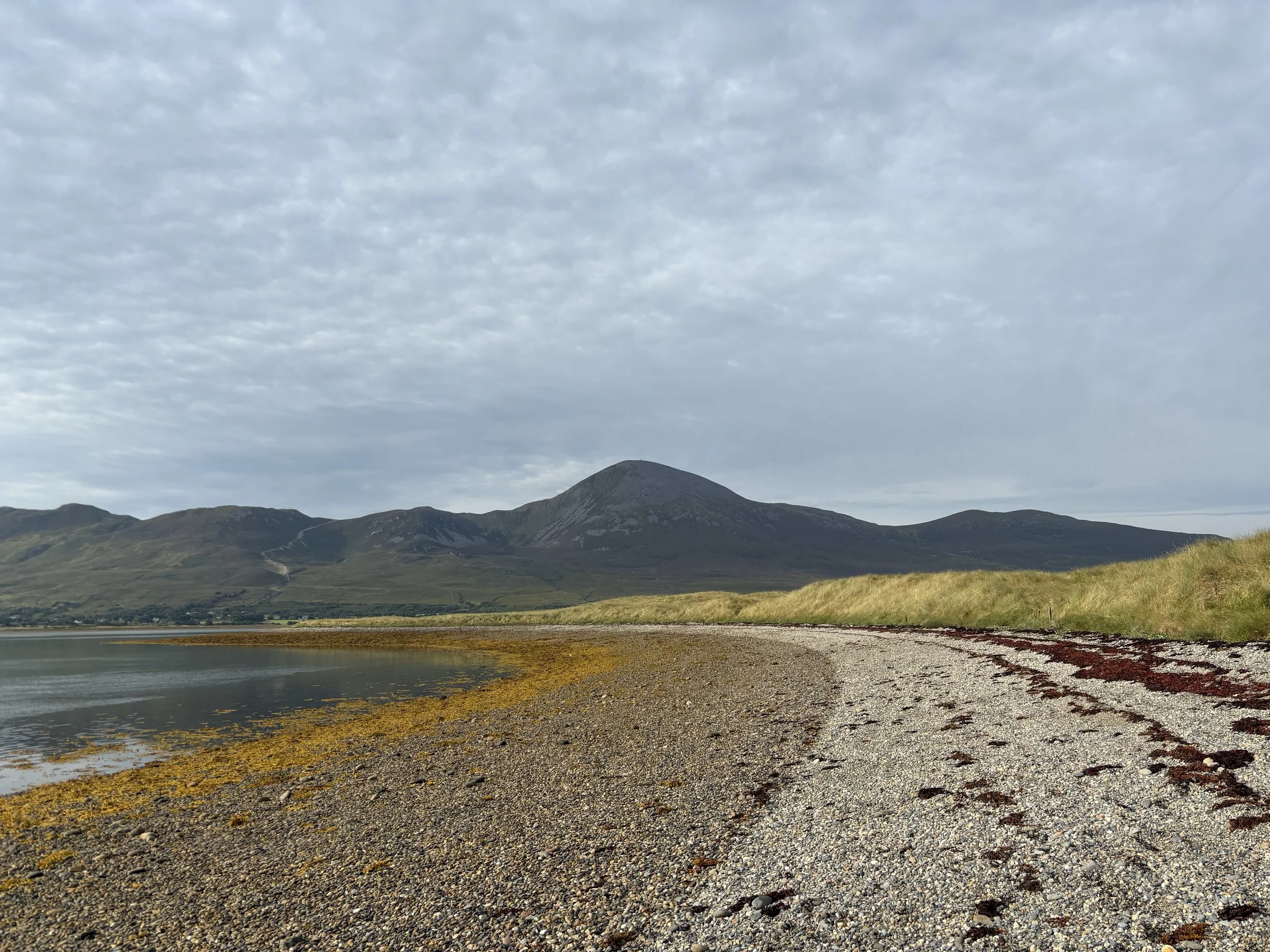
We were the only boat anchored off Inishlyre for four days. This little island was nestled among tons of other small islands inside the bay. As we neared Inishlyre, I noticed one mountain peak that sort of loomed over the others. Its desolate mountain top housed one small white building at the very top, which, at the time, I thought to be someone’s home.
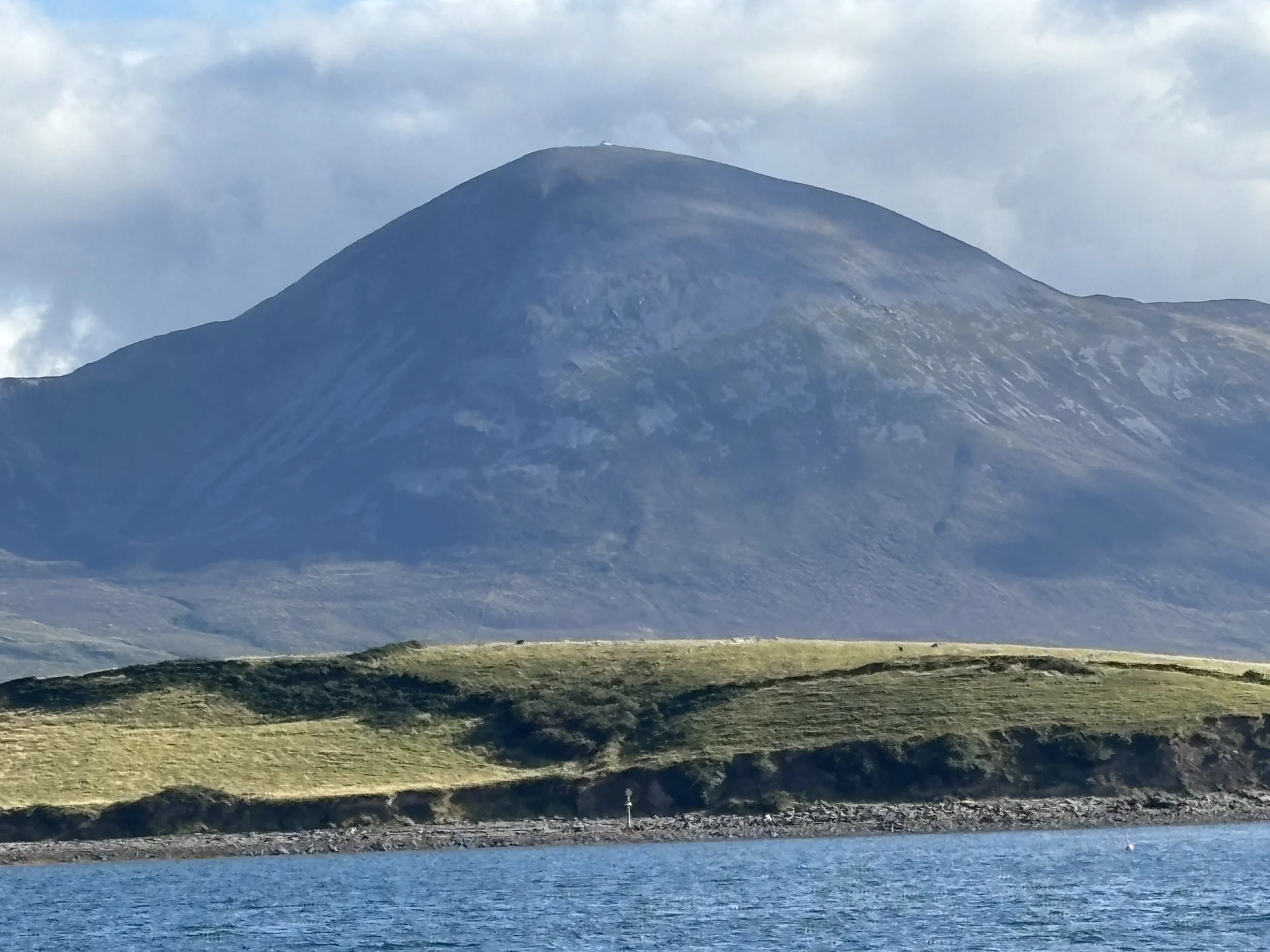
Peep the lone small building at the very top.
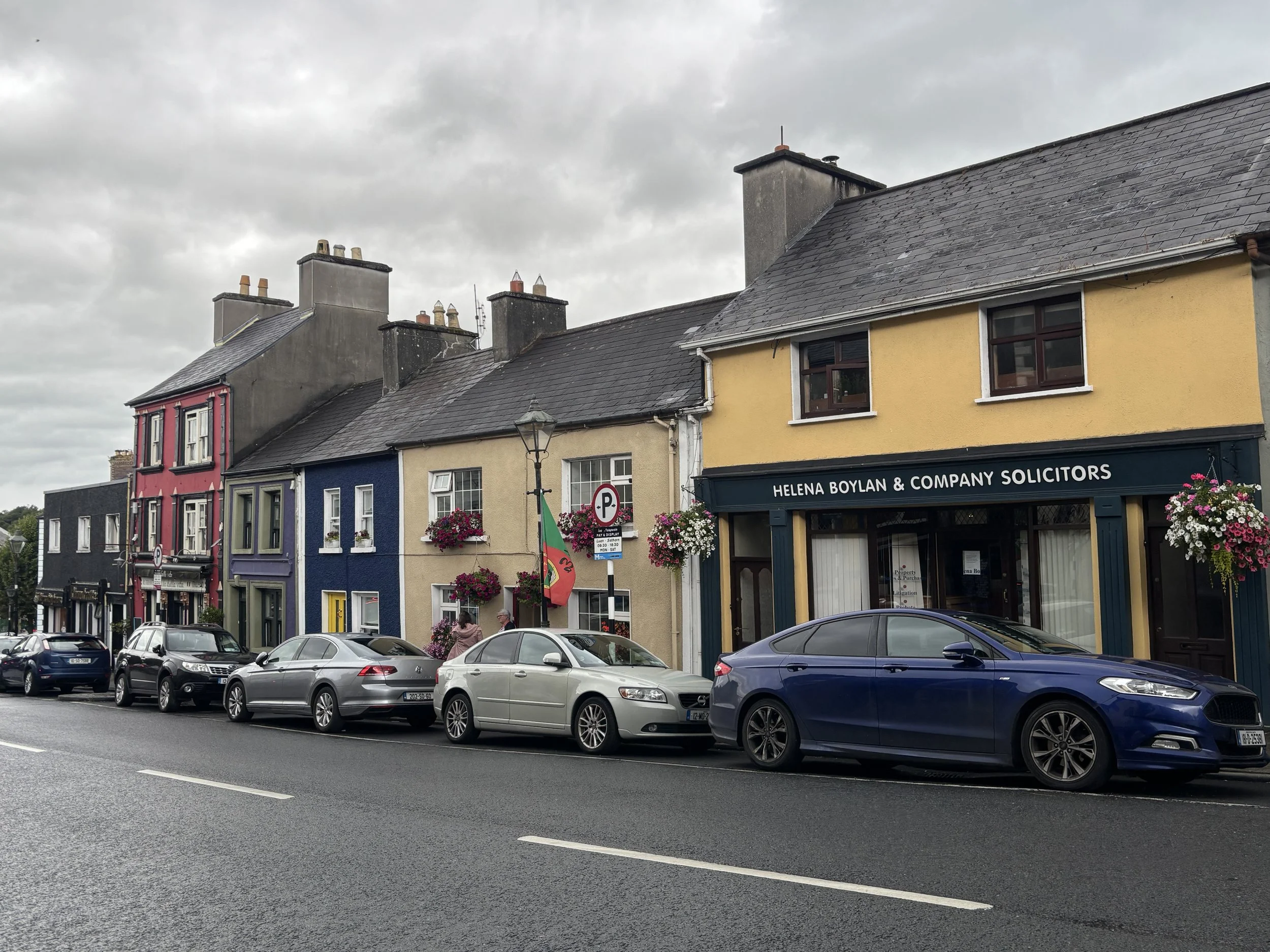
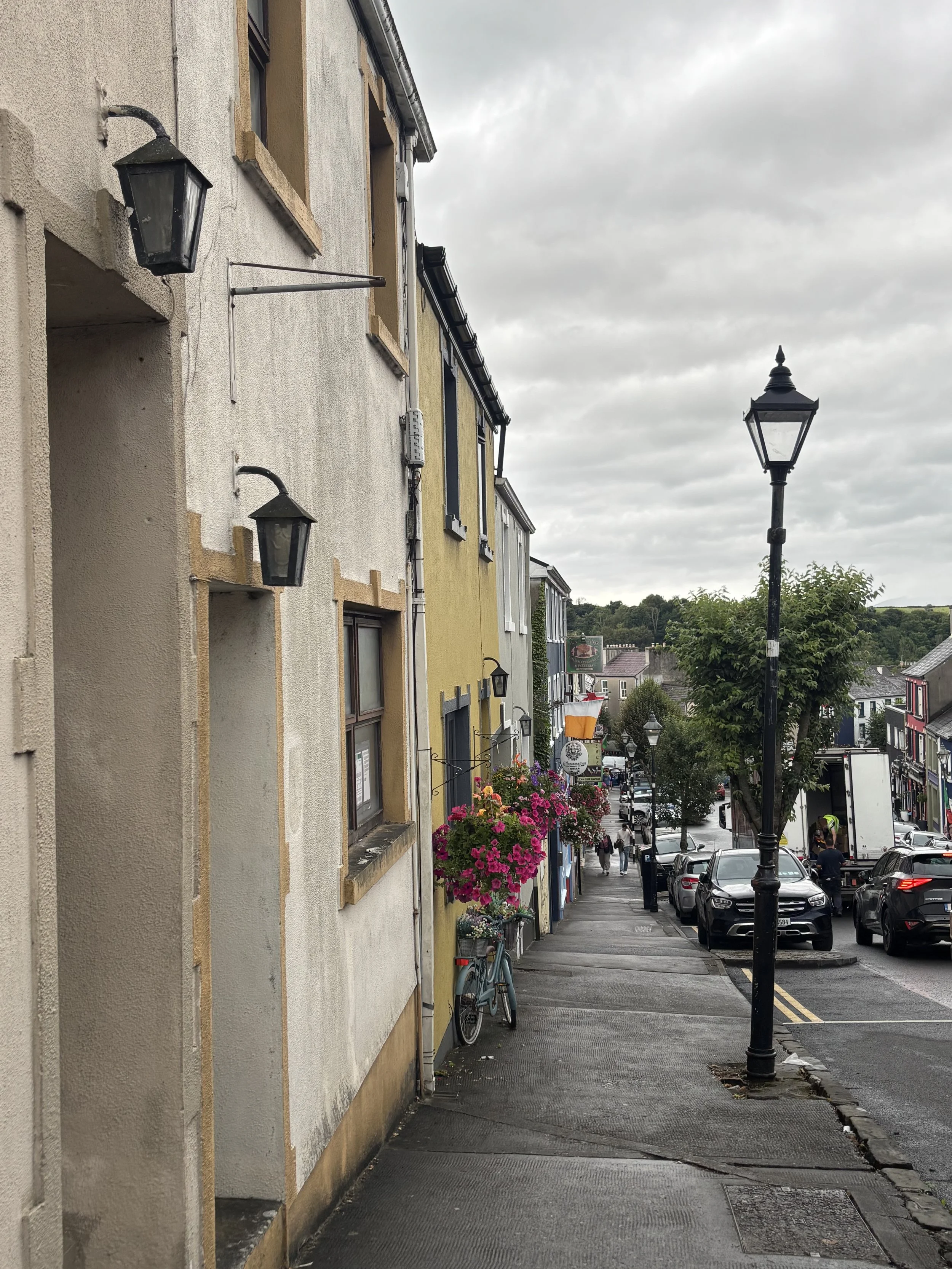
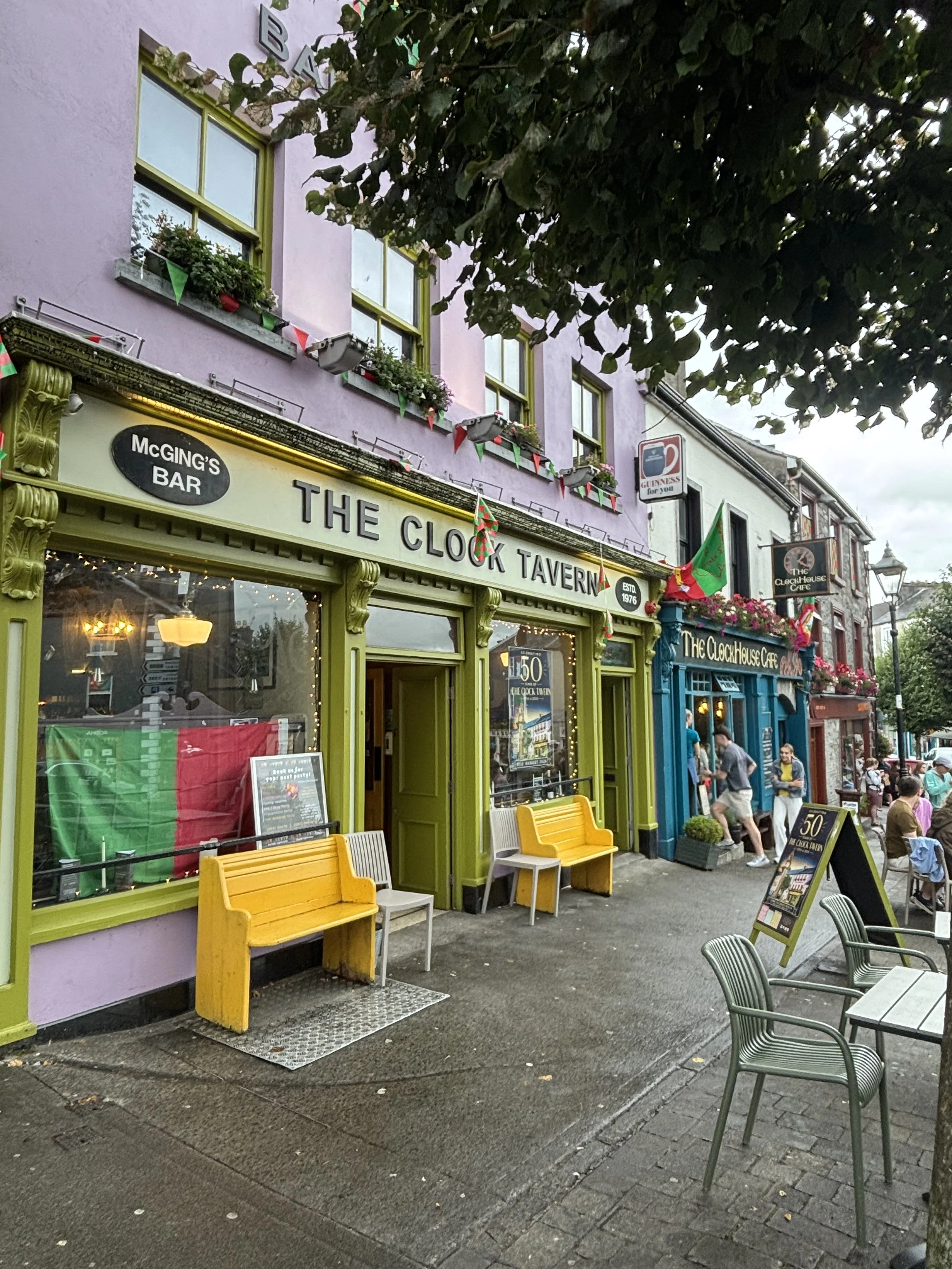
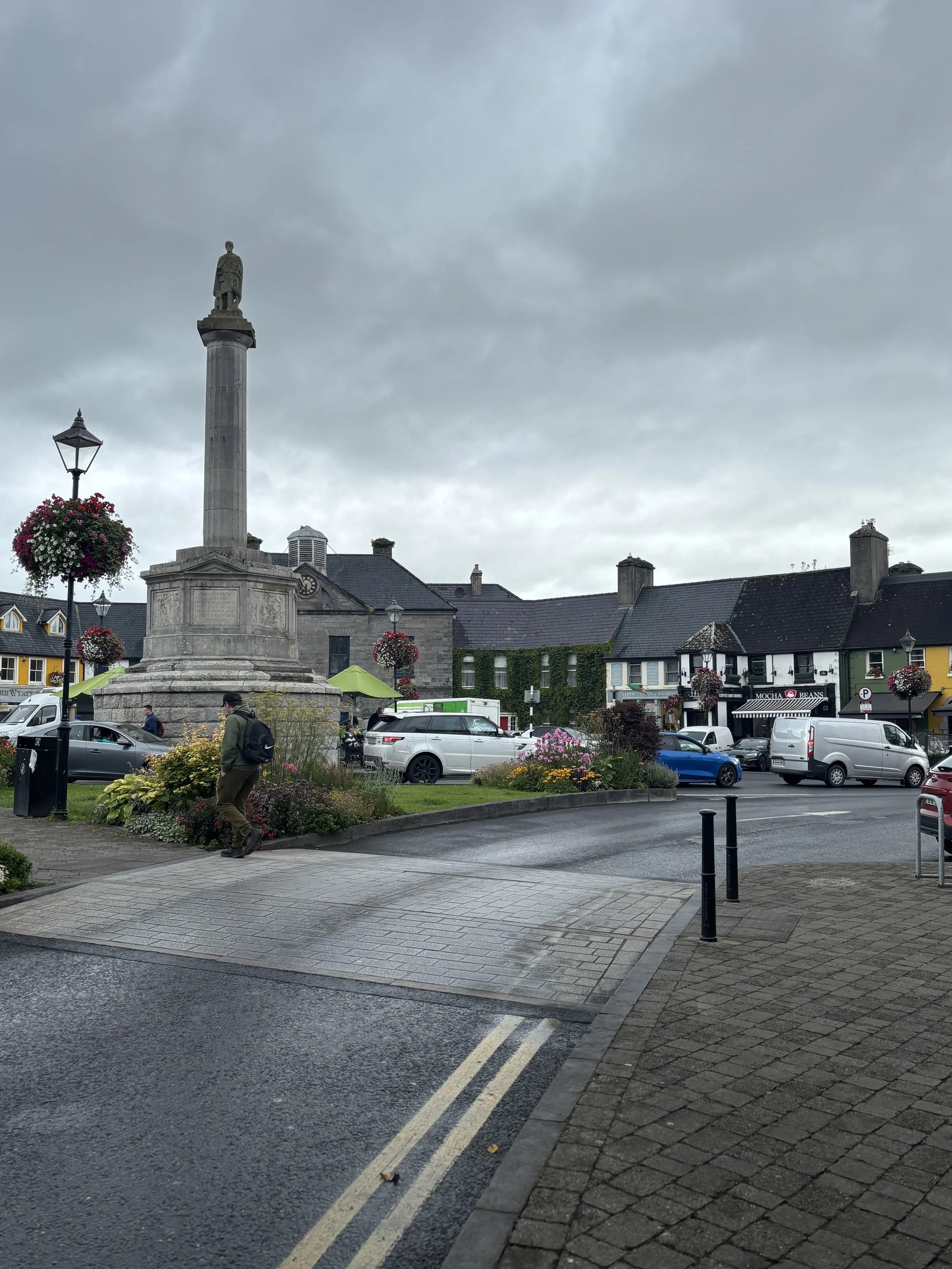
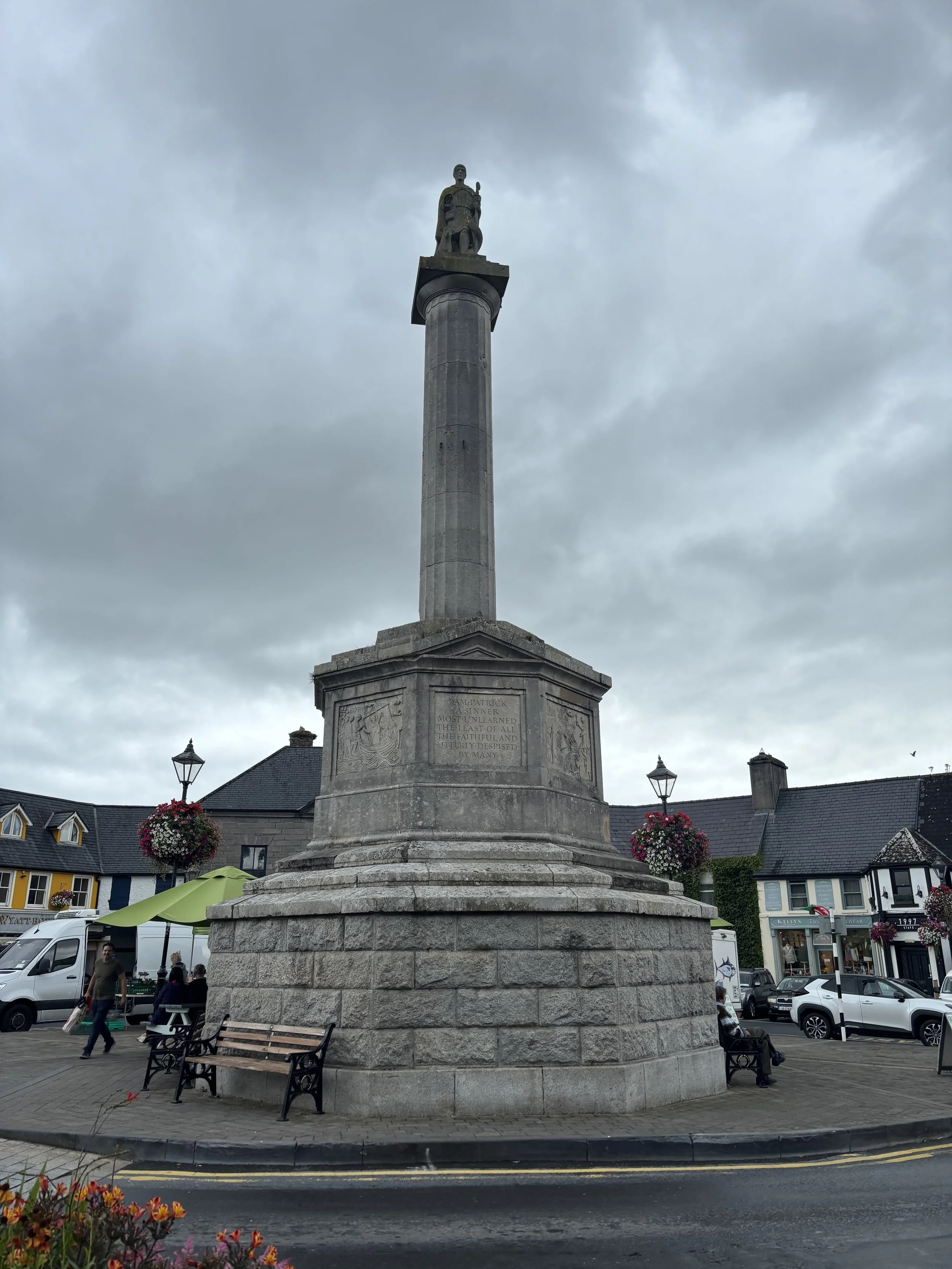
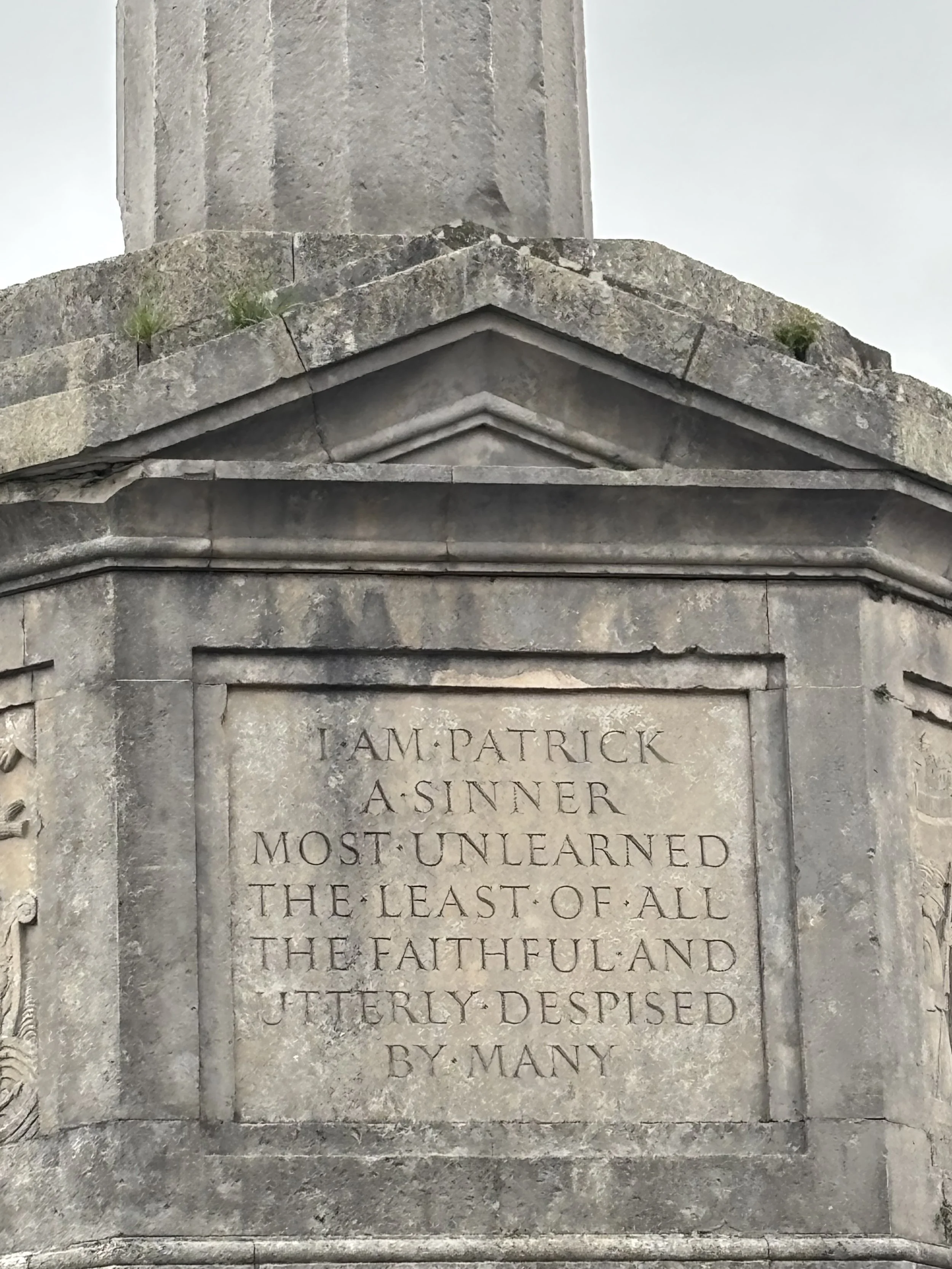
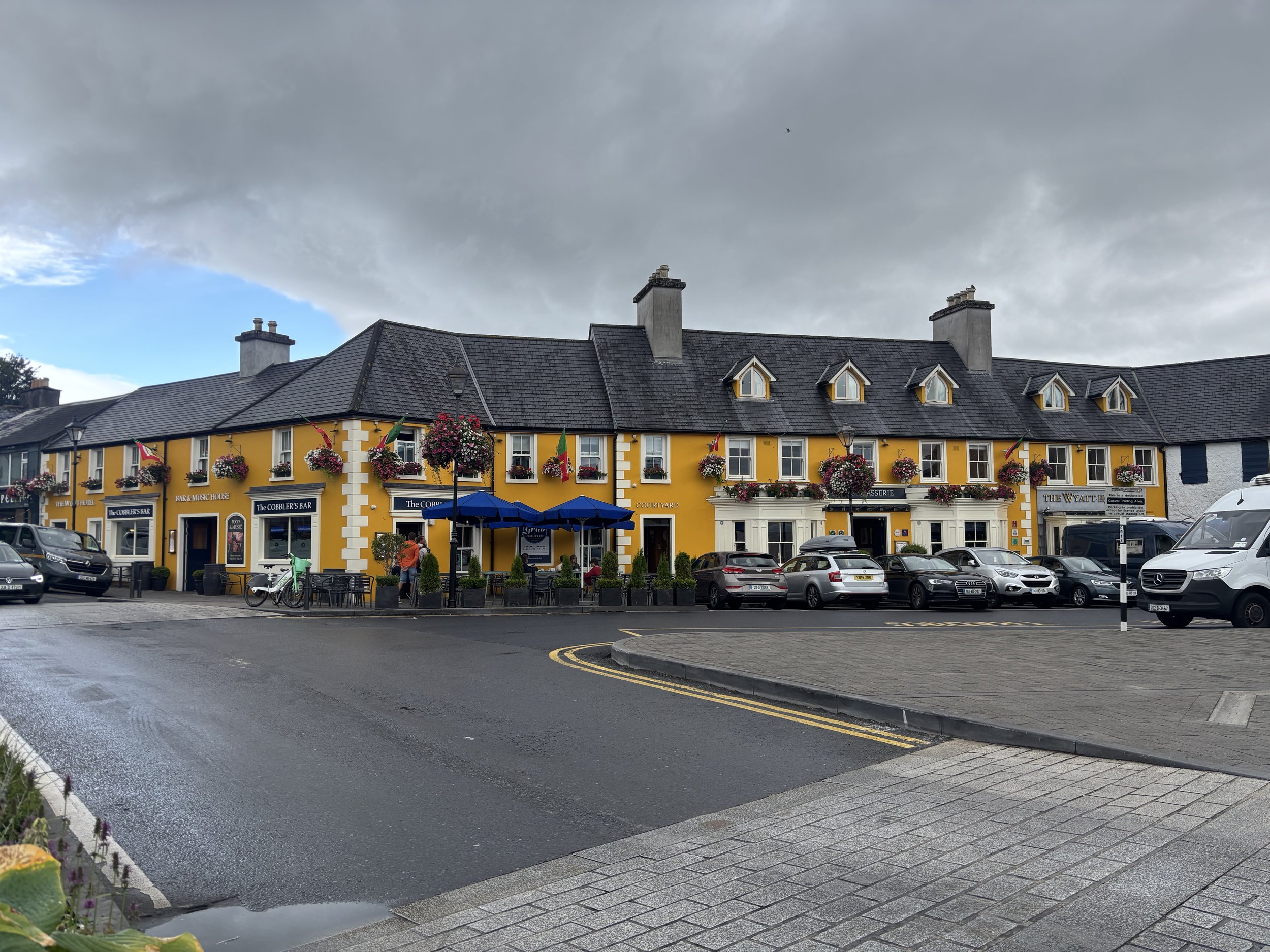
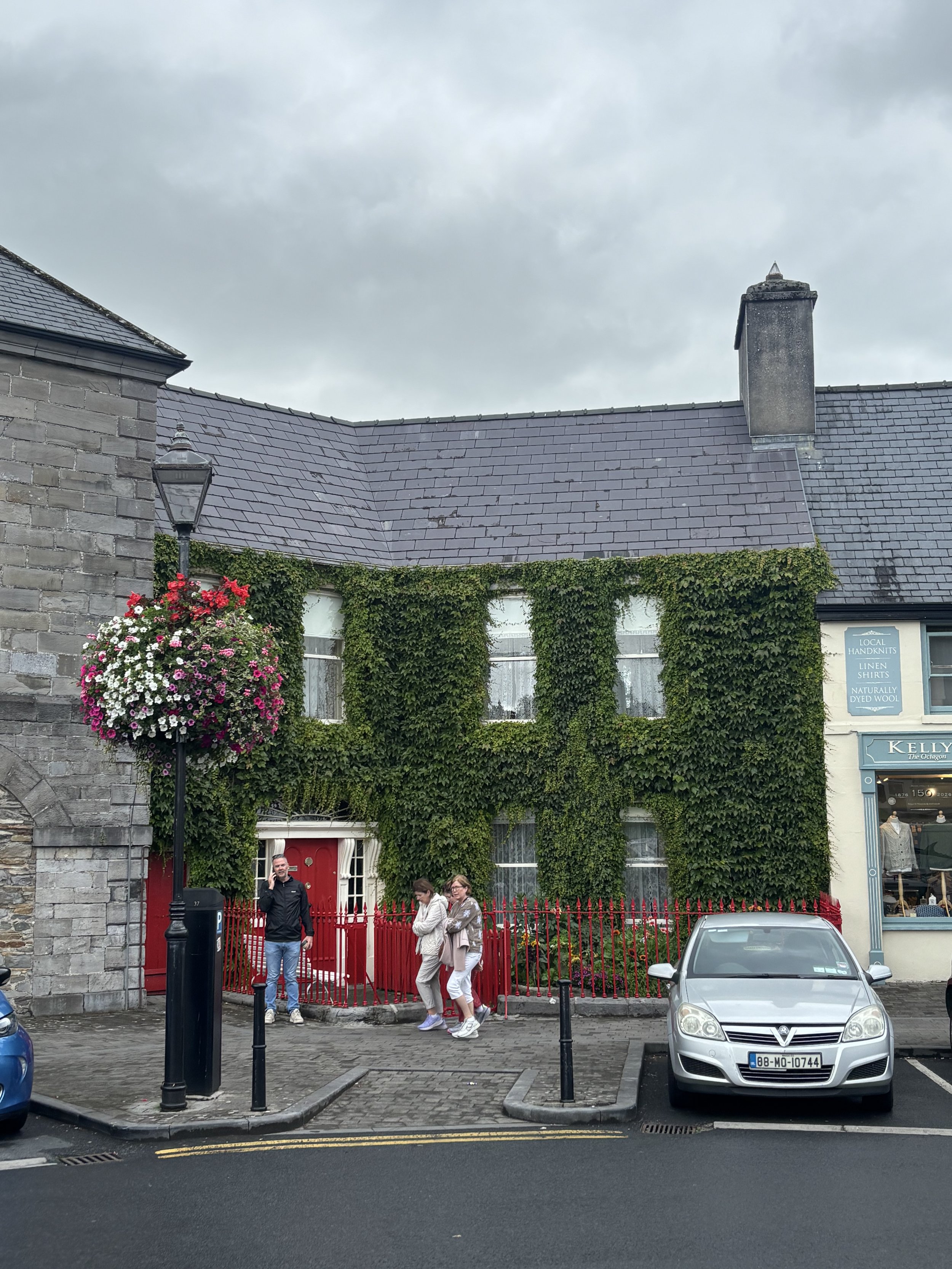
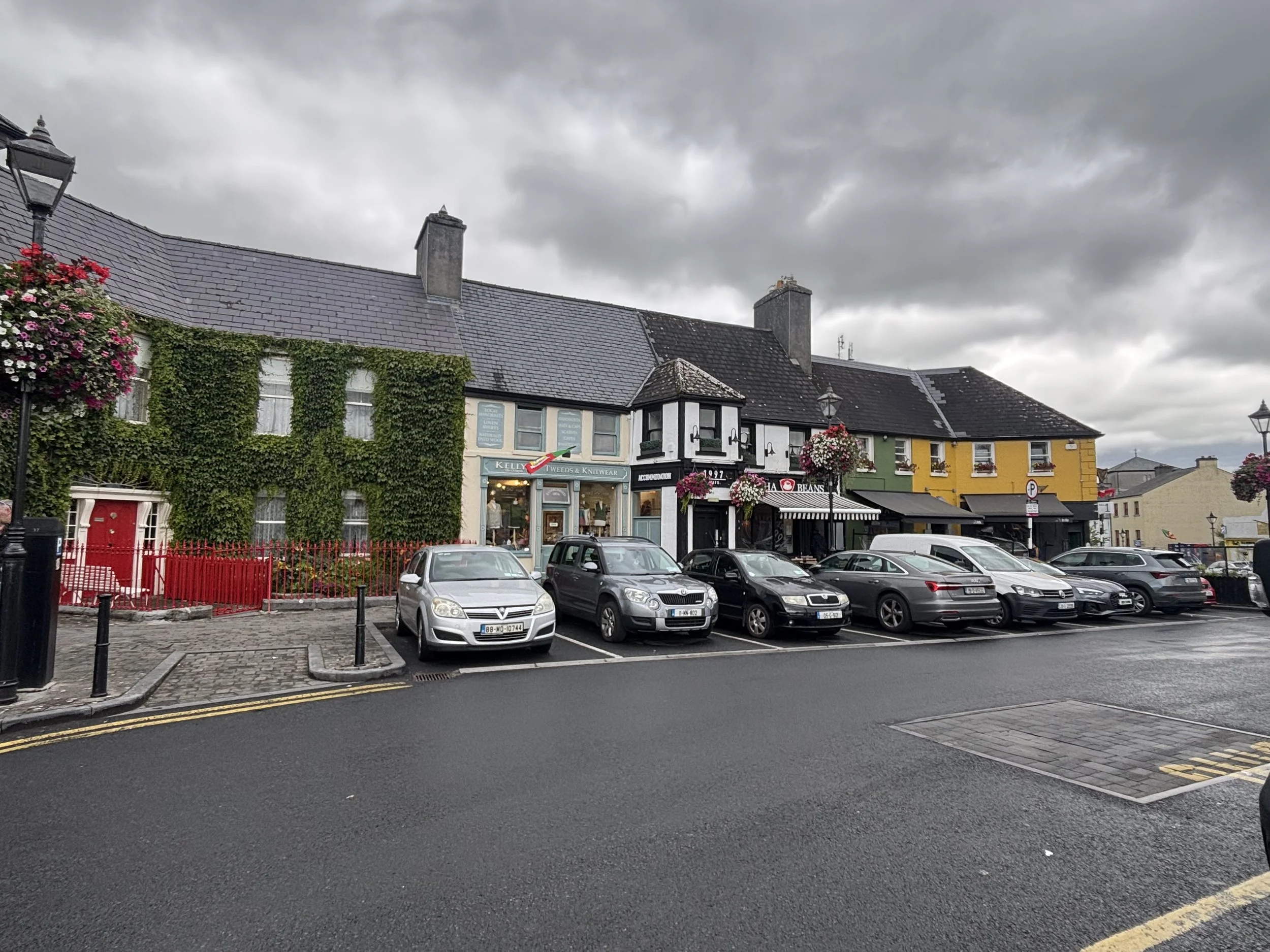
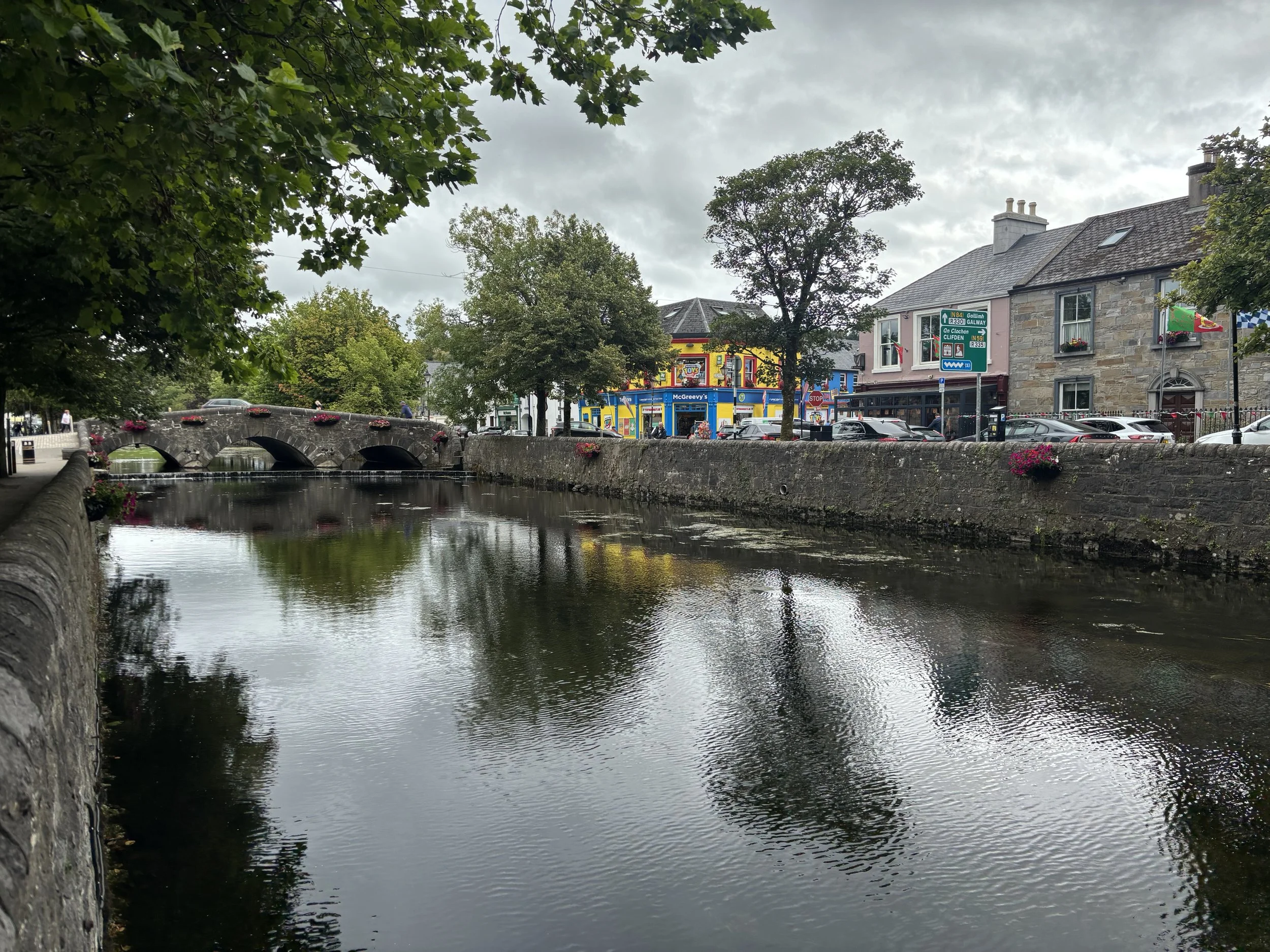
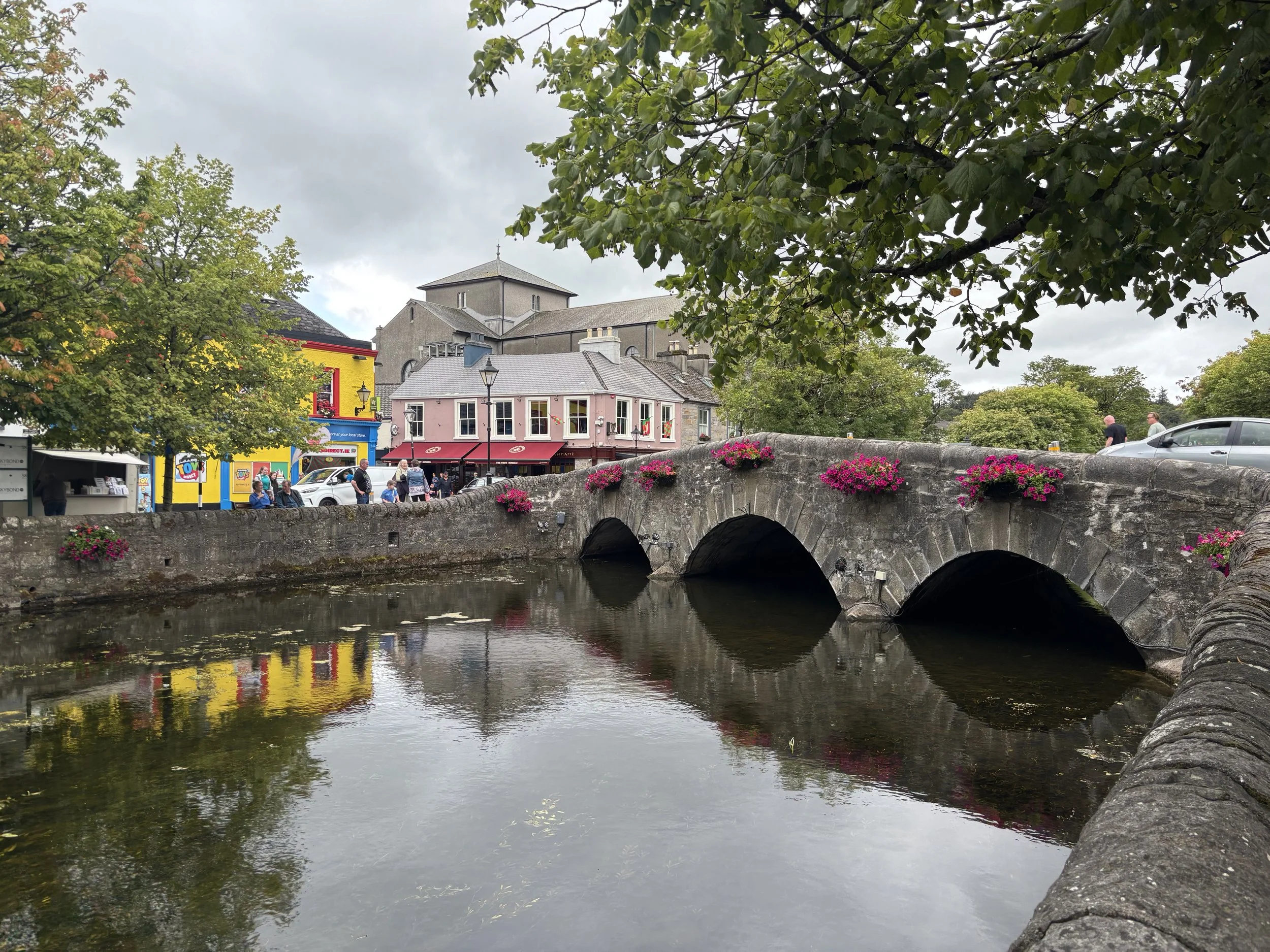
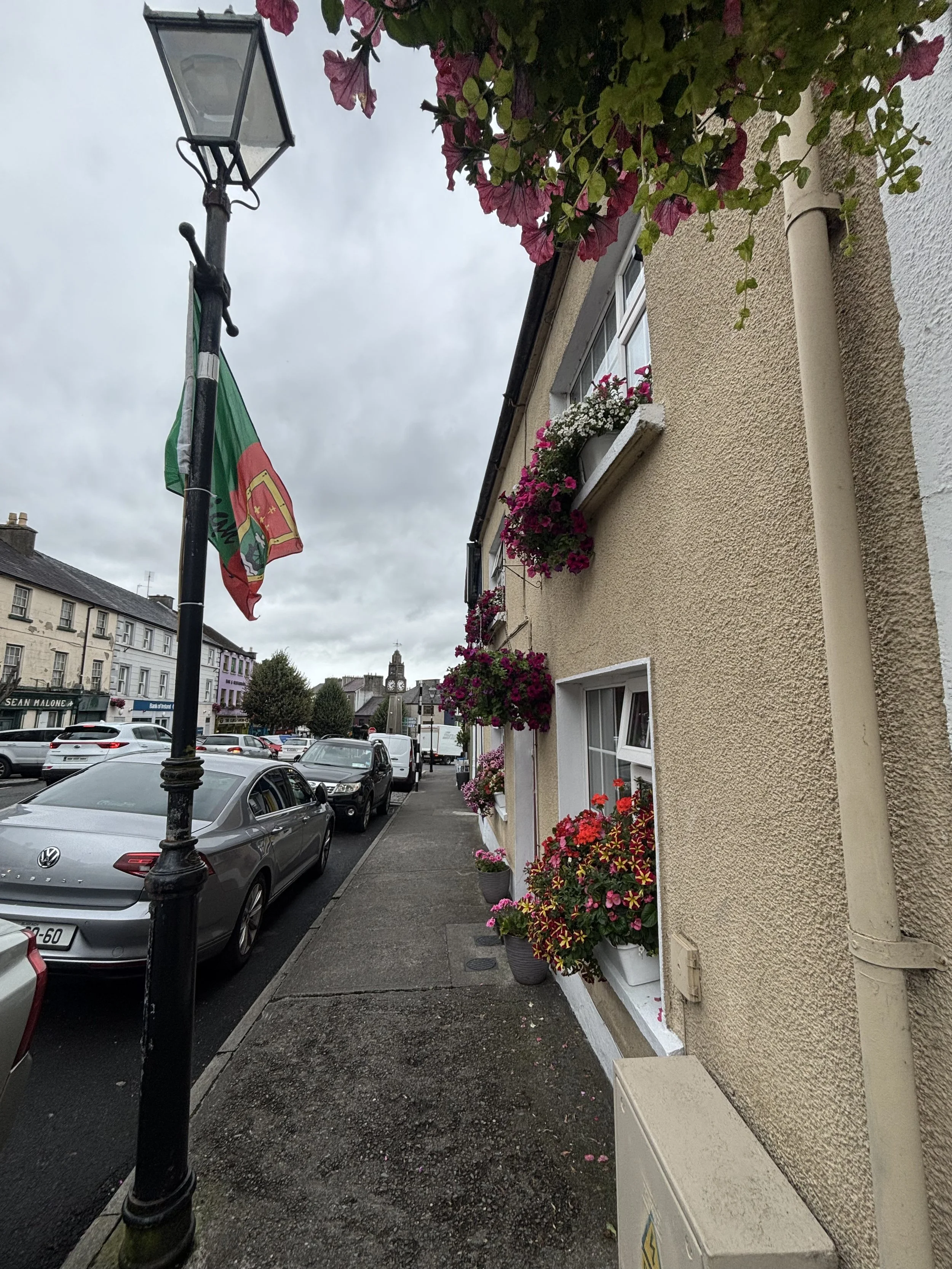
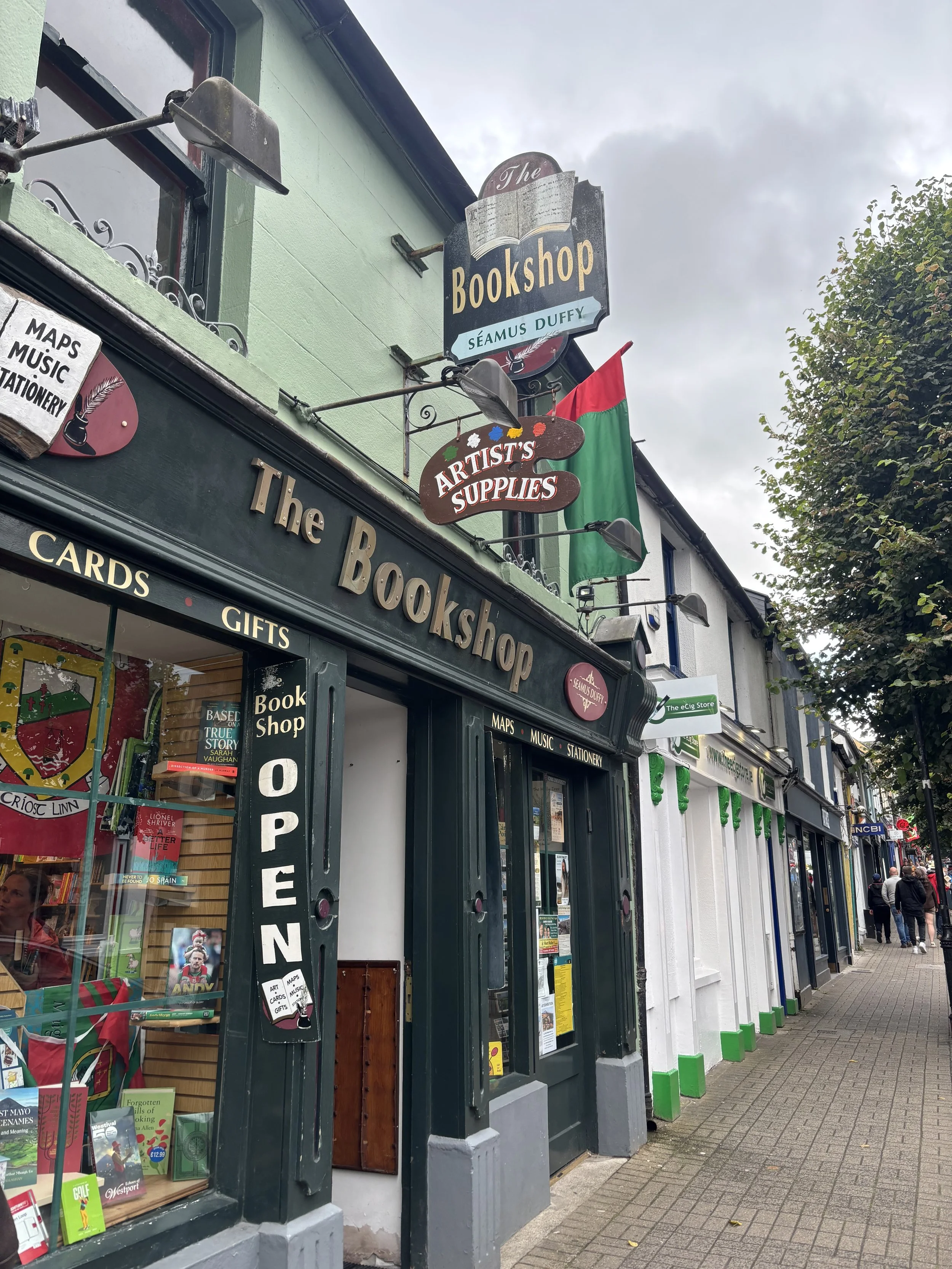
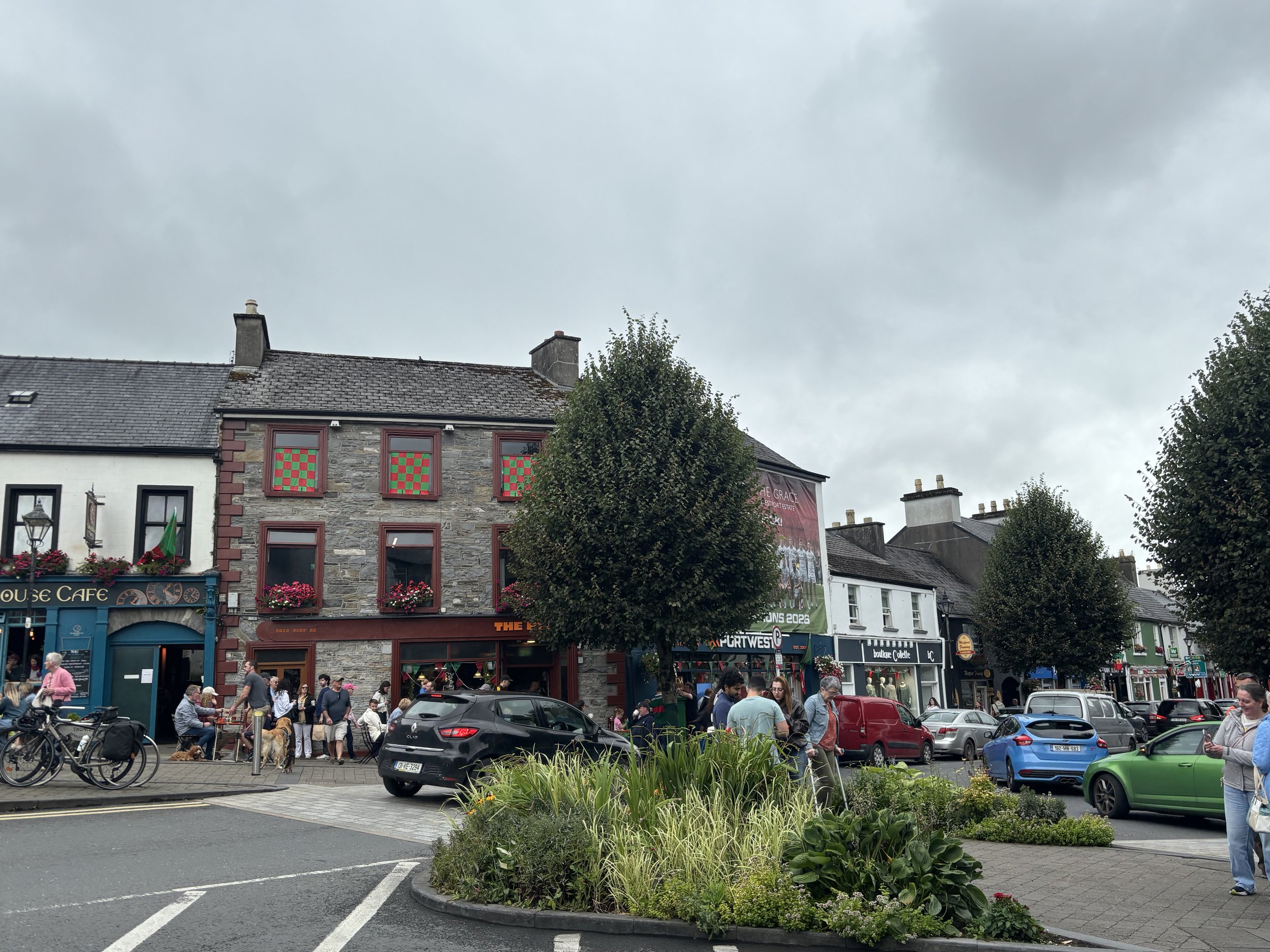
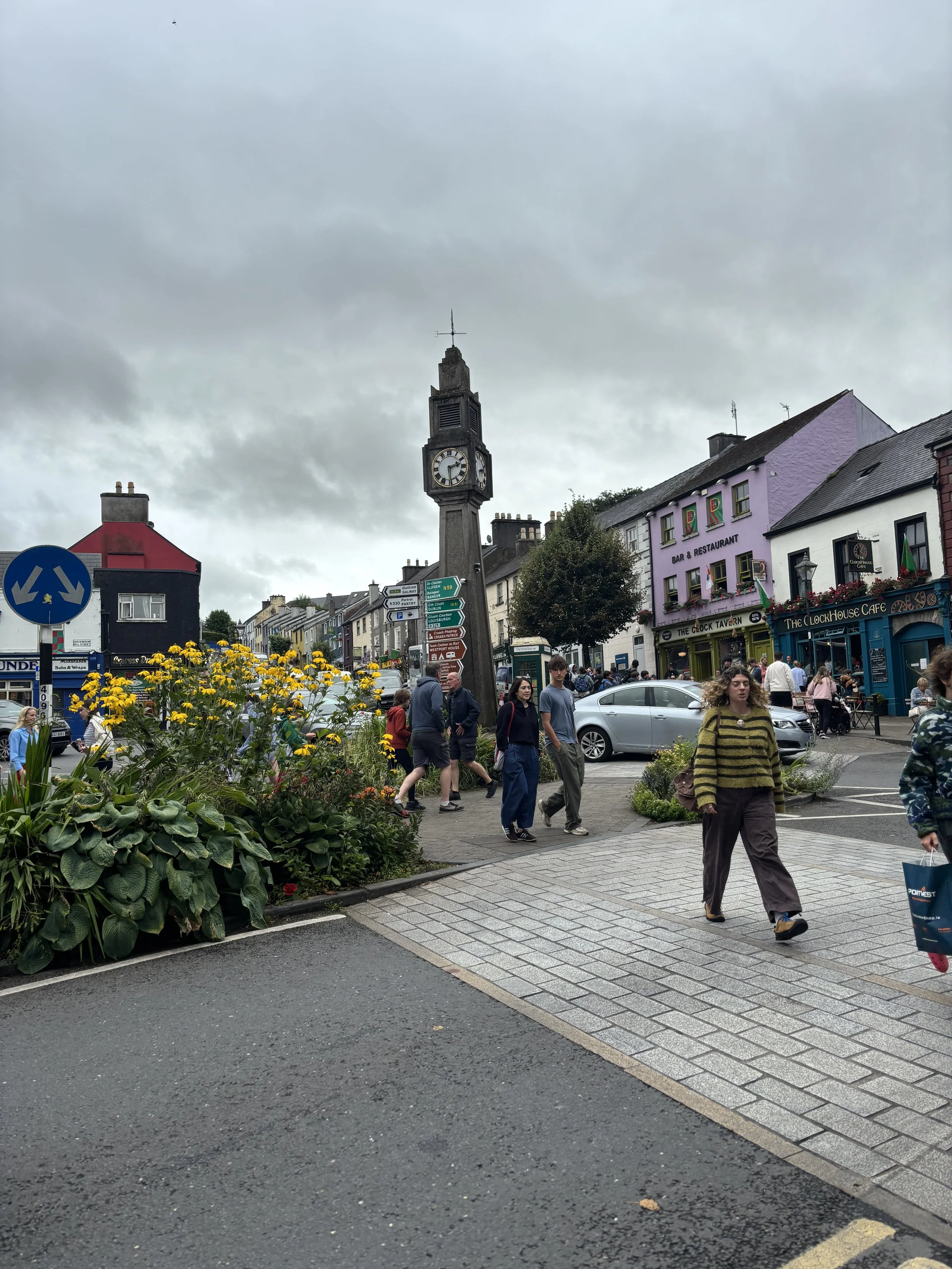
The closest town was Westport, which was a 3.5-mile dinghy ride from our anchorage, followed by a one-mile walk into Westport. The ride there wasn’t too bad. A bit bumpy with a little bit of the characteristic Irish drizzle. Westport was a gem! What a charming, bustling town.
We walked around for a bit before stopping for lunch at Friends Bistro, where we ate a traditional northwestern Irish dish called boxty, which dates back to the 1700s. The word comes from the Irish arán bocht tí, which translates to “poorhouse bread.” The boxty uses potatoes, an Irish staple crop. The boxty is made by combining grated raw potatoes with mashed potatoes to form a potato pancake. Potatoes were cheap and heavily relied upon for survival, especially by rural families with limited resources. Transforming the potato into a boxty was a way to stretch rations and create a heavy, energy-dense meal that kept workers full for hours. Our “elevated” boxty was made into a sandwich with goat cheese and sundried tomatoes. It was delicious!
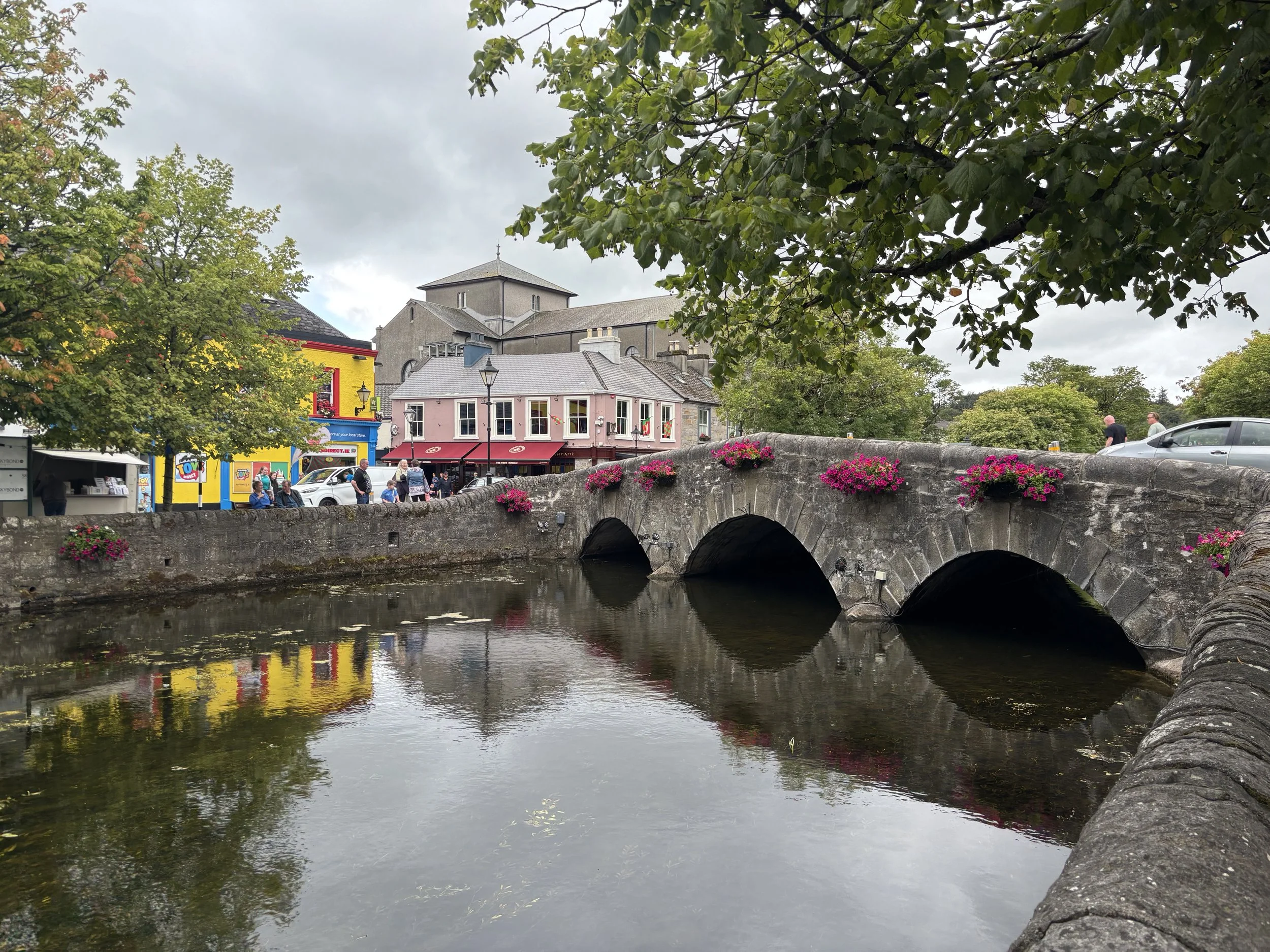
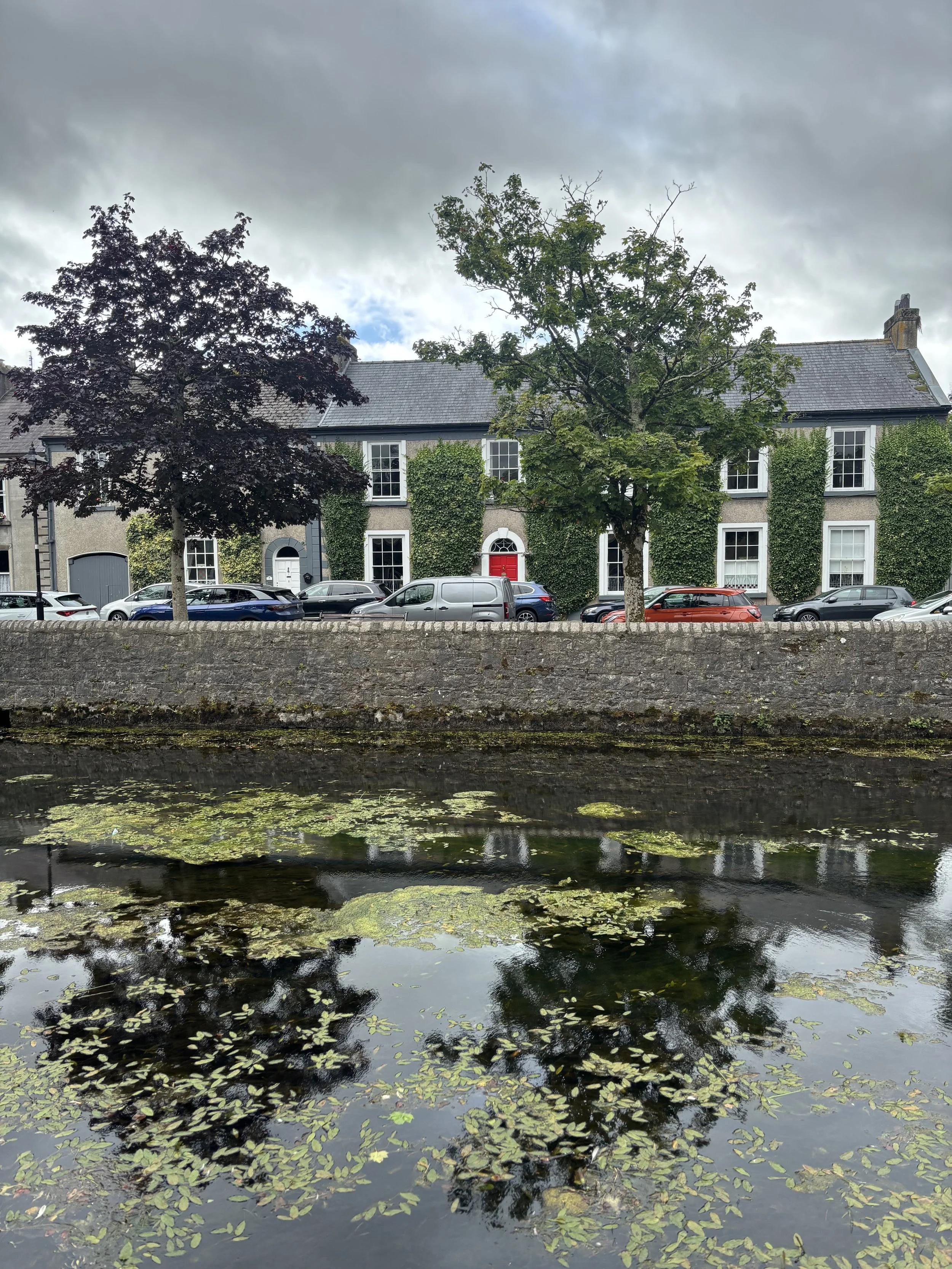
A small canal and bridge in Westport
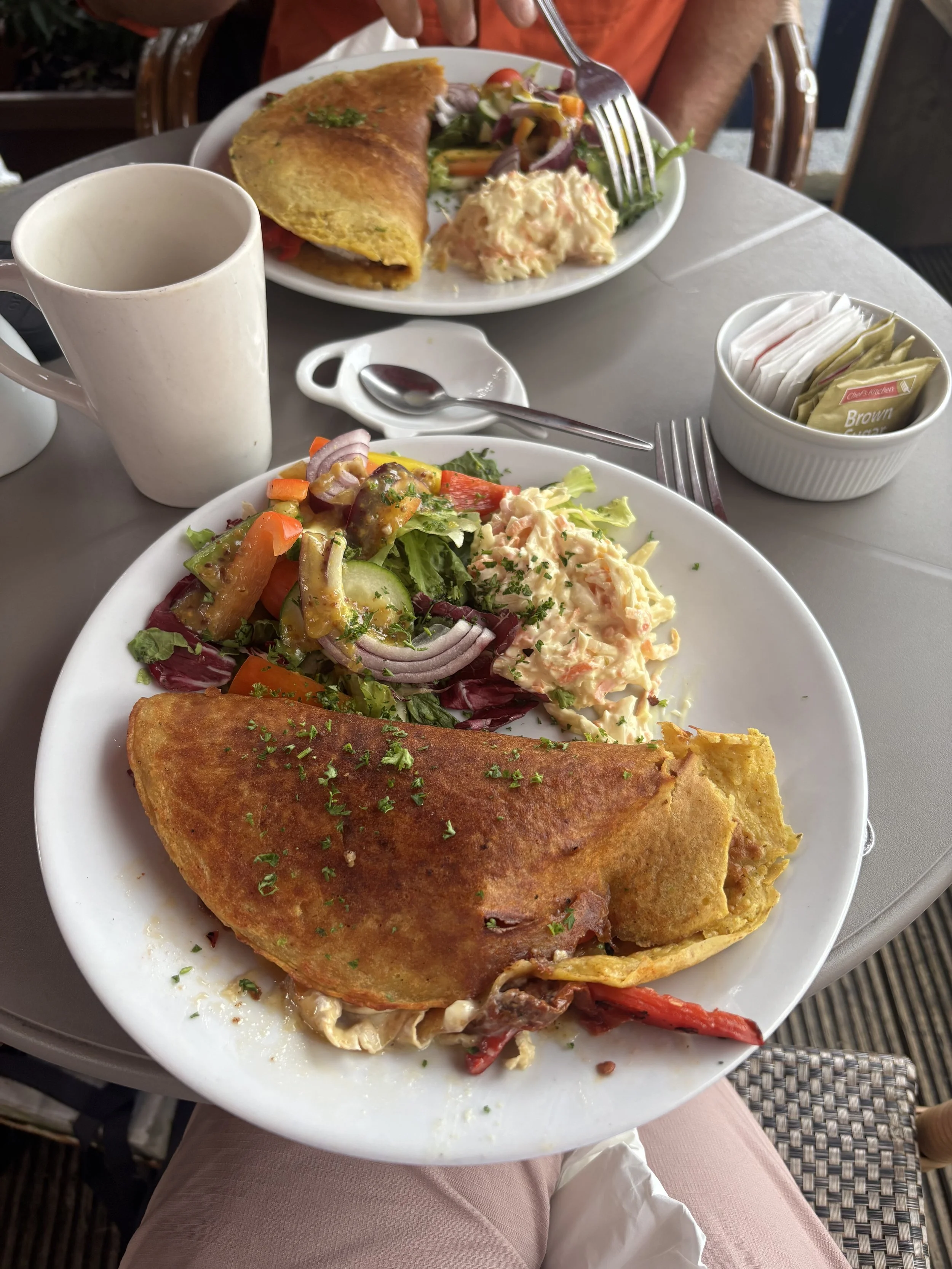
Our boxty lunch, with a side salad and slaw. One of the best meals we have had in Ireland!
After lunch, we continued to walk around the city of Westport, enjoying all it had to offer—including a much-needed grocery store stop. And while our long dinghy ride to Westport was relatively easy, the ride back was a bit like riding a bucking bronco down a river. It was a very bumpy, very wet ride.
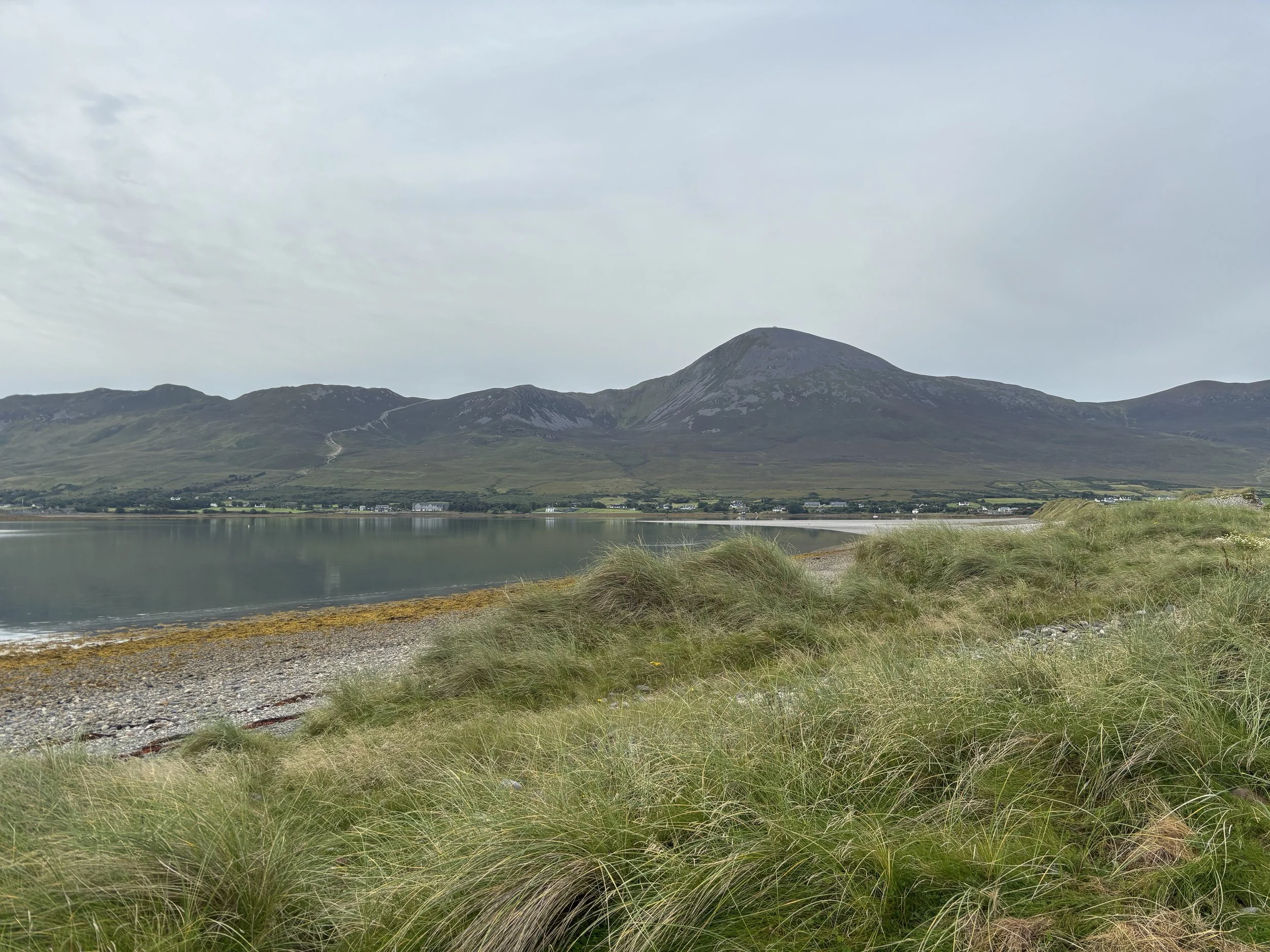
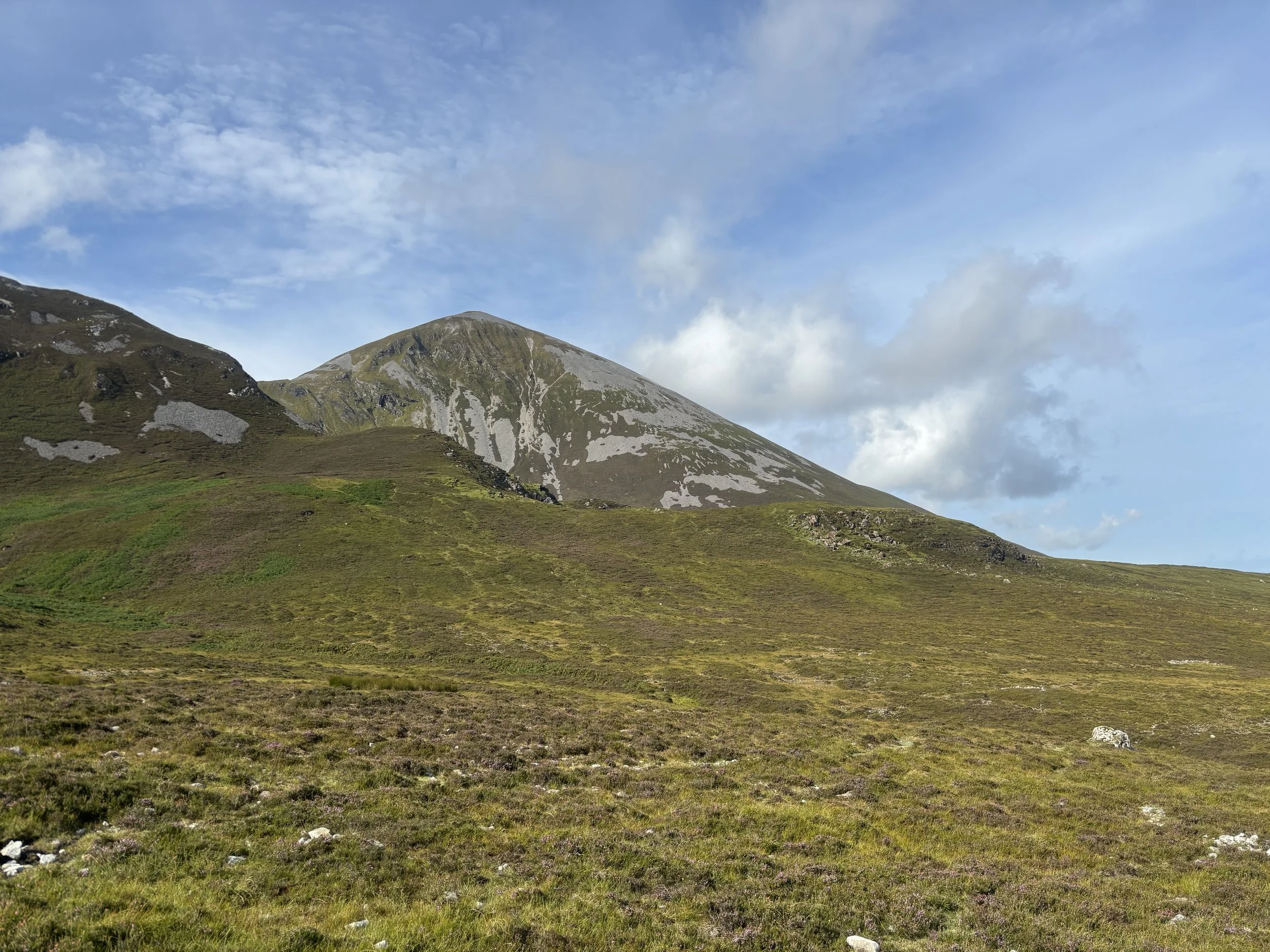
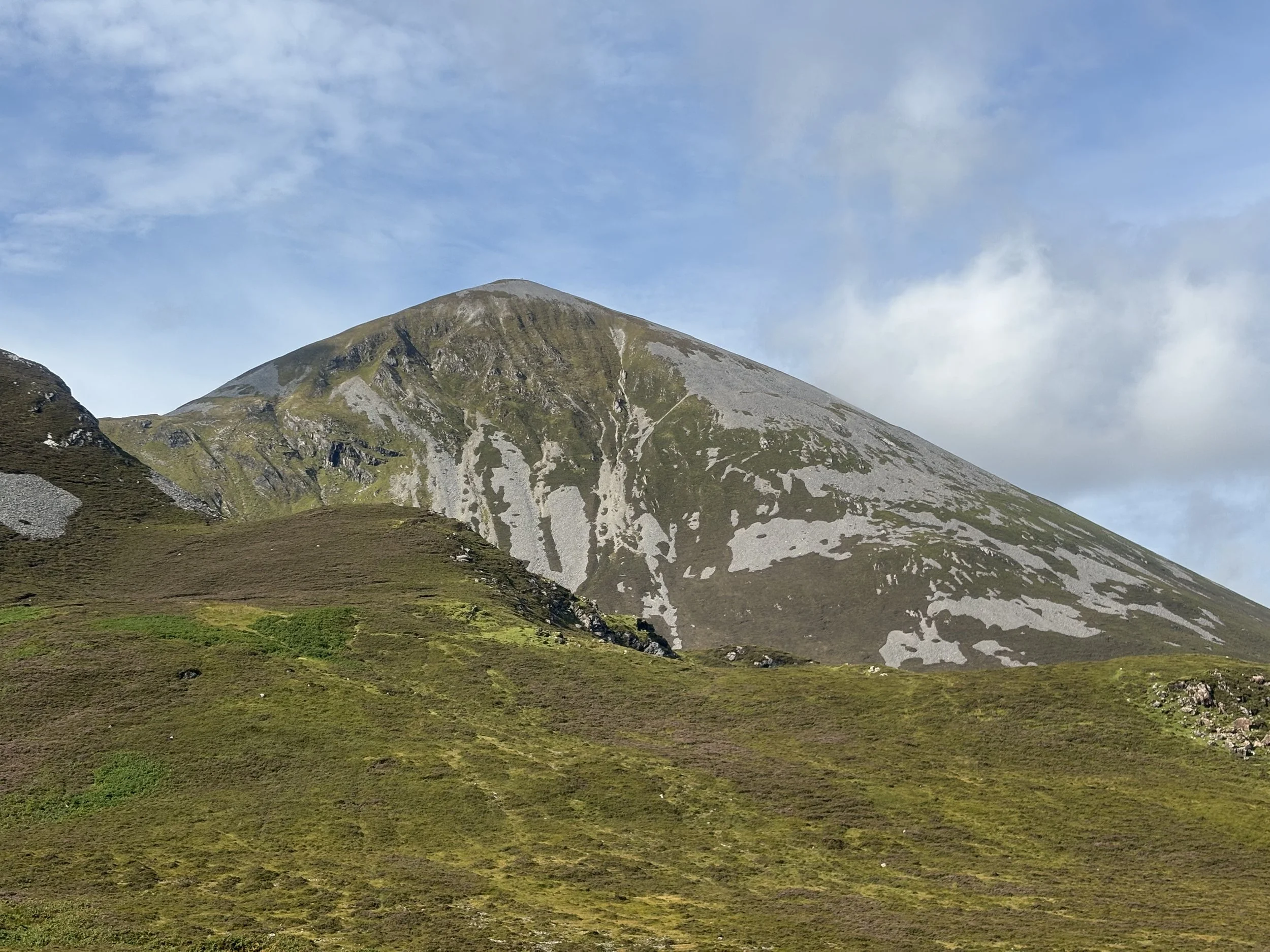
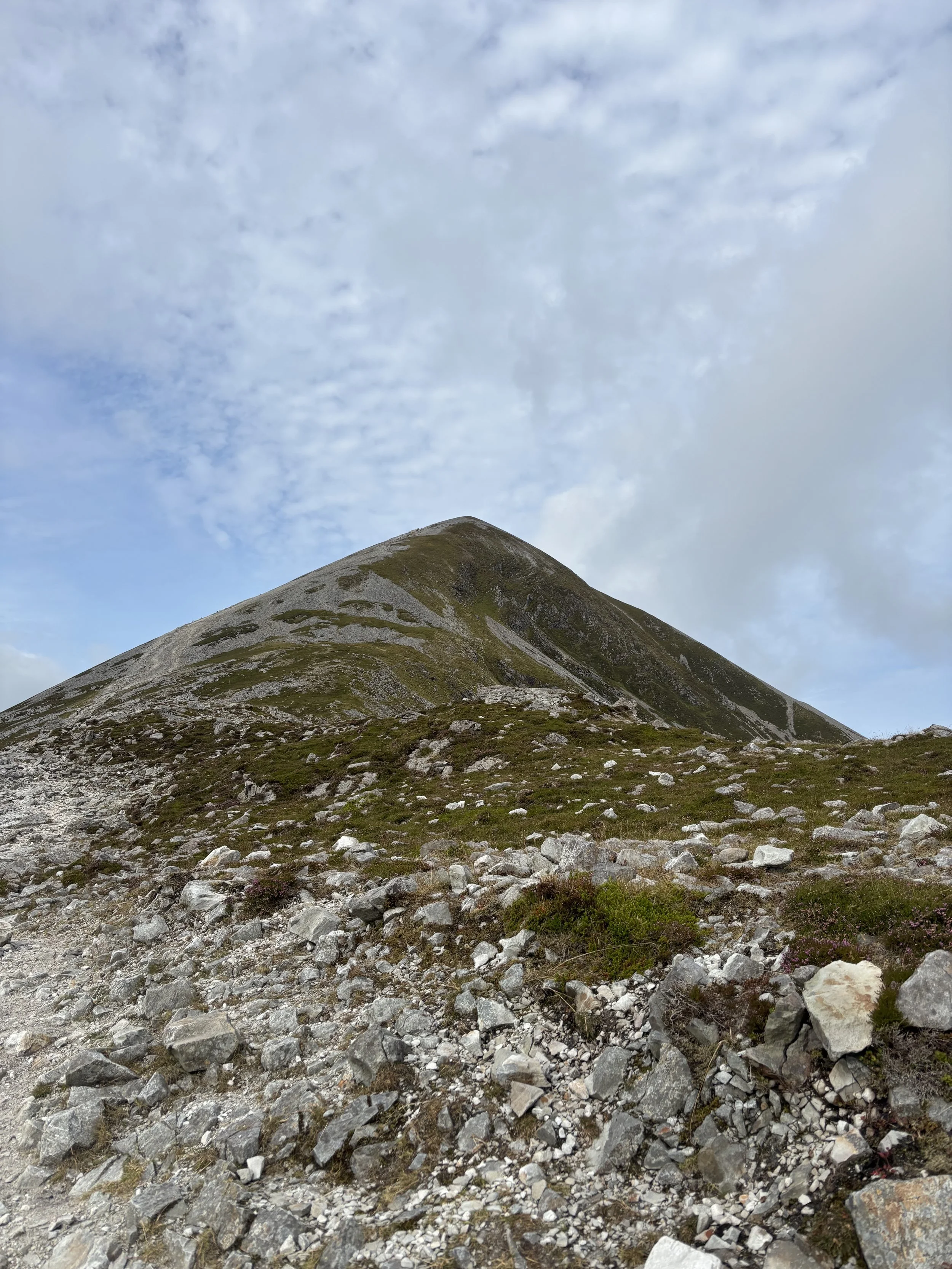
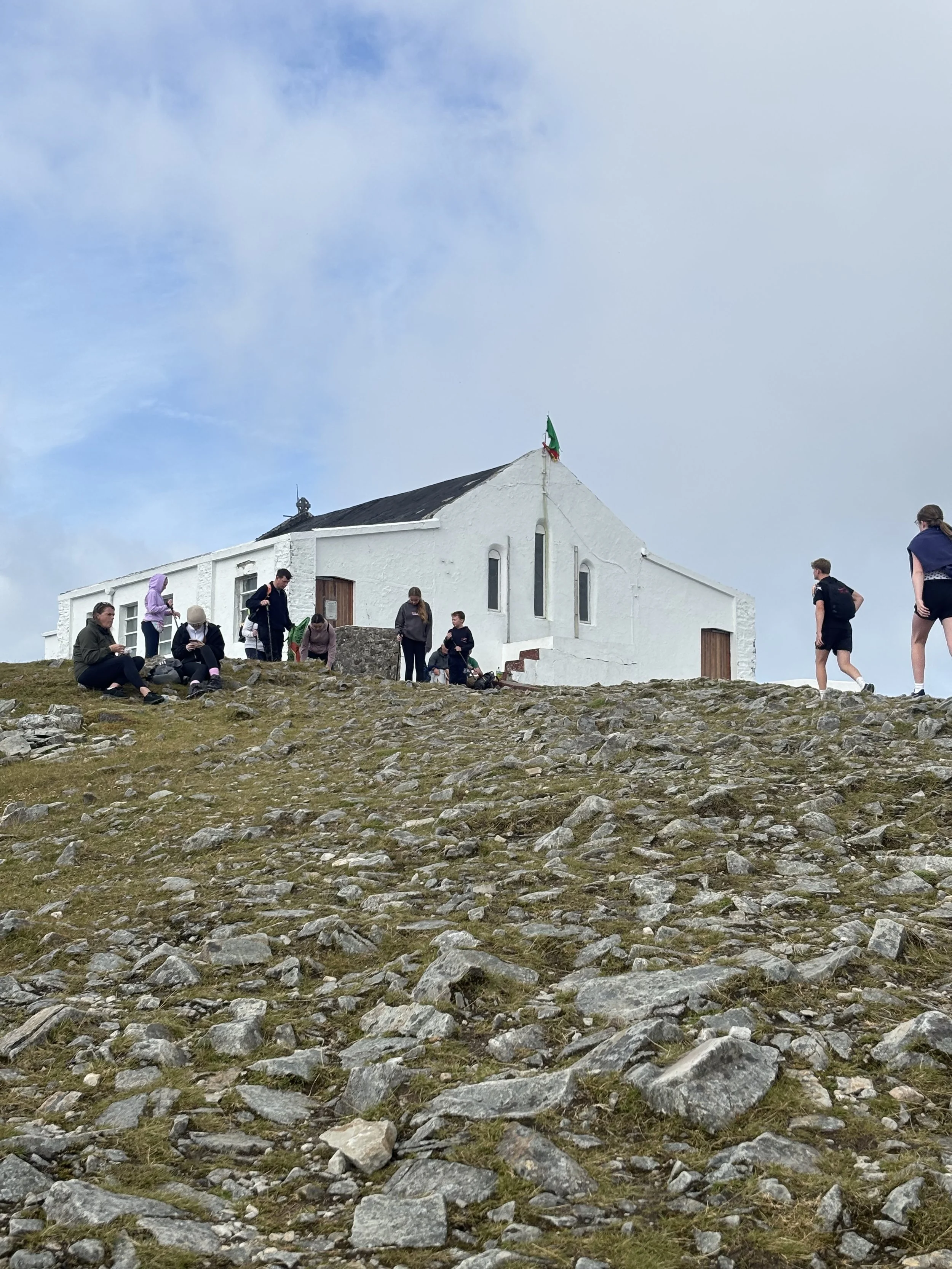
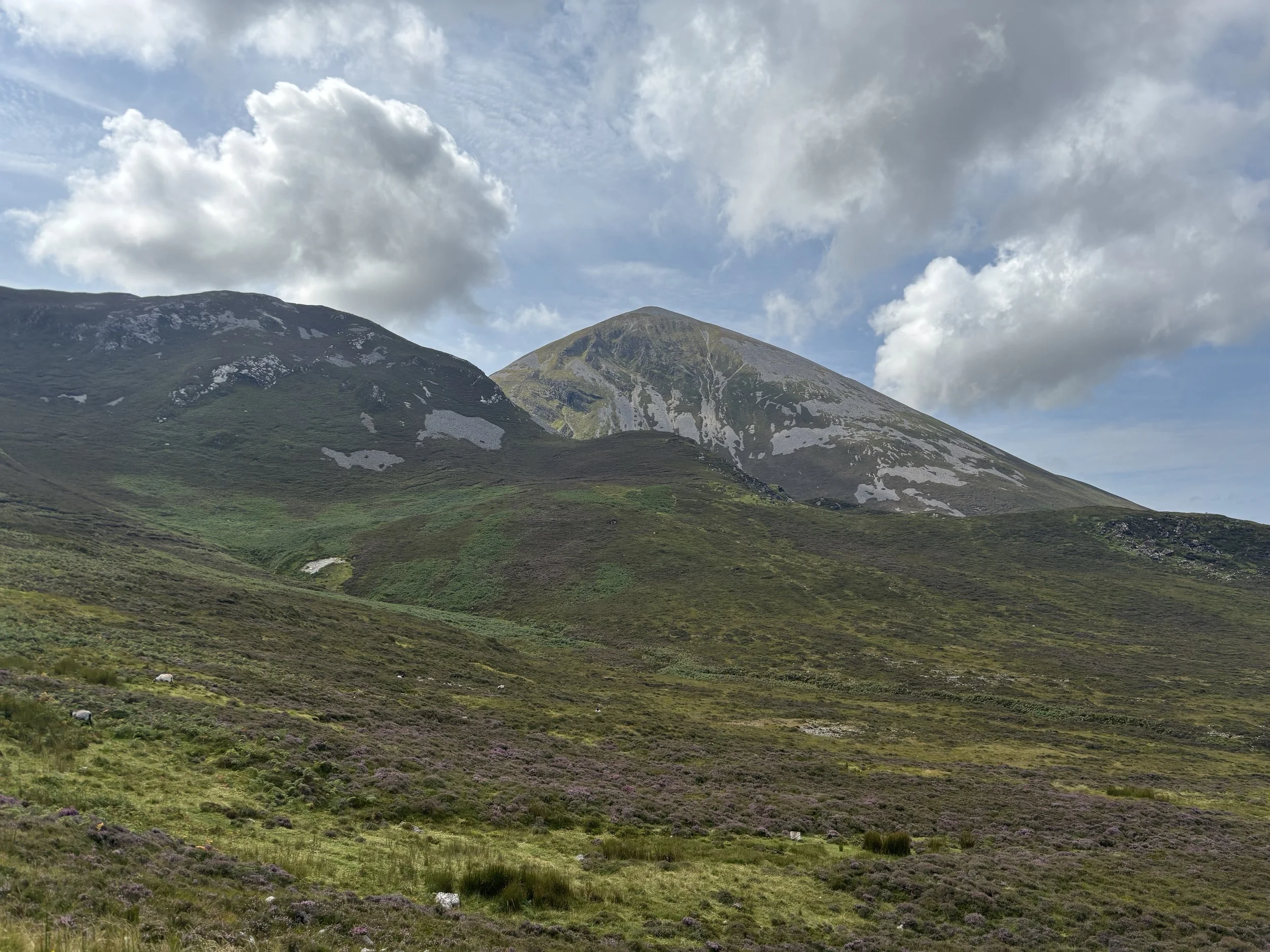
While exploring Westport, we learned that the mountain looming over us in Clew Bay is called Croagh Patrick. This mountain, also known as “The Reek,” stands at 2,507 feet tall. And the sole building I saw on top is not a house, but a chapel. This mountain is a major pilgrimage site where St. Patrick fasted for 40 days and nights in 441 AD.
It is believed that Croagh Patrick was originally a pagan worship site thousands of years before Christianity and Patrick's pilgrimage there. On the last Sunday of July, known as “Reek Sunday,” it is estimated that somewhere between 5,000 and 25,000 pilgrims follow in Patrick’s footsteps—doing a pilgrimage to the top of Croagh Patrick, some of them barefoot or even on their knees.
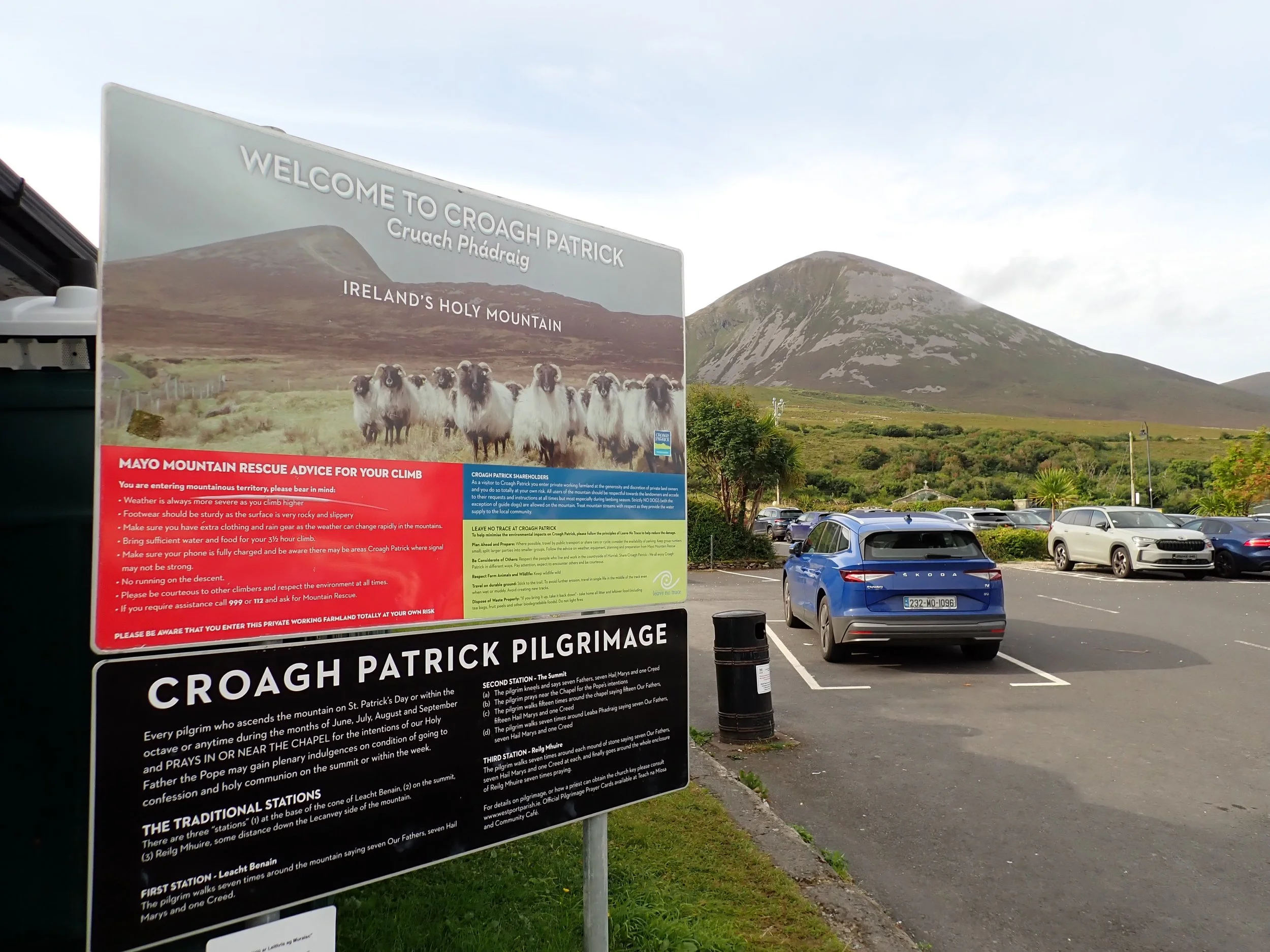
Ireland’s Holy Mountain, Croagh Patrick
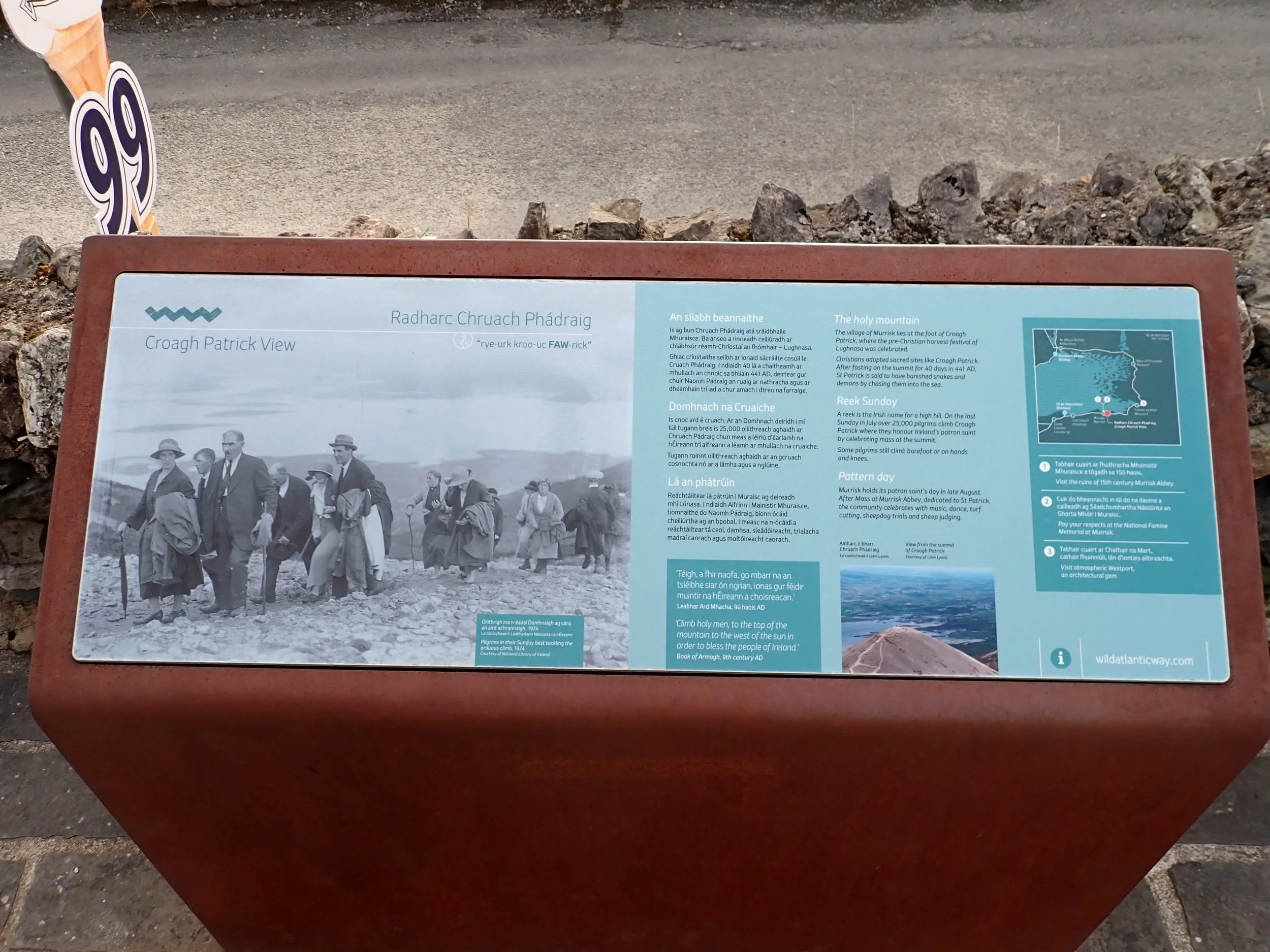
Pilgrims climbing Croagh Patrick in their Sunday best.
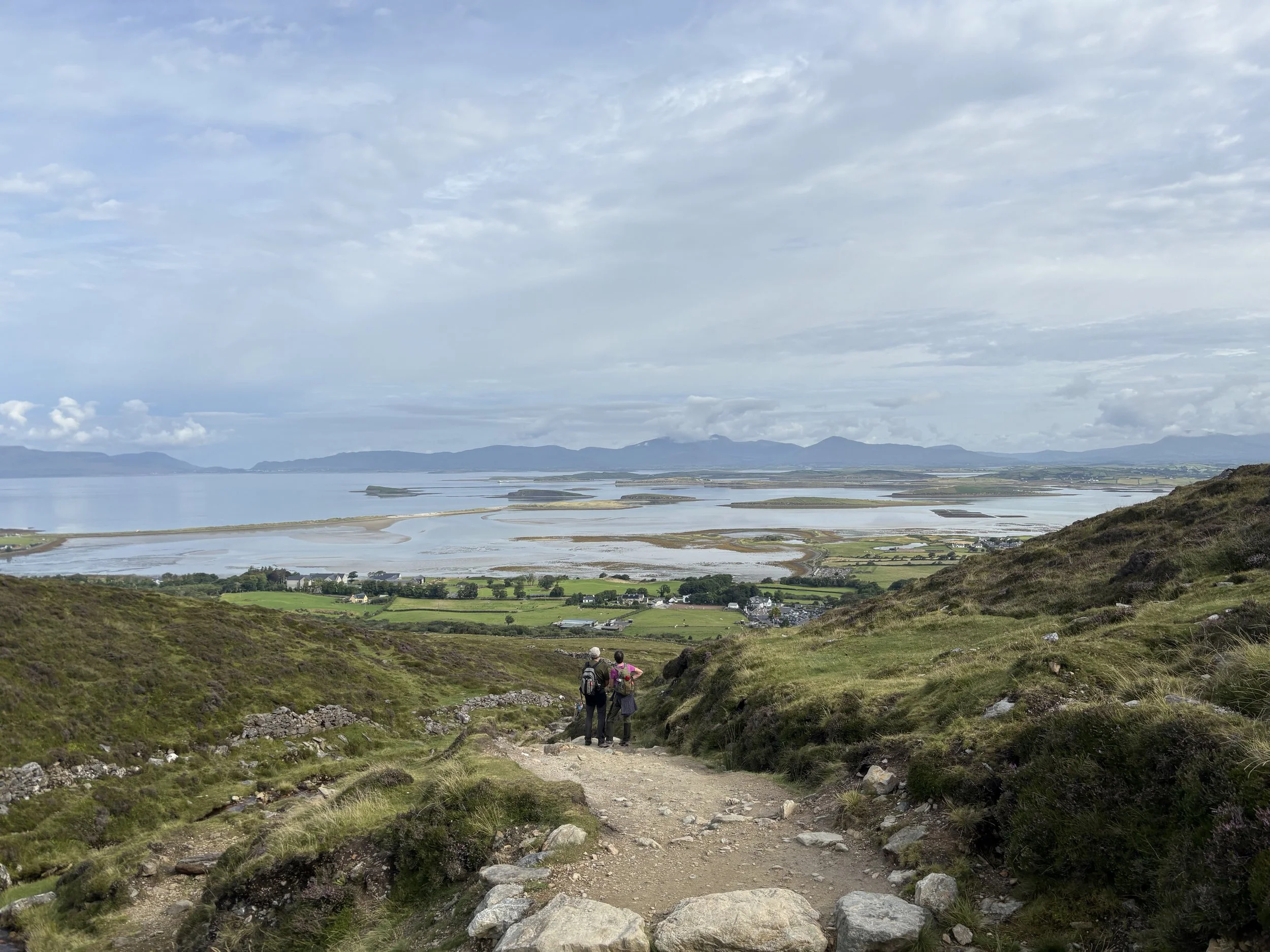
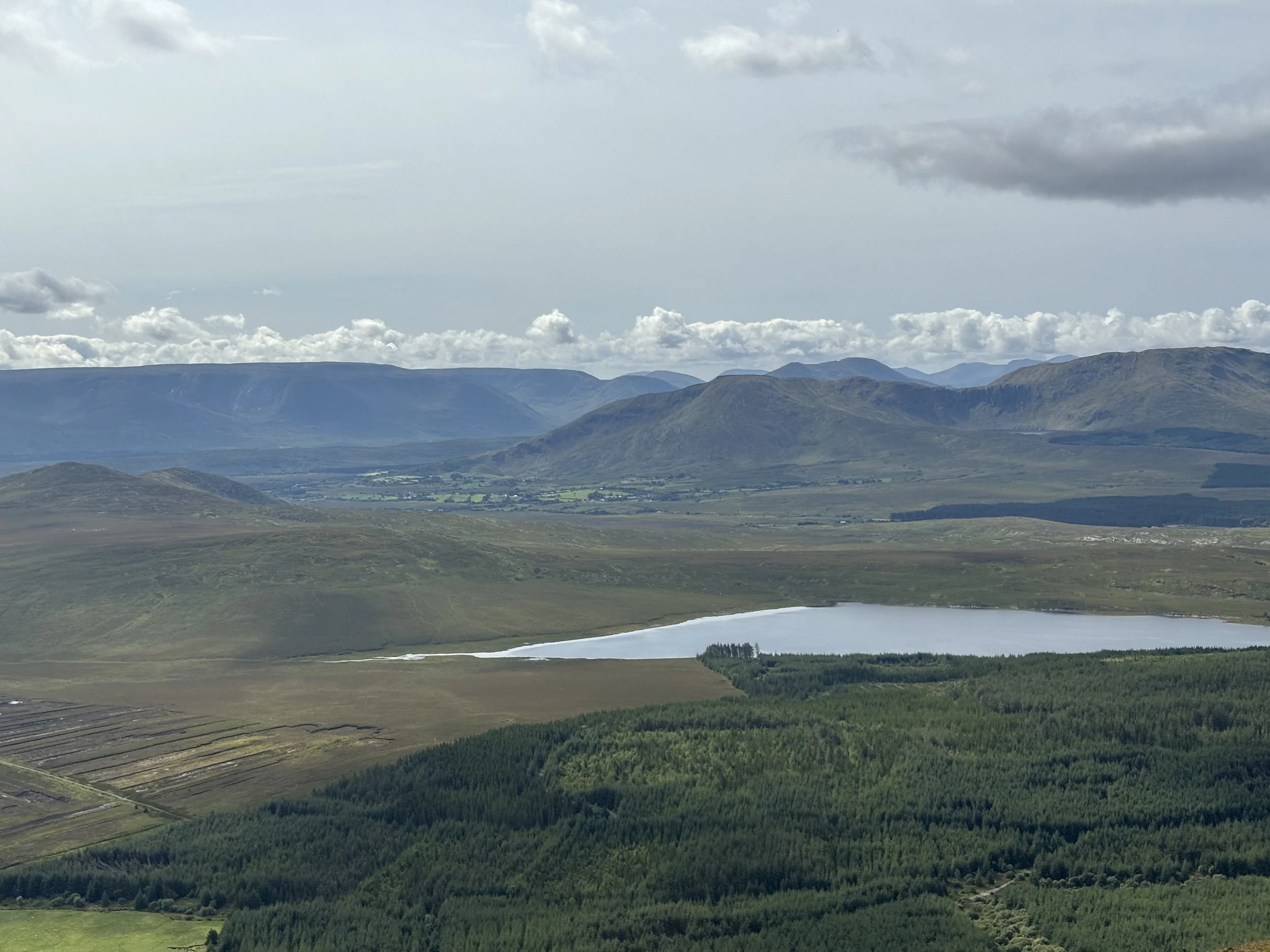
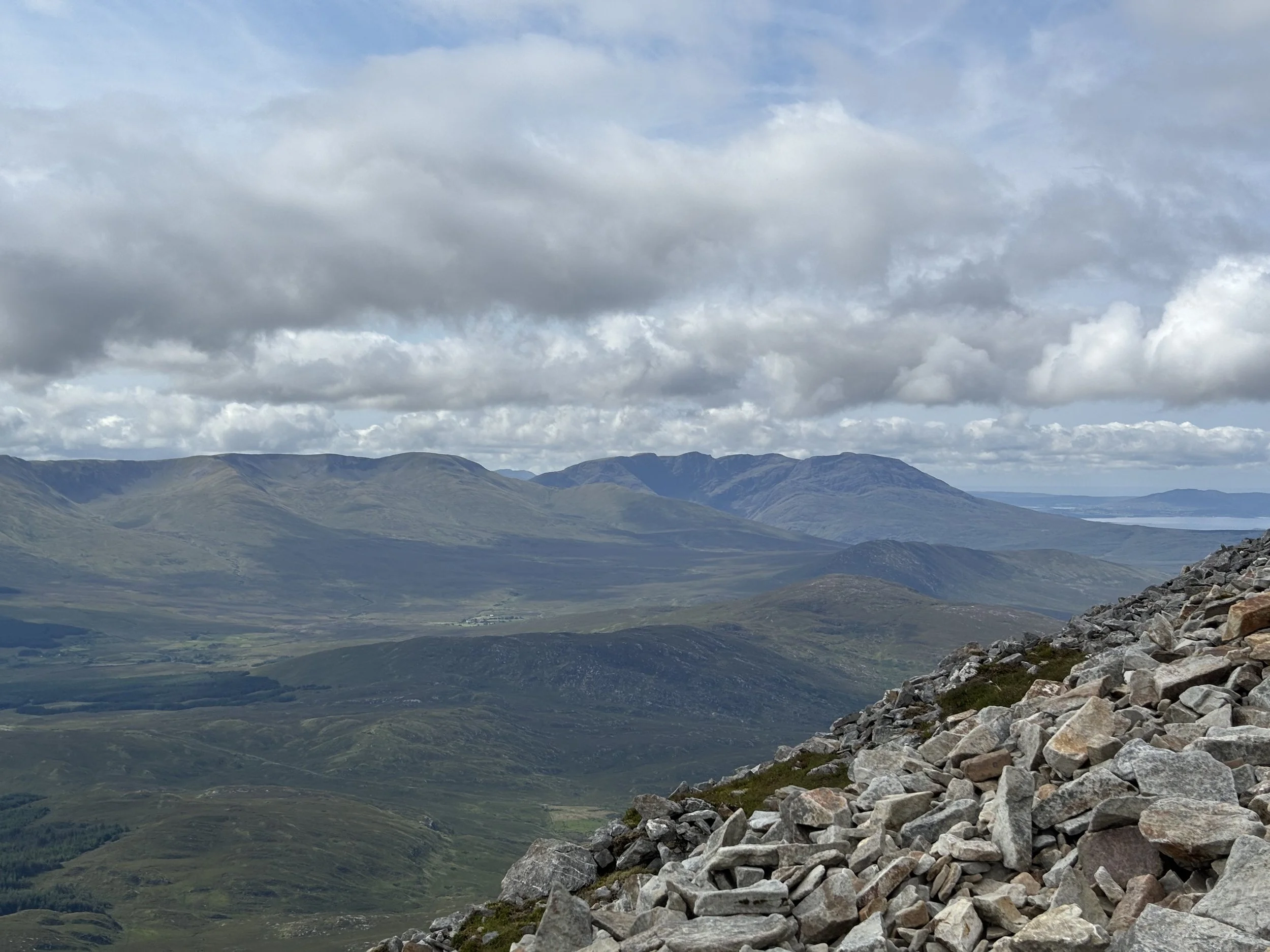
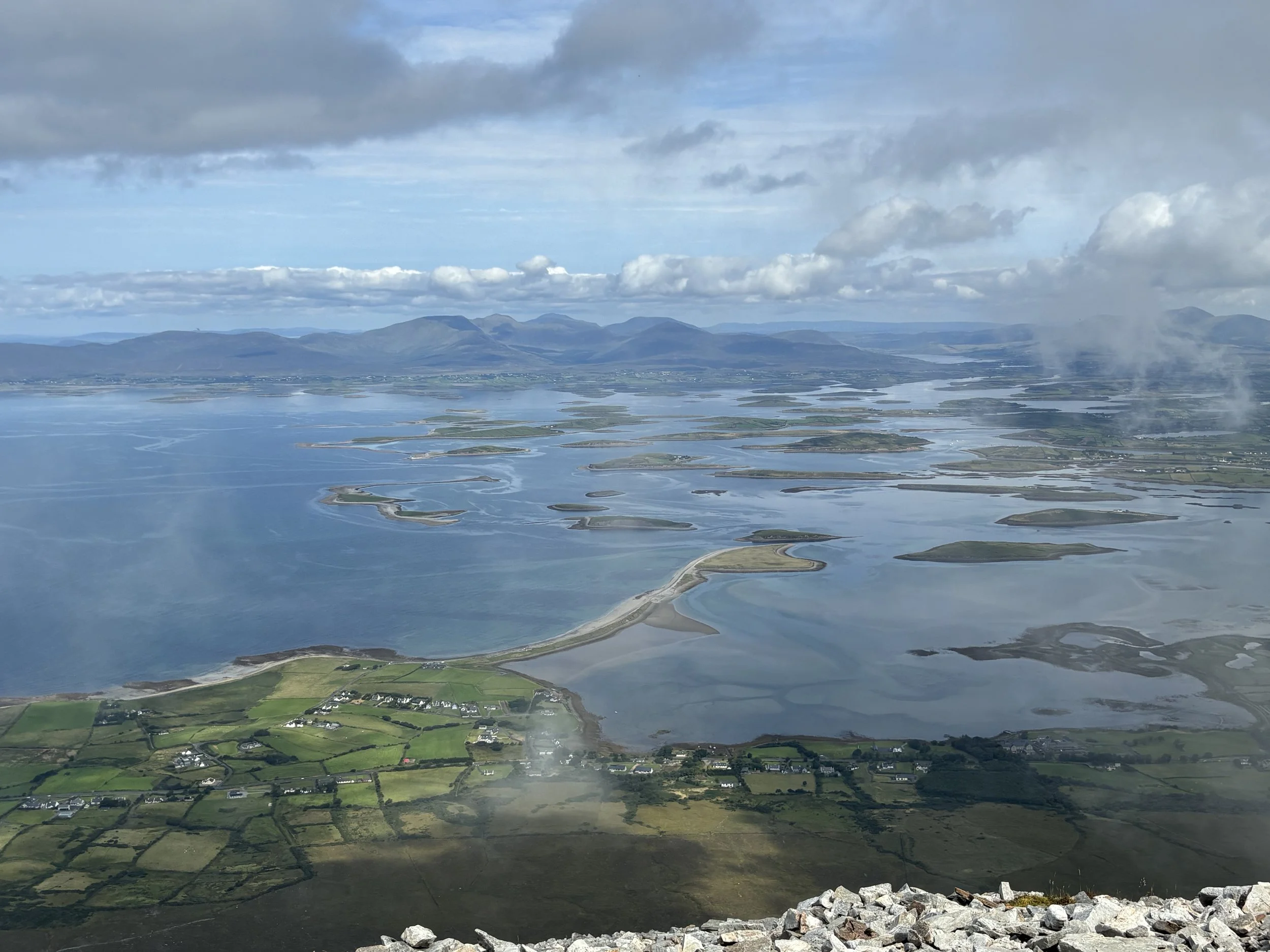
I have never been a fan of hikes with significant elevation gain, but I knew I wanted to hike to the top of “The Reek.” During our first couple of days in Clew Bay, Croagh Patrick was shrouded in clouds. But when it is clear at the summit, Croagh Patrick promises an expansive and impressive view of all the islands of Clew Bay. We decided to go for it and picked the day with the best weather.
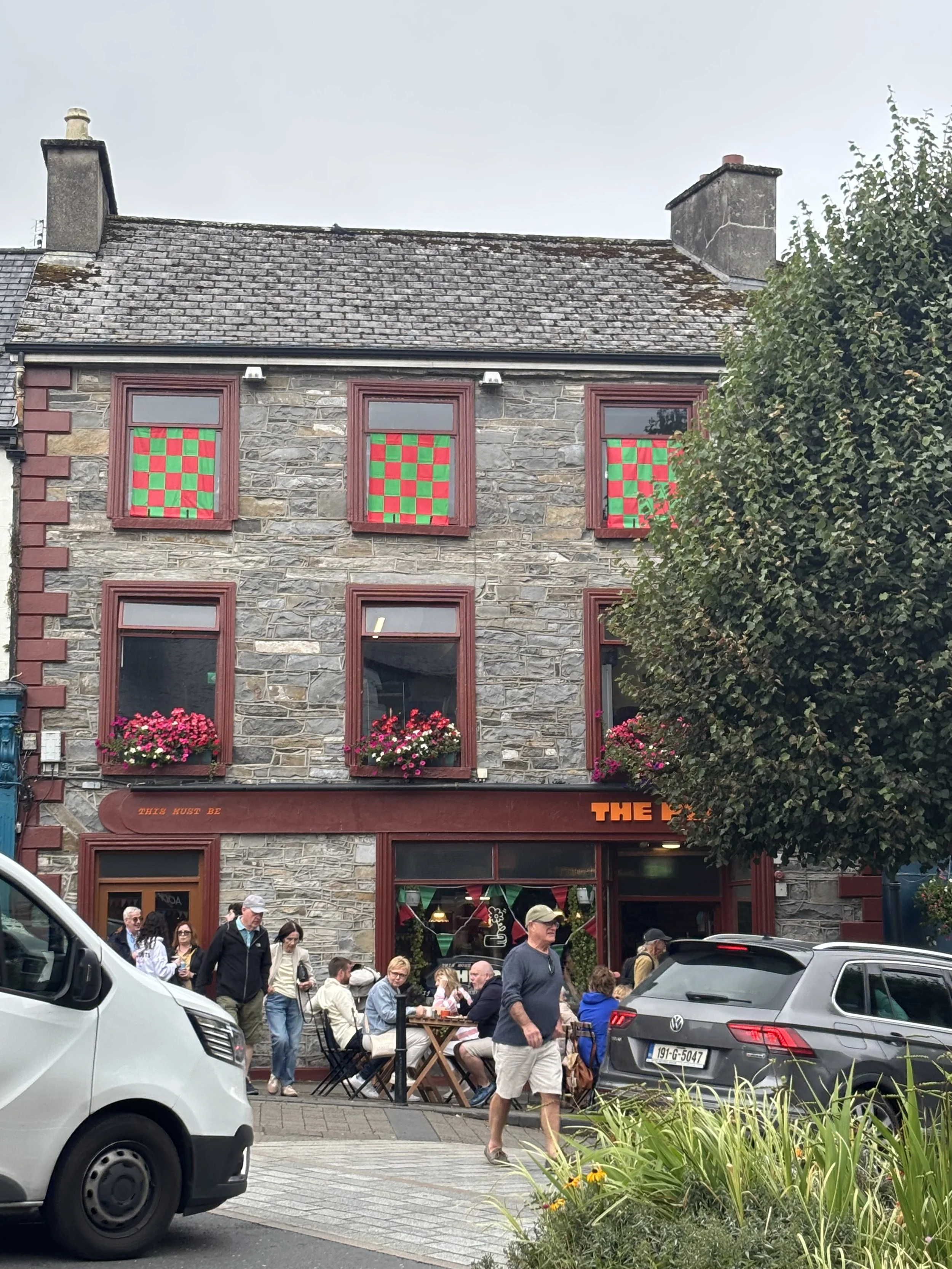
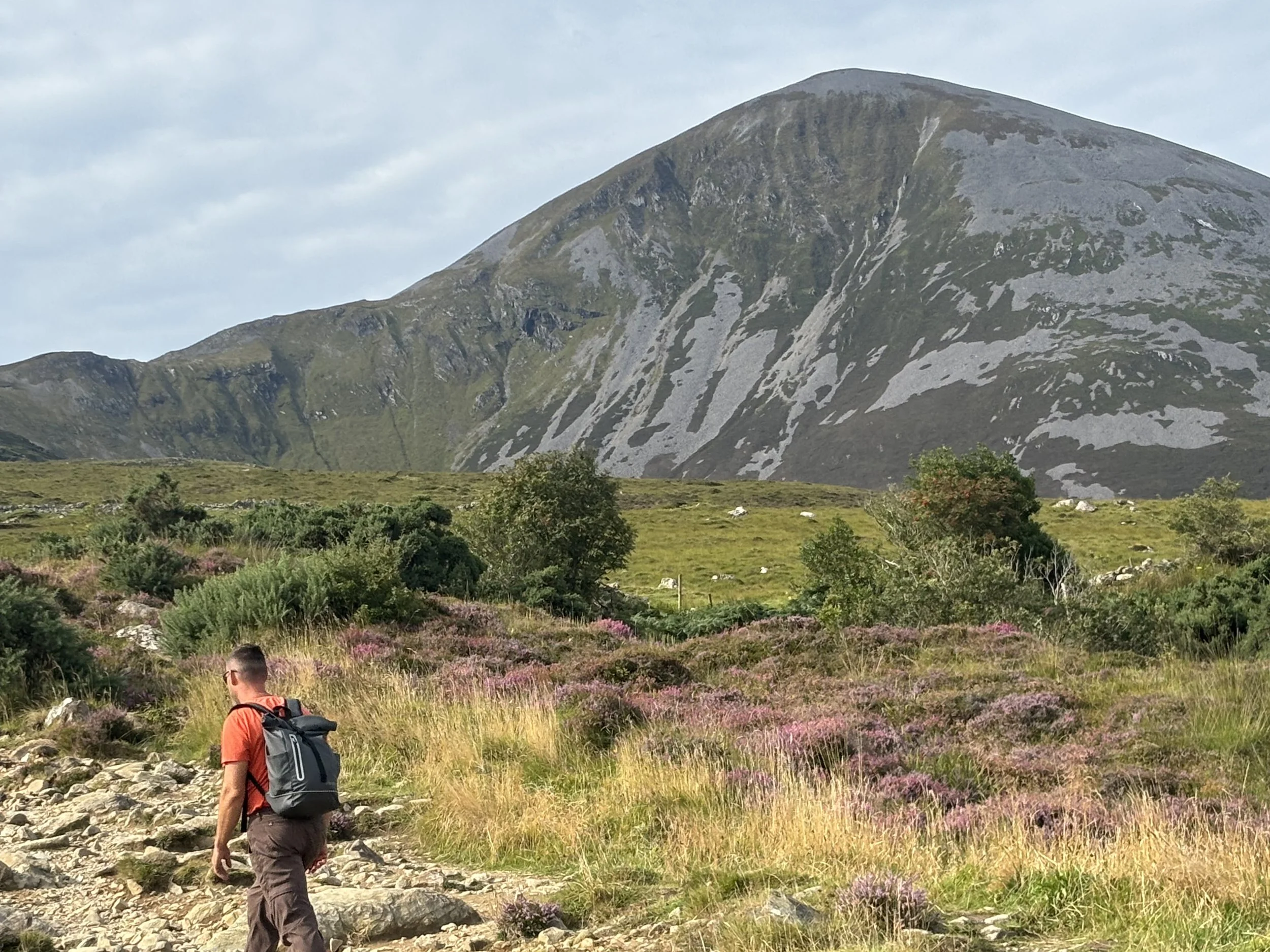
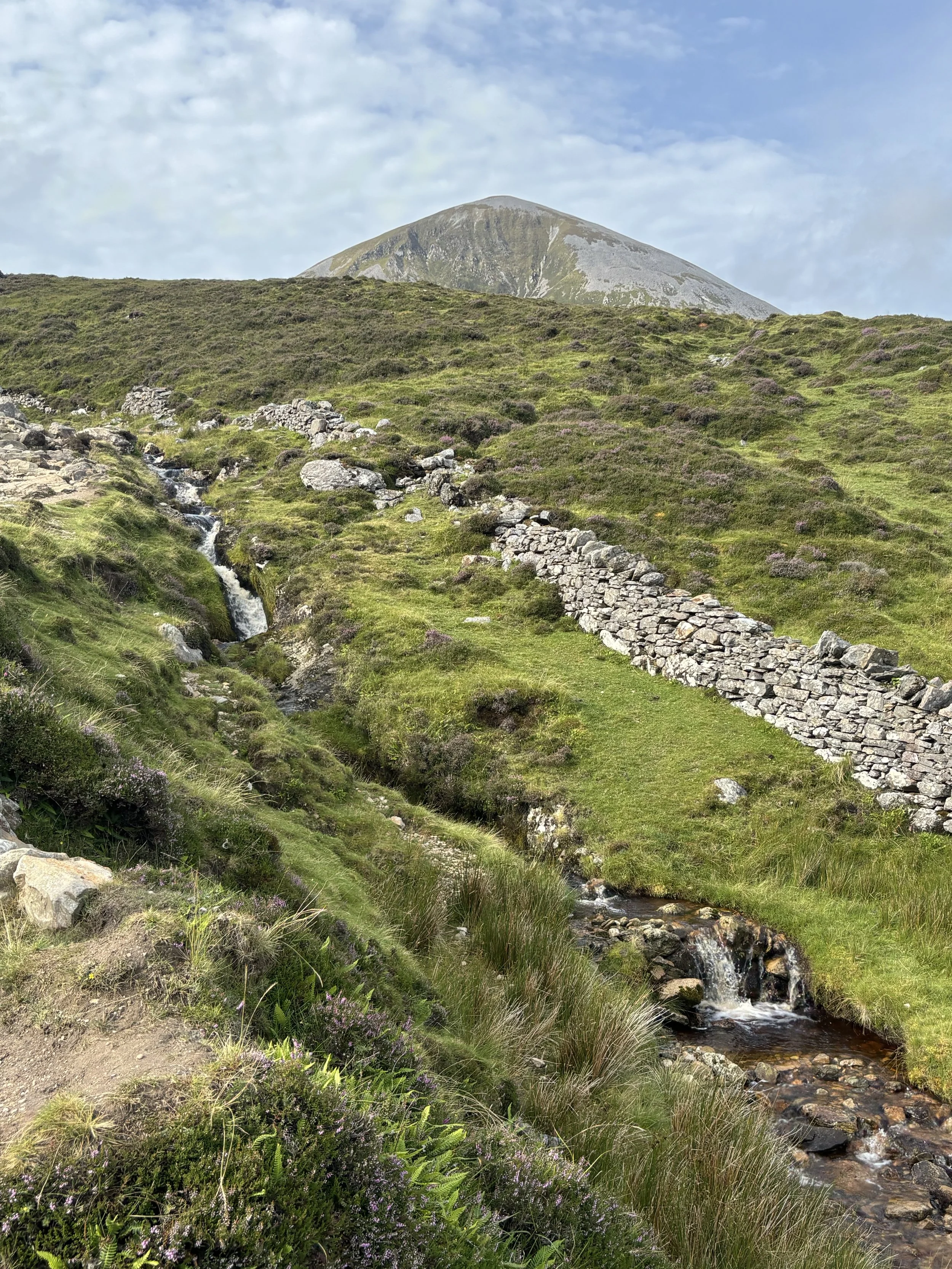
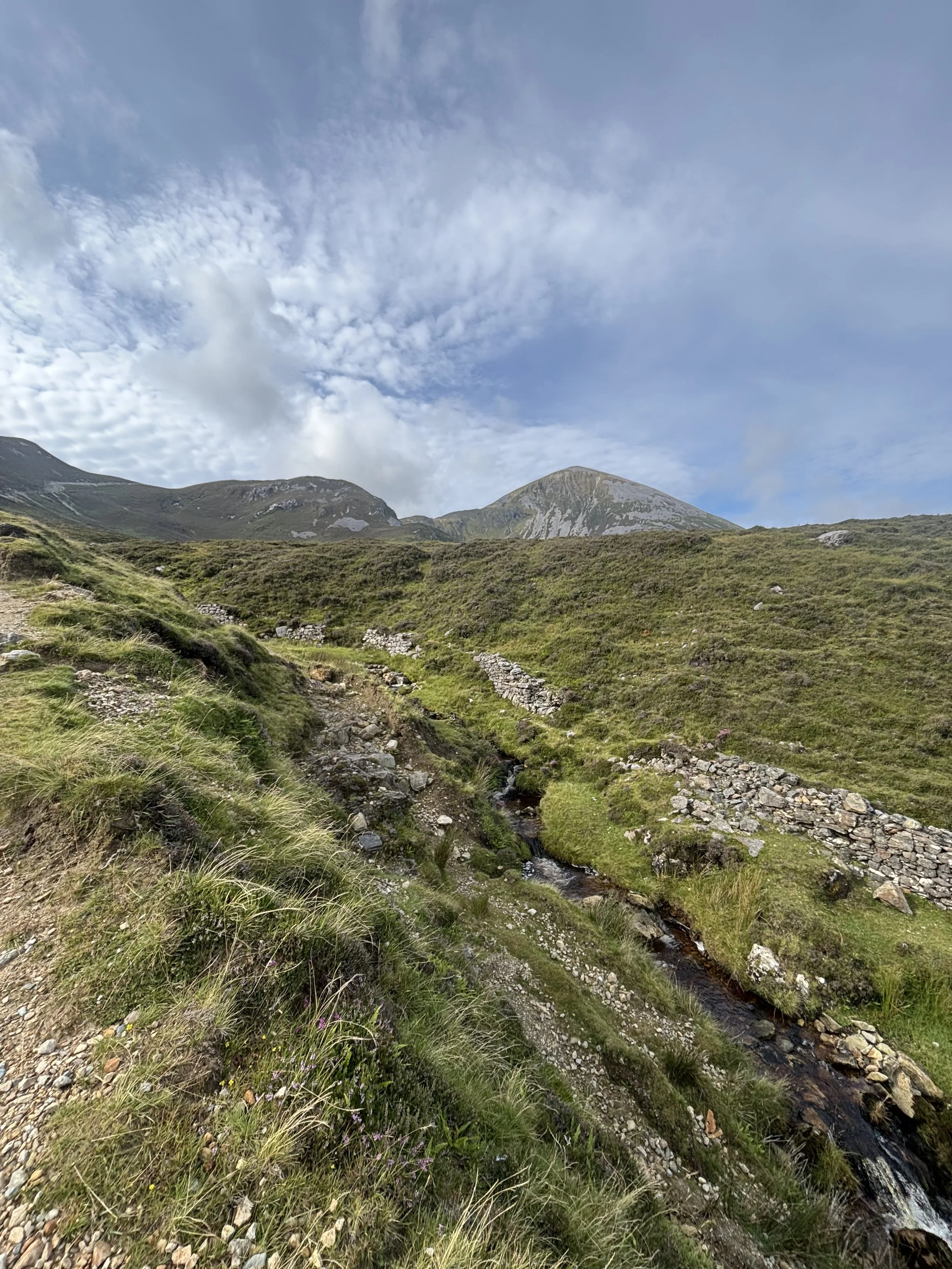
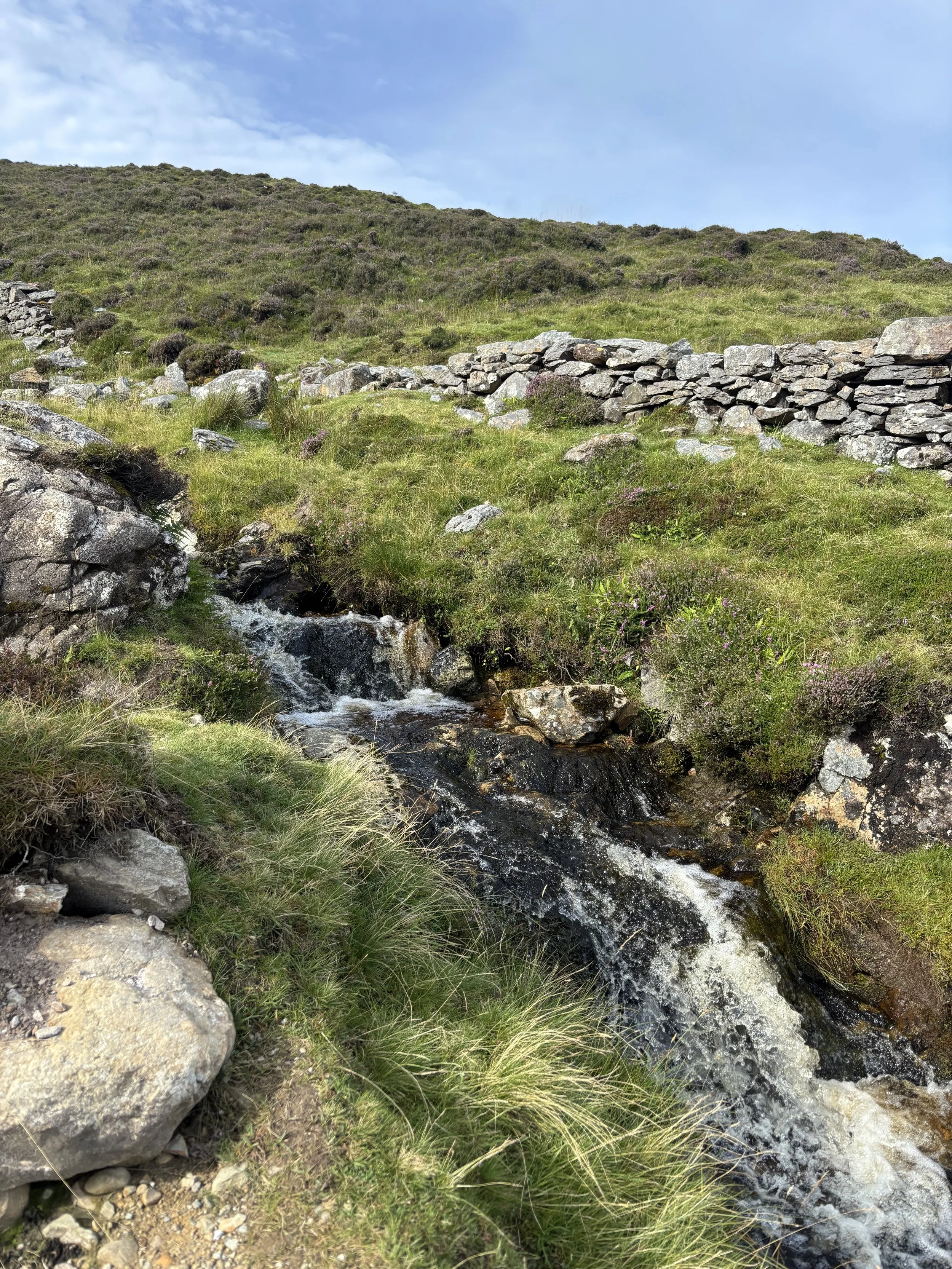
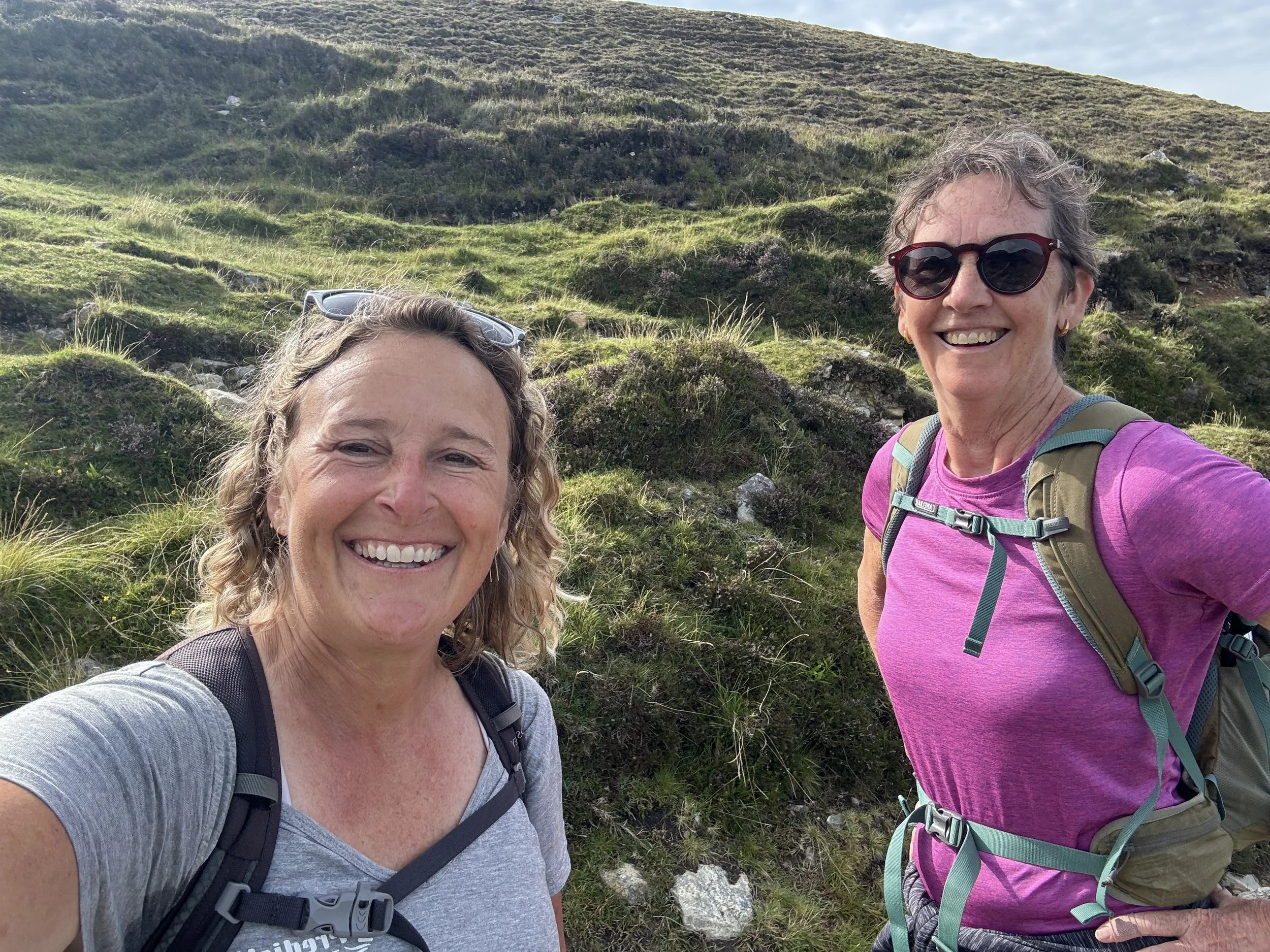
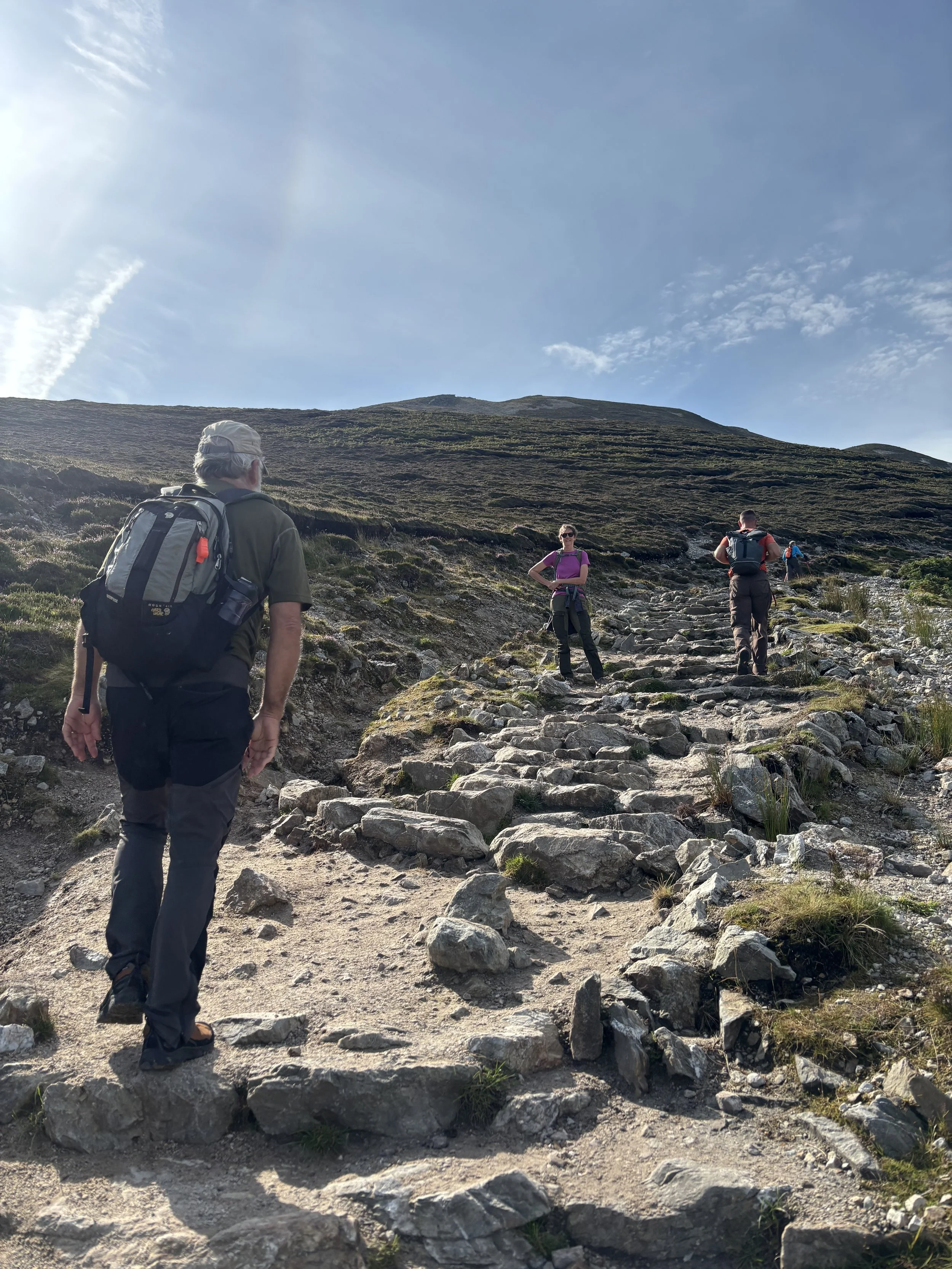
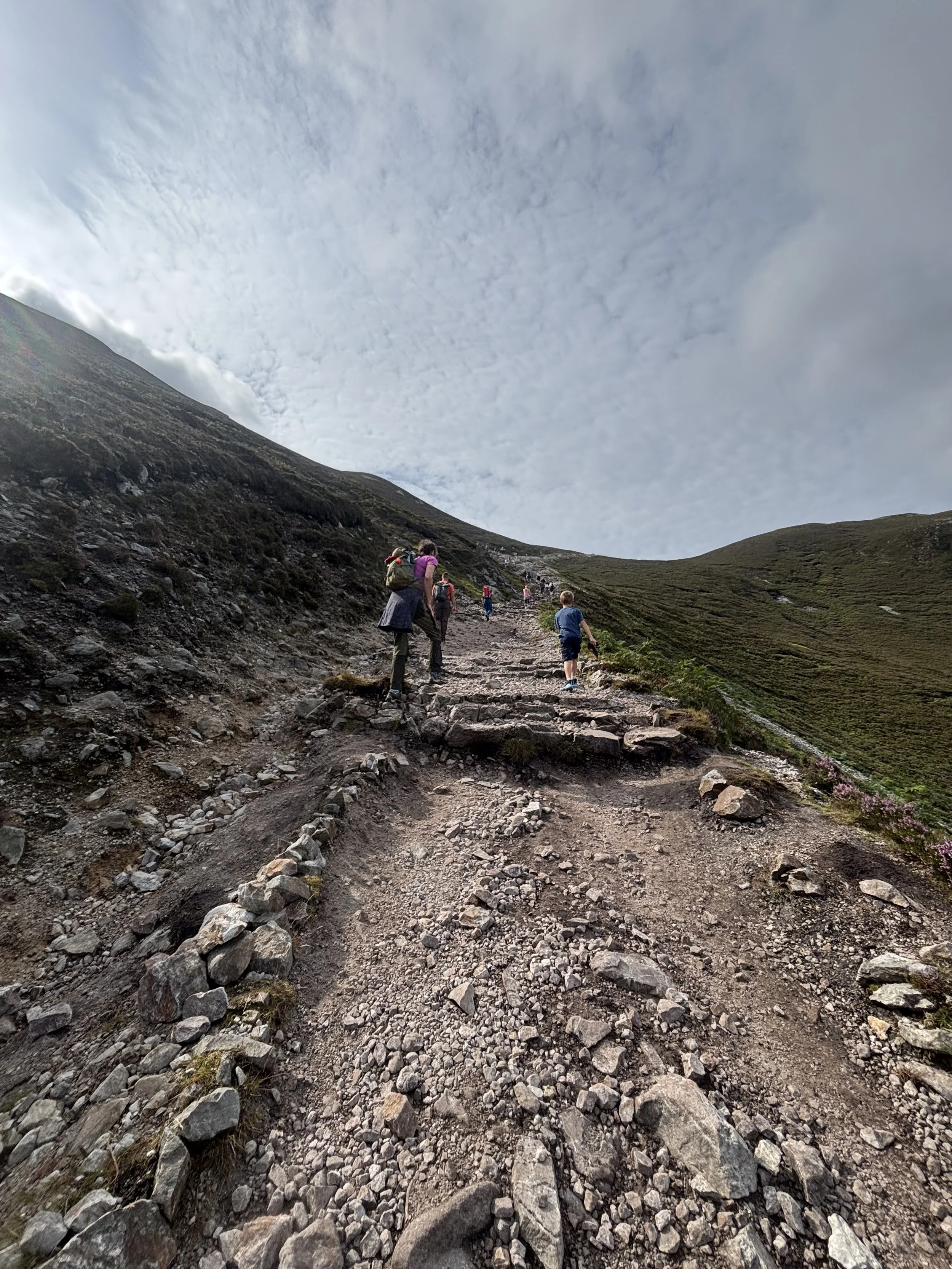
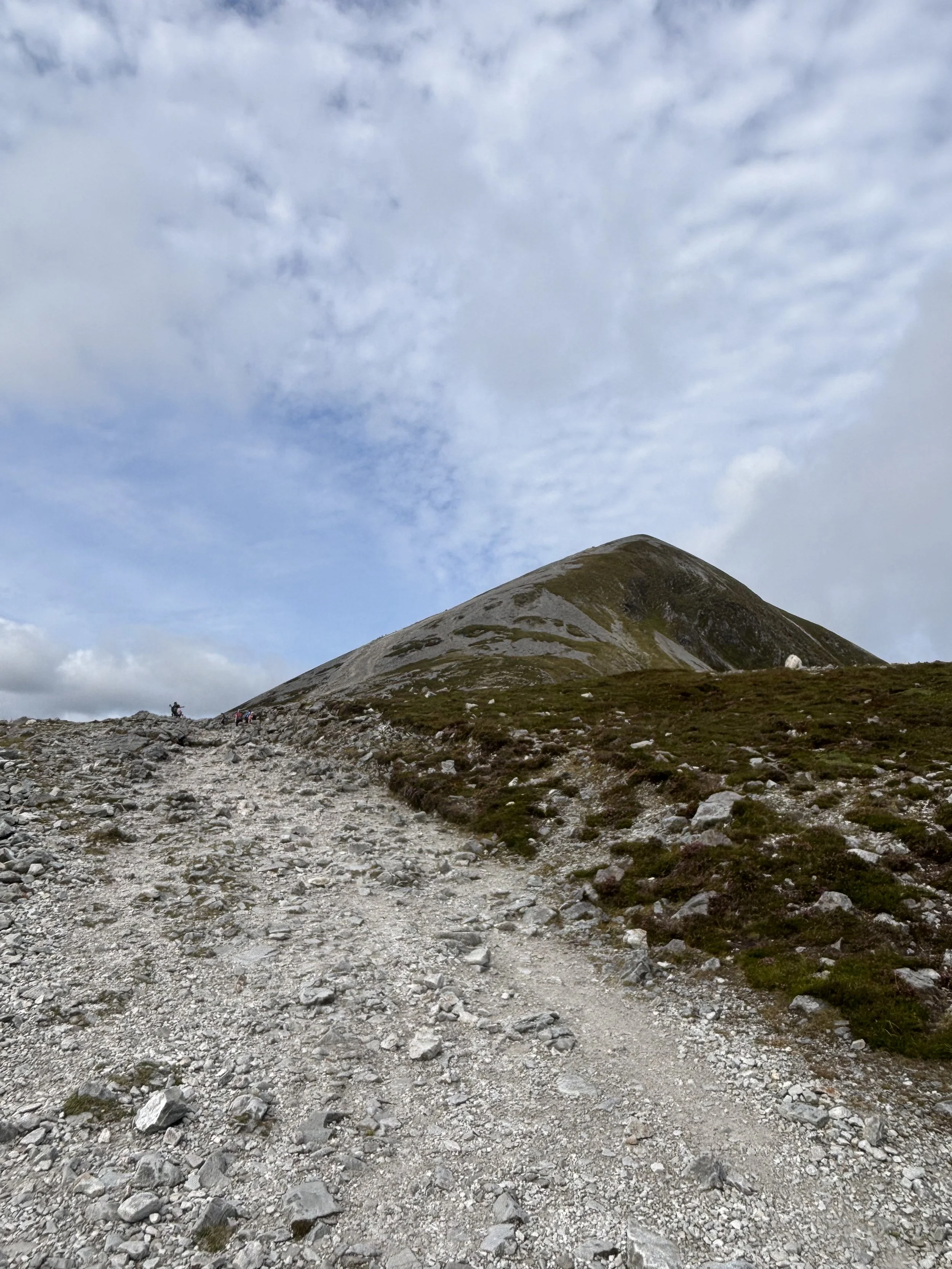
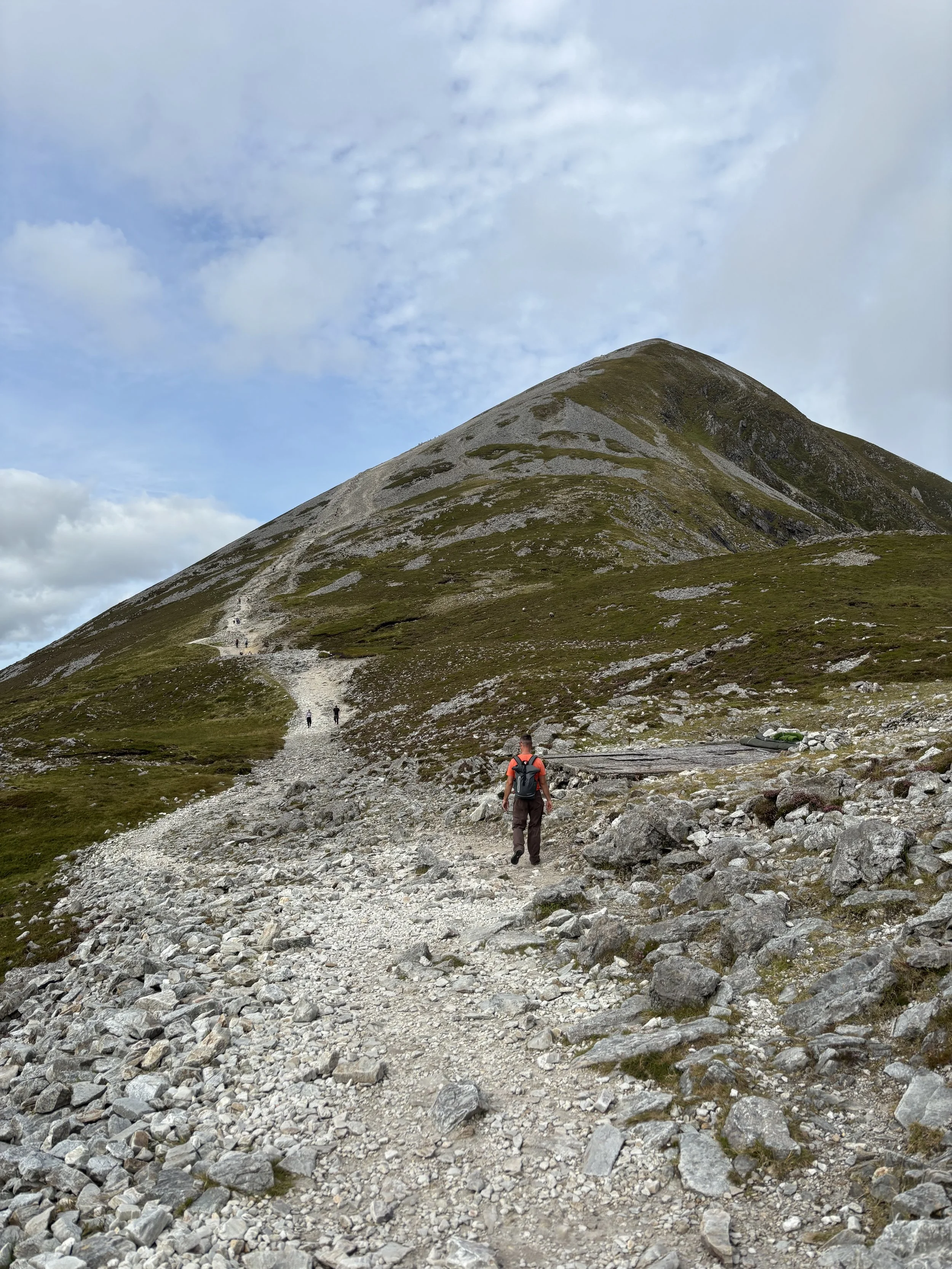
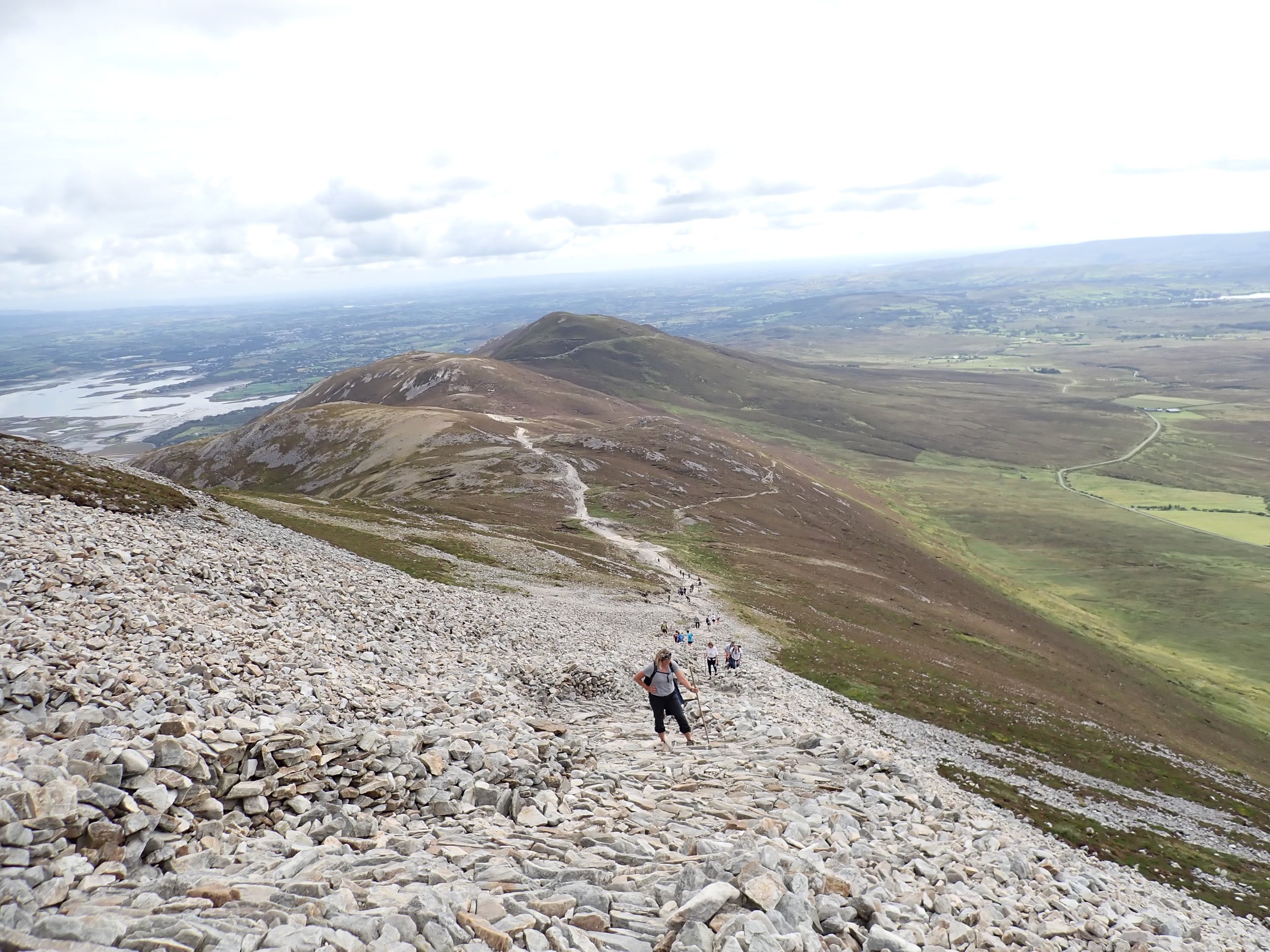
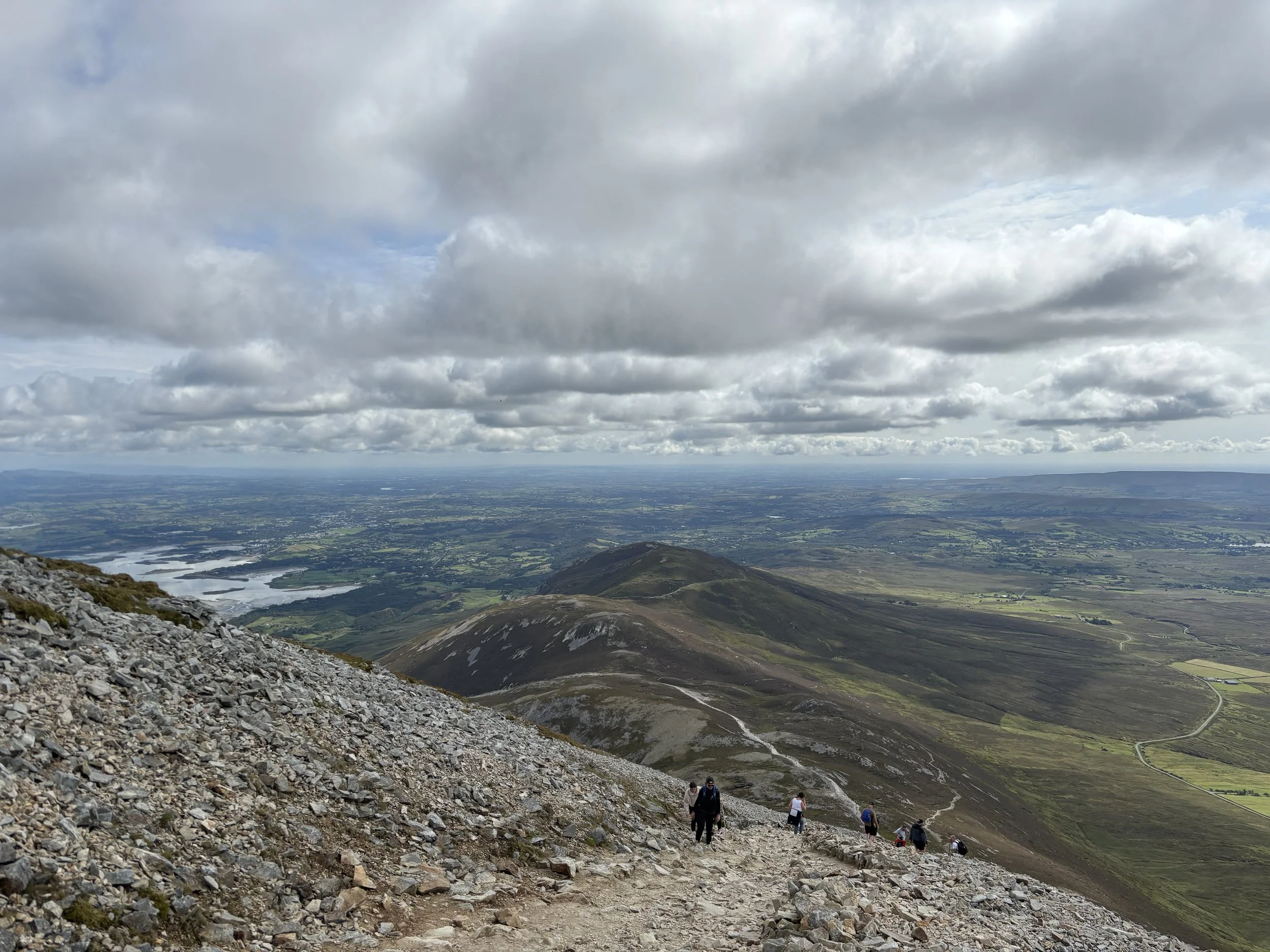
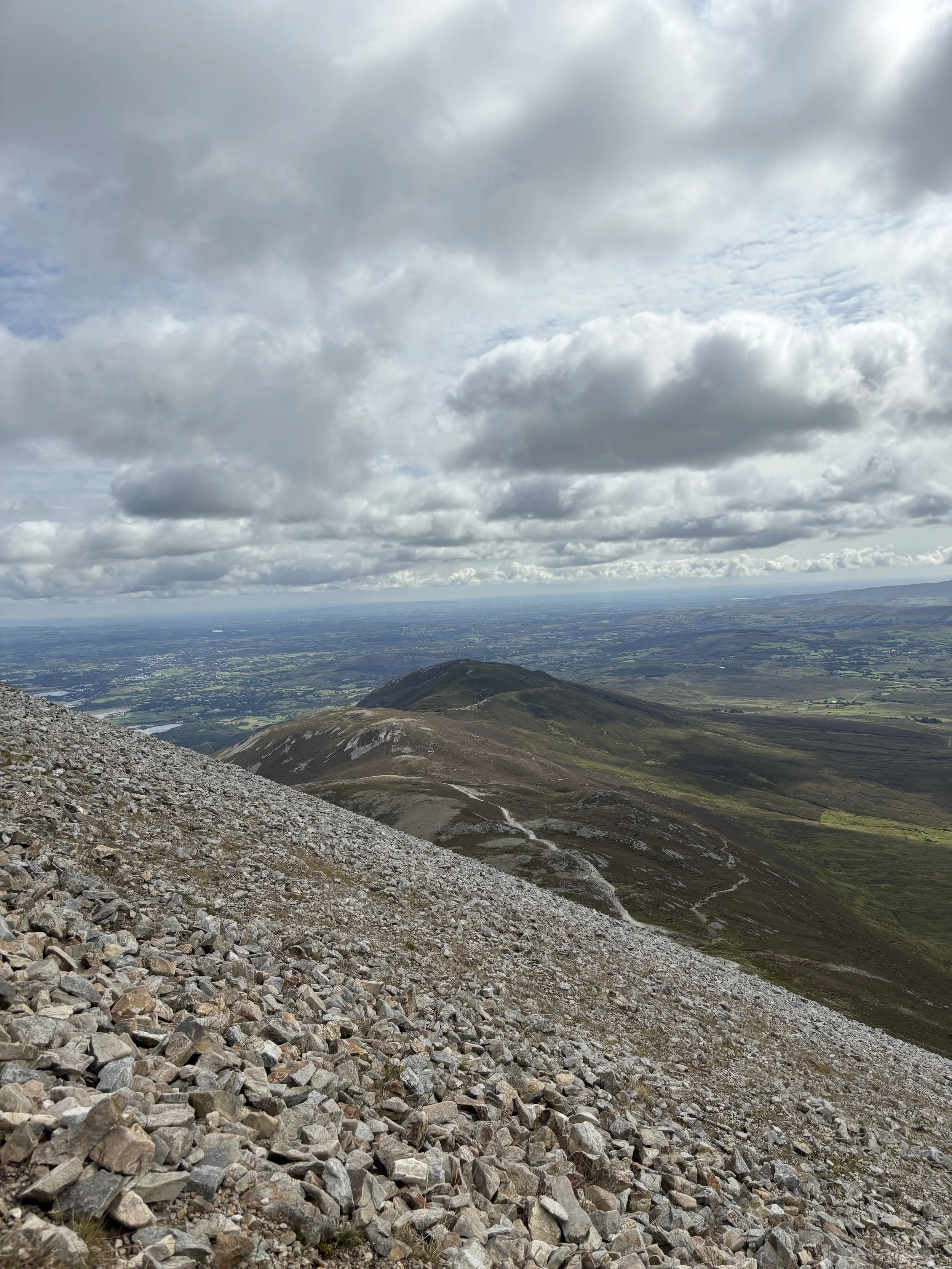
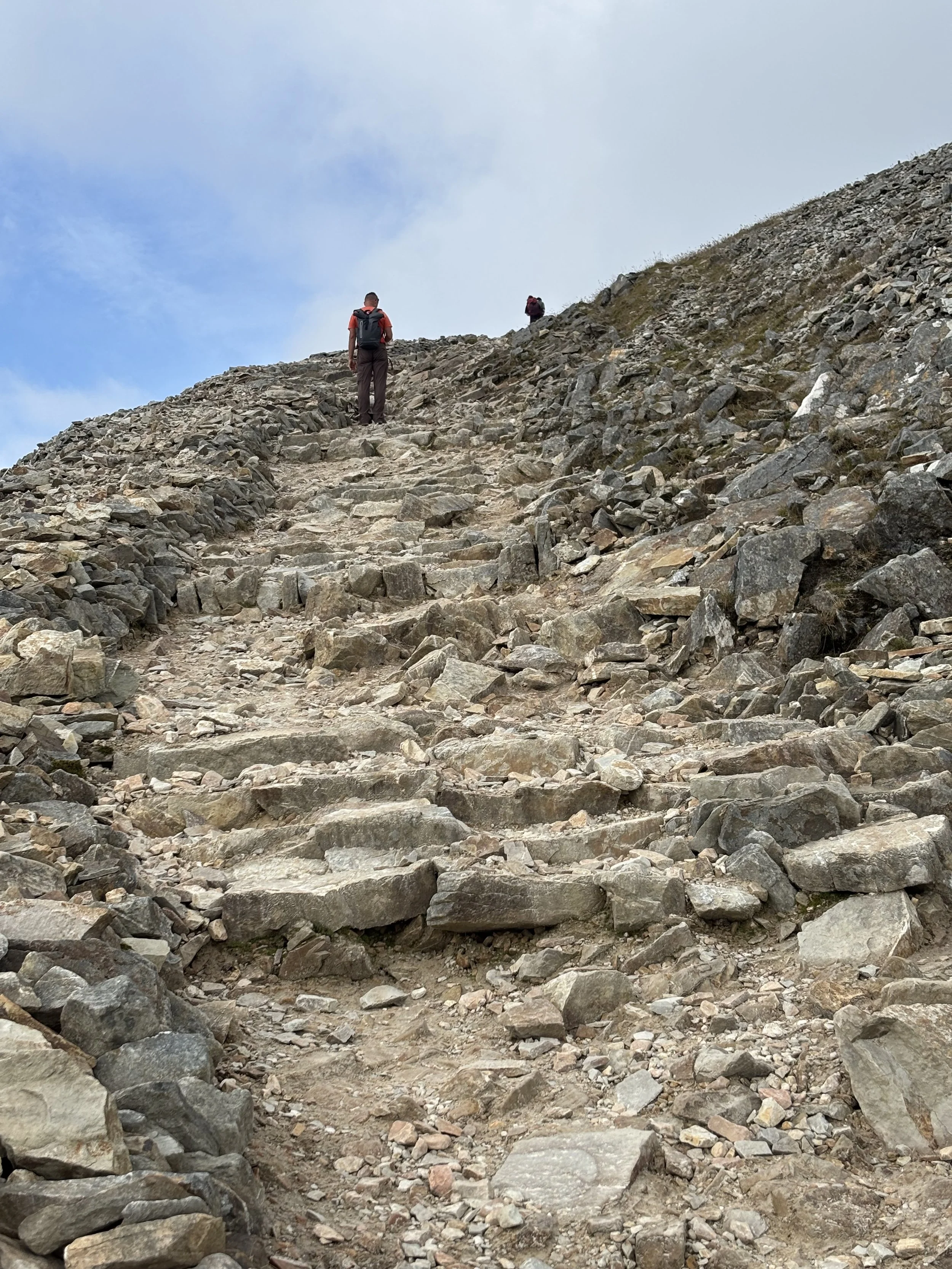
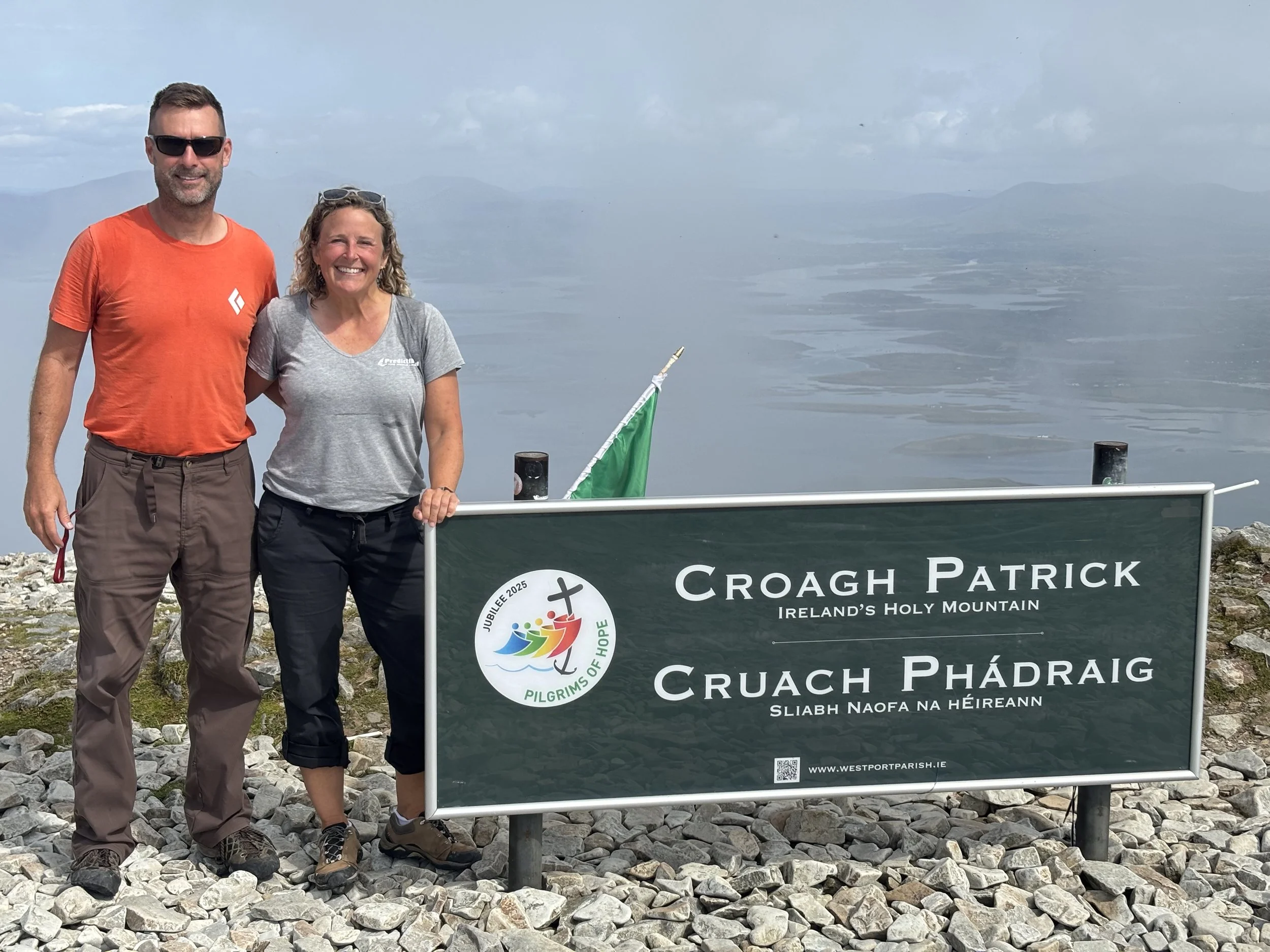
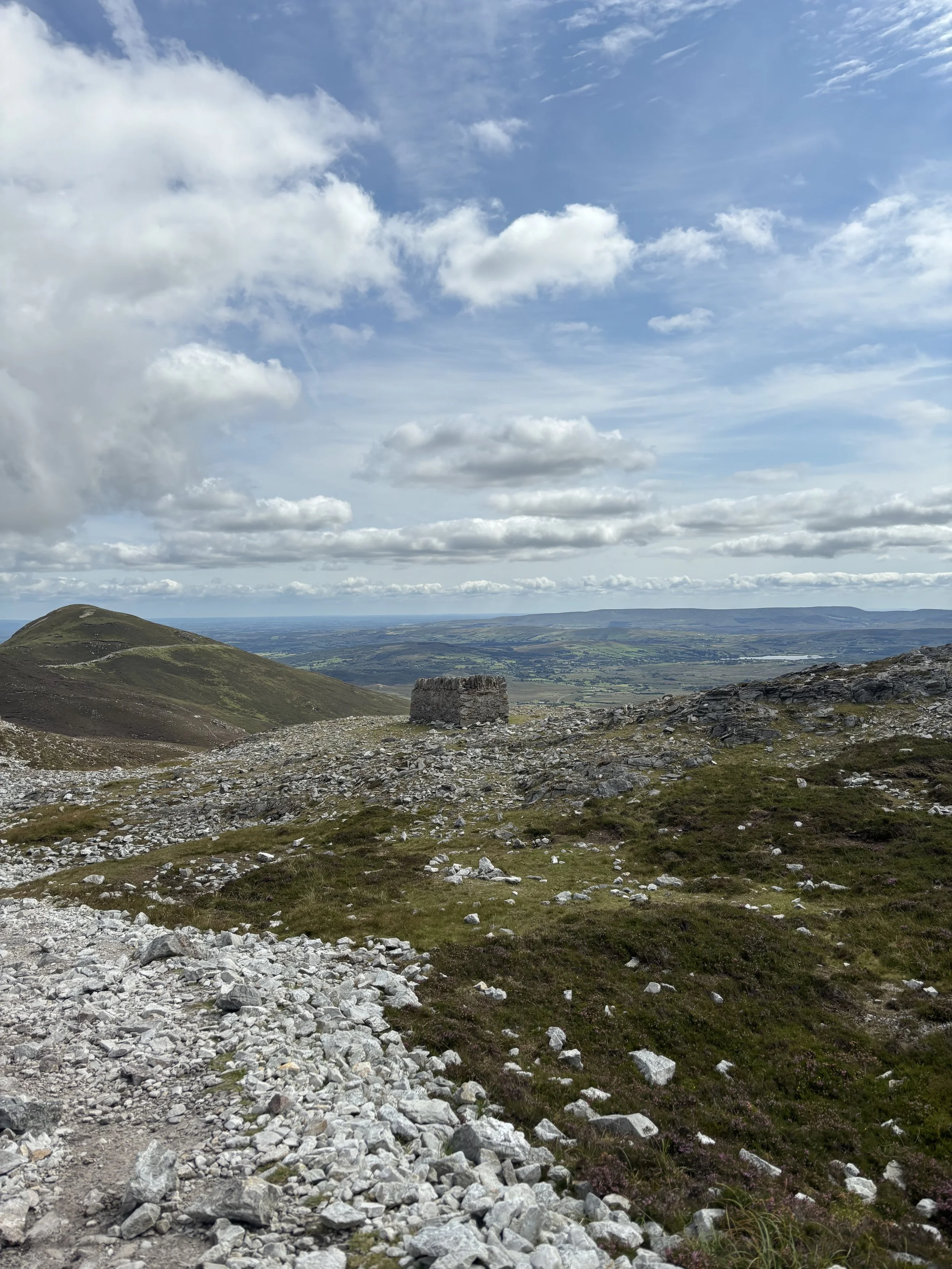
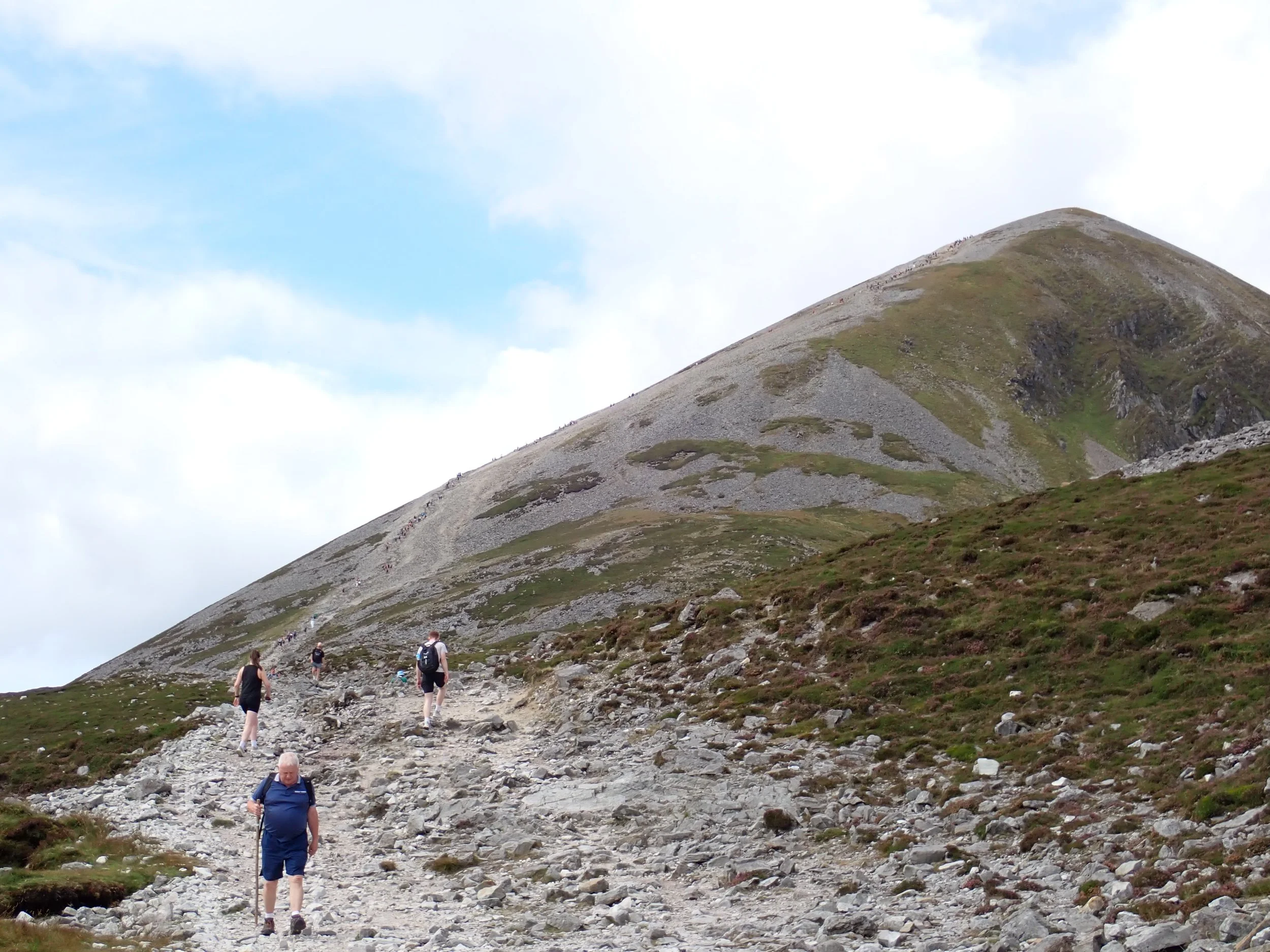
We started out early that morning, taking the dinghy to a beach about 2.5- 3 miles away from the base of the mountain. Once we got there, we began our ascent, pausing along the way to capture photos (and catch my breath). The bottom half was more like a scarred rocky roadbed. The top half was the steepest part of the climb. Up until several years ago, it was all loose shale. But in the last few years, rocks from the mountain have been harvested and made into a type of rocky steps, providing a more stable final ascent to the top. While we didn’t have perfectly clear views at the top, the clouds parted just enough for us to take a few good pictures. We even passed the Mayo Gaelic Football team descending Croagh Patrick with the trophy. They won the championship for the first time in 75 years, breaking what locals believed to be a curse!
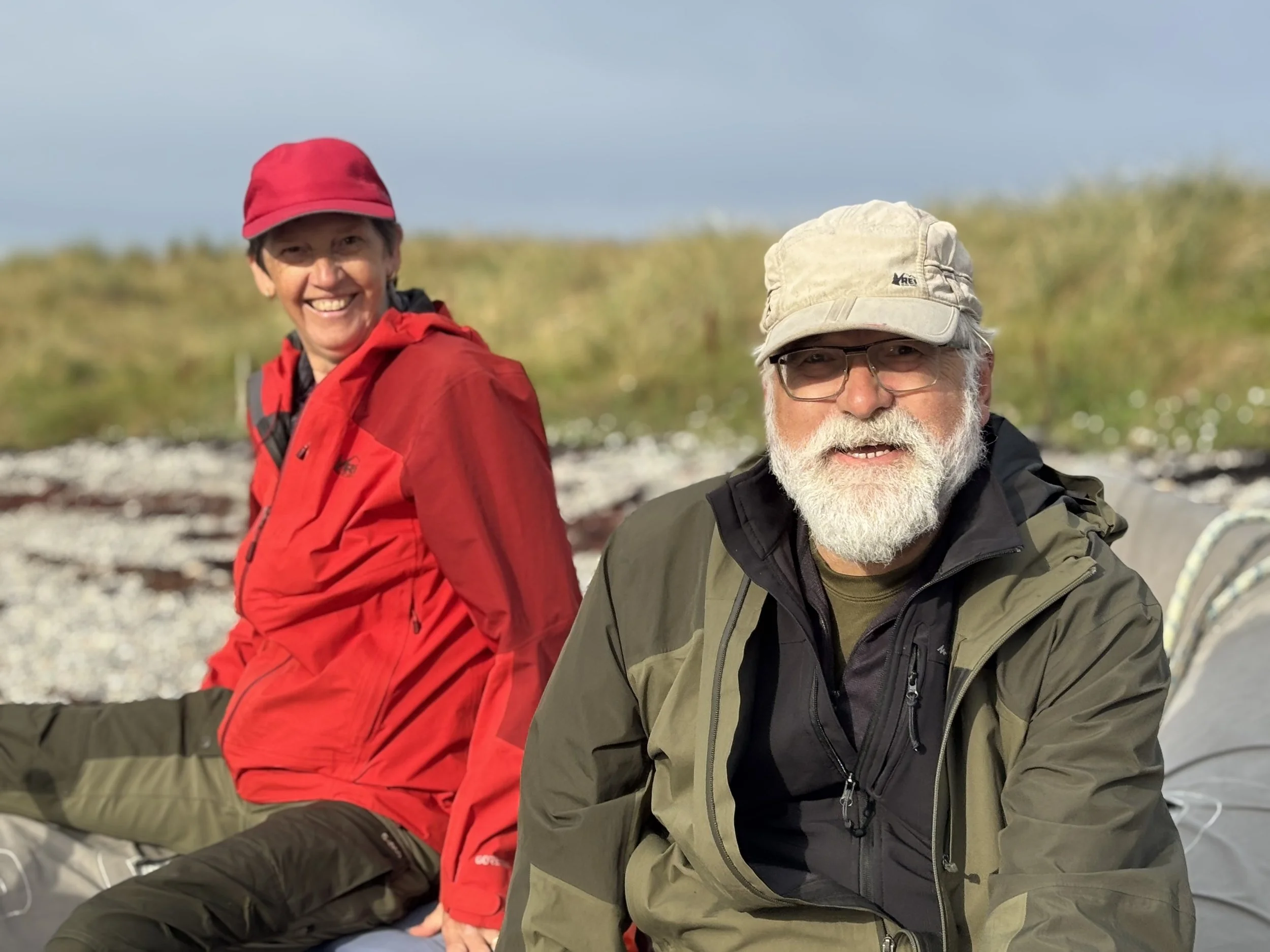
Our friends Helen and Brian from SV Helacious on the beach getting ready for our ascent of Croagh Patrick
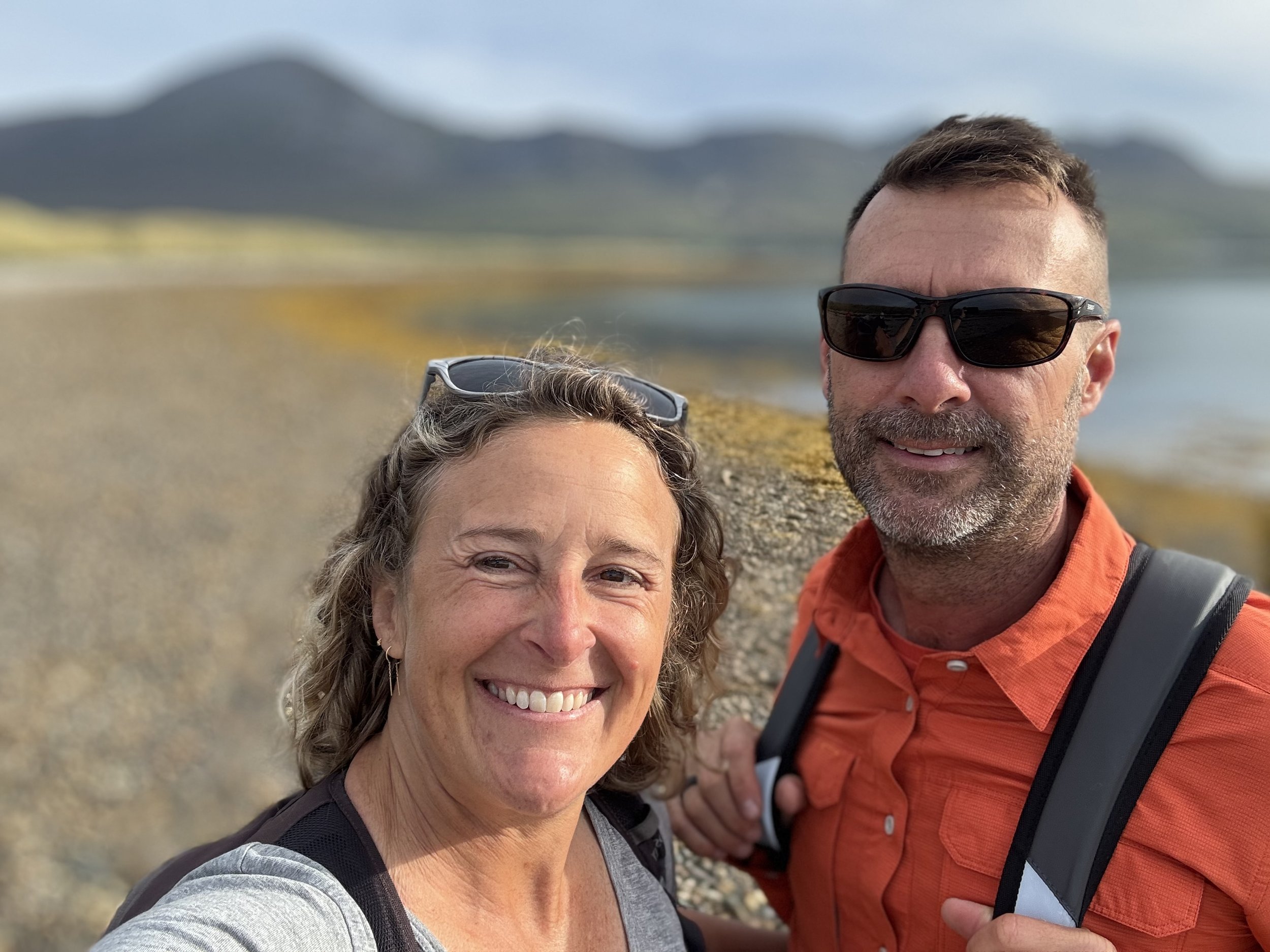
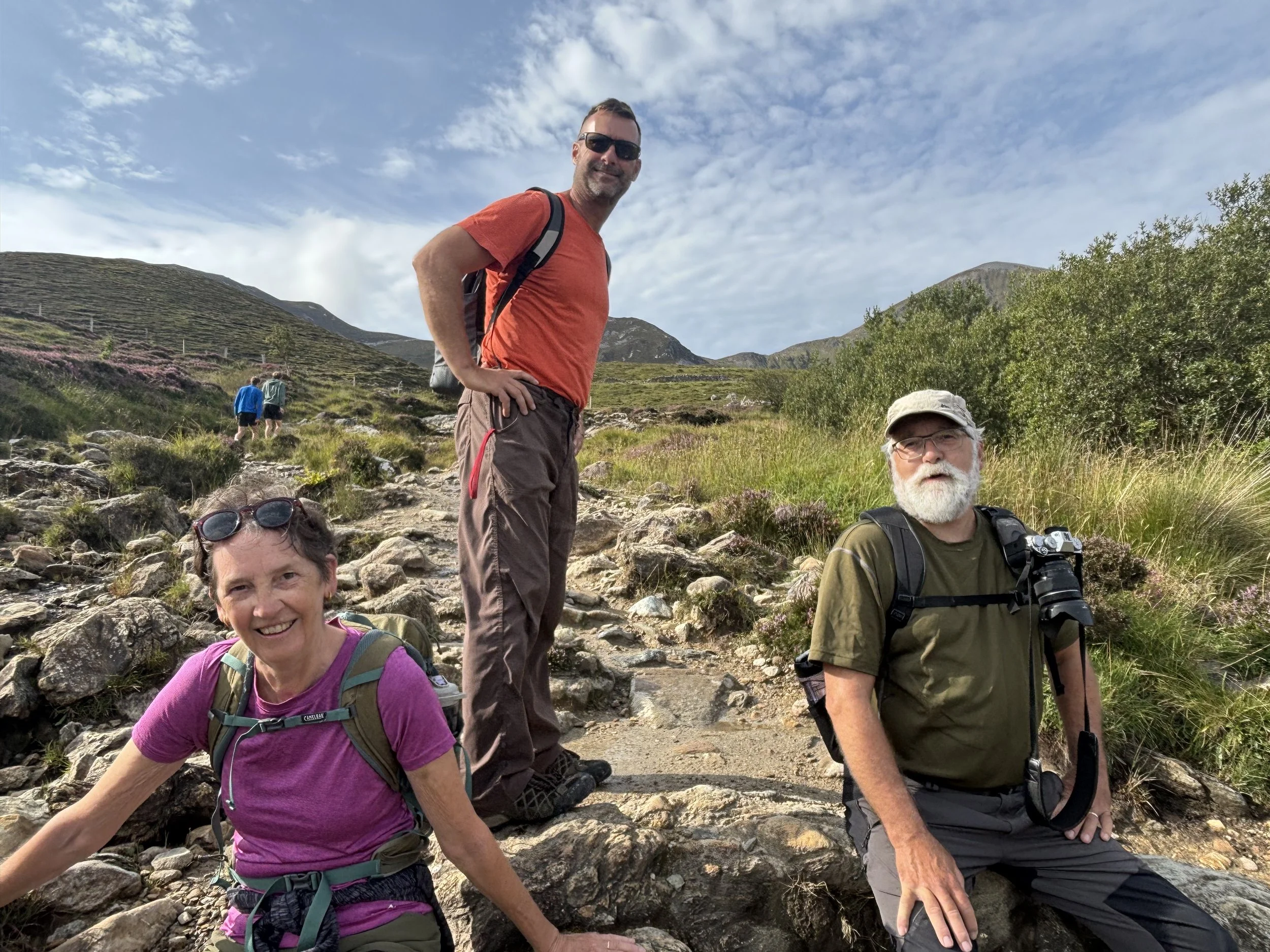
Ready to take on Croagh Patrick!
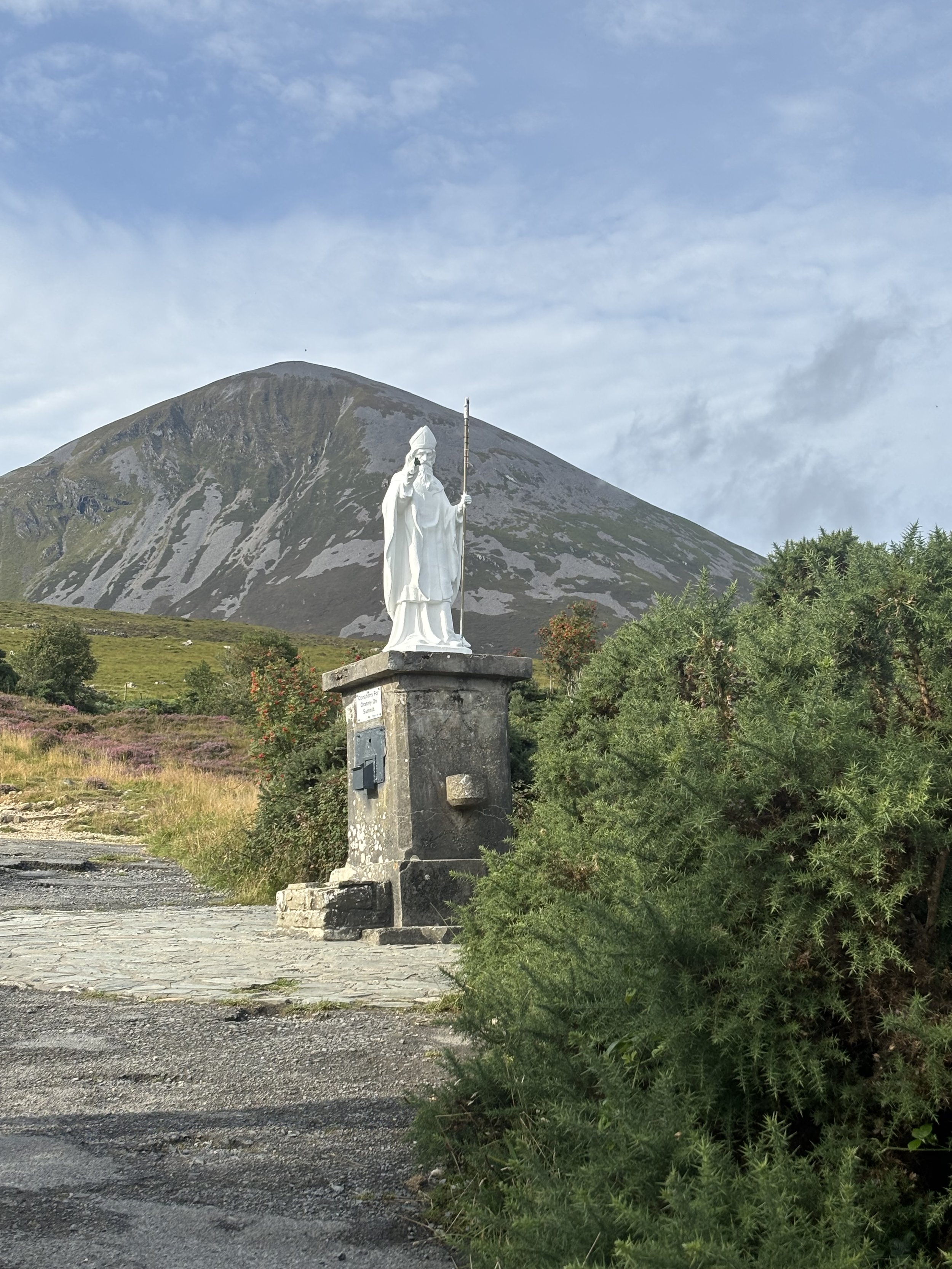
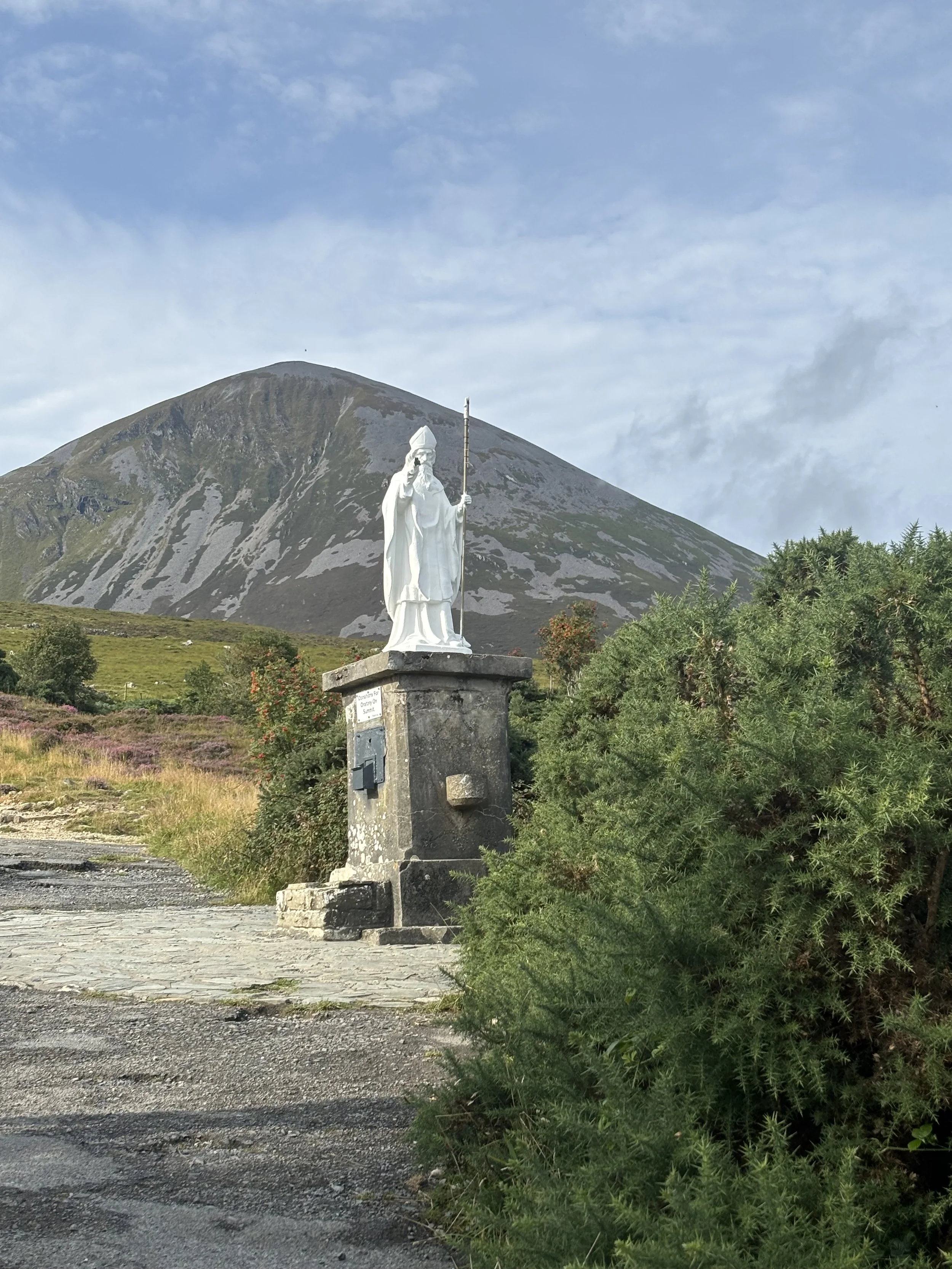
St. Patrick at the base where pilgrims begin their trek up.
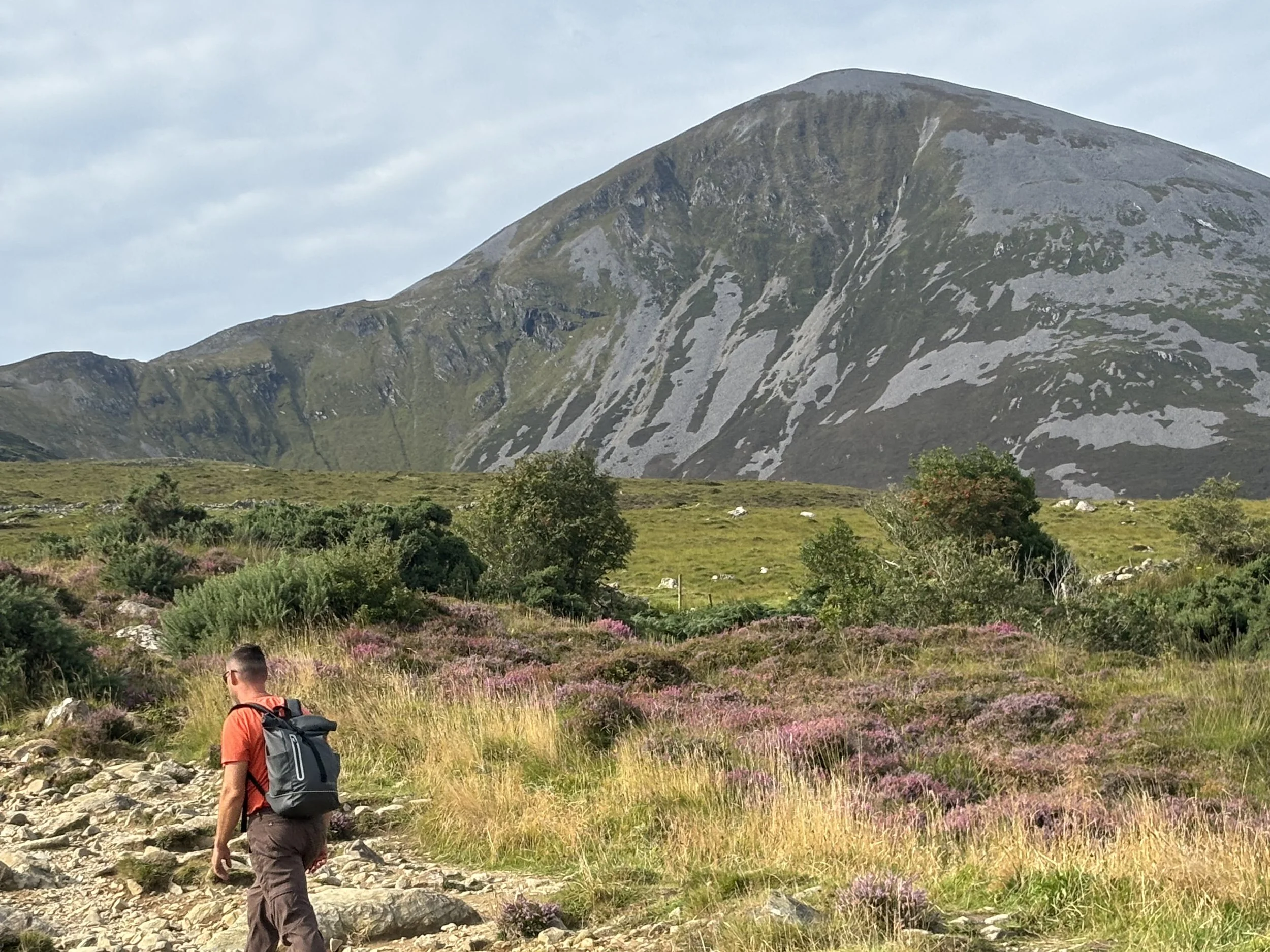
The base of Croagh Patrick
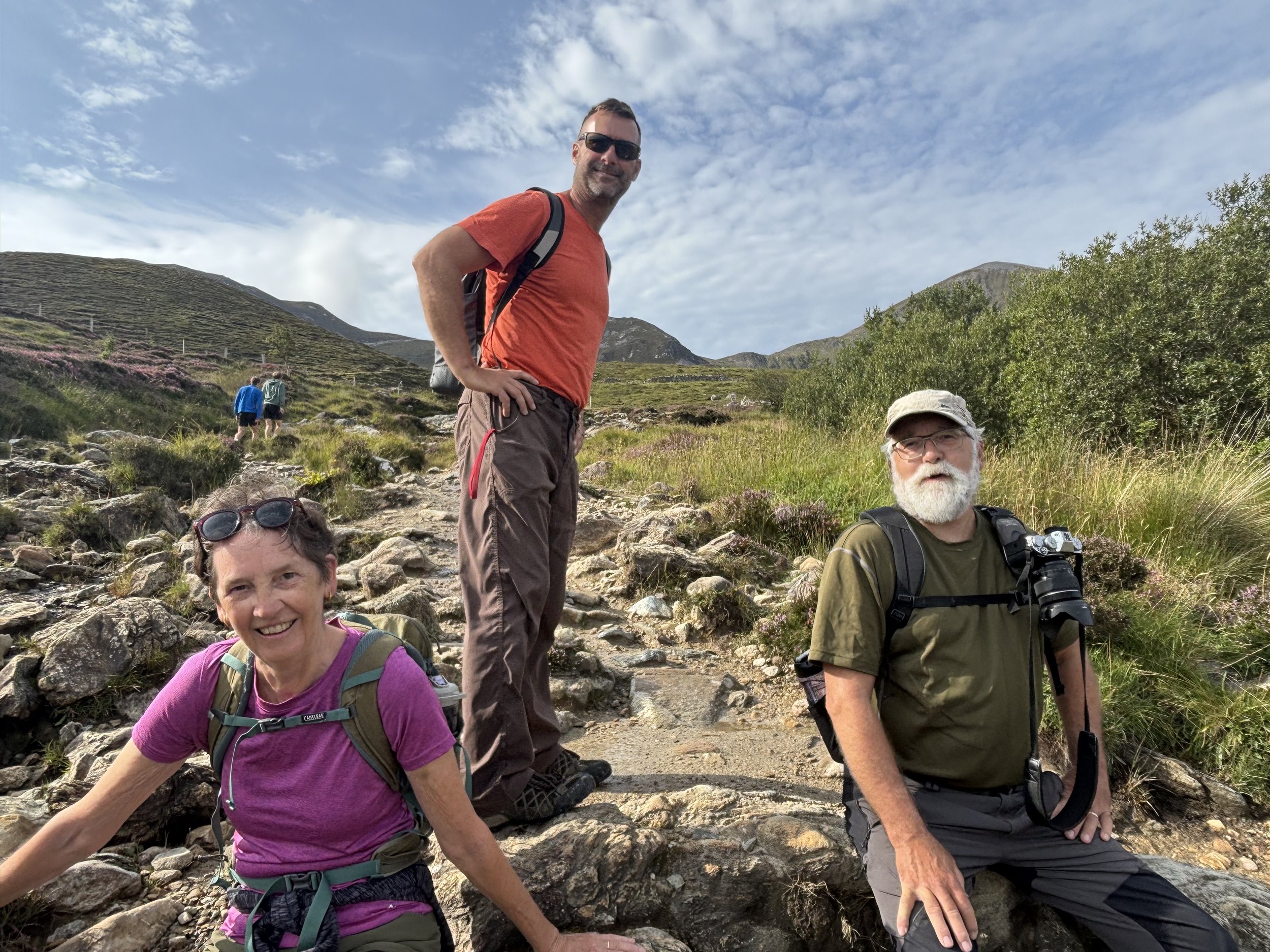
Water break!
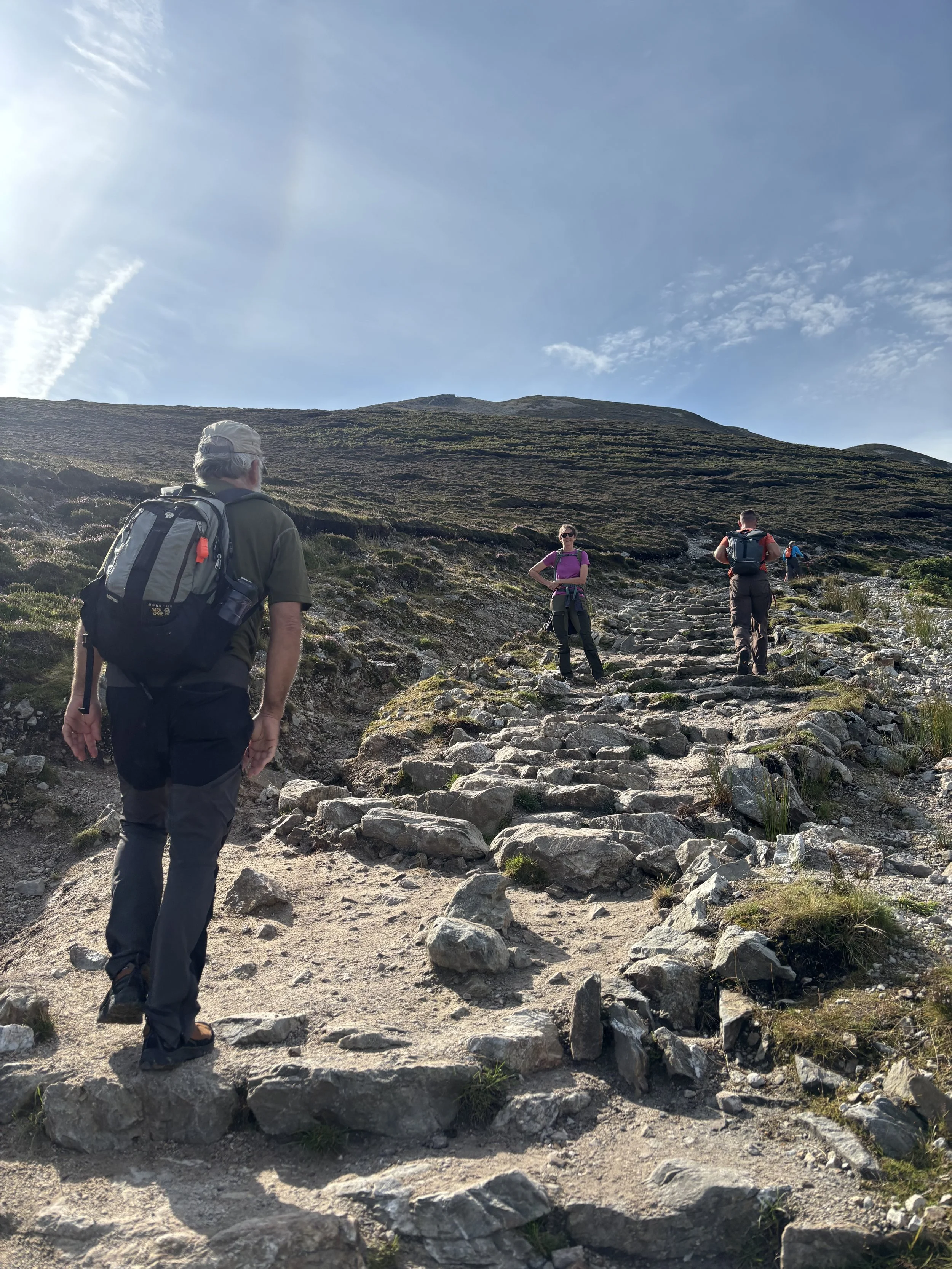
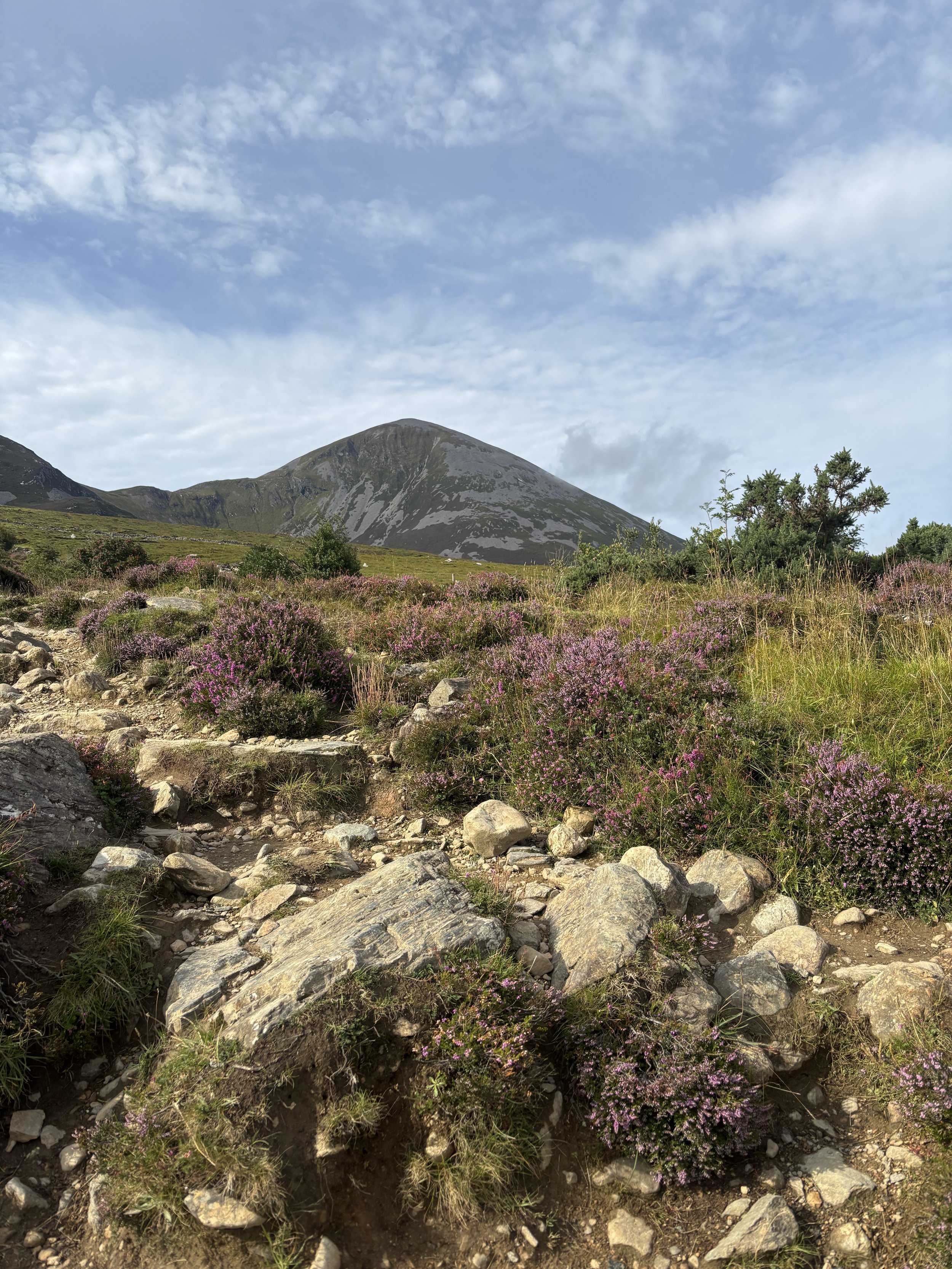
Rugged terrain but well-maintained trail
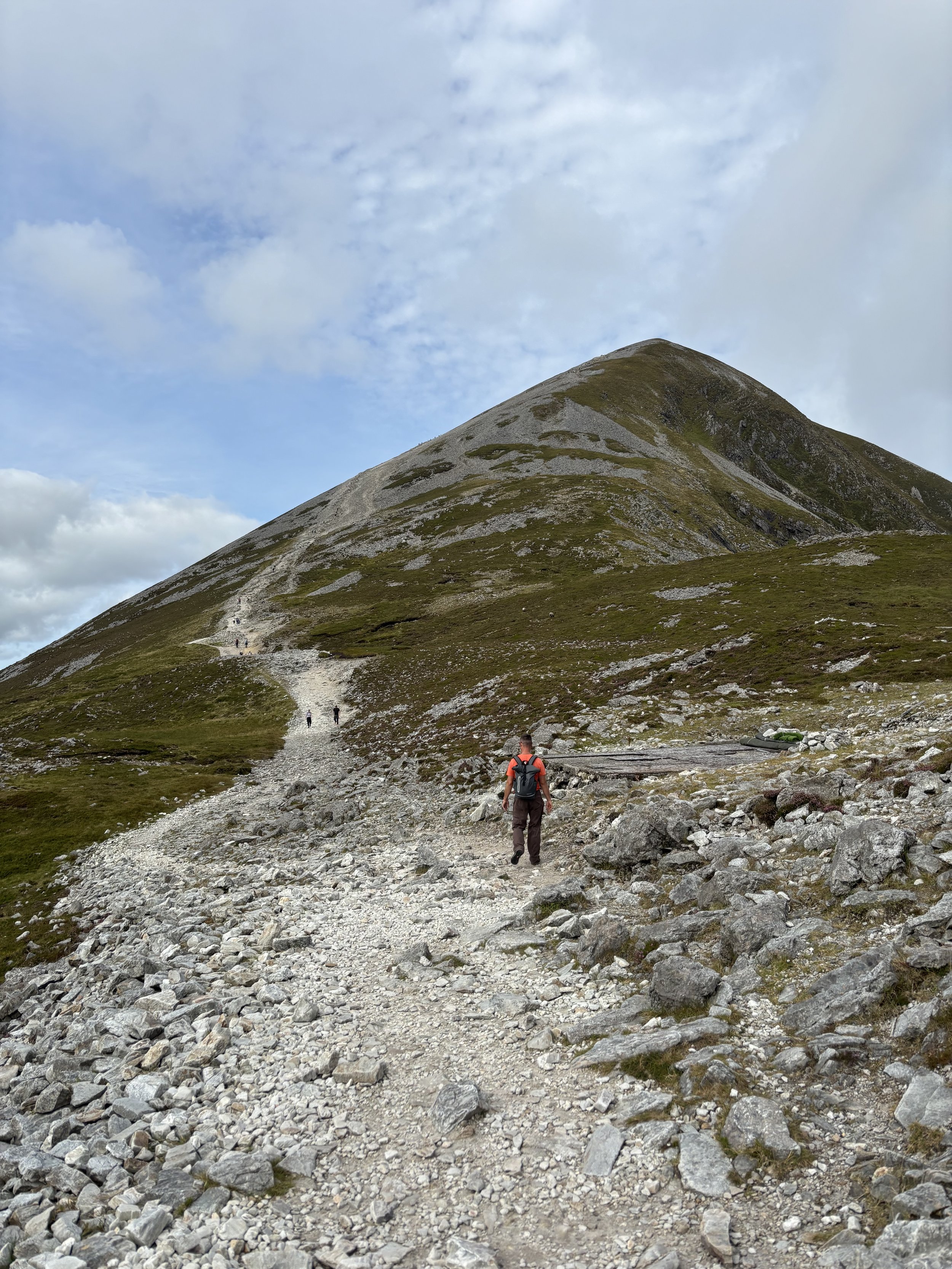
Nearing the push to the top
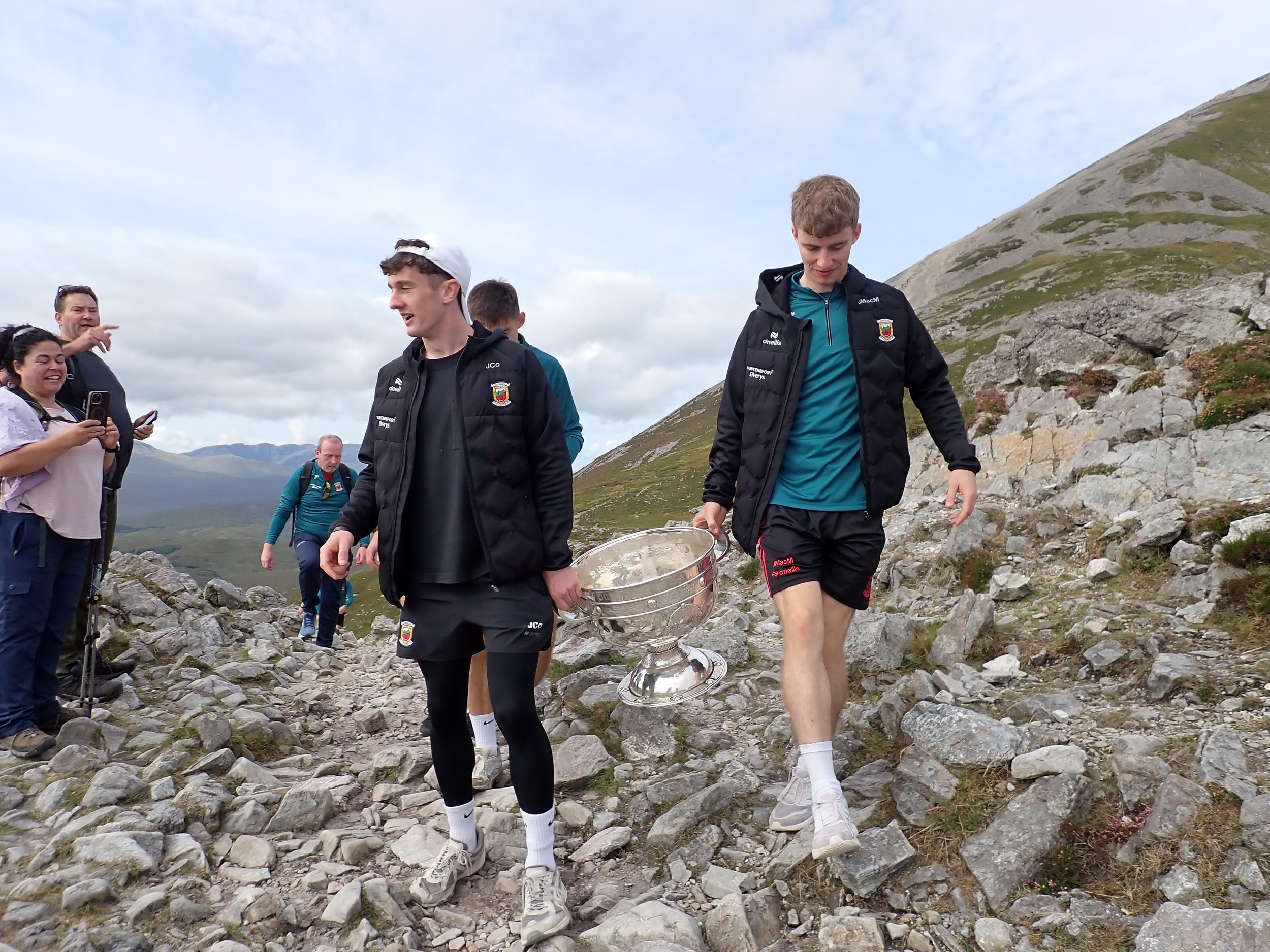
Mayo Gaelic Football Team descending Croagh Patrick with trophy
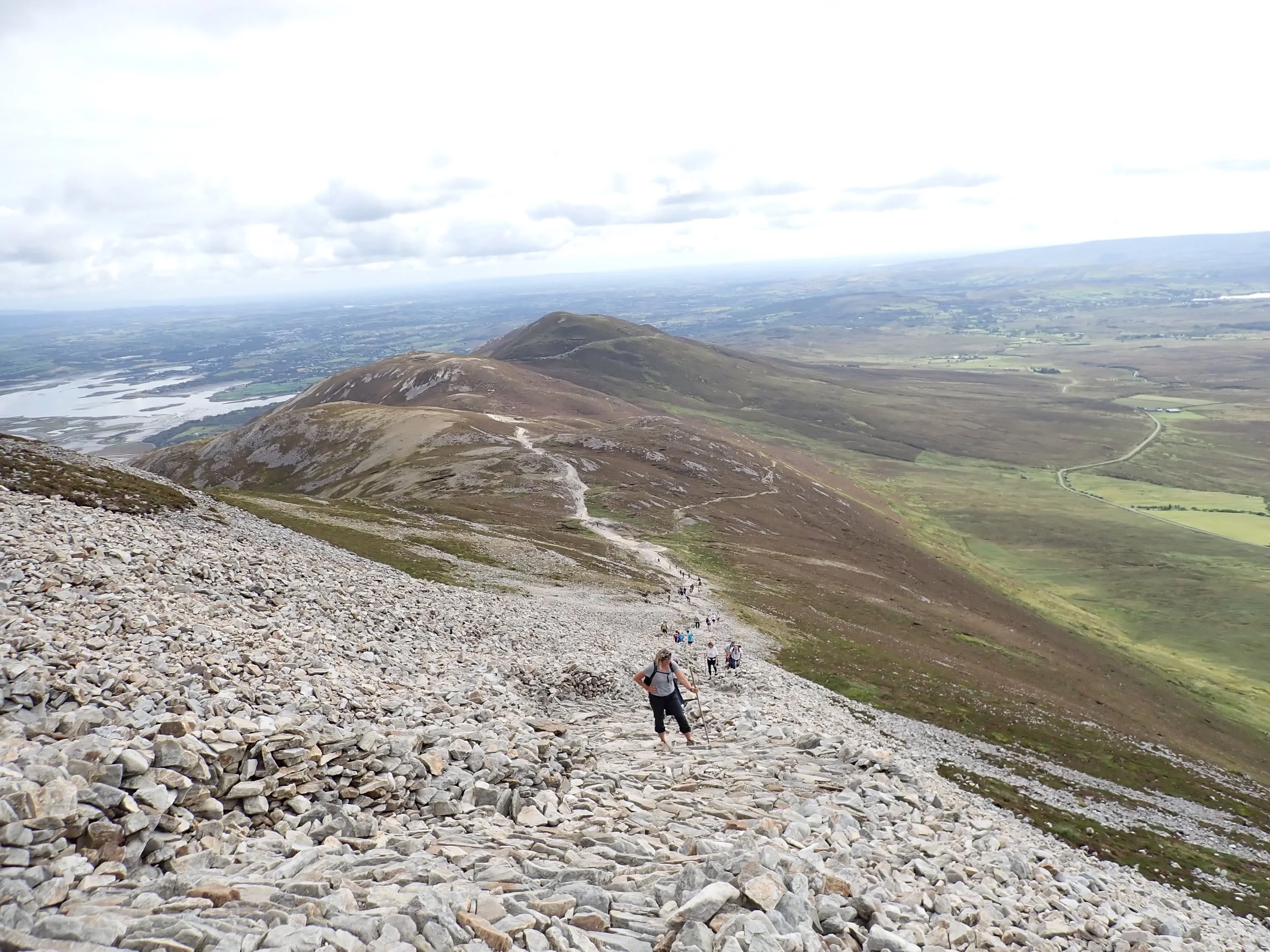
Beginning the final ascent
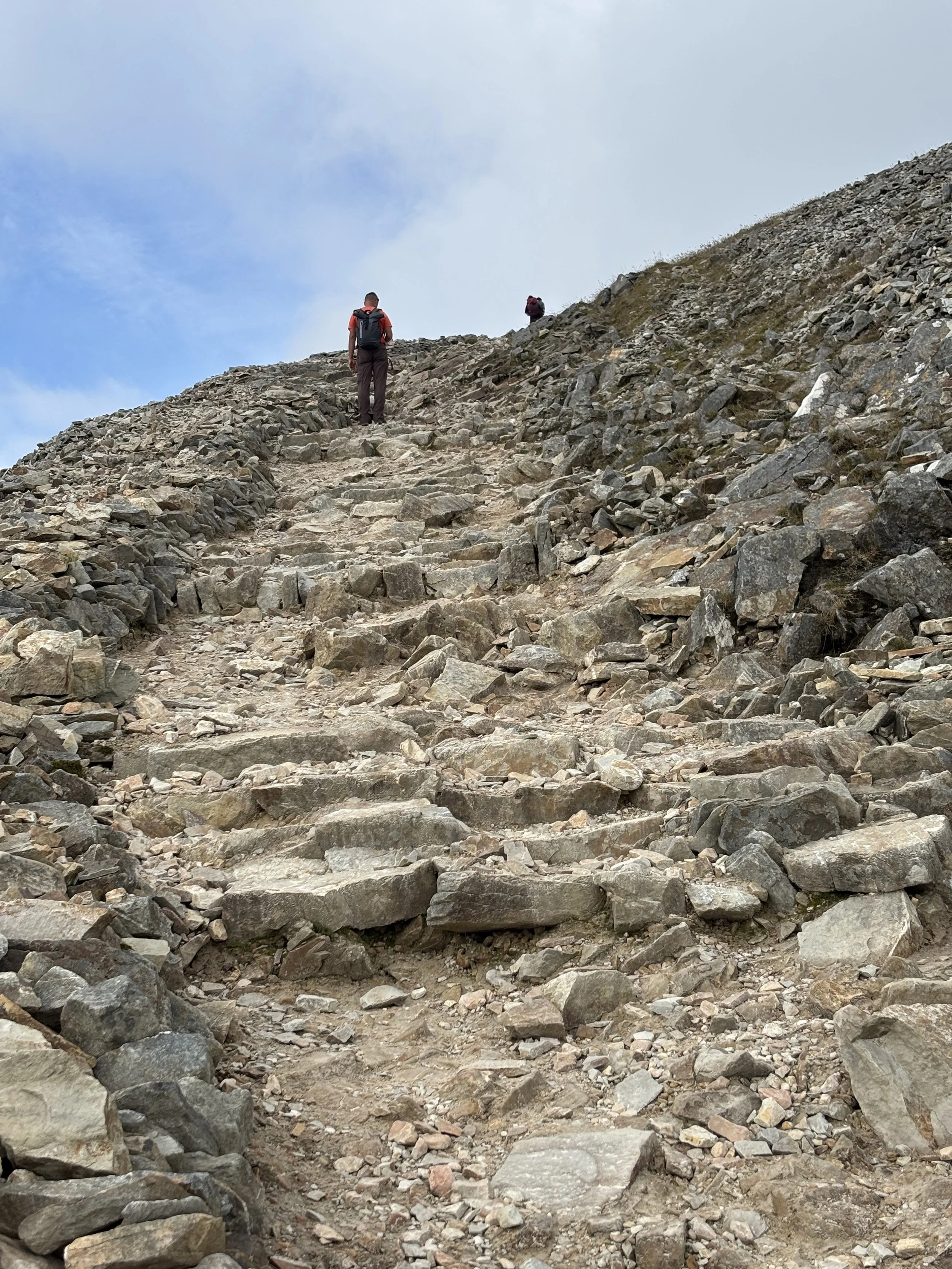
Almost there!
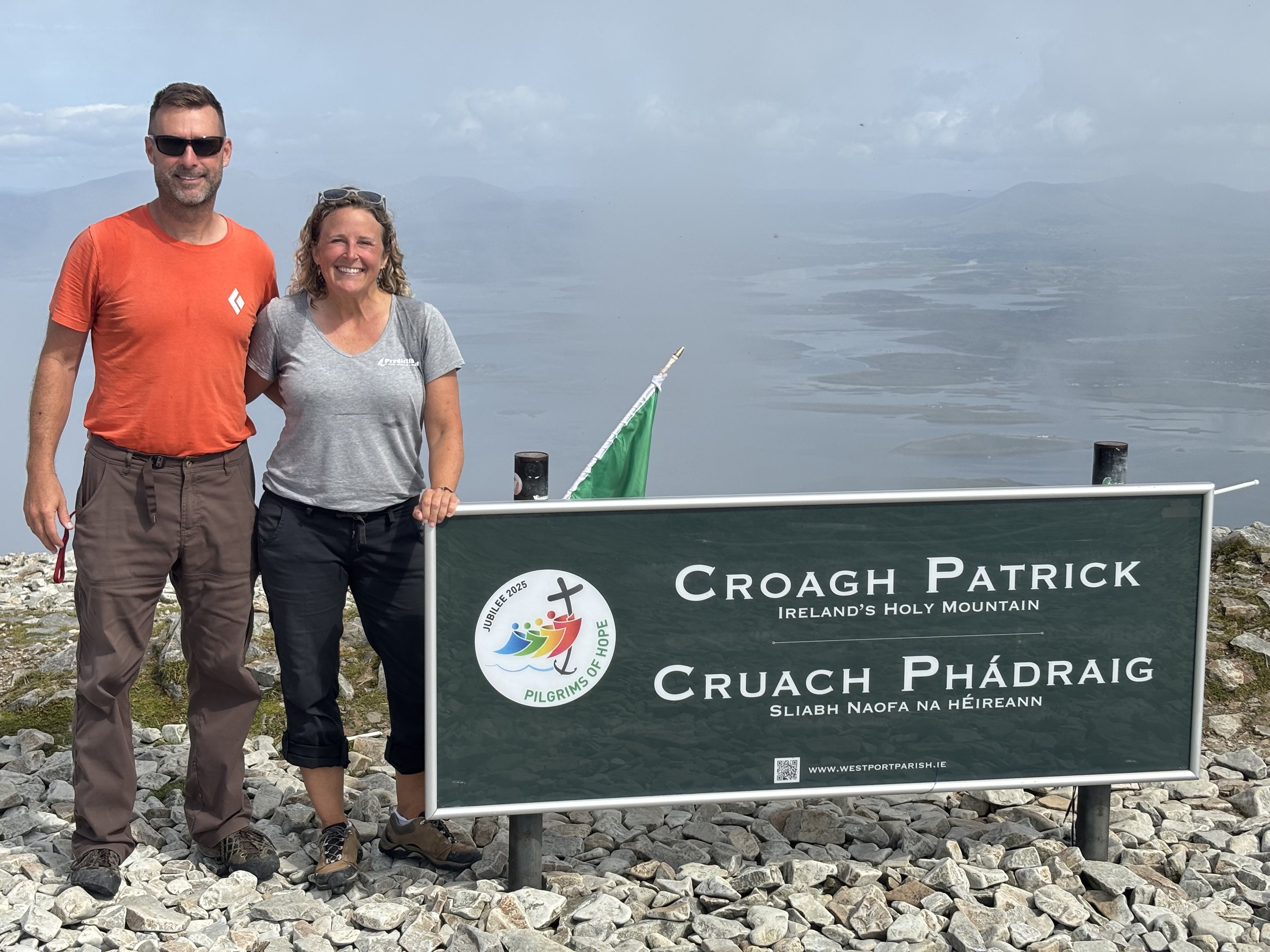
At the top! We made it!
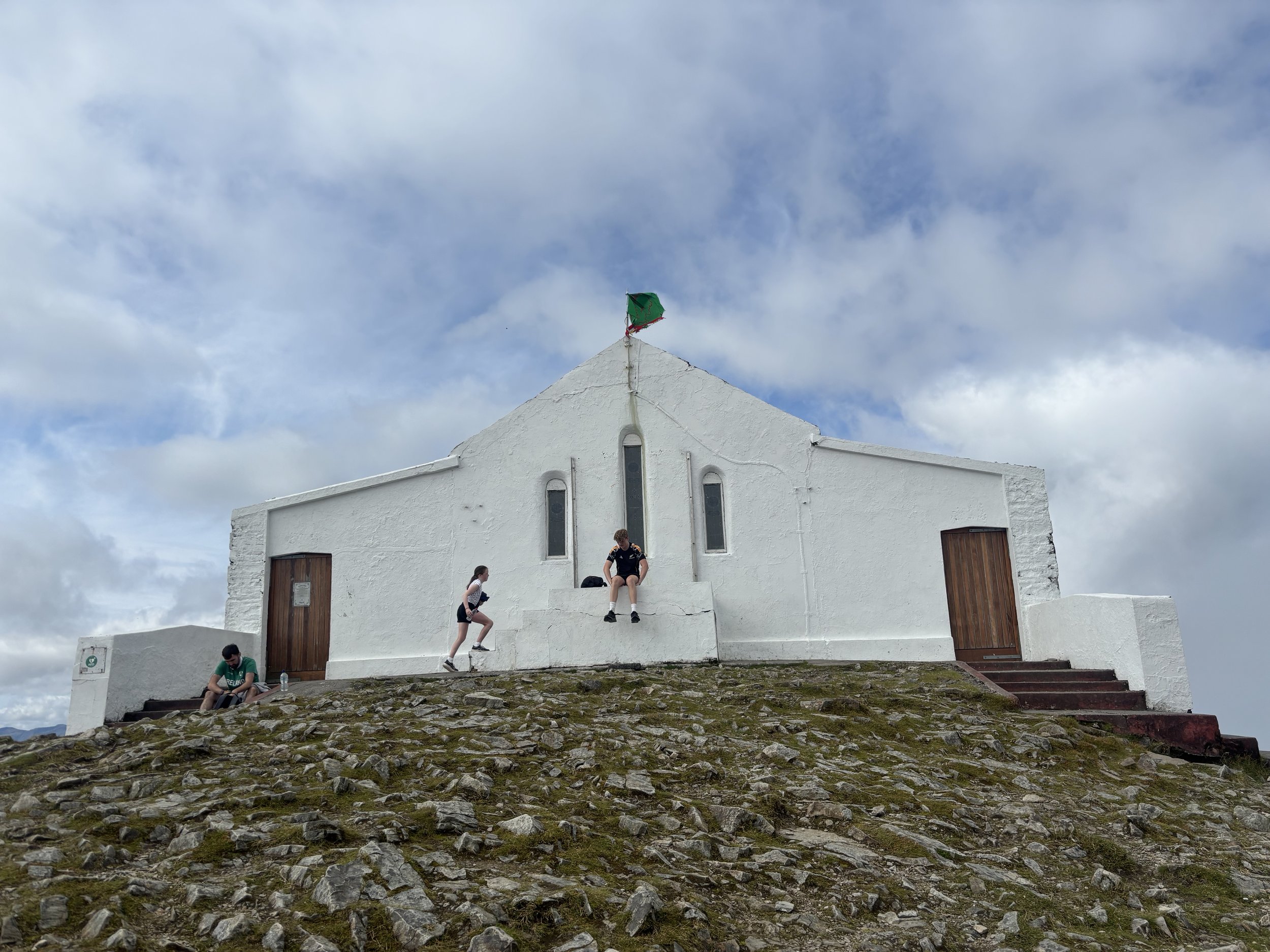
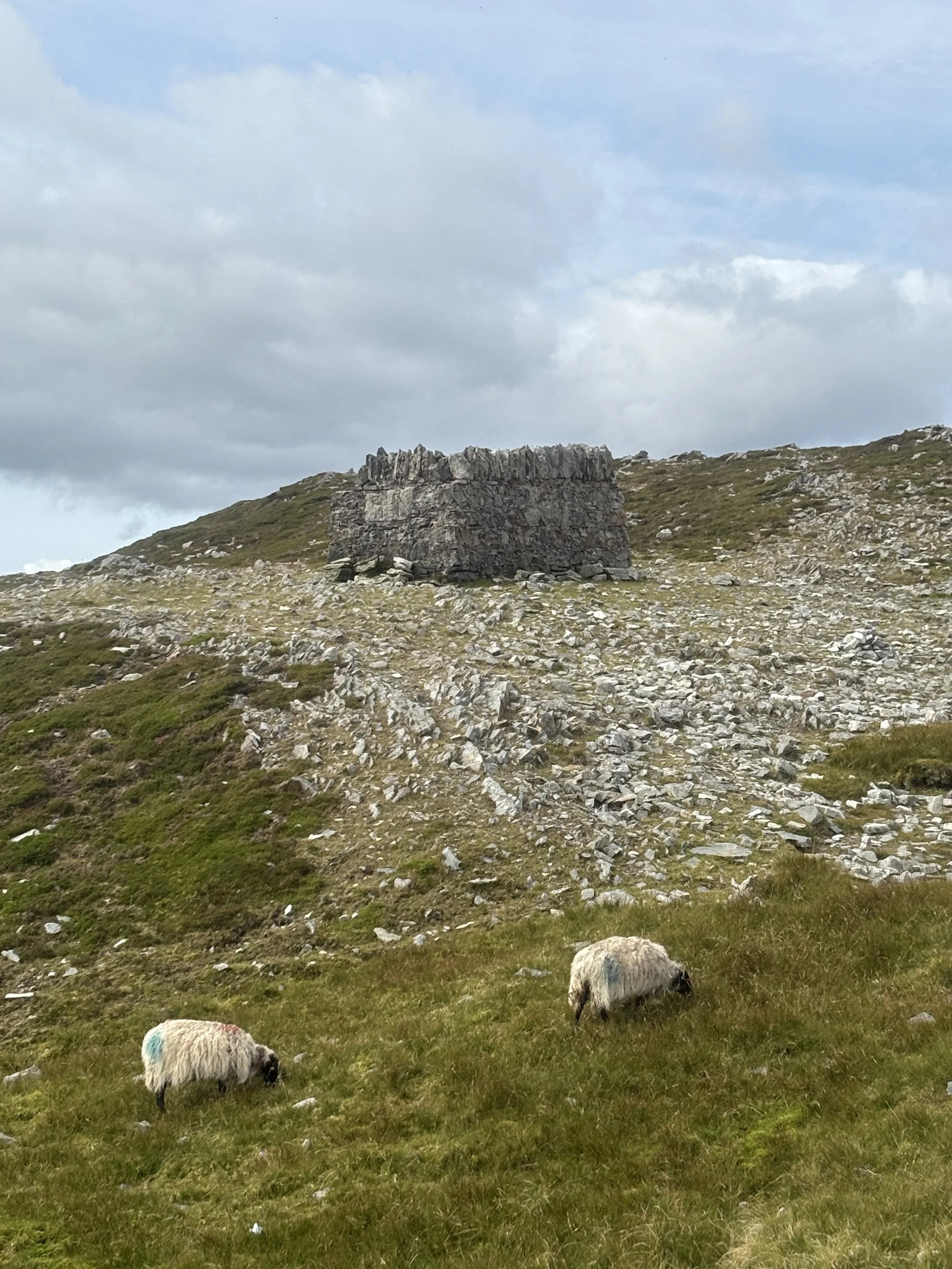
Chapel at the top
The hike was challenging on my 53-year-old, live-on-a-sailboat body. We walked 12.5 miles that day—between the walk to and from the dinghy, and the hike itself—but every step was worth it.
I loved hiking up this ancient mountain, where St. Patrick had once fasted and prayed more than 1,500 years ago. Exploring Ireland, with all its connections to early Christianity, and hiking up Croagh Patrick, I feel more connected to my own ancient faith and to the generations of Christians who worshiped, prayed, and walked these lands long before me.
With the weather improving and our ascent of Croagh Patrick completed, it was time to leave Clew Bay and move further north. It is always hard to leave a place you love, but we were excited to see what the rest of northwestern Ireland had in store for us.
Living untethered, but held fast.
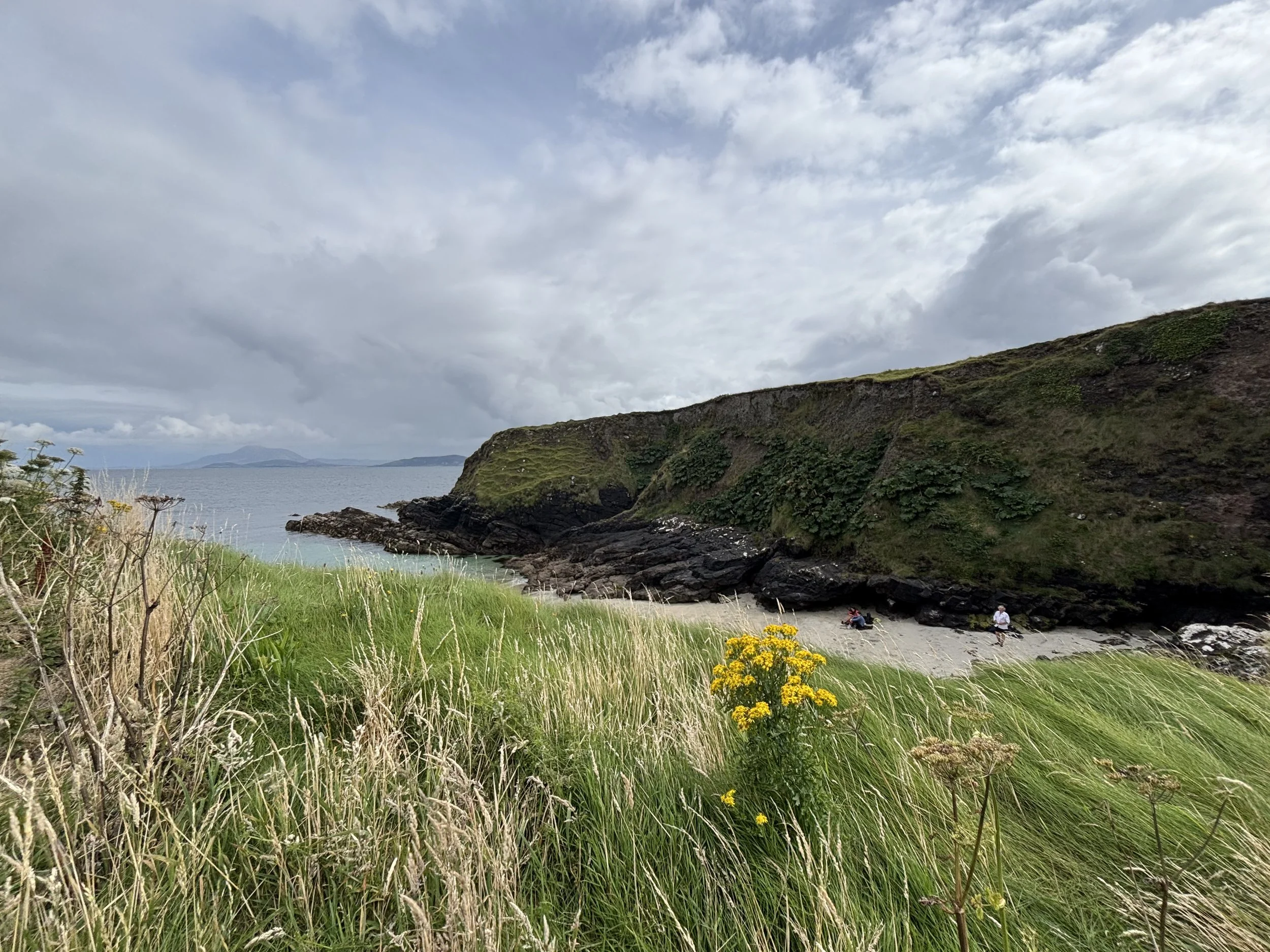
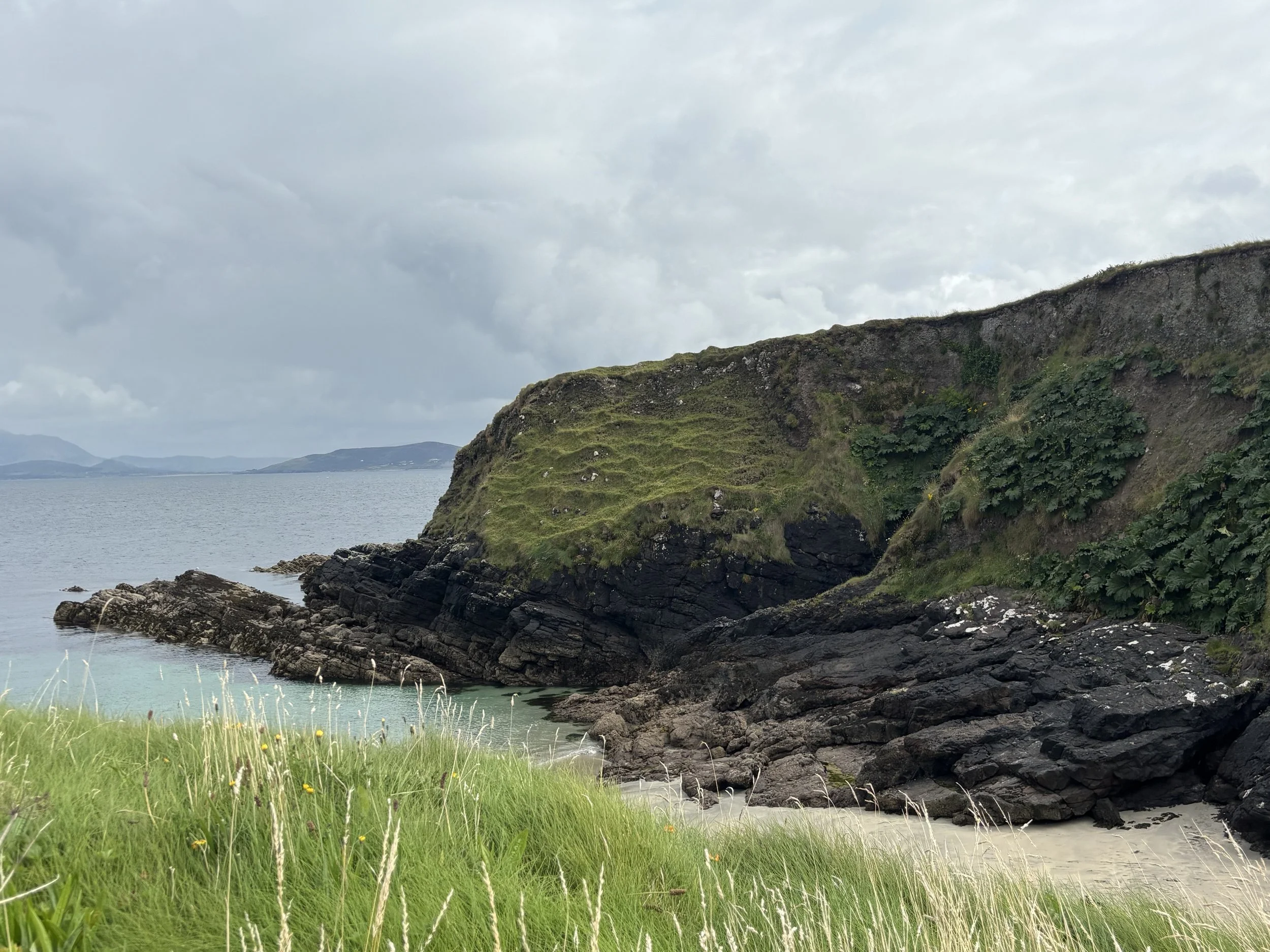
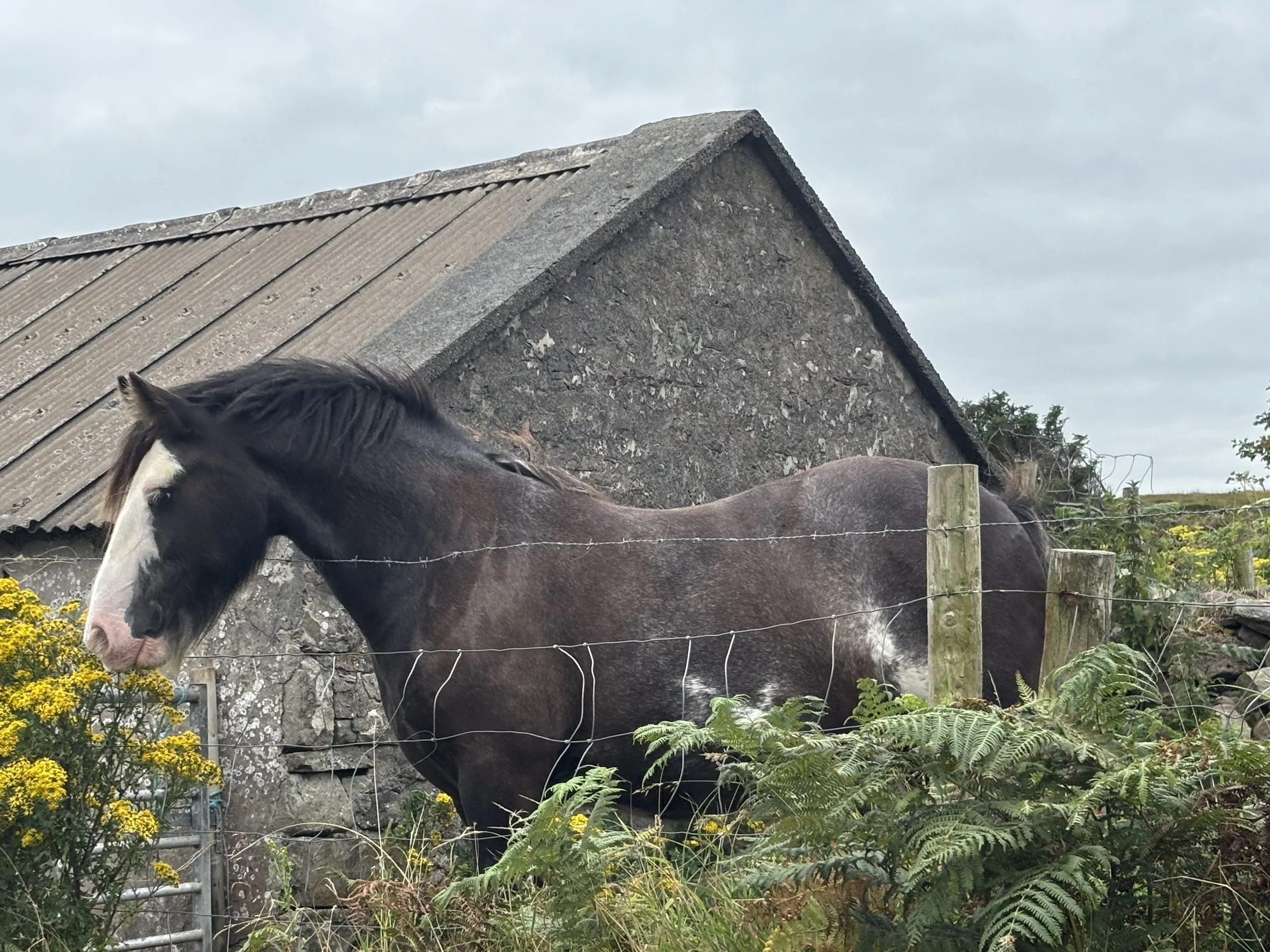
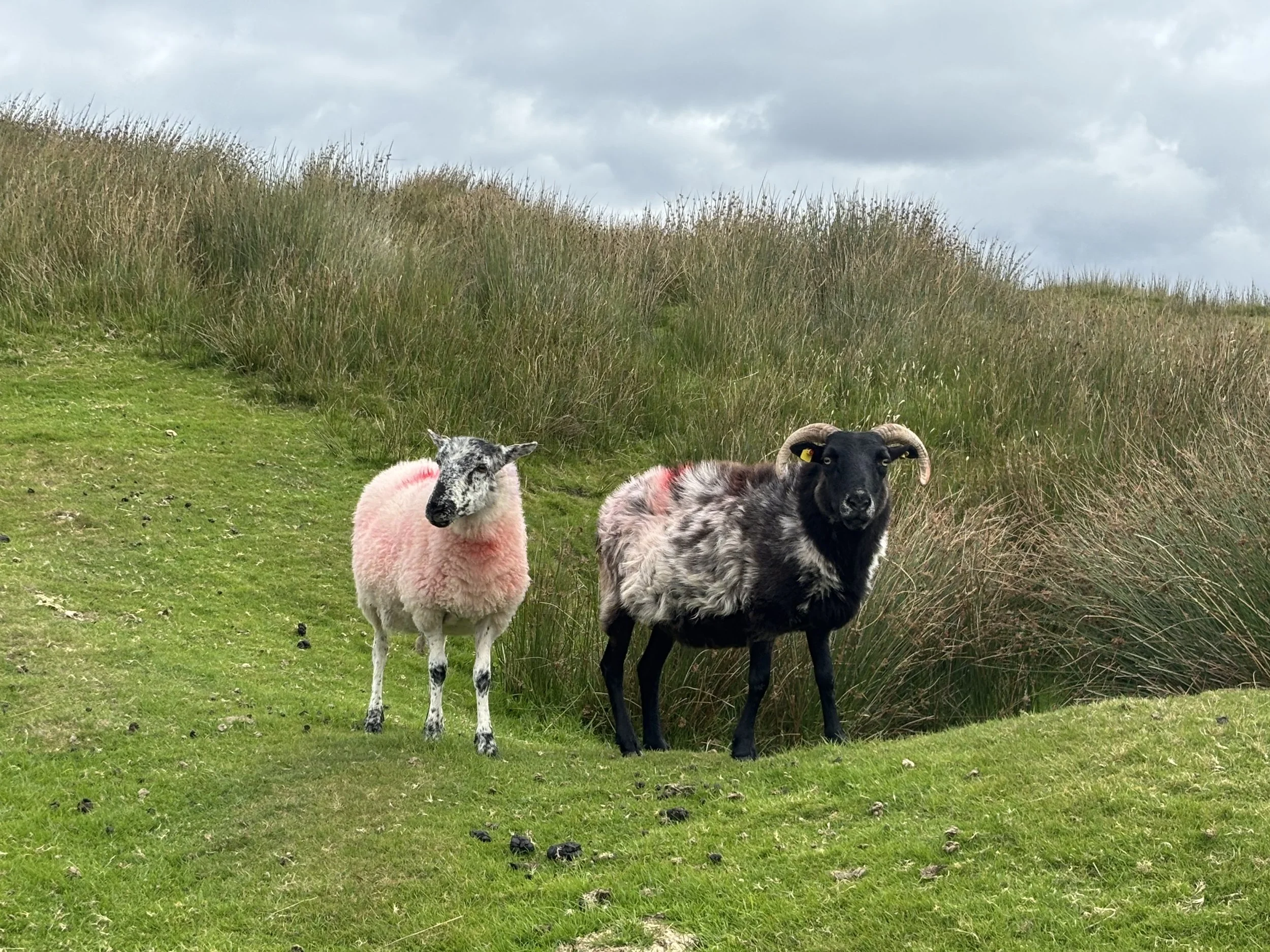
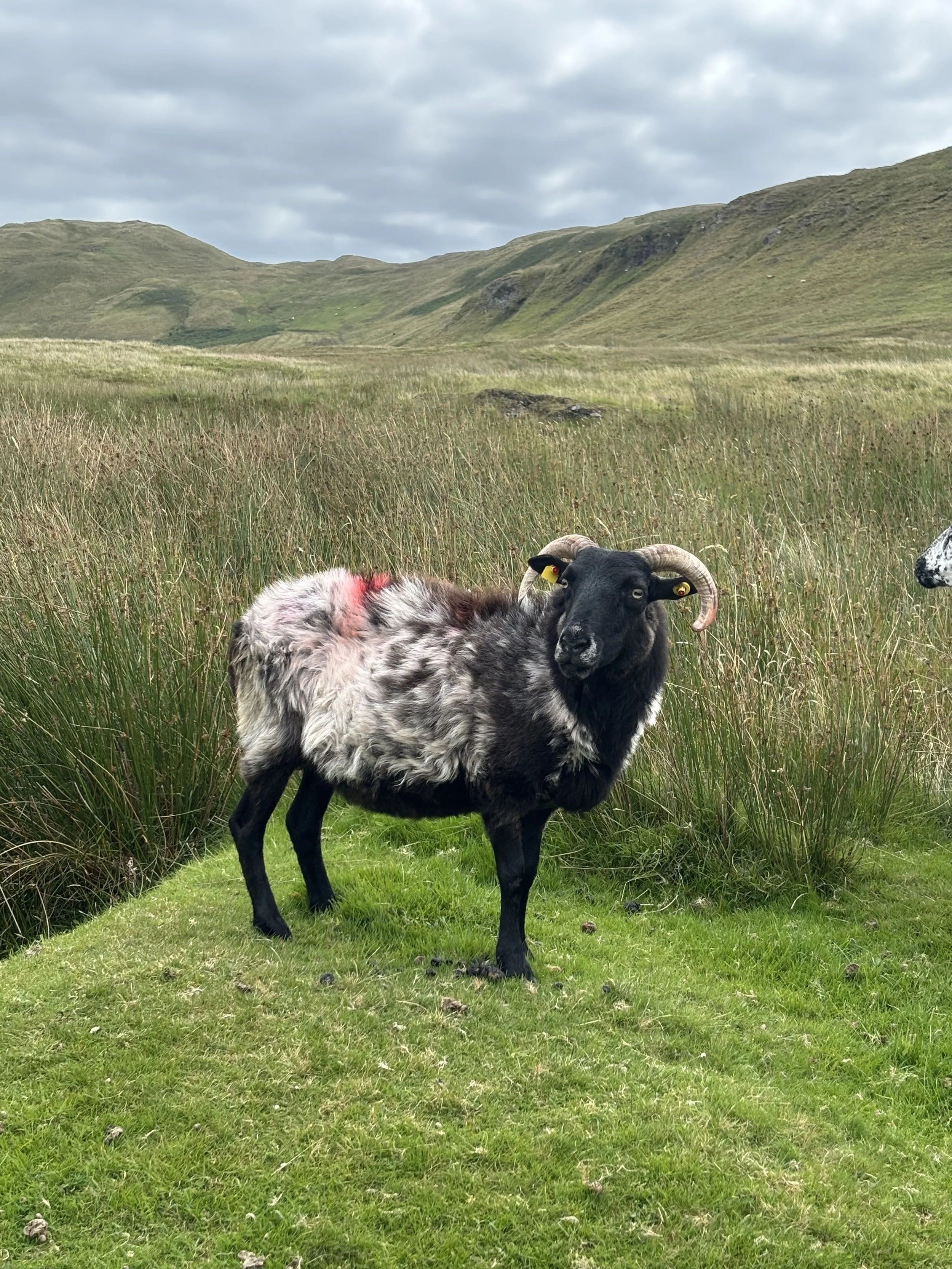
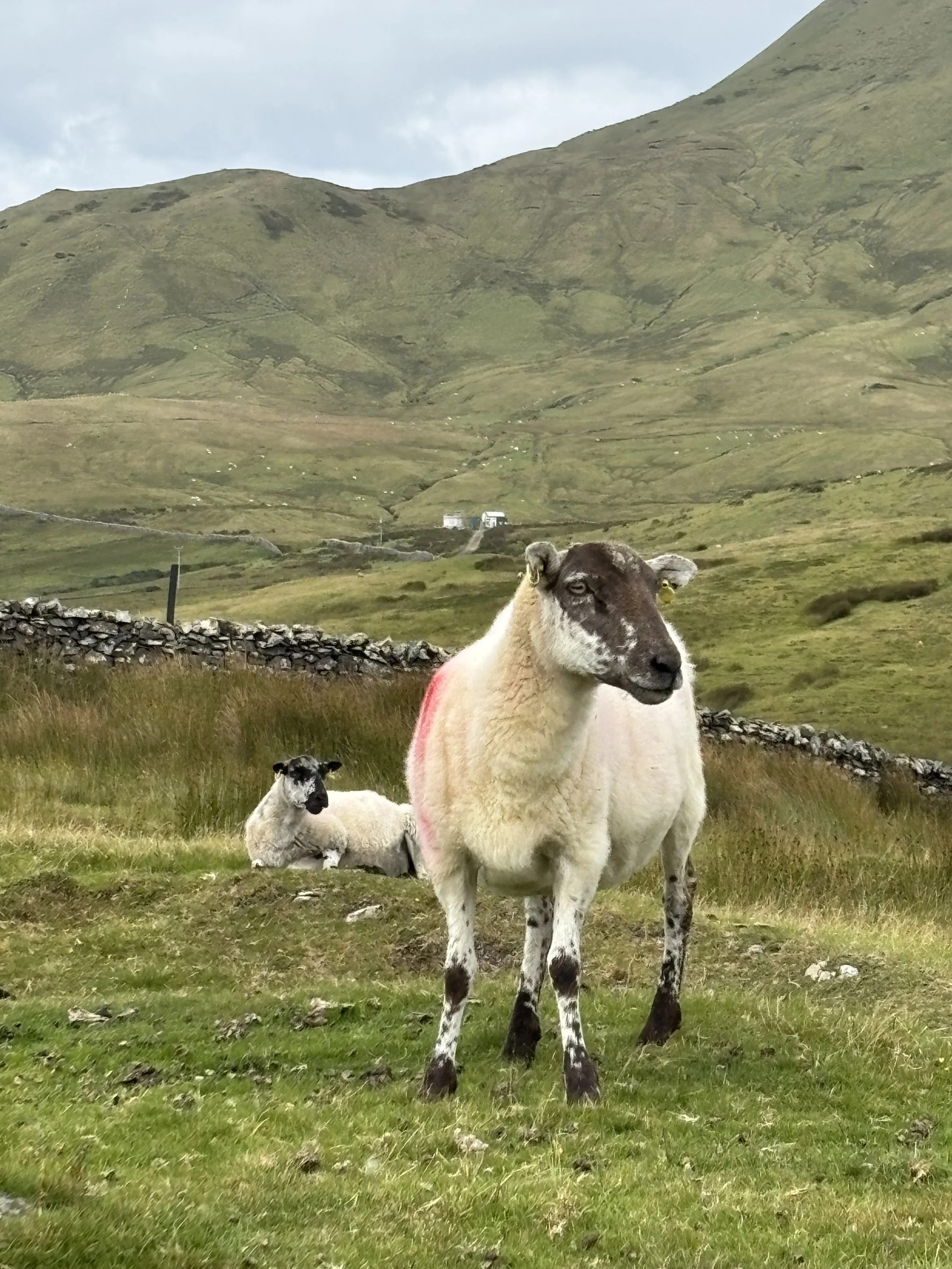
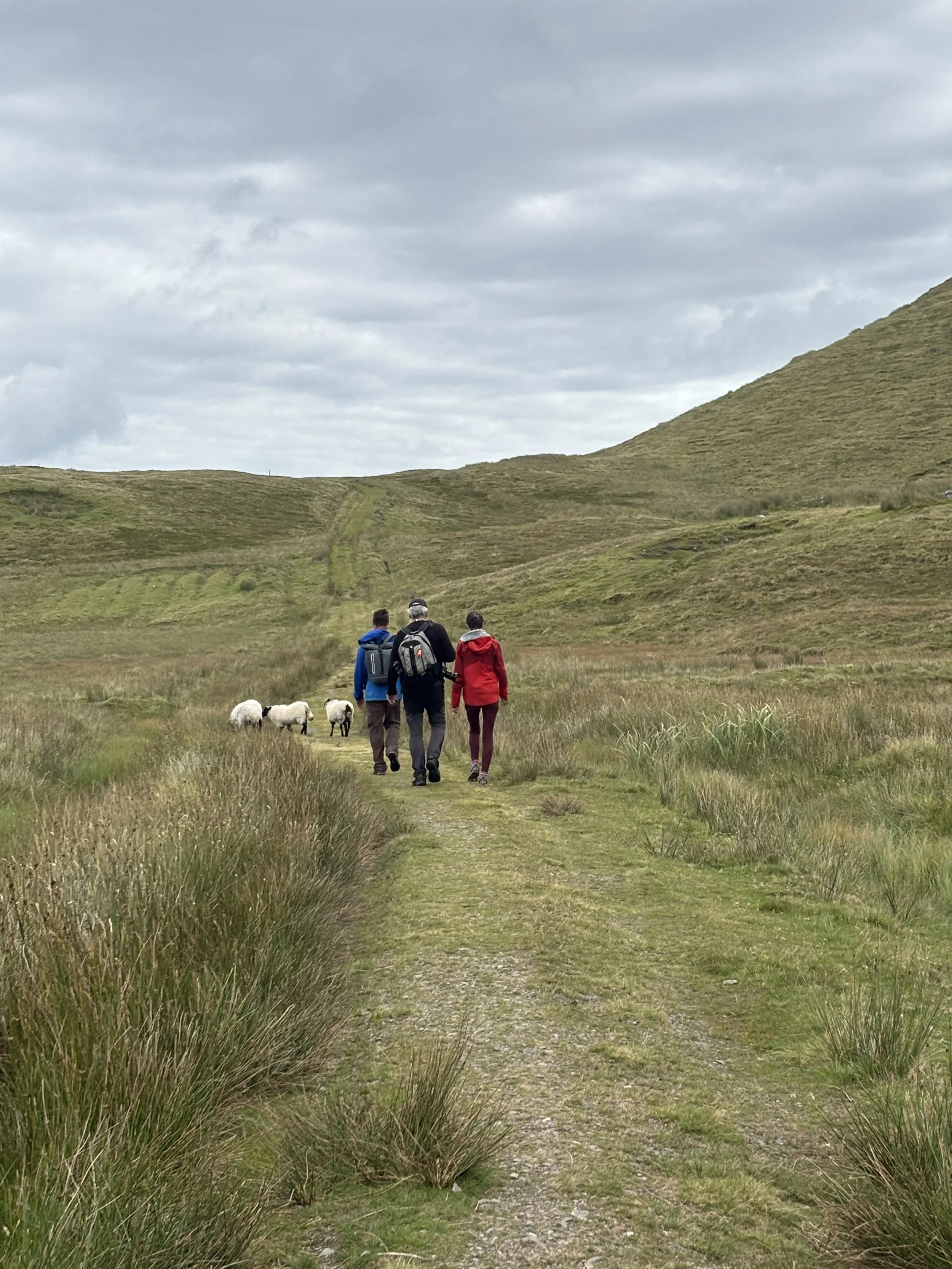
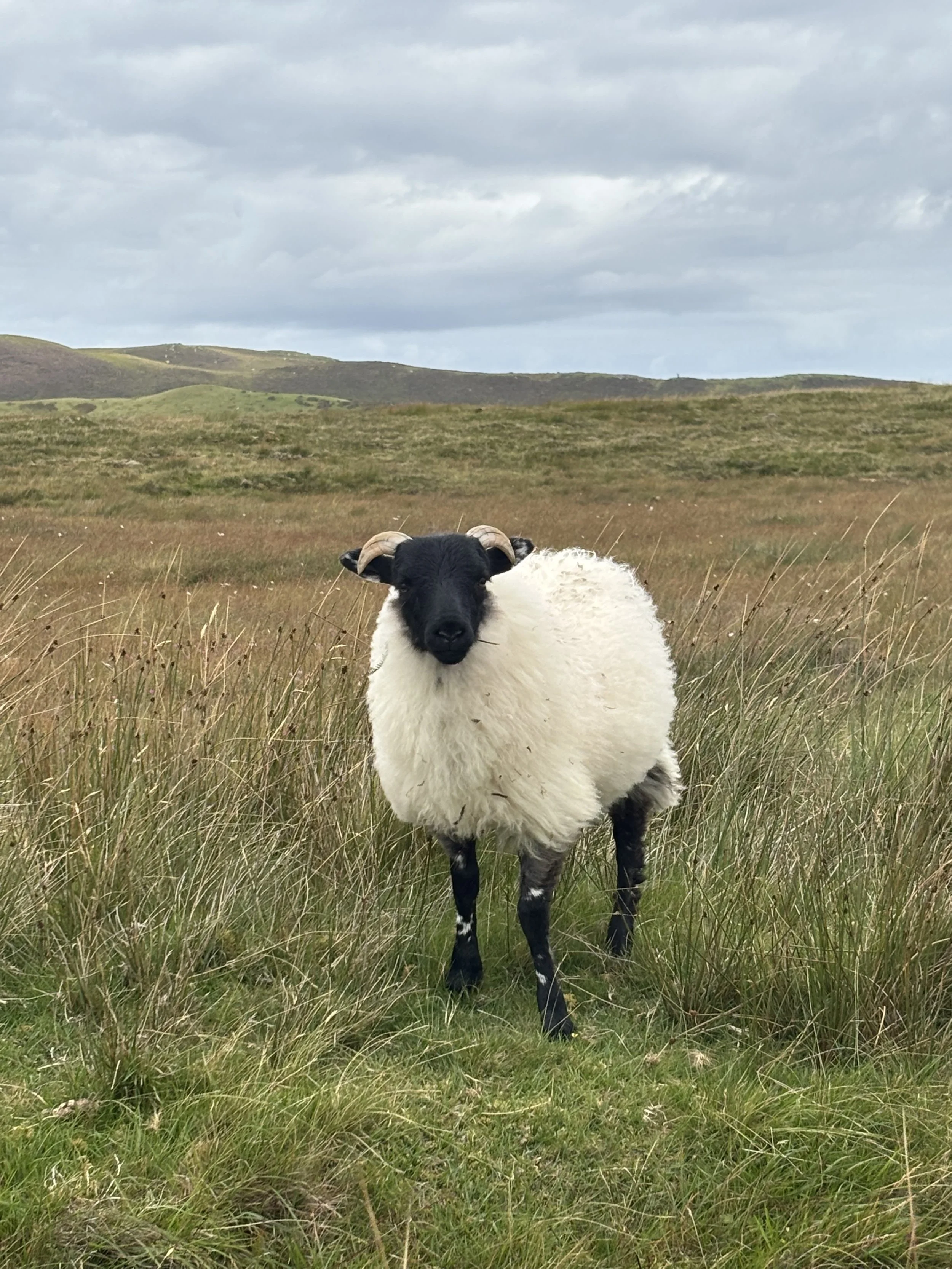
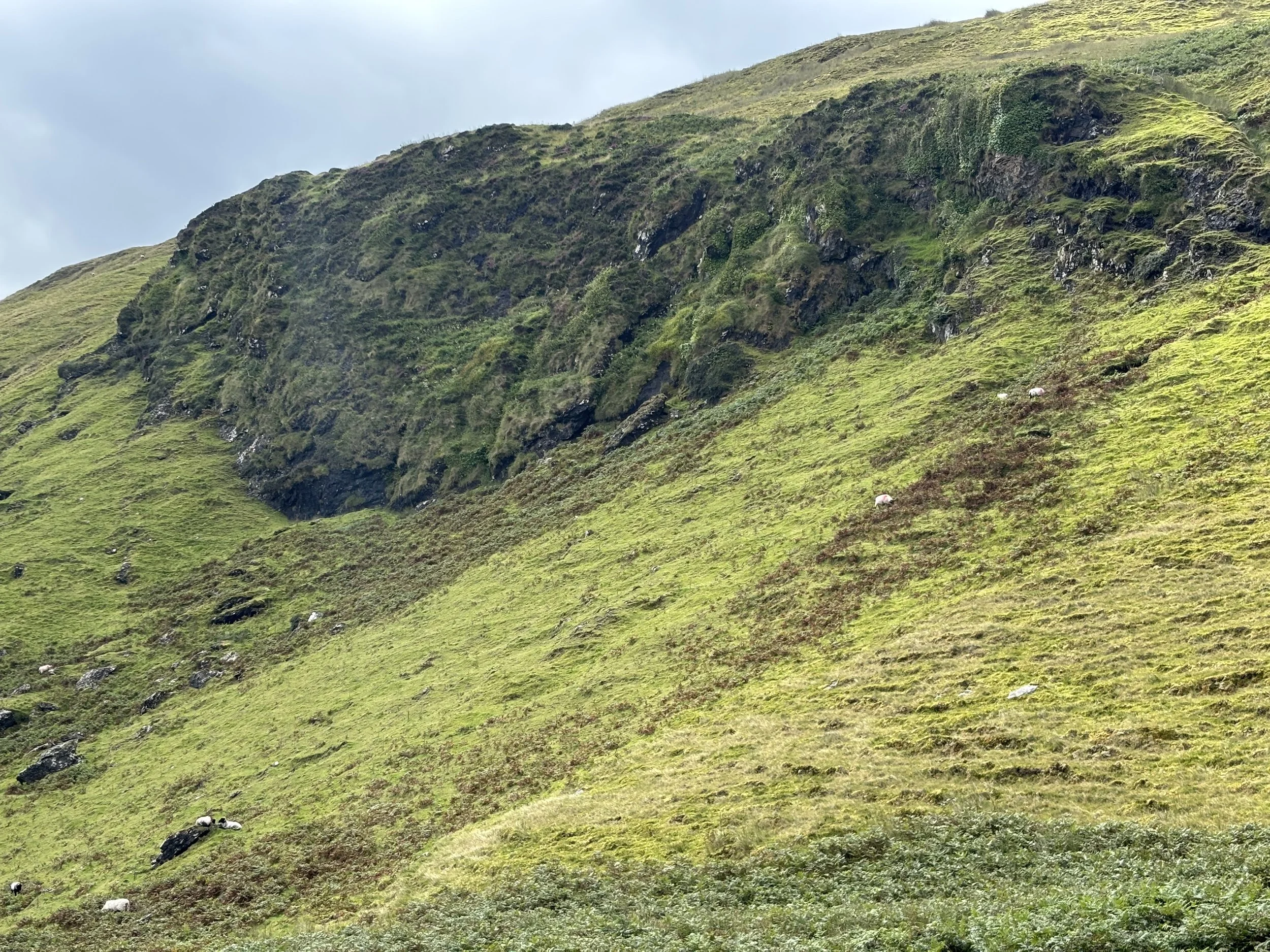
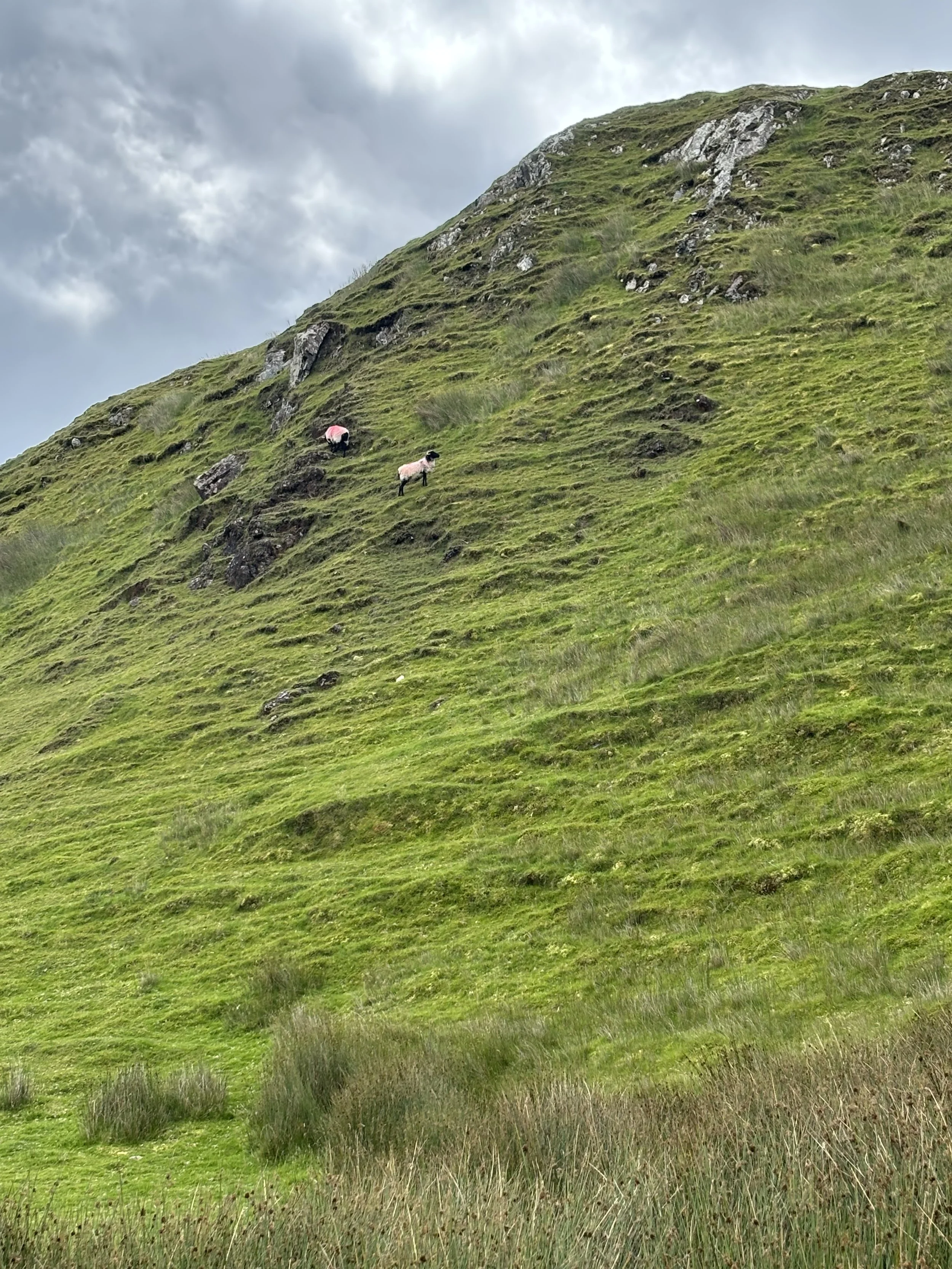
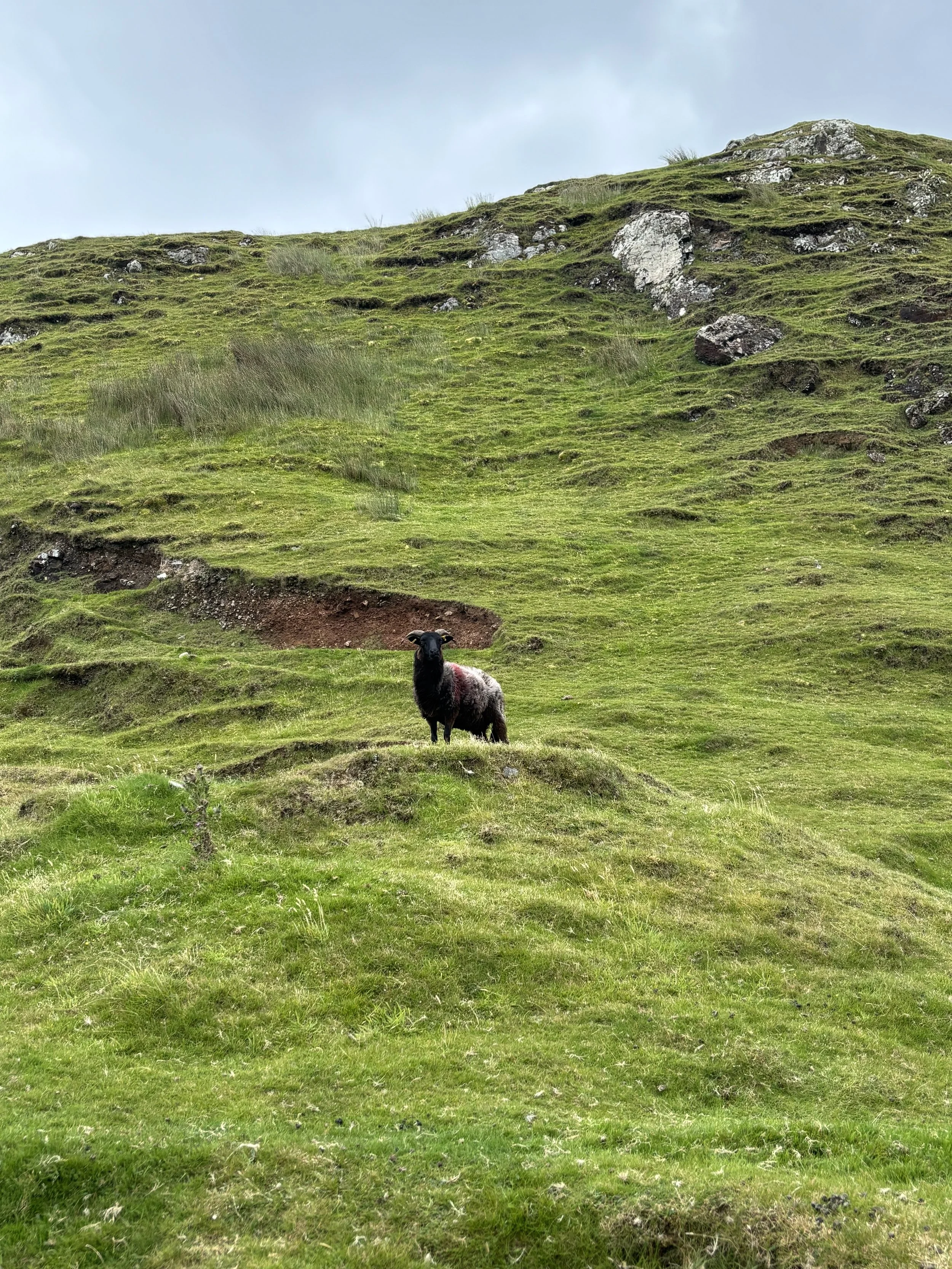
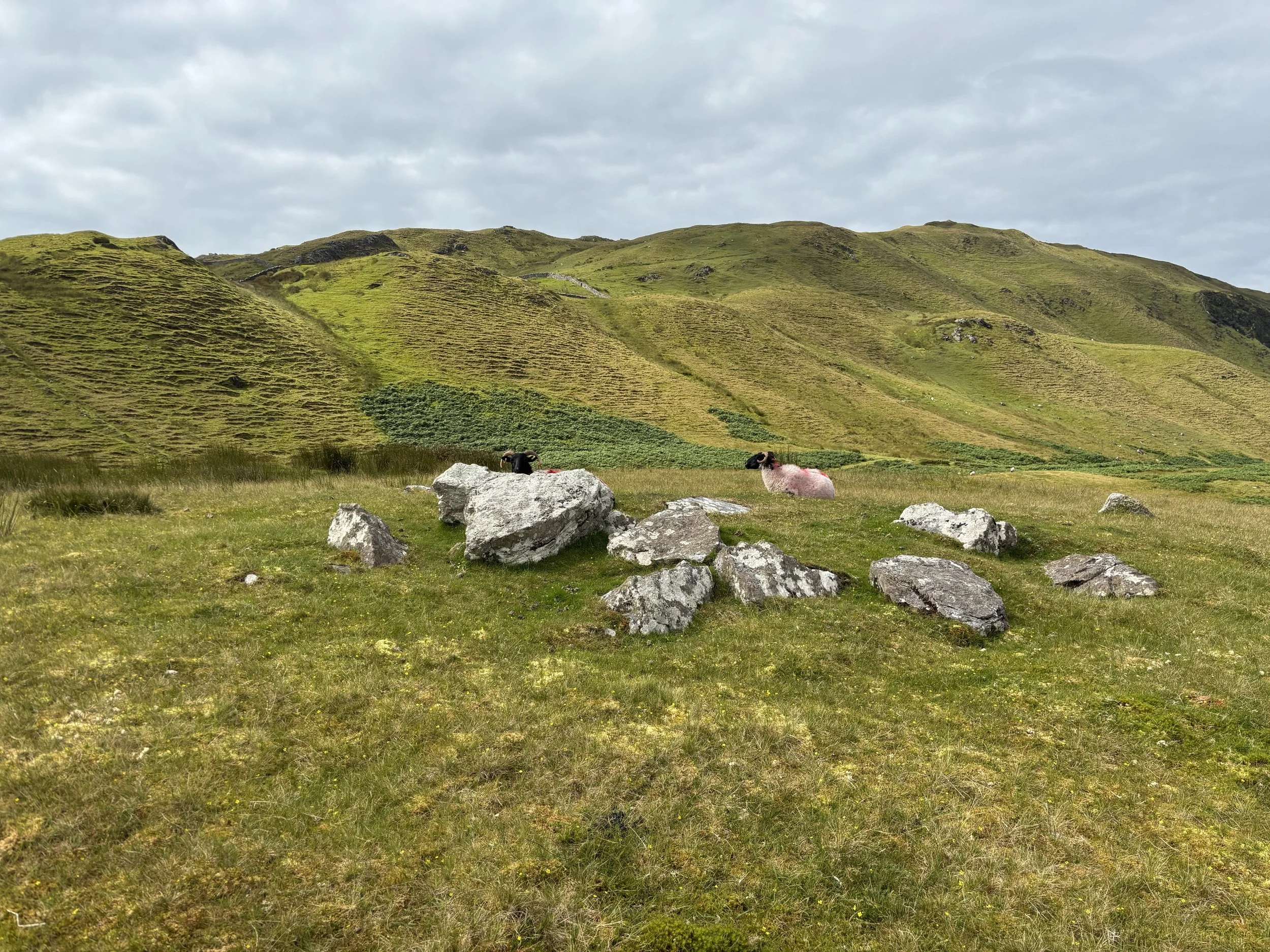
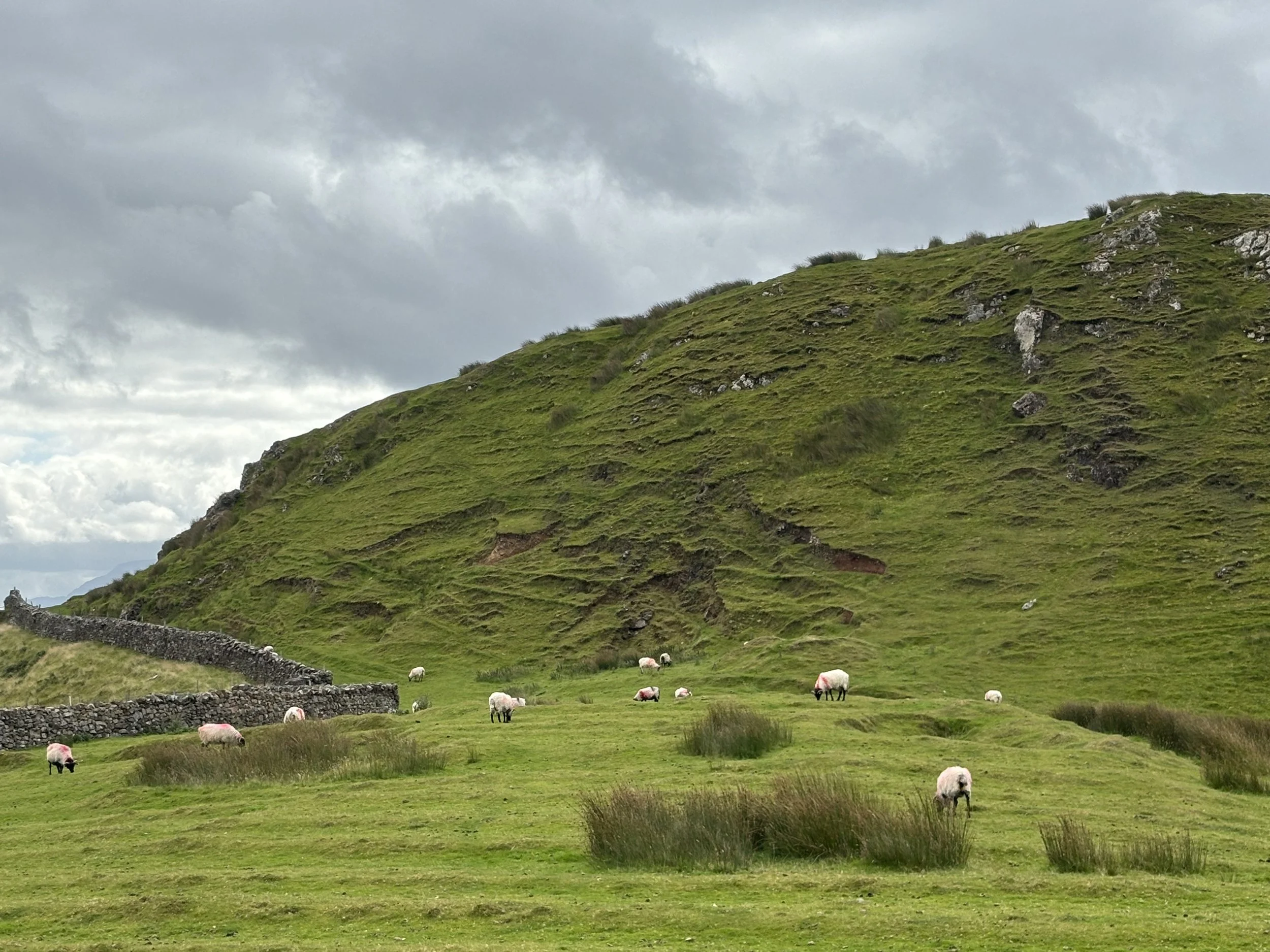
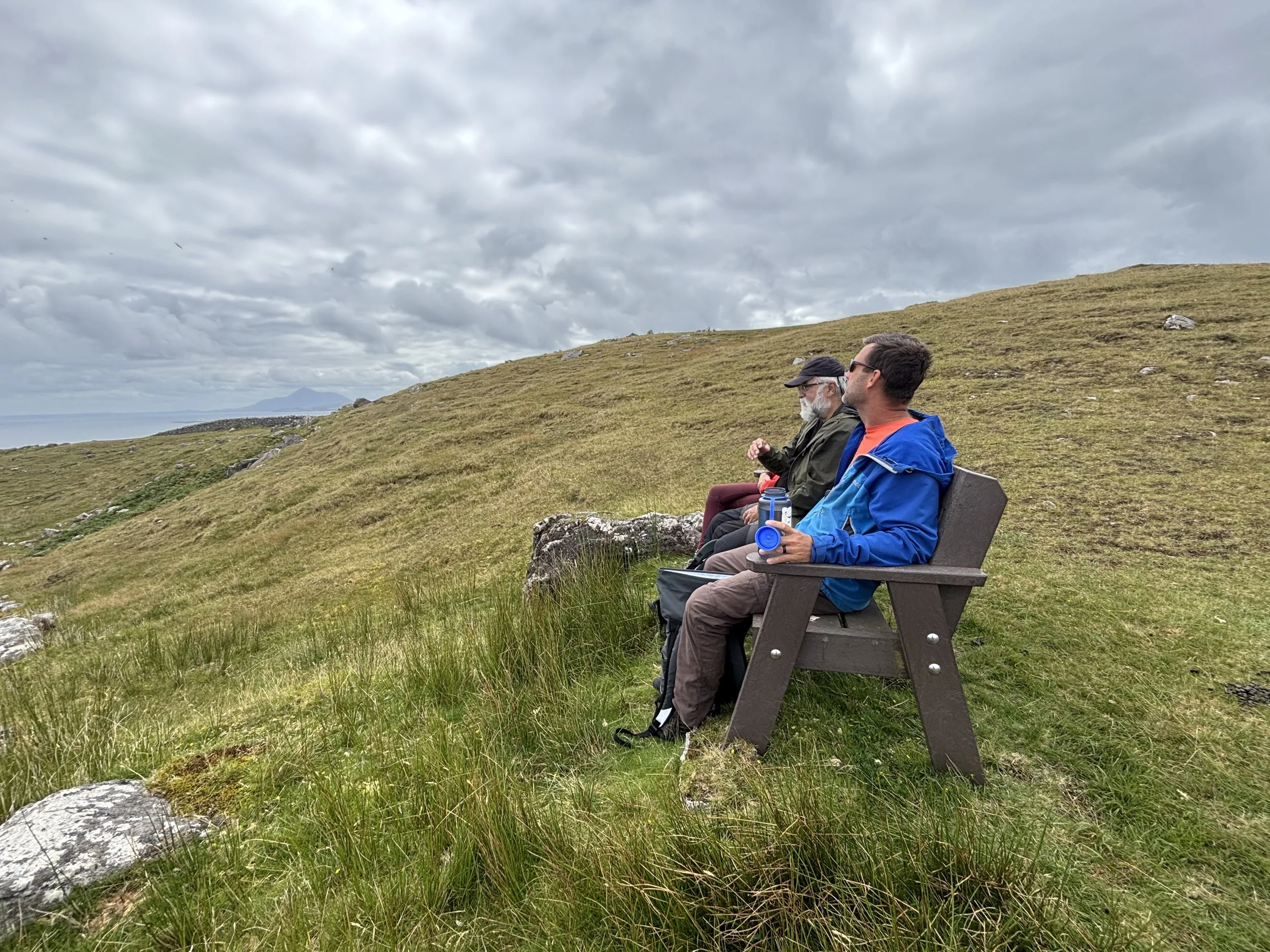
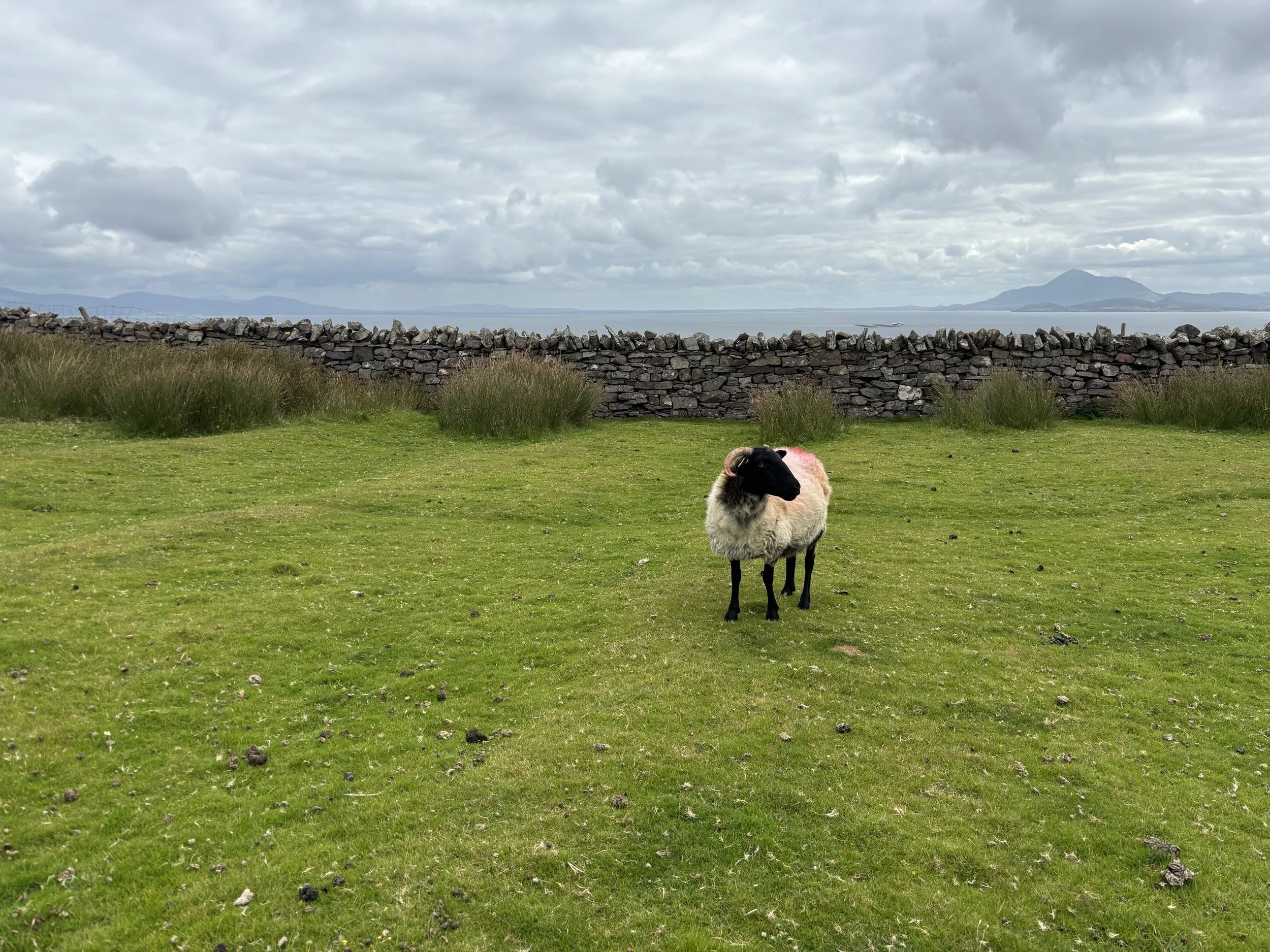
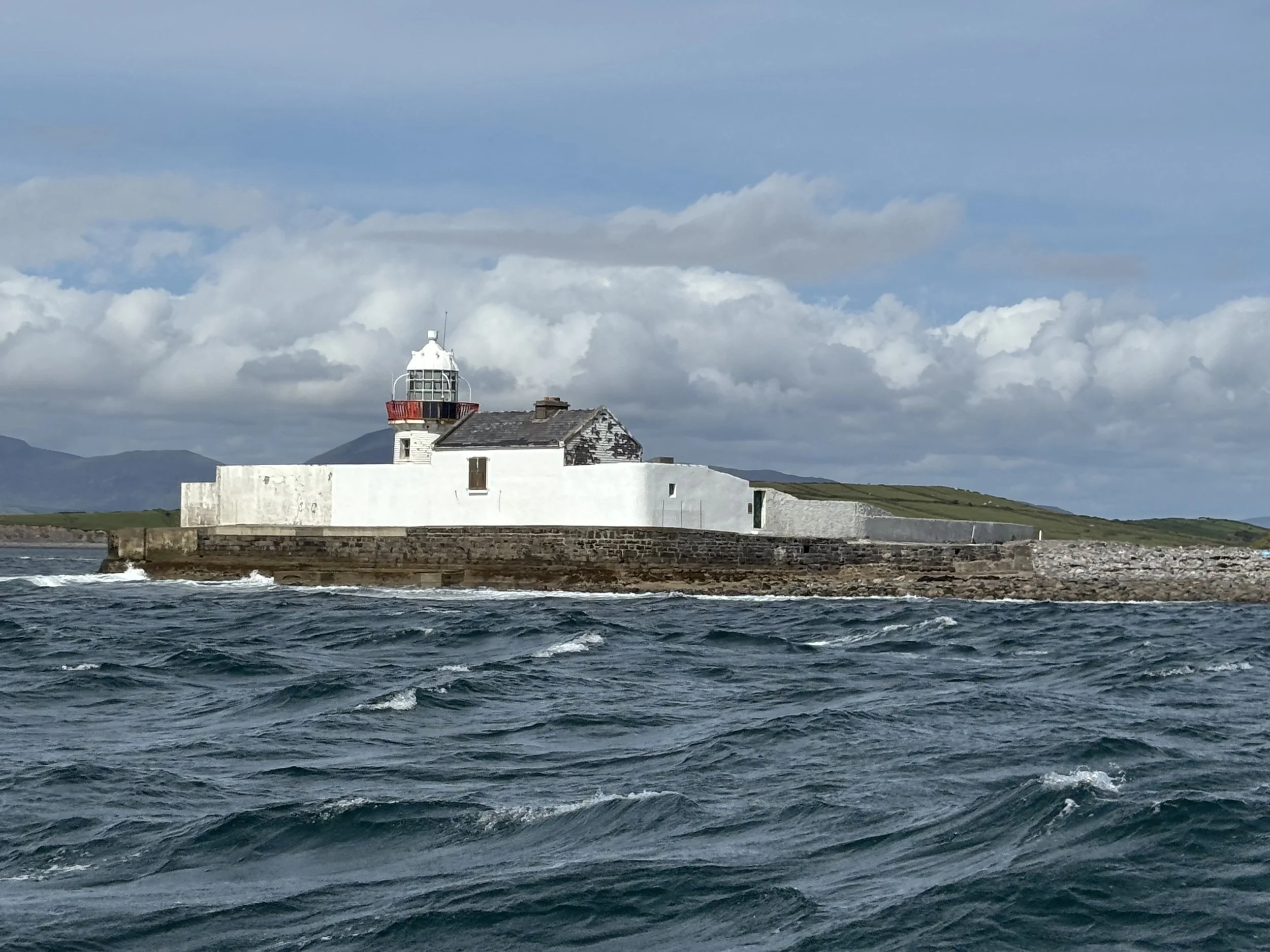
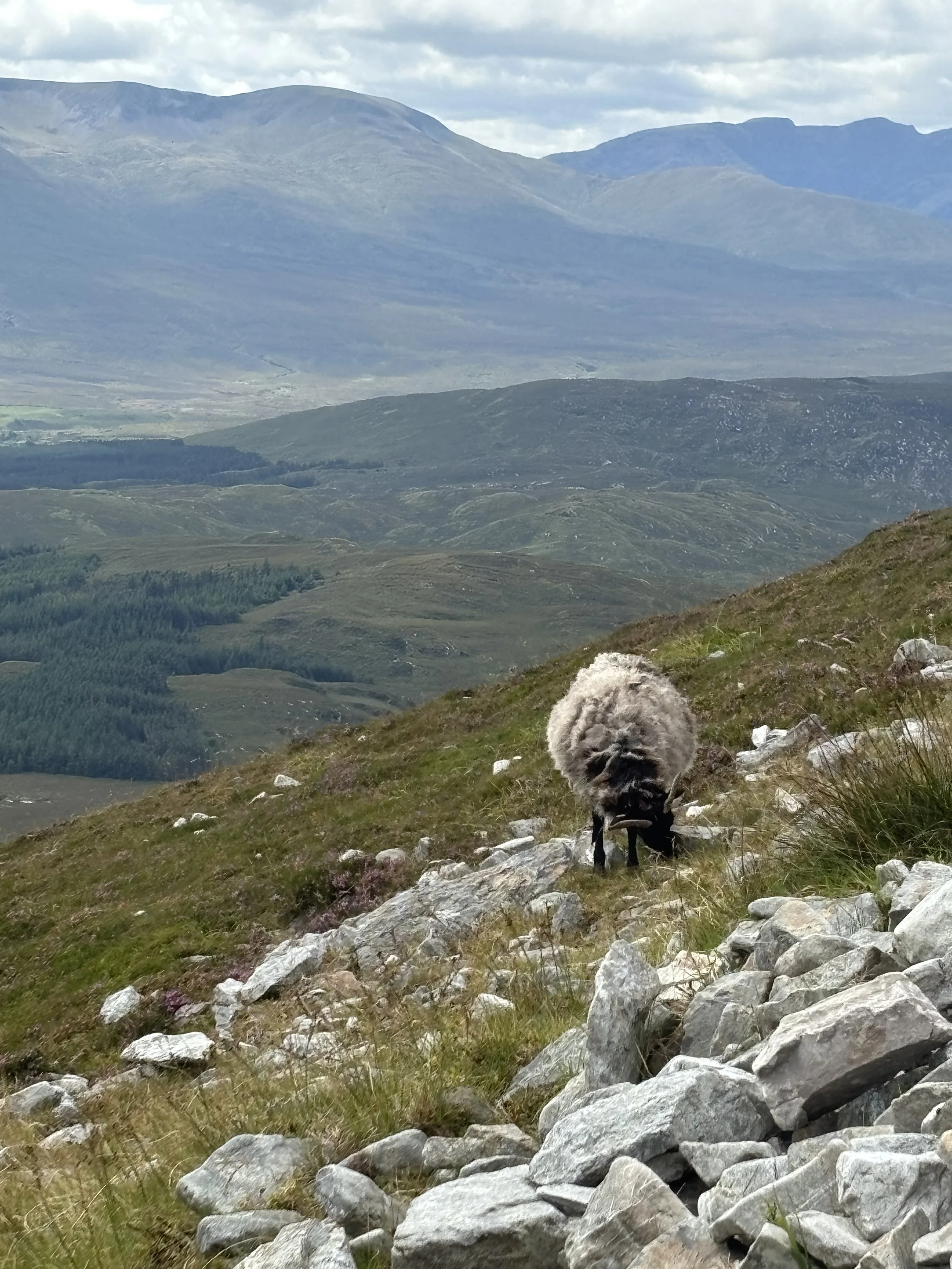
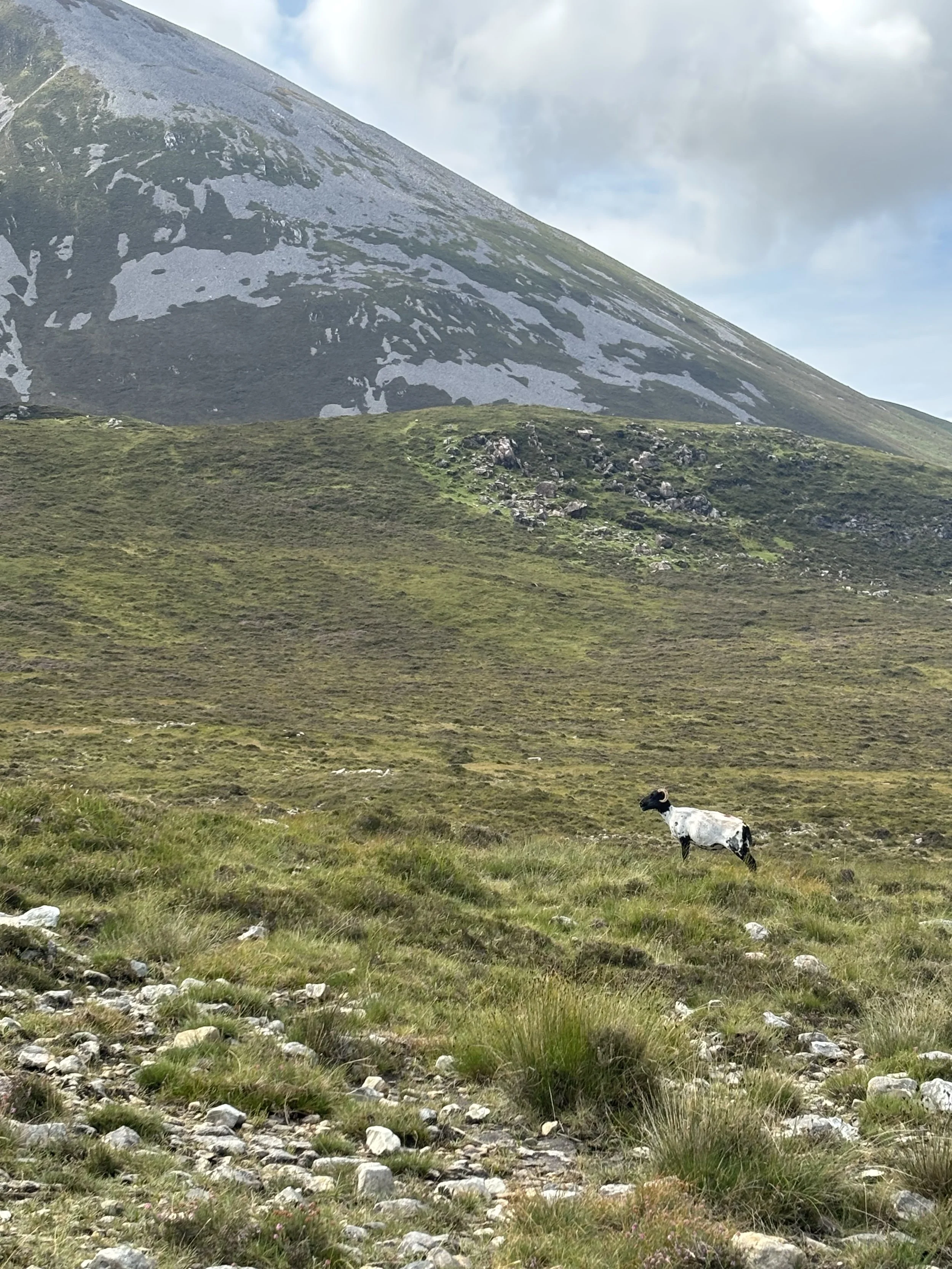
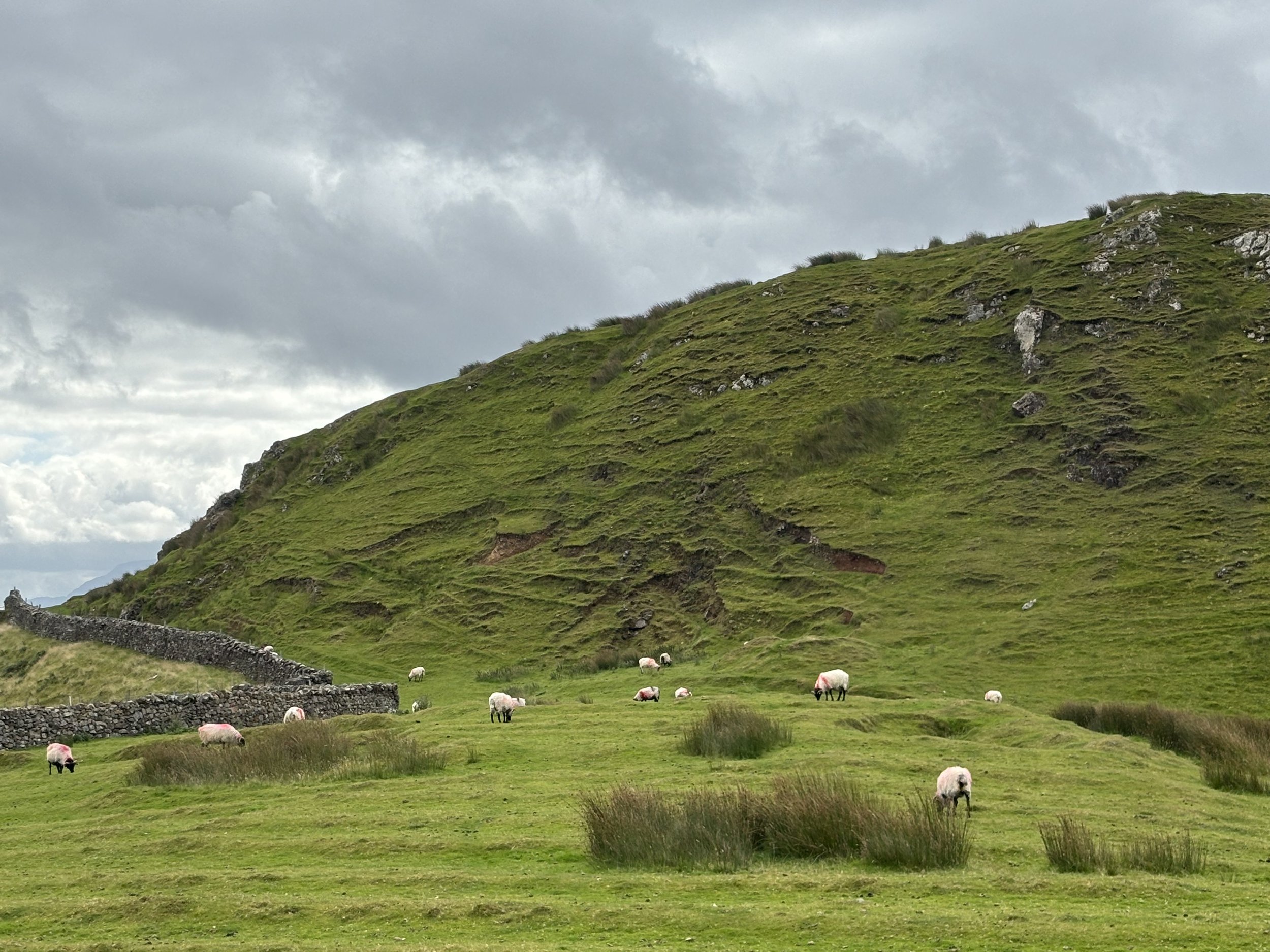
We have so many incredible photos. Here is a gallery of photos from our time in Clew Bay. And, of course, there are quite a few sheep pictures. Mostly because I love them, but also because there are so many sheep everywhere!
If you are reading this in your email, you will need to click this link to view them.